
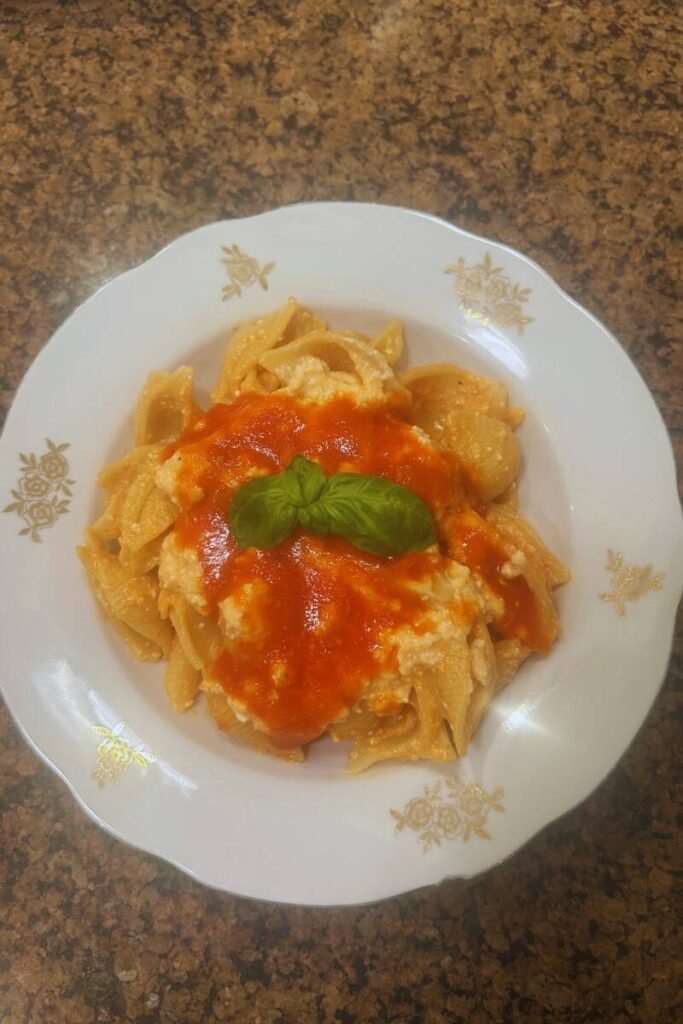
This simple yet elegant pasta dish combines creamy ricotta with tender shell pasta and a vibrant tomato sauce. Conchiglie alla ricotta con sugo represents the essence of Italian home cooking, few ingredients, minimal effort, and maximum flavor. The dish showcases how proper technique transforms humble components into something extraordinary. 🙂
Understanding the Dish
Conchiglie, meaning “shells” in Italian, are the perfect vehicle for this preparation. Their curved shape cradles the creamy ricotta while creating pockets that catch the tomato sauce. This interplay of textures, smooth ricotta against the ridged pasta and bright sugo, creates a harmonious eating experience that’s both comforting and satisfying.
The technique of mixing pasta with loosened ricotta rather than a traditional sauce creates a luxurious coating that’s lighter than cream-based preparations yet equally indulgent. This method is common in central and southern Italian cooking, where ricotta features prominently in both sweet and savory applications.
Ingredients (Serves 2)
Ingredients for Conchiglie alla Ricotta
For the pasta:- 200 g conchiglie (shell pasta)
- Salt (for pasta water)
- 60–120 ml reserved pasta water
- 150 g ricotta cheese
- 1⁄4 teaspoon salt (adjust to taste)
- Tomato sauce (sugo), warmed
Selecting Quality Ingredients
The Ricotta
Fresh ricotta is the star of this dish. Look for whole-milk ricotta with a short ingredient list—ideally just milk, vinegar or citric acid, and salt. The texture should be slightly grainy but creamy, not watery or chalky. If your ricotta seems wet, drain it in a fine-mesh sieve for 30 minutes before using.
According to Sporked’s ricotta taste test, quality ricotta should have a fresh, milky flavor and a texture that’s loose and creamy without being soupy or too cottage cheese-like. Avoid ricotta that contains gums and stabilizers, which are often added to mass-produced versions to prevent separation.
The Pasta
Conchiglie comes in various sizes, for this dish, medium shells (conchiglie rigate) work best. The ridged exterior helps the ricotta cling to each piece. Quality dried pasta made from durum wheat semolina will have better texture and flavor. The Kitchn explains how to identify high-quality dried pasta by looking for a rough, matte surface and pale yellow color.
The Tomato Sauce
A simple sugo, a tomato sauce made from crushed tomatoes, garlic, olive oil, and basil, is traditional. You can prepare this ahead or use a high-quality jarred marinara. The sauce should be warm but not piping hot when serving.
Step-by-Step Instructions
1. Cook the Pasta Properly
Fill a large pot with water, use at least 4 liters for 200 g of pasta. Generously salt the water once it reaches a rolling boil. The water should taste like the sea. This is your only opportunity to season the pasta itself from within.
Add the conchiglie and stir immediately to prevent sticking. Set a timer for 1–2 minutes less than the package directions indicate for al dente. You want the pasta slightly firmer than usual since it will continue cooking slightly when mixed with the hot ricotta mixture.
Critical step: Before draining, use a measuring cup or ladle to reserve at least 120 ml of the starchy pasta cooking water. This liquid is essential for achieving the proper consistency.
2. Prepare the Ricotta Cream
While the pasta cooks, place the ricotta in a large serving bowl, this will be your mixing and serving vessel. Add 1⁄4 teaspoon salt and stir to incorporate.
Begin adding the hot pasta water gradually, starting with 60 ml (about 1⁄4 cup). Stir vigorously with a fork or small whisk until the ricotta transforms from thick and grainy to smooth and pourable. The consistency should resemble thick cream, it should coat the back of a spoon but still flow easily. Add more pasta water if needed, a tablespoon at a time.
The starchy pasta water serves two purposes: it thins the ricotta to a sauce-like consistency and helps it emulsify, creating a silky texture that will coat the pasta beautifully. The salt in the pasta water also seasons the ricotta from within.
3. Combine and Plate
Once the pasta is cooked and drained (don’t rinse it), add it directly to the bowl with the loosened ricotta while both are still hot. Using a large spoon or spatula, gently fold the pasta through the ricotta mixture. The goal is to coat each shell with the creamy ricotta without breaking the pasta. Work quickly, the residual heat from the pasta will warm the ricotta and help everything meld together.
Transfer the dressed pasta to individual shallow bowls or plates. Spoon the warm tomato sauce over the top, allowing it to pool around the pasta rather than mixing it in completely. This presentation creates visual contrast, white ricotta-coated shells against the vibrant red sauce, and allows each diner to combine the elements to their preference as they eat.
Tips for Success
Temperature matters: The pasta water must be hot when added to the ricotta to achieve proper emulsification. Cold water will cause the ricotta to seize and become grainy.
Don’t overdrain: A few drops of water clinging to the pasta help thin the ricotta further and prevent dryness.
Adjust consistency: If the ricotta mixture seems too thick after adding the pasta, incorporate another tablespoon or two of pasta water.
Sauce temperature: The tomato sauce should be warm but not boiling hot. If it’s too hot, it will thin out the ricotta too much when mixed at the table.
Serving immediately: This dish doesn’t hold well. The ricotta will tighten as it cools and the pasta will absorb the moisture. Prepare it just before serving for best results.
Variations and Additions
While the basic recipe is perfect in its simplicity, several traditional additions work beautifully:
- Fresh herbs: Torn basil leaves stirred into the ricotta or scattered on top add freshness
- Black pepper: A generous grinding of black pepper provides welcome heat
- Pecorino Romano: A light grating of aged cheese adds salty depth
- Lemon zest: A small amount of grated lemon zest brightened the ricotta mixture
- Garlic: A finely minced or grated clove stirred into the ricotta adds punch
Wine Pairing
The creamy ricotta and bright tomato sauce call for a wine with good acidity and moderate body. A Chianti Classico, Barbera d’Alba, or Nero d’Avola would complement the dish beautifully. For white wine lovers, a Vermentino or Greco di Tufo provides enough structure to stand up to the richness while echoing the bright acidity of the tomatoes.
Nutritional Considerations
This dish provides a balance of carbohydrates from the pasta, protein and calcium from the ricotta, and vitamins and antioxidants from the tomato sauce. One serving (half the recipe) contains approximately 450–500 calories, depending on the exact brands and amounts used.
The ricotta contributes significant protein, about 14 grams per serving, making this more substantial than a simple pasta with tomato sauce. Using whole-milk ricotta provides a richer texture and better nutritional profile than part-skim versions.
The Cultural Context
Pasta with ricotta represents cucina povera, peasant cooking, at its finest. Historically, ricotta was an economical way to add richness to pasta without expensive meat or aged cheese. The technique of loosening ricotta with pasta water remains common throughout central and southern Italy, particularly in Lazio, Campania, and Sicily.
This preparation allows quality ingredients to shine without fussy technique or hard-to-find components. It’s the type of dish an Italian grandmother might prepare for a simple weeknight dinner, yet it’s elegant enough for company when presented thoughtfully.
Conclusion
Conchiglie alla ricotta con sugo proves that exceptional food doesn’t require complicated methods or exotic ingredients. The key lies in proper technique, salting the pasta water adequately, reserving that starchy cooking liquid, and using it to transform grainy ricotta into silky sauce. Master these fundamentals, and you’ll return to this dish again and again for its comforting simplicity and satisfying flavor.
The separate presentation of ricotta-coated pasta and tomato sauce isn’t just visually appealing, it allows each element to maintain its distinct character while inviting the diner to blend flavors with each forkful. This is Italian cooking at its most essential: respect for ingredients, attention to technique, and trust in simplicity.