
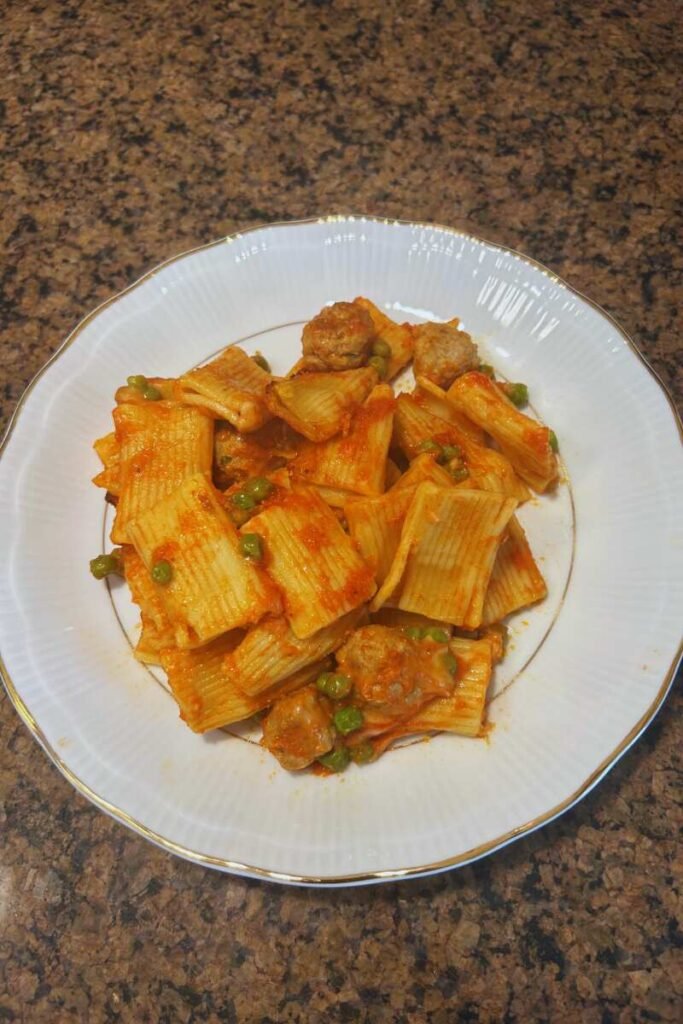
This Oven Baked Rigatoni with Meatballs, Peas, Tomato Sauce & Mozzarella combines tender rigatoni, homemade meatballs, and rich tomato sauce for a comforting, family-style meal. Mozzarella is stirred in and layered on top for creamy, golden perfection. This hearty dish is perfect for gatherings and cozy dinners 🙂.
Understanding Baked Pasta Construction
Baked pasta dishes require different considerations than stovetop preparations. The pasta must be undercooked initially because it continues cooking in the oven while absorbing sauce. The sauce needs sufficient body to coat pasta without becoming dry during baking, yet not so liquid that the dish becomes soupy. The cheese must be distributed strategically to create both interior richness and attractive surface browning.
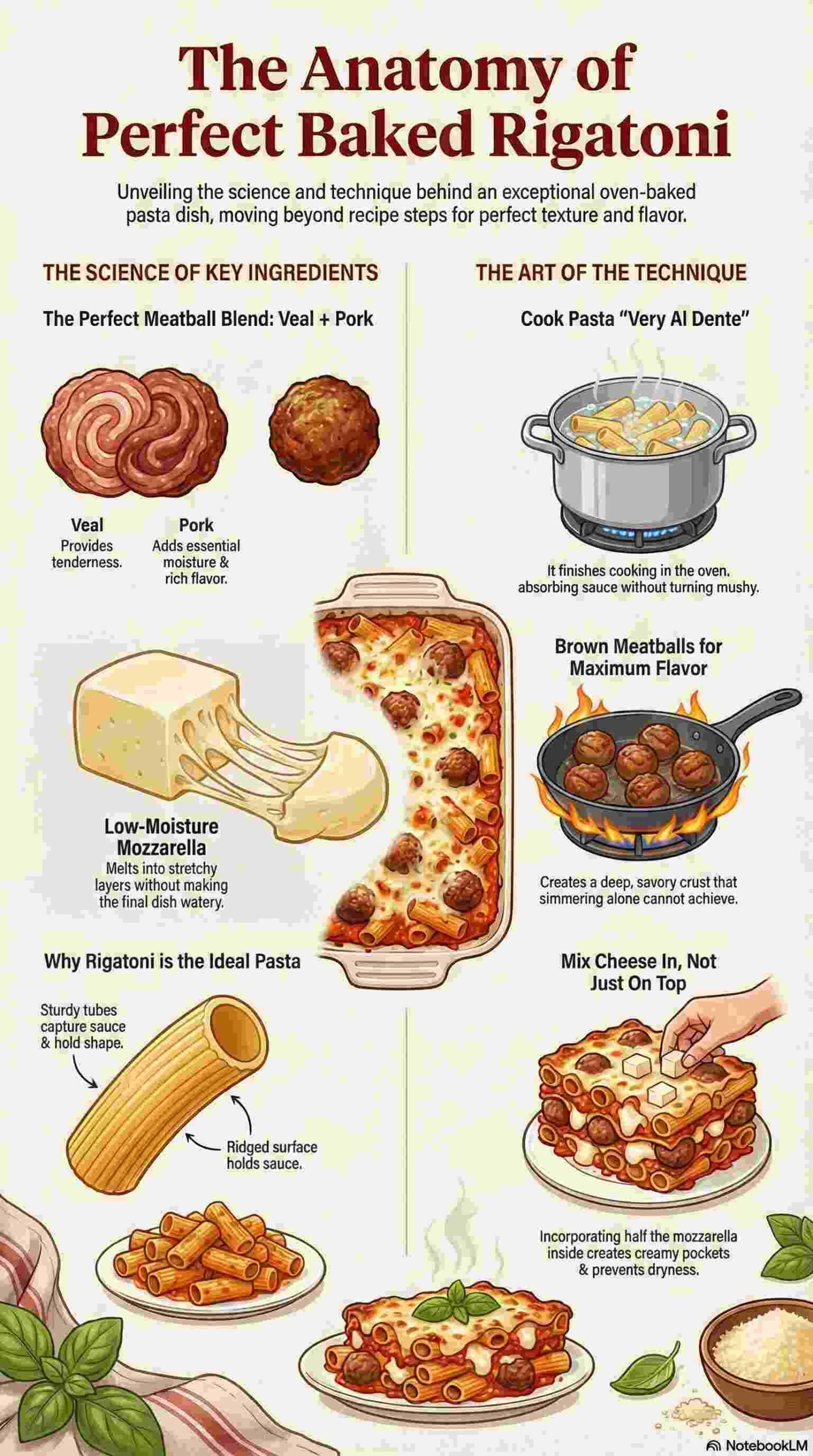
Rigatoni’s large tubes and ridged exterior make it ideal for baked preparations. The tubular shape captures sauce and small ingredients like peas inside, while the ridges (righe in Italian) provide surface area for sauce adhesion. The sturdy structure maintains integrity during mixing and baking, unlike more delicate shapes that might break apart or become mushy.
Ingredients for Oven Baked Rigatoni with Meatballs, Peas, Tomato Sauce & Mozzarella
For the Sauce- 3 tablespoons olive oil
- ¼–½ medium onion, small dice (40–80g)
- Pinch of salt (for cooking onions)
- 700ml passata (strained tomato purée)
- 2 bay leaves
- 2 fresh basil leaves
- ½ teaspoon red chili flakes
- Salt and freshly ground black pepper to taste
- 200g ground veal
- 200g ground pork
- 2 large eggs
- 40–50g Parmesan cheese, finely grated (about 1 handful)
- 3 tablespoons fresh parsley, finely chopped
- 60–75g breadcrumbs (approx. ½ cup)
- Salt and freshly ground black pepper to taste
- 125g green peas (fresh or frozen, approx. ½ cup)
- 700g rigatoni pasta
- 200–250g mozzarella cheese, cut into small cubes or shredded
- 50–75g additional Parmesan cheese, grated for topping
Ingredient Selection and Quality
Meat Selection for Meatballs
The combination of veal and pork creates meatballs with superior texture and flavor compared to single-meat versions. Veal contributes delicate, mild flavor and tender texture due to its youth and lower connective tissue content. Pork adds fat content (typically 15-20% in ground pork) that keeps meatballs moist and contributes rich, savory flavor. This 1:1 ratio balances tenderness with richness.
Ground meat quality significantly impacts final results. Meat ground freshly at a butcher counter or ground at home produces superior texture compared to pre-packaged ground meat that may contain meat from multiple animals and various cuts. For optimal results, select meat with visible fat marbling; overly lean ground meat produces dry, dense meatballs. According to the USDA Food Safety and Inspection Service, ground meat should be handled carefully and cooked to proper internal temperatures to ensure food safety.
Breadcrumb Function in Meatballs
Breadcrumbs serve as a panade component (when combined with the eggs) that keeps meatballs tender by preventing meat proteins from binding too tightly during cooking. Breadcrumbs absorb moisture and create pockets within the meat mixture that interrupt dense protein networks, resulting in lighter, more tender texture.
The quantity of breadcrumbs affects texture considerably. Too few breadcrumbs produce dense, compact meatballs, while excessive breadcrumbs create meatballs that lack meat flavor and may fall apart. The “approximately ½ cup” measurement allows adjustment based on the mixture’s consistency—it should hold together when formed but not feel pasty or sticky.
Passata Quality Considerations
High-quality passata makes a substantial difference in sauce flavor. Premium passata uses vine-ripened tomatoes processed at peak ripeness, creating naturally sweet flavor with balanced acidity. Italian passata, particularly from San Marzano tomatoes grown in volcanic soil near Mount Vesuvius, offers superior sweetness and low acidity compared to standard domestic varieties.
Read ingredient labels carefully. Quality passata contains only tomatoes and sometimes salt, with no added citric acid, sugar, or preservatives beyond what’s necessary for safe preservation. Tomatoes should be the first and often only ingredient listed.
Mozzarella Selection for Baking
Low-moisture mozzarella works best for baked pasta preparations. Fresh mozzarella packed in water contains 55-60% moisture that releases during baking, potentially creating a watery dish. Low-moisture mozzarella (45-50% moisture) melts into stretchy, cohesive layers without releasing excessive liquid.
Whole-milk mozzarella provides richer flavor and better melting properties than part-skim varieties. The higher fat content creates smoother melting and more appealing browning. Pre-shredded mozzarella contains anti-caking agents (typically potato starch or cellulose) that inhibit melting, making block mozzarella that you cube or shred yourself the superior choice.
Method
Make the Sauce
1. Sauté the aromatics: Heat 3 tablespoons of olive oil in a medium-large pot or deep sauté pan over medium-low heat. Add the diced onion along with a pinch of salt, which helps draw out moisture and promotes even softening. Cook gently, stirring occasionally, for 5-7 minutes until the onion turns completely translucent and soft without taking on any color. The slow, gentle cooking develops sweetness while eliminating harsh sulfurous compounds present in raw onions.
Proper onion preparation at this stage builds the sauce’s flavor foundation. Rushed cooking that browns the onions creates different flavor compounds that work in other applications but don’t suit the clean, bright tomato flavor desired here.
2. Add tomatoes and seasonings: Pour in the 700ml of passata, stirring to combine with the softened onions and oil. Add 2 bay leaves, 2 fresh basil leaves (torn if large, left whole if small), ½ teaspoon red chili flakes, and season with salt and freshly ground black pepper to taste. Start conservatively with salt, as the sauce concentrates during simmering and the meatballs and cheese add additional salt later.
3. Simmer and develop flavor: Bring the sauce to a gentle simmer, then reduce heat to maintain a steady but not vigorous bubble. Simmer for 20 minutes, stirring occasionally to prevent sticking or scorching on the pot bottom. During this time, the sauce thickens slightly as water evaporates, concentrating tomato flavor and creating better coating consistency. The aromatics infuse their flavors throughout.
4. Remove bay leaves: After 20 minutes, fish out and discard the bay leaves. They’ve released their subtle, complex flavor but are tough and unpleasant to eat. The basil leaves can remain; they’ll break down during continued cooking and baking.
Form and Cook the Meatballs
1. Mix the meatball ingredients: In a large bowl, combine the ground veal, ground pork, eggs, grated Parmesan, chopped parsley, breadcrumbs, and season with salt and black pepper. Using your hands or a large fork, mix gently just until all ingredients are evenly distributed throughout. Avoid overmixing or vigorous handling, which develops tough texture by overworking the meat proteins and creating dense, rubbery meatballs.
The mixture should hold together when squeezed but remain slightly loose. If it feels too wet and won’t hold a shape, add breadcrumbs 1 tablespoon at a time. If too dry and crumbly, add a splash of water or milk.
2. Form small meatballs: Using damp hands (moisture prevents sticking), roll the mixture into small meatballs approximately 2-3cm in diameter—roughly the size of a walnut or large marble. These “polpettine” (little meatballs) should be substantially smaller than standard meatballs. The small size creates a better meatball-to-pasta ratio, ensures they cook through quickly, and makes the final dish easier to eat.
Aim for uniform size so all meatballs cook at the same rate. Placing formed meatballs on a tray or large plate as you work keeps the process organized.
3. Brown the meatballs (optional but recommended): Heat 2-3 tablespoons olive oil in a large skillet over medium-high heat. Working in batches to avoid overcrowding, add meatballs and brown on multiple sides, turning carefully with tongs or a spatula. This browning takes 4-6 minutes total and creates flavorful browned crust through the Maillard reaction—a complex chemical process where proteins and sugars react under heat to create hundreds of new flavor compounds.
This browning reaction begins around 140-165°C (285-330°F) and creates savory, meaty flavors impossible to achieve through simmering alone. While this step is labeled optional, it substantially improves final flavor complexity.
4. Simmer in sauce: Transfer the browned meatballs (or raw meatballs if skipping browning) directly into the simmering tomato sauce. The meatballs will finish cooking in the sauce over the next 10 minutes, during which they release fat and juices that enrich the sauce with meaty flavor. Simmer gently, stirring occasionally with care to avoid breaking the meatballs apart. The meatballs are done when they feel firm throughout and have reached an internal temperature of 71°C (160°F) for the pork content, though this temperature is difficult to measure in such small meatballs.
Add the Peas
During the final 5 minutes of the meatball simmering time, add the green peas to the sauce. Fresh peas need the full 5 minutes to become tender, while frozen peas (which have been blanched before freezing) need only 3-4 minutes to heat through and soften.
Peas add sweetness, color contrast, and textural variety to the dish. Their addition toward the end prevents overcooking, which turns peas mushy and dull green. Properly cooked peas should be tender but retain slight texture and bright color.
Cook the Pasta
1. Boil well-salted water: Bring a large pot (at least 6 liters) of water to a rolling boil. Add salt generously—2-3 tablespoons for this quantity of pasta. The water should taste noticeably salty, similar to seawater. Properly salted pasta water seasons the pasta from within as it cooks and contributes to sauce cohesion later.
2. Cook very al dente: Add the rigatoni to boiling water and cook according to package directions but reduce the time by 3-4 minutes. For pasta with a standard cooking time of 12 minutes, cook only 8-9 minutes. The pasta should be quite firm with a chalky, undercooked center when bitten. This “very al dente” texture is essential because the pasta continues cooking during baking, absorbing sauce and softening further. Pasta cooked fully before baking becomes mushy in the oven.
As explained by the Barilla Pasta Academy, proper pasta cooking technique is fundamental to Italian cuisine, with the al dente texture providing both better mouthfeel and improved digestibility due to the starch structure remaining more resistant.
3. Reserve pasta water and drain: Before draining, scoop out and reserve at least 1 cup (250ml) of the starchy pasta cooking water. This liquid contains dissolved starch that helps bind sauce to pasta and can adjust consistency if needed. Drain the pasta thoroughly.
Combine and Add Mozzarella
1. Mix pasta with sauce: Add the drained rigatoni directly to the pot with the sauce, meatballs, and peas. Using a large spoon or silicone spatula, toss everything together gently but thoroughly. Every piece of pasta should be coated with sauce, and the meatballs and peas should be distributed evenly throughout.
2. Incorporate half the mozzarella: Add half of the mozzarella cubes or shredded cheese (100-125g) to the pasta mixture while it’s still hot. Stir gently to distribute. The residual heat from the pasta and sauce begins melting this cheese, creating pockets of creamy, melted mozzarella throughout the interior of the dish rather than only on top.
3. Adjust consistency: Evaluate the mixture’s moisture level. It should be well-coated with sauce but not swimming in liquid, as excess liquid creates a soupy baked dish. If the mixture seems dry, add reserved pasta water 2-3 tablespoons at a time, stirring after each addition. The starchy water helps the sauce cling to the pasta while adding necessary moisture.
Assemble and Bake
1. Preheat oven: Set oven to 190°C (375°F) and position a rack in the center. This moderate temperature cooks the pasta through and melts the cheese without burning the top before the interior heats.
2. Transfer to baking dish: Lightly oil a 23x33cm (9×13 inch) baking dish or similar-sized casserole. Transfer the pasta-sauce-meatball mixture to the dish, spreading it relatively evenly but without obsessive smoothing. Some irregularity creates textural interest and varied browning.
3. Add toppings: Distribute the remaining mozzarella evenly over the top surface. Sprinkle generously with grated Parmesan cheese, covering the entire top. The mozzarella creates stretchy, melted cheese pools, while the Parmesan browns beautifully and adds sharp, salty flavor contrast.
4. Bake: Place the dish in the preheated oven and bake for 20-25 minutes. The dish is ready when:
- The cheese on top has melted completely and bubbles actively around the edges
- The top develops golden-brown spots, particularly on the Parmesan
- The edges appear slightly crispy where pasta pieces peek through the cheese
- The sauce bubbles visibly at the dish’s edges
- An instant-read thermometer inserted in the center reads at least 74°C (165°F)
5. Optional broiling: For more dramatic browning and crispy cheese spots, switch the oven to high broil during the final 2-3 minutes of cooking. Watch constantly, as the top can go from perfectly browned to burnt very quickly under the broiler’s intense heat. This step creates appealing visual contrast and adds caramelized cheese flavor.
Rest and Serve
1. Rest before serving: Remove the baking dish from the oven and let it rest at room temperature for 5 minutes before serving. This resting period allows the sauce to thicken slightly and the cheese to set enough that portions hold together when served rather than running all over the plate. Cutting into the dish immediately results in messy, sauce-filled portions.
2. Serve: Use a large serving spoon or spatula to scoop portions onto individual plates. Each serving should contain pasta, sauce, meatballs, peas, and plenty of melted cheese. The interior should be creamy and cohesive, while the portions maintain reasonable structure.
Technical Notes on Baked Pasta Success
Several technical factors determine whether baked pasta achieves ideal texture or becomes dry, mushy, or soupy:
Pasta doneness before baking: Undercooking is essential. Pasta contains starch granules that gelatinize (absorb water and swell) during cooking. If pasta is fully cooked before baking, the starch granules have reached maximum hydration and will overcook during oven time, becoming mushy. Very al dente pasta retains capacity to absorb sauce during baking while reaching perfect texture.
Sauce-to-pasta ratio: The mixture should be generously sauced but not soupy. Too little sauce creates dry baked pasta as moisture evaporates in the oven, while excessive sauce creates a casserole that won’t set properly. Visual assessment helps: every piece of pasta should be coated, with sauce visible between pieces but not pooling at the bottom.
Cheese distribution: Incorporating cheese into the mixture (not just on top) creates interior creaminess that prevents dryness. The cheese melts into the sauce, enriching it and creating a more cohesive dish. Top cheese provides visual appeal and textural contrast.
Oven temperature: Moderate heat (190°C/375°F) allows the interior to heat through before the top burns. Higher temperatures risk burning the cheese before the center warms, while lower temperatures extend cooking time unnecessarily and may dry out the dish.
Serving Suggestions
This baked rigatoni serves 6-8 people as a main course, depending on portion sizes and accompanying dishes. Its rich, substantial nature requires minimal accompaniment:
Simple green salad: Bitter greens like arugula or radicchio with lemon vinaigrette cut through the richness and provide refreshing contrast.
Crusty bread: Italian or French bread for soaking up extra sauce adds to the meal’s comfort-food appeal.
Roasted or grilled vegetables: Zucchini, eggplant, or bell peppers provide vegetable variety and lighter elements to balance the pasta’s richness.
Wine pairings: Medium-bodied Italian red wines like Chianti, Barbera, or Montepulciano d’Abruzzo complement the tomato sauce and meatballs without overwhelming the dish.
Variations and Adaptations
Meat variations: Replace veal and pork with all beef, all pork, or combinations including ground turkey or chicken for different flavors. A mixture of beef, pork, and veal (traditional “meatloaf mix”) creates particularly flavorful meatballs.
Vegetarian version: Omit meatballs and increase vegetables. Add sautéed mushrooms, zucchini, bell peppers, or eggplant to the sauce. Consider adding white beans or chickpeas for protein and substance.
Pasta shape substitutions: Rigatoni can be replaced with penne, ziti, paccheri, or other tube-shaped pasta. Avoid long pasta like spaghetti or fettuccine, which doesn’t work well in baked preparations.
Additional vegetables: Beyond peas, incorporate:
- Sautéed mushrooms mixed into the sauce
- Roasted red peppers cut into strips
- Spinach or kale wilted into the hot sauce before mixing with pasta
- Diced zucchini or eggplant sautéed and added to sauce
Spice adjustments: Increase chili flakes for more heat, or omit entirely for a mild, family-friendly version. Add dried oregano or Italian seasoning to the sauce for different herb profiles.
Cheese alternatives: Experiment with:
- Provolone instead of or combined with mozzarella for sharper flavor
- Ricotta dolloped throughout before baking for creaminess
- Fontina for nutty, rich character
- A mixture of Italian cheeses for complexity
Make-ahead preparation: This dish is ideal for advance preparation. Assemble completely up to 24 hours ahead, cover tightly with foil, and refrigerate. Bring to room temperature for 30 minutes before baking, then add 10-15 minutes to the baking time since the dish starts cold. This makes it excellent for entertaining or meal preparation.
Storage and Reheating
Leftover baked rigatoni stores well, making it ideal for batch cooking. Cool completely, then cover tightly and refrigerate for up to 4 days. The pasta continues absorbing sauce during storage, often tasting even better the next day as flavors meld.
Reheat individual portions in the microwave for 2-3 minutes, stirring halfway through, or reheat the entire dish covered with foil in a 180°C (350°F) oven for 20-25 minutes until heated through. Add a splash of water or additional sauce before reheating to compensate for moisture loss during storage.
Baked rigatoni freezes successfully for up to 3 months. Cool completely after baking, wrap tightly in plastic wrap and then aluminum foil, and freeze. Thaw overnight in the refrigerator before reheating as directed above.
This oven-baked rigatoni represents Italian home cooking at its most comforting: simple ingredients prepared with care, combined thoughtfully, and finished in a format designed for sharing. The technique of incorporating mozzarella both inside and on top, cooking meatballs directly in the sauce to enrich it, and carefully managing pasta doneness creates a dish that balances richness with structure, delivering restaurant-quality results from accessible ingredients and straightforward methods.