
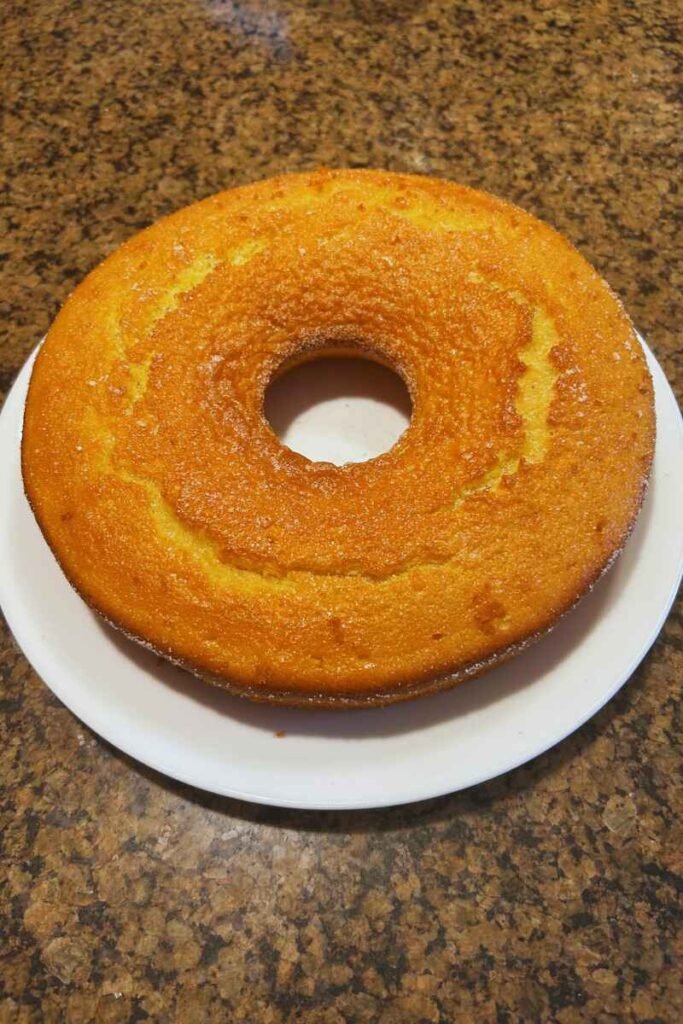
This Italian-style orange cake (torta all’arancia) represents the traditional approach to simple citrus baking. Whole eggs whipped with sugar create structure and lightness, while fresh orange juice, zest, and extract deliver bold citrus flavor throughout.
The cake achieves a tender, moist crumb thanks to pastry flour, oil instead of butter, and the acidic orange juice that gently softens the gluten. It needs no frosting or elaborate decoration since the bright flavor and golden color provide all the appeal on their own 😊.
Understanding Oil-Based Cake Structure
Oil-based cakes differ fundamentally from butter-based cakes in texture and keeping quality. Butter contains approximately 80% fat and 15-18% water, plus milk solids that contribute flavor but can create denser texture. Oil is 100% fat, creating exceptionally moist, tender cakes that remain soft even when refrigerated (unlike butter cakes, which firm up when cold).
The oil coats flour proteins more effectively than solid butter, inhibiting gluten development and producing fine, delicate crumb. This makes oil-based cakes particularly suited to citrus preparations, where you want the bright fruit flavor to dominate rather than rich butter notes. According to food science research, oil-based cakes also maintain moisture longer than butter cakes, making them ideal for advance preparation and storage.
Ingredients
Ingredients for Italian Orange Cake
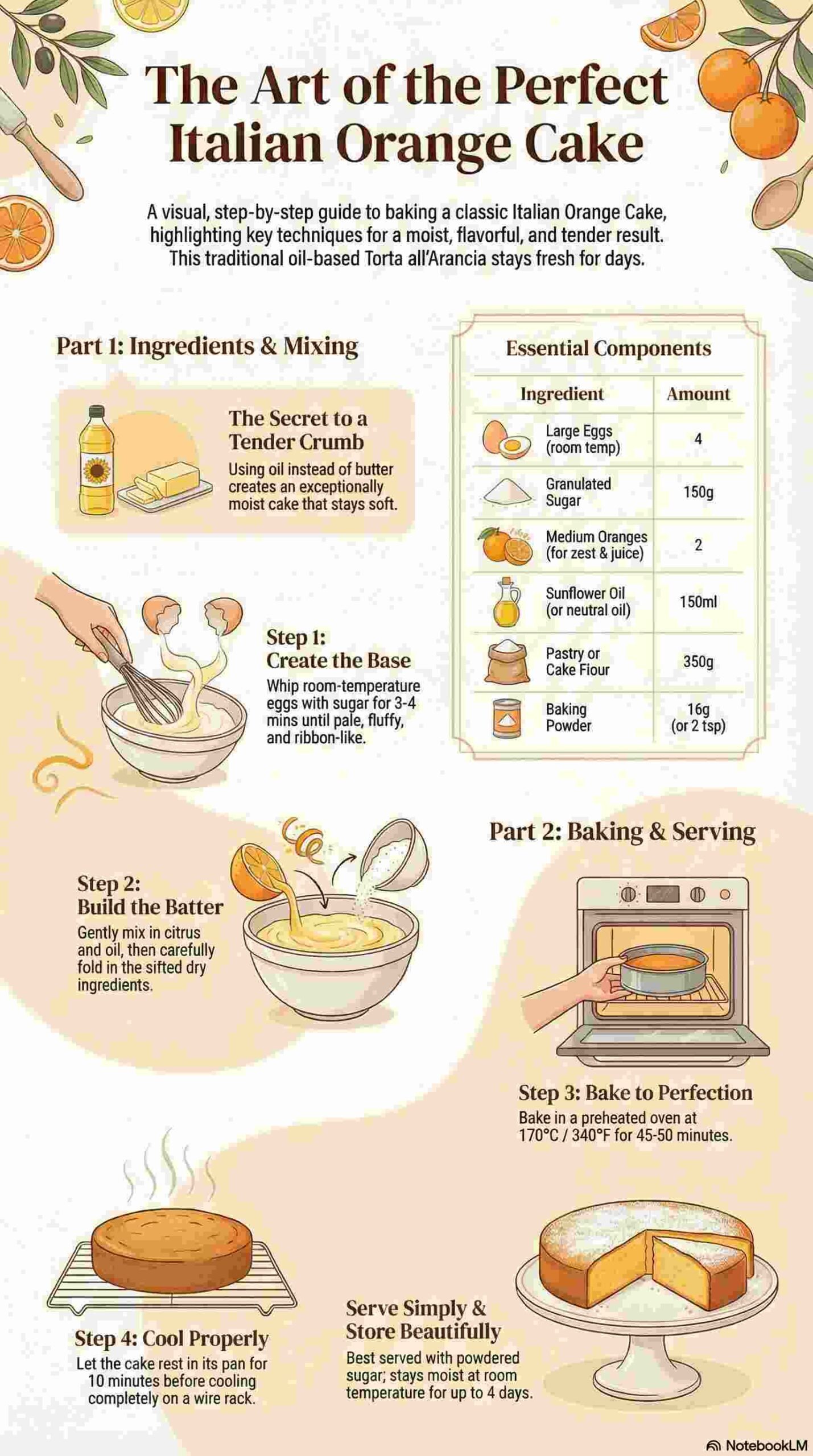
- 4 large eggs, at room temperature
- 150g granulated sugar
- Zest of 2 medium oranges (about 2 tablespoons)
- Juice of 2 medium oranges (about 150ml or ⅔ cup)
- 1 tablespoon orange extract
- 150ml sunflower oil (or other neutral oil)
- 350g pastry flour (or cake flour)
- 16g baking powder (or 2 teaspoons baking powder + ½ teaspoon vanilla powder)
Ingredient Selection and Quality
Egg Temperature Matters
Room temperature eggs are essential for achieving proper volume when whipping with sugar. Cold eggs don’t incorporate air as effectively, and the temperature difference can cause other ingredients (particularly oil) to seize or separate when combined. Remove eggs from refrigeration 1-2 hours before baking, or place them (still in shells) in a bowl of warm water for 10 minutes to bring them to room temperature quickly.
The eggs provide structure, moisture, leavening (through the air incorporated during whipping), and richness. Their emulsifying properties help bind the oil and juice together into a cohesive batter.
Orange Selection and Preparation
Orange variety significantly impacts final flavor. Valencia oranges provide excellent juice content with balanced sweet-tart flavor. Navel oranges offer sweeter, less acidic juice. Blood oranges create dramatic color and complex berry-like notes. For this quantity, you’ll need 2-3 medium oranges depending on their juiciness.
Organic oranges are preferable when zesting, as conventional oranges may have pesticide residues and wax coatings on the peel. Wash oranges thoroughly with warm water before zesting. Zest only the colored outer layer, avoiding the bitter white pith underneath. Use a microplane grater or fine zester for best results—the finer the zest, the more evenly its flavor distributes throughout the batter.
Pastry Flour vs. All-Purpose Flour
Italian pastry flour (farina per dolci) contains lower protein than American all-purpose flour, typically 8-9% compared to 10-12%. This lower protein content produces more tender cakes with finer crumb. Cake flour makes an excellent substitute, as it also has low protein content (approximately 8%). If using all-purpose flour, reduce the quantity by 2 tablespoons per cup to approximate pastry flour’s lighter structure.
Pane degli Angeli Explained
Pane degli Angeli is an Italian leavening product containing baking powder, vanillin (vanilla flavoring), and sometimes other aromatics. One 16g packet equals approximately 2 teaspoons baking powder plus ½ teaspoon vanilla powder or extract. If unavailable, use standard double-acting baking powder and add vanilla to taste. The baking powder creates lift through carbon dioxide production when exposed to moisture and heat.
Oil Selection
Neutral-flavored oils like sunflower, canola, or vegetable oil work best, allowing the orange flavor to dominate. Extra virgin olive oil can be used for a more Mediterranean character, but its assertive flavor will compete with the orange. Choose refined sunflower oil rather than cold-pressed varieties, which may have strong flavors.
Method
Prepare for Baking
1. Preheat the oven: Set the oven to 170°C (340°F) and position a rack in the center. This moderate temperature allows the cake to rise evenly and develop structure without over-browning the exterior before the interior cooks through. Professional bakers often use lower temperatures for delicate cakes, as high heat can create tough exteriors and domed tops.
2. Prepare the pan: Grease a 24cm (9-inch) round cake pan thoroughly with butter or oil, ensuring coverage of the bottom and sides. Dust with flour, tapping out excess, or line the bottom with a parchment paper circle and grease the sides. Proper preparation prevents sticking and ensures clean release after baking. A springform pan works particularly well for this cake, making removal easier.
Mix the Batter
1. Whip eggs and sugar: In a large mixing bowl, combine the 4 room-temperature eggs and 150g sugar. Using an electric mixer on medium-high speed (or a balloon whisk and considerable arm strength), beat for 3-4 minutes until the mixture becomes pale yellow, fluffy, and noticeably increased in volume. The mixture should fall in thick ribbons from the beaters and hold its shape briefly before dissolving back into the mass.
This whipping process serves multiple functions. It dissolves the sugar, incorporates air that will expand during baking (providing lift), and creates a stable emulsion. The eggs’ proteins denature and form networks that trap air bubbles, while lecithin in the yolks acts as an emulsifier. According to the King Arthur Baking Company, proper egg and sugar whipping is crucial for cake structure, as insufficient whipping produces dense cakes while overwhipping can create dry, brittle texture.
2. Add citrus flavors: Add the orange zest (from 2 oranges), orange juice (approximately 150ml), and 1 tablespoon orange extract to the whipped egg mixture. Mix gently with the mixer on low speed or fold by hand with a spatula just until combined. The goal is to incorporate these liquid ingredients without deflating the air you’ve worked to incorporate.
The orange juice adds moisture and flavor but also introduces acid, which affects the cake’s chemistry. Acid strengthens egg proteins and gluten structure while also activating baking powder. The zest contains essential oils that provide intense orange flavor and aroma.
3. Incorporate the oil: With the mixer running on low speed (or while whisking gently by hand), slowly drizzle in the 150ml sunflower oil in a thin, steady stream. This gradual addition allows the oil to emulsify with the egg mixture rather than separating into distinct layers. The batter should appear smooth, glossy, and homogeneous. If oil pools on the surface, increase mixing slightly until fully incorporated.
Oil emulsions in cake batter are less stable than butter-based mixtures, so gentle, thorough mixing is essential. The lecithin in egg yolks facilitates this emulsion, creating stable bonds between the oil and water-based ingredients.
4. Add dry ingredients: Sift together the 350g pastry flour and 16g baking powder (or substitute). Sifting aerates the flour, breaks up lumps, and ensures even distribution of the leavening agent. Add the sifted mixture to the wet ingredients in 2-3 additions, folding gently with a silicone spatula after each addition.
Folding technique is crucial here. Use the spatula to cut down through the center of the batter, sweep along the bottom of the bowl, and fold up and over the top, rotating the bowl slightly with each fold. This motion incorporates flour while minimizing gluten development and preserving the batter’s aeration. Mix only until no dry flour pockets remain—overmixing develops gluten, creating tough, rubbery texture instead of tender crumb.
The batter should be thick but pourable, falling from the spatula in a smooth ribbon. If it seems too thick, you can add 1-2 tablespoons of orange juice or milk to adjust consistency.
Bake the Cake
1. Fill the pan: Pour the batter into the prepared pan, using the spatula to scrape all batter from the bowl. Gently level the top with the spatula or by rotating the pan in a circular motion, allowing gravity to settle the batter evenly. Tap the pan gently on the counter 2-3 times to release any large air bubbles trapped in the batter.
2. Bake until done: Place the pan in the preheated oven and bake for 45-50 minutes. Avoid opening the oven door during the first 30 minutes, as temperature fluctuations can cause the cake to collapse. The cake is done when:
- The top appears golden brown and springs back when pressed lightly in the center
- The edges pull slightly away from the pan sides
- A toothpick or cake tester inserted into the center comes out clean or with just a few moist crumbs (no wet batter)
- The internal temperature reaches approximately 95-98°C (203-208°F)
Baking times vary based on oven accuracy, pan material (dark pans conduct heat faster than light-colored ones), and altitude. Begin checking at 40 minutes, particularly if your oven runs hot.
3. Initial cooling: Remove the cake from the oven and let it cool in the pan for 10 minutes on a wire cooling rack. This brief rest allows the cake’s structure to firm up enough to handle without breaking. Removing the cake immediately while it’s still very soft often causes it to fall apart or stick to the pan.
4. Unmold and complete cooling: After 10 minutes, run a thin knife or offset spatula around the pan’s edge to release any stuck portions. If using a springform pan, release the sides. Invert the cake onto the cooling rack, then flip it right-side up (so the browned top faces upward). Allow the cake to cool completely before slicing, approximately 1-2 hours.
Cooling on a wire rack rather than a solid surface allows air circulation around the entire cake, preventing moisture from condensing on the bottom and creating sogginess.
Technical Notes on Cake Success
Several factors determine whether this cake achieves ideal texture or develops common problems:
Proper egg whipping: Insufficient whipping produces dense, heavy cake because inadequate air incorporation means less leavening. The eggs and sugar should at least double in volume and become noticeably lighter in color. However, overwhipping to stiff peaks (more appropriate for sponge cakes) can create dry, coarse texture.
Gentle folding: Vigorous mixing after adding flour develops gluten networks that create tough, chewy texture instead of tender crumb. Fold just until combined, accepting that a few small flour streaks are preferable to overmixing.
Accurate oven temperature: Too high temperature creates domed tops and dry exteriors with undercooked centers. Too low temperature produces pale, dense cakes that may sink in the center. An oven thermometer helps verify actual temperature, as many home ovens run 10-25°C off from the set temperature.
Proper pan preparation: Even minor sticking can tear the cake when unmolding. Thorough greasing and flouring (or parchment lining) ensures clean release.
Serving Suggestions
This orange cake shines with minimal adornment. Serve it simply:
Dusted with powdered sugar: A light dusting of confectioners’ sugar through a fine-mesh sieve creates elegant presentation without overwhelming the cake’s flavor.
With whipped cream: Lightly sweetened whipped cream, perhaps with a touch of orange zest or vanilla, provides rich contrast to the bright cake.
Glazed: A simple glaze of powdered sugar mixed with orange juice (approximately 200g powdered sugar to 3-4 tablespoons juice) poured over the cooled cake intensifies citrus flavor and adds sweetness.
With fruit: Fresh orange segments, berries, or fruit compote complement the cake’s flavor.
Accompanied by coffee or tea: The cake’s moderate sweetness pairs perfectly with espresso, cappuccino, or Earl Grey tea.
The cake serves 8-10 people as dessert or 12-16 as a tea cake with coffee.
Variations and Adaptations
Lemon variation: Replace oranges with lemons (zest and juice of 3-4 lemons, as they’re smaller and more acidic than oranges). The result is a classic Italian lemon cake with bright, sharp flavor.
Mixed citrus: Combine orange with lemon, grapefruit, or lime for complex citrus flavor. Maintain the same total quantity of juice and zest.
Meyer lemon version: Meyer lemons, with their sweet, floral character, create a more delicate, less acidic cake.
Blood orange: When in season, blood oranges provide dramatic color and unique berry-like flavor notes.
Almond addition: Replace 50g of the flour with 50g finely ground almonds (almond flour) for subtle nutty flavor and denser texture.
Olive oil variation: Replace sunflower oil with mild extra virgin olive oil for Mediterranean character. Use a delicate, fruity oil rather than robust, peppery varieties.
Yogurt addition: Replace 50ml of the orange juice with 50g plain yogurt for tangier flavor and slightly denser, moister texture.
Poppy seed orange: Add 2 tablespoons poppy seeds to the batter for textural interest and subtle nutty flavor.
Chocolate drizzle: Once cooled, drizzle with melted dark chocolate for orange-chocolate combination.
Storage and Make-Ahead
This oil-based cake stores exceptionally well, often improving in texture and flavor after a day as the flavors meld and the crumb softens slightly.
Room temperature storage: Wrap the cooled cake tightly in plastic wrap or store in an airtight container at room temperature for up to 4 days. The oil keeps the cake moist far longer than butter-based cakes, which tend to dry out quickly.
Refrigeration: The cake can be refrigerated for up to 1 week, though this isn’t necessary unless your kitchen is very warm or humid. Unlike butter cakes, which become hard when cold, oil-based cakes remain tender even when chilled.
Freezing: Wrap individual slices or the whole cake tightly in plastic wrap, then aluminum foil. Freeze for up to 3 months. Thaw at room temperature for several hours before serving. The texture remains excellent after freezing.
Make-ahead timing: This cake can be made 1-2 days ahead, making it ideal for entertaining. The flavors develop and intensify slightly during storage.
Cultural Context and Traditions
Orange cakes appear throughout Mediterranean and Middle Eastern baking traditions, wherever citrus grows abundantly. Italian torta all’arancia varies by region—some versions include ground almonds, others use whole boiled oranges processed into purée, while this straightforward version relies on fresh juice and zest for flavor.
The cake represents the Italian philosophy of using readily available seasonal ingredients to create simple but flavorful desserts. It requires no exotic ingredients or complex techniques, yet delivers sophisticated results through proper execution of basic methods.
In Italian homes, such cakes often appear for afternoon merenda (snack time) with coffee, as casual desserts, or as contributions to family gatherings. The cake’s unfrosted simplicity reflects the Italian preference for letting quality ingredients speak for themselves rather than masking them with heavy frostings or elaborate decorations.
This orange cake exemplifies how fundamental baking techniques—properly whipping eggs, gentle folding, controlled baking—transform basic ingredients into something greater than the sum of their parts. The result is a tender, aromatic cake that celebrates citrus in its purest form, requiring nothing more than quality oranges and careful technique to achieve excellence.