
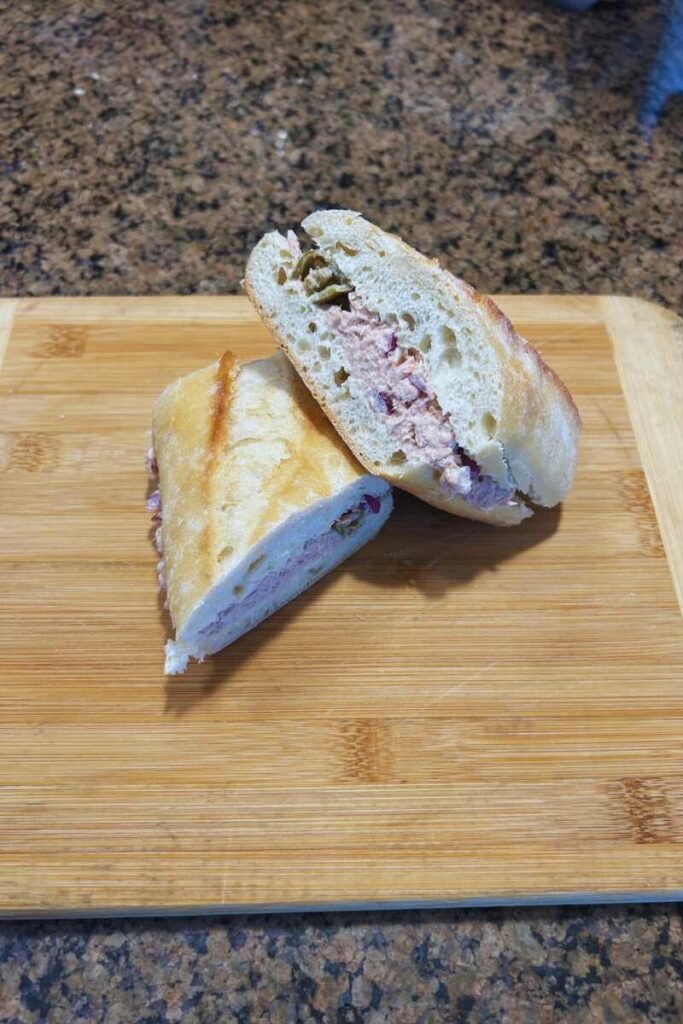
This Italian-inspired tuna ciabatta sandwich elevates the humble canned tuna into something considerably more interesting through strategic additions: sharp red onion, tangy pickled hot peppers, bright lemon juice, and creamy mayonnaise, all piled into crispy-crusted ciabatta bread.
Unlike overly mayonnaise-heavy American tuna salad, this preparation balances richness with acidity and heat, creating a sandwich with distinct, well-defined flavors. The ciabatta’s open, airy crumb and crisp crust provide textural contrast to the creamy filling while being sturdy enough to contain it without becoming soggy. The result is a satisfying lunch that requires minimal cooking but delivers maximum flavor.
Understanding Italian Tuna Sandwich Tradition
Tuna sandwiches appear throughout Italian cuisine in various forms, from simple pane e tonno (bread and tuna with olive oil) to more elaborate preparations with vegetables and condiments. Italian tuna tends toward lighter, oil-based dressings rather than the mayonnaise-heavy American approach, though this recipe incorporates mayo in moderation alongside acidic and spicy elements that keep it balanced.
Canned tuna represents a pantry staple throughout Italy, where high-quality tuna packed in olive oil is widely available and valued. The sandwich often appears as a quick lunch in bars and cafés, served on various breads depending on regional preference. What distinguishes Italian tuna preparations is the emphasis on quality ingredients and balanced flavors rather than masking the tuna under excessive dressing.
Ingredients
Tuna Salad Ciabatta
Ingredients
For the Tuna Salad- 300g canned tuna (approximately two 150g cans or one large 300g can), drained
- ½ medium red onion, finely diced
- 3 to 4 pickled hot peppers (such as pepperoncini or cherry peppers), finely chopped
- Juice of ½ lemon (approximately 1½ to 2 tablespoons)
- 3 to 4 tablespoons mayonnaise
- Salt to taste
- 2 ciabatta rolls (or 1 large ciabatta loaf cut into portions)
- Optional: lettuce, tomato slices, olive oil for brushing
Ingredient Selection and Quality
Tuna Quality and Selection
Canned tuna quality varies dramatically. Italian or Spanish tuna packed in olive oil offers superior flavor and texture compared to water-packed tuna common in American supermarkets. The oil-packed tuna tastes richer, has better texture, and doesn’t require as much mayonnaise to compensate for dryness. Look for:
Solid or chunk tuna rather than flaked, which provides better texture and indicates higher quality.
Tuna in olive oil for authentic Italian character and superior flavor. If using water-packed tuna (which is leaner), drain it thoroughly and consider increasing the mayonnaise slightly.
Sustainable sourcing matters for both environmental and quality reasons. Look for pole-and-line caught tuna or brands certified by the Marine Stewardship Council.
Tuna varieties: Yellowfin (ahi), skipjack, or albacore all work well. Albacore (white tuna) has milder flavor and firmer texture, while yellowfin and skipjack offer more pronounced tuna character.
Drain the tuna thoroughly before using. If using oil-packed tuna, you can reserve a small amount of the packing oil to add back for moisture and flavor if the mixture seems dry.
Red Onion Preparation
Red onions provide sharp, slightly sweet flavor with less aggressive bite than yellow or white onions. Their purple color also adds visual appeal. For raw onion in sandwiches, cutting it very fine is essential, as large chunks can be overpowering and create textural issues.
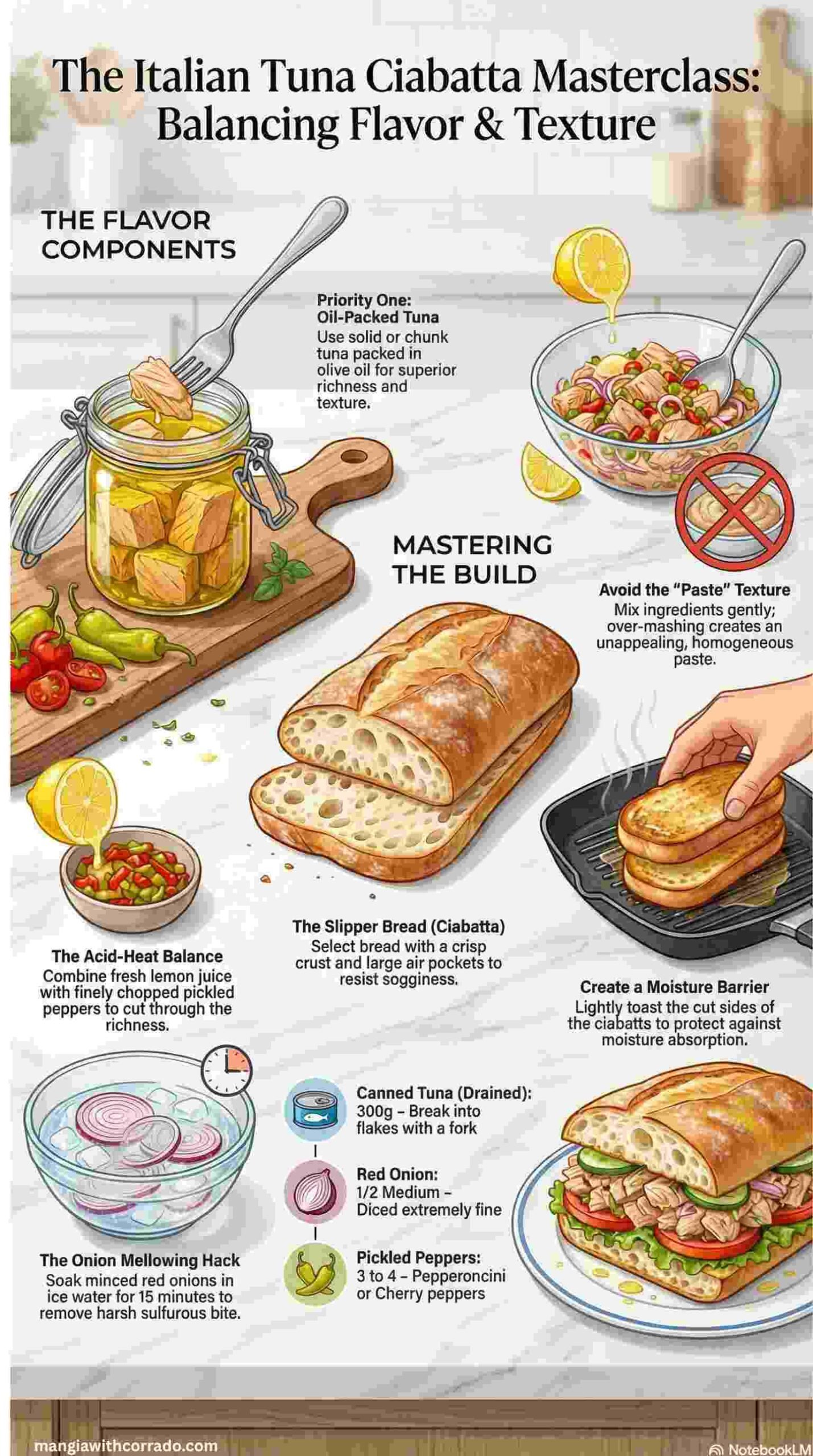
If you find raw red onion too sharp, soak the diced onion in ice water for 10 to 15 minutes before draining and adding to the tuna. This removes some of the harsh sulfurous compounds while maintaining crunch and color. Pat the onion dry thoroughly after soaking to avoid adding excess water to the tuna mixture.
Pickled Hot Pepper Selection
Pickled hot peppers contribute both heat and tangy, vinegary brightness that cuts through the mayonnaise richness. Several varieties work well:
Pepperoncini (mild to medium heat) are classic Italian pickled peppers with gentle spice and pronounced tanginess.
Cherry peppers (medium to hot) offer more substantial heat and slightly sweeter character.
Banana peppers (mild) provide tang without significant heat for those who prefer milder preparations.
Jalapeños (medium to hot) work if Italian peppers are unavailable, though they create slightly different flavor profile.
Chop the peppers finely so their heat and acidity distribute evenly throughout the tuna mixture. Remove seeds if you prefer less heat. The pickling brine clinging to the peppers adds additional tang, so there’s no need to rinse them unless they seem excessively salty.
Mayonnaise Considerations
Use quality mayonnaise made with real eggs and oil. Brands like Hellmann’s/Best Foods or Duke’s offer superior flavor to generic or low-fat varieties. Japanese mayonnaise (Kewpie) creates interesting variation with its richer, slightly sweeter, more umami-forward character.
The quantity of mayonnaise is a matter of personal preference. Start with 3 tablespoons and add more if needed to achieve desired creaminess. The mixture should be cohesive but not swimming in mayonnaise. According to the USDA Food Safety and Inspection Service, mayonnaise-based salads should be kept refrigerated and consumed within 3 to 5 days for food safety.
Ciabatta Bread
Ciabatta, meaning “slipper” in Italian due to its shape, offers ideal characteristics for this sandwich: crisp, flour-dusted crust and open, irregular crumb with large air pockets. The sturdy crust prevents the sandwich from becoming soggy, while the airy interior provides substantial texture without being dense or doughy.
Fresh ciabatta from a bakery provides superior results to pre-packaged supermarket versions. The bread should feel relatively light for its size (indicating proper fermentation and air structure) with a crisp crust that yields to firm pressure. Day-old ciabatta works acceptably, particularly if you toast or warm it before assembly.
Lemon Juice
Fresh lemon juice is essential. Bottled lemon juice has inferior flavor and creates flat, one-dimensional acidity. The lemon brightens all the flavors while providing acidic balance to the rich mayonnaise and tuna.
Method
Prepare the Tuna Salad
1. Drain the tuna: Open the canned tuna and drain thoroughly. If using oil-packed tuna, reserve 1 to 2 tablespoons of the oil in case the mixture needs additional moisture. Transfer the drained tuna to a medium mixing bowl.
2. Break up the tuna: Using a fork, break the tuna into smaller flakes. The texture is personal preference: some prefer larger chunks for more distinct tuna character, while others like it broken into fine flakes for smoother, more cohesive salad. Avoid over-mashing, which can create pasty texture.
3. Prepare the vegetables: Dice the half red onion as finely as possible. Fine dice ensures the onion flavor distributes evenly without creating large, overpowering pieces. If soaking the onion to mellow its sharpness, do so now for 10 to 15 minutes in ice water, then drain and pat completely dry.
Finely chop 3 to 4 pickled hot peppers, removing stems and seeds if you prefer milder heat. The peppers should be chopped into small pieces comparable in size to the diced onion.
4. Combine ingredients: Add the finely diced red onion and chopped pickled peppers to the bowl with the tuna. Squeeze the juice from half a lemon over the mixture, capturing any seeds with your other hand or using a small strainer. Add a pinch of salt (start conservatively, as the tuna and pickled peppers already contribute salt). Add 3 tablespoons of mayonnaise.
5. Mix thoroughly: Using a fork or spoon, mix everything together until well combined and the mixture appears cohesive. The tuna should be evenly coated with mayonnaise, and the onion and peppers should distribute throughout. Taste and adjust seasoning, adding more salt if needed, additional lemon juice for brightness, or more mayonnaise for creaminess. The mixture should taste balanced: rich from the tuna and mayo, sharp from the onion, tangy and spicy from the peppers, and bright from the lemon.
The tuna salad can be prepared several hours ahead and refrigerated in a covered container until ready to assemble sandwiches. In fact, the flavors improve slightly after 30 minutes to 1 hour of rest as they meld together.
Assemble the Sandwiches
1. Prepare the bread: Slice the ciabatta rolls or loaf horizontally to create top and bottom halves. If the bread seems dense or you prefer warmer sandwiches, you can toast the cut sides lightly or warm the whole loaf in a 180°C (350°F) oven for 5 minutes. Toasting creates additional textural contrast and helps prevent the bread from absorbing too much moisture from the filling.
Some people prefer to hollow out some of the ciabatta’s interior crumb to create more room for filling, though this is optional and a matter of personal preference.
2. Optional enhancements: If desired, brush the cut sides of the ciabatta lightly with olive oil for additional richness and moisture. This is particularly good if using day-old bread.
3. Fill the sandwiches: Divide the tuna mixture evenly between the ciabatta bottoms, spreading it relatively evenly to the edges. The amount of filling per sandwich is generous, creating a substantial, satisfying bite.
4. Optional additions: At this point, you can add lettuce leaves (for crunch), tomato slices (for freshness and acidity), or additional pickled vegetables if desired. These are not traditional but can enhance the sandwich if you prefer more vegetables.
5. Close and serve: Place the top halves of the ciabatta over the filling and press down gently. The sandwich is now ready to eat. For easier handling, you can cut large sandwiches in half diagonally or wrap them tightly in parchment paper or foil, which helps hold everything together during eating.
Technical Notes on Success
Several factors determine whether this sandwich achieves proper balance and texture:
Drain the tuna thoroughly: Excess liquid in the tuna creates watery, unappetizing filling and can make the bread soggy.
Fine dice for onions and peppers: Large chunks create uneven distribution and can be overpowering when you bite into them. Small, uniform pieces integrate better.
Balance the mayonnaise: Too little leaves the mixture dry and crumbly, while too much creates heavy, cloying filling. Start conservatively and add more as needed.
Fresh lemon juice matters: The brightness from fresh lemon is essential to cutting through the richness. Bottled juice cannot replicate this.
Quality bread is essential: Stale, dense, or overly soft bread compromises the entire sandwich. Proper ciabatta with crisp crust and open crumb makes a significant difference.
Don’t overmix: Gentle mixing preserves some texture in the tuna. Aggressive mixing creates pasty, homogeneous filling.
Serving Suggestions
This recipe makes enough filling for 2 large ciabatta rolls or 3 to 4 smaller portions. The sandwich works for various occasions:
Casual lunch: Serve with potato chips, pickle spears, or a simple green salad.
Picnic fare: The sandwich travels well if wrapped tightly and kept cool. Pack the filling and bread separately and assemble on-site for maximum freshness.
Quick dinner: Pair with vegetable soup for a satisfying light meal.
Crowd-pleasing option: Double or triple the recipe for gatherings, serving the tuna salad on sliced baguette or small rolls as appetizers.
Beverage pairings: Crisp white wine, Italian beer, sparkling water with lemon, or iced tea all complement the sandwich well.
Variations and Adaptations
This basic formula accommodates numerous variations:
Classic Italian style: Omit the mayonnaise and dress the tuna with good olive oil, lemon juice, salt, and pepper for a lighter, more traditional preparation.
Mediterranean variation: Add chopped Kalamata olives, capers, fresh basil, and sun-dried tomatoes.
Sicilian style: Include diced celery for crunch and a small amount of raisins and pine nuts for sweet-savory complexity.
Anchovy enhancement: Add 2 to 3 finely minced anchovy fillets for umami depth (adjust salt accordingly).
Herb additions: Fresh parsley, basil, or oregano contribute aromatic complexity.
Caper addition: Chopped capers provide additional briny, tangy character similar to the pickled peppers.
Different peppers: Roasted red peppers (not pickled) create sweeter, less acidic variation.
Avocado addition: Mashed or sliced avocado adds creaminess and allows reduction in mayonnaise.
Hard-boiled egg: Chopped hard-boiled egg, traditional in some tuna salads, creates richer, more substantial filling.
Different breads: Focaccia, baguette, sourdough, or whole wheat bread all work well if ciabatta is unavailable.
Storage and Food Safety
Tuna salad requires careful handling for food safety:
Refrigeration: Prepare the tuna salad and store it in an airtight container in the refrigerator for up to 3 days. The mayonnaise-based mixture must be kept cold to prevent bacterial growth.
Assembly timing: For best results, assemble sandwiches just before serving. Pre-assembled sandwiches can become soggy as the bread absorbs moisture from the filling. If you must assemble ahead, wrap tightly and refrigerate for no more than 2 to 3 hours.
Transport considerations: If packing for lunch or picnics, use an insulated lunch bag with ice packs to keep the sandwich cold until eating.
Leftover bread: Unused ciabatta keeps at room temperature wrapped in paper (not plastic, which makes the crust soft) for 1 day, or freeze for up to 1 month.
Cultural Context and Sandwich Philosophy
Italian sandwich culture emphasizes quality ingredients simply prepared rather than elaborate constructions with excessive fillings. The focus remains on balance: each component should be discernible and contribute to the whole without any single element dominating. This tuna sandwich exemplifies that philosophy through its restrained use of mayonnaise, strategic acidic and spicy elements, and quality bread that provides structural and textural foundation.
The sandwich also represents practical, everyday Italian cooking: using pantry staples (canned tuna) elevated through careful technique and thoughtful additions. It’s food that respects both tradition and convenience, creating something satisfying from readily available ingredients without requiring extensive cooking or specialized skills.
This tuna ciabatta sandwich demonstrates how simple preparations can achieve sophistication through attention to quality ingredients, proper balance, and technique. The interplay of rich tuna, sharp onion, tangy pickled peppers, bright lemon, and creamy mayonnaise, all contained in crispy-crusted ciabatta, creates a sandwich that satisfies on multiple levels while remaining fundamentally straightforward. It’s cooking that honors the ingredients while respecting the cook’s time, producing results that taste considerably more complex than the minimal effort required.