
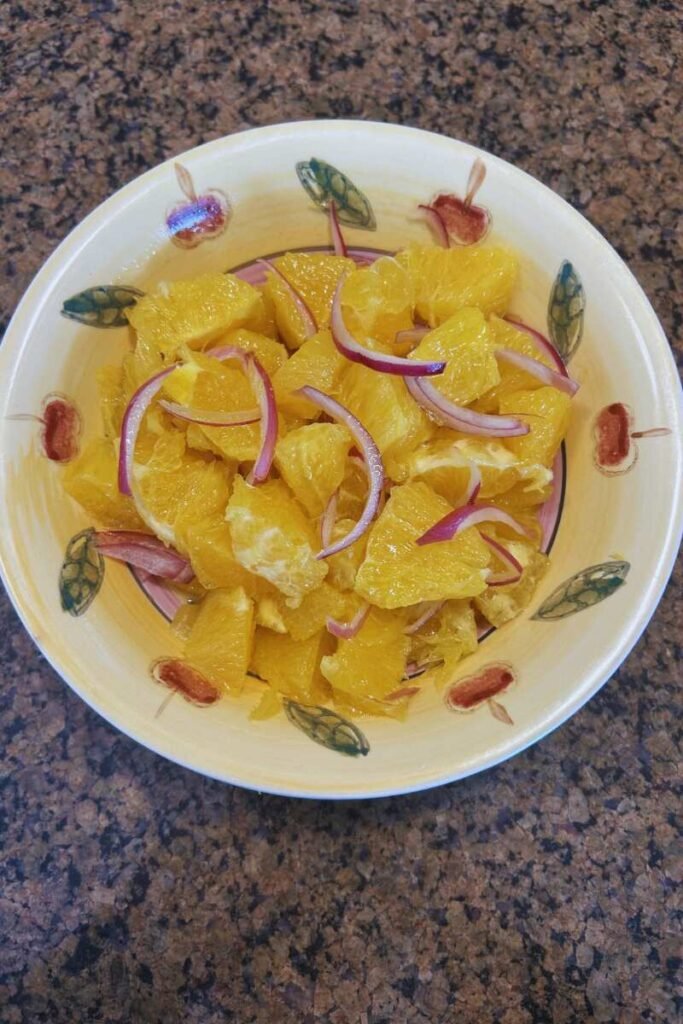
This deceptively simple Traditional Sicilian Orange salad showcases the island’s famous blood oranges paired with sharp red onion, fruity olive oil, and sea salt. The dish represents Sicilian cooking at its most elemental: exceptional ingredients combined with minimal intervention to create something far greater than the sum of its parts. Sweet-tart oranges contrast with pungent onion, while the olive oil enriches and unifies the flavors.
Crusty bread becomes essential rather than optional, serving to capture the precious mixture of citrus juice and olive oil that pools at the bottom of the plate. Despite requiring no cooking and only four ingredients, this salad delivers complex flavors and textures that speak to Sicily’s agricultural bounty and culinary philosophy.
Understanding Sicilian Orange Culture
Sicily produces some of the world’s finest citrus, particularly the blood oranges (arance rosse) that thrive in the volcanic soil surrounding Mount Etna. The three main varieties of Sicilian blood oranges are Tarocco, Moro, and Sanguinello, each offering different levels of red pigmentation, sweetness, and acidity. These oranges have been cultivated in Sicily since the Arab period, becoming integral to the island’s cuisine, economy, and cultural identity.
Orange salad appears throughout Sicilian tables, particularly in winter when blood oranges reach peak season (December through April). The salad serves various roles: as an antipasto to stimulate the appetite, as a palate cleanser between rich courses, or as a light lunch with bread and cheese. In traditional Sicilian homes, the salad might include additional elements like fennel, olives, or anchovies, though the purest version remains simply oranges, onion, oil, and salt.
Ingredients
Sicilian Orange Salad
Ingredients
- 3 large oranges (blood oranges preferred, or navel/Valencia oranges)
- ¼ medium red onion, sliced paper-thin
- 3 to 4 tablespoons high-quality extra virgin olive oil
- Flaky sea salt or coarse salt to taste
- Crusty Italian bread (ciabatta, pane casareccio, or similar), for serving
Ingredient Selection and Quality
Orange Selection
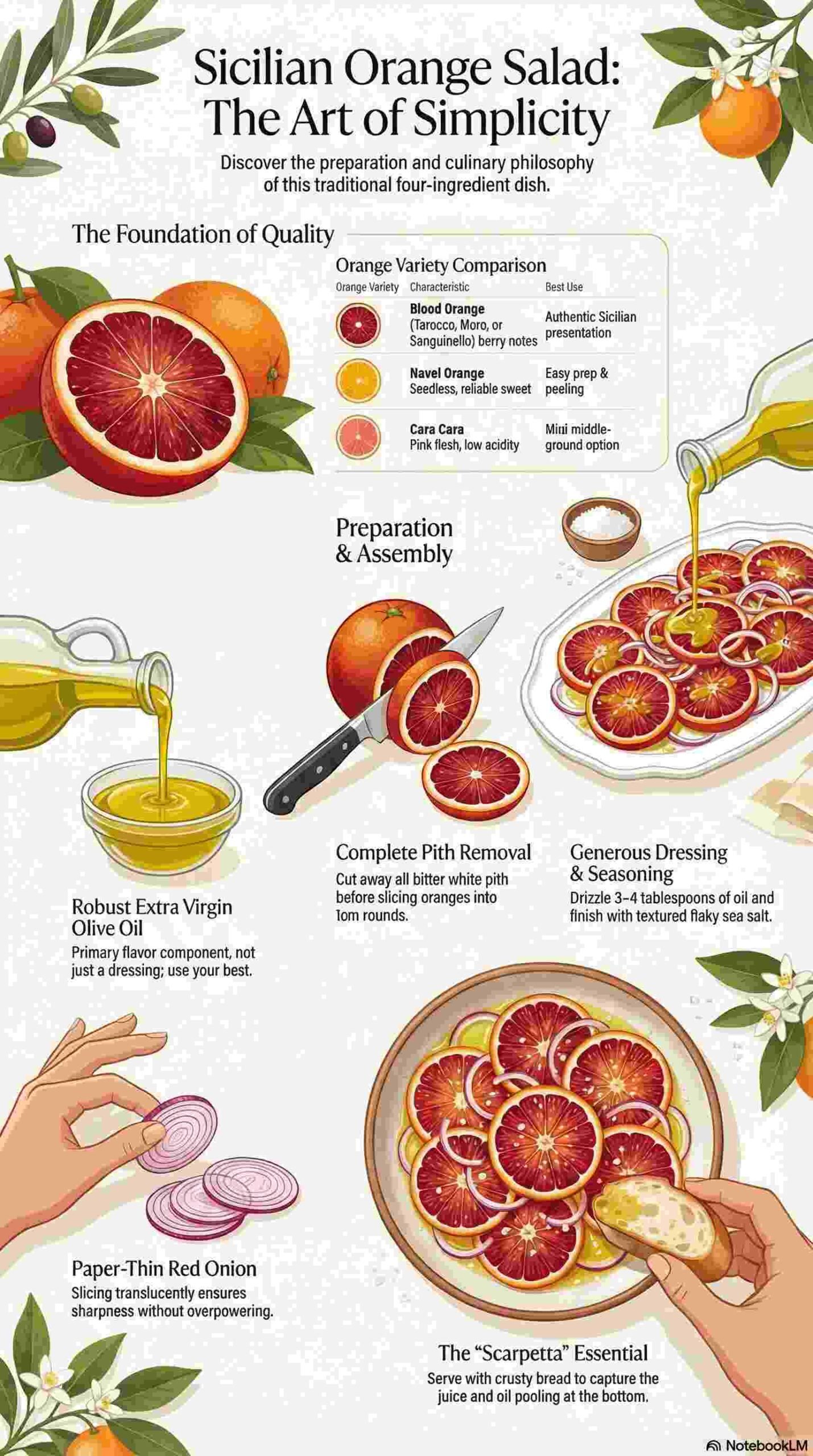
Blood oranges create the most authentic and visually striking version of this salad. Their deep red flesh, ranging from ruby streaks to nearly burgundy, provides dramatic color against the purple onion. Blood oranges taste sweeter and less acidic than standard oranges, with subtle berry-like notes. If blood oranges are unavailable, use the best quality sweet oranges you can find.
Navel oranges work well as substitutes, offering reliable sweetness and easy peeling. Their seedless nature simplifies preparation.
Valencia oranges provide excellent juice content and balanced sweet-tart flavor.
Cara Cara oranges (pink navel oranges) offer a middle ground between standard and blood oranges, with pink flesh and sweet, low-acid flavor.
Choose oranges that feel heavy for their size, indicating high juice content. The skin should be firm and relatively smooth. Avoid oranges with soft spots, excessive greening, or very thick, puffy skin. According to the USDA Agricultural Research Service, citrus fruits provide significant vitamin C and other beneficial compounds that contribute to both flavor and nutrition.
Red Onion Preparation
Red onions contribute essential sharpness and slight sweetness that contrasts beautifully with the oranges’ sugar and acidity. The onion must be sliced extremely thin, almost translucent. Paper-thin slicing ensures the onion’s pungency remains present but not overwhelming, and allows it to soften slightly in the orange juice and olive oil.
If you find raw red onion too sharp, soak the sliced onion in ice water for 10 to 15 minutes before using. This removes some harsh sulfurous compounds while maintaining crunch and color. Drain thoroughly and pat dry before adding to the salad. However, many Sicilians prefer the full, unadulterated onion bite as an essential component of the salad’s character.
Olive Oil Quality
This salad demands the finest extra virgin olive oil you possess. The oil serves not merely as dressing but as a primary flavor component. Sicilian olive oil would be most authentic, offering fruity, sometimes peppery character with notes of fresh grass, artichoke, or tomato leaf. However, any high-quality, fresh extra virgin olive oil works beautifully.
Look for oil with a harvest date within the past year, stored in dark glass bottles to protect from light degradation. The oil should taste vibrant and complex, with balanced fruitiness, bitterness, and pepperiness. Avoid bland, characterless oils or those with rancid, greasy, or flat flavors.
For this preparation, choose a robust, flavorful oil rather than delicate, mild varieties. The oil needs sufficient character to stand up to the oranges’ sweetness and the onion’s sharpness.
Salt Selection
Flaky sea salt (such as Maldon) or coarse Sicilian sea salt provides the best results. The larger salt crystals create textural interest and deliver bursts of salinity that contrast with the sweet oranges. Fine table salt works functionally but doesn’t provide the same textural dimension or clean, mineral flavor.
Bread Requirements
Crusty Italian or Sicilian bread is essential to this dish’s full enjoyment. The bread serves to capture the mixture of orange juice and olive oil that accumulates at the plate’s bottom, transforming what might otherwise go to waste into the most delicious part of the meal. Choose bread with substantial crust and chewy, open crumb: ciabatta, pane casareccio, or rustic Italian sourdough all work excellently. The bread should be relatively fresh, with crisp crust that provides resistance when torn.
Method
Prepare the Oranges
1. Peel the oranges: Using a sharp knife, cut a thin slice from both the top and bottom of each orange to create stable, flat surfaces. Stand the orange upright on the cutting board. Following the orange’s curve, carefully cut downward in strips to remove both the peel and the white pith underneath. Rotate the orange as you work, removing all the peel and pith while preserving as much flesh as possible.
The goal is to expose the orange flesh completely while removing all bitter white pith. Take your time with this step, as clean, beautifully peeled oranges create much better presentation and eating experience than roughly peeled ones with remaining pith.
2. Slice the oranges: Lay each peeled orange on its side and cut crosswise into rounds approximately 6mm to 1cm (¼ to ½ inch) thick. The rounds should be relatively uniform in thickness for even presentation. As you slice, remove any visible seeds with the knife tip or your fingers.
Some cooks prefer to slice the oranges over a bowl to capture any juice that escapes during cutting, then pour this juice over the finished salad. This ensures no precious citrus flavor goes to waste.
Prepare the Onion
1. Slice very thin: Cut the quarter red onion into paper-thin slices. A sharp knife is essential; a dull knife crushes the onion rather than slicing cleanly, releasing more harsh compounds and creating ragged, unattractive pieces. Alternatively, use a mandoline set to the thinnest setting for perfectly uniform slices.
The slices should be so thin they’re nearly translucent. This thinness is crucial, as thick onion slices would overpower the delicate oranges and create unpleasant textural contrast.
2. Optional soaking: If you prefer milder onion flavor, submerge the sliced onion in a bowl of ice water for 10 to 15 minutes. This removes some of the sharp sulfurous compounds. Drain thoroughly and pat completely dry with paper towels before using. The onion will retain its crunch and color but taste noticeably milder.
Assemble and Dress
1. Arrange the oranges: Select a wide, shallow serving plate or platter. Arrange the orange slices in a single layer, slightly overlapping them in a decorative pattern if desired. You can arrange them in concentric circles, in neat rows, or scattered casually, depending on your aesthetic preference. If blood oranges are used, their deep red color creates dramatic visual impact that benefits from thoughtful arrangement.
2. Add the onion: Scatter the paper-thin onion slices over the arranged oranges, distributing them relatively evenly so each portion will receive some onion. The purple-red onion against the orange (or deep red blood orange) creates beautiful color contrast.
3. Dress with oil: Drizzle the extra virgin olive oil generously over the entire salad. Don’t be shy; this salad requires liberal oil application. The oil should pool slightly at the plate’s bottom and coat the oranges visibly. Use approximately 3 to 4 tablespoons, though the exact amount depends on personal preference and the number of oranges. The Sicilian approach tends toward generosity with olive oil.
4. Season with salt: Sprinkle flaky sea salt or coarse salt over the salad. Start conservatively with approximately ½ teaspoon, then add more to taste. The salt should be visible on the surface, providing both seasoning and textural interest.
5. Rest briefly (optional): Some cooks let the dressed salad rest for 5 to 10 minutes before serving, allowing the salt to dissolve slightly and the flavors to meld. During this time, the oranges release additional juice that mingles with the olive oil, creating more of the delicious liquid that makes the bread essential.
Serve
Serve the salad immediately or within 30 minutes of dressing. Provide the crusty bread alongside or in a basket, encouraging diners to use it to soak up the orange juice and olive oil mixture that collects at the bottom of the plate. This mixture represents the salad’s soul and should not be wasted.
Technical Notes on Success
Despite extreme simplicity, several factors determine whether this salad achieves its full potential:
Orange quality is paramount: Mediocre oranges cannot be transformed into an excellent salad. Use the best, sweetest, juiciest oranges available.
Complete pith removal: White pith tastes bitter and creates unpleasant texture. Take time to remove it thoroughly during peeling.
Paper-thin onion slices: Thick onion is overpowering and creates textural discord. Invest in a sharp knife or mandoline for proper results.
Excellent olive oil is non-negotiable: This dish showcases olive oil in its purest form. Inferior oil creates inferior salad. Use your best bottle.
Generous oil application: Timid oiling produces dry salad. The oil should be visible and abundant.
Proper salt: Flaky or coarse salt provides textural dimension and clean flavor that fine salt cannot match.
Fresh bread matters: Stale or poor-quality bread fails at its essential function of capturing the juice and oil.
Simplicity requires perfection: With so few components, each must be flawless. There’s nowhere to hide inferior ingredients or sloppy technique.
Serving Suggestions and Meal Context
This salad serves 4 people as an appetizer or side dish, or 2 people as a light lunch with bread and cheese. It fits various meal occasions:
As antipasto: Serve before a rich meal to stimulate the appetite and cleanse the palate.
Light lunch: Pair with good bread, sheep’s milk cheese (pecorino or ricotta salata), and cured olives for a simple, satisfying meal.
Winter refreshment: The salad’s brightness provides welcome contrast to heavy winter dishes.
Palate cleanser: Serve between courses in a multi-course meal to refresh the palate.
Accompaniment: Serve alongside grilled fish, roasted vegetables, or braised meats.
Wine pairings: Crisp Sicilian white wines like Grillo, Catarratto, or Inzolia complement the salad beautifully. Light, fruity rosés also work well.
Traditional Variations
While the basic version uses only oranges, onion, oil, and salt, traditional Sicilian variations include:
With fennel: Add thinly sliced raw fennel bulb for anise notes and crunchy texture. This creates “insalata di arance e finocchio,” perhaps even more common than the onion version.
With olives: Scatter black or green olives (preferably Sicilian varieties) over the salad for briny, savory contrast.
With mint: Fresh mint leaves, torn or left whole, add aromatic freshness. This is particularly common in eastern Sicily.
With anchovies: A few anchovy fillets draped over the oranges add umami depth and salty richness.
With capers: A small amount of salt-packed capers (rinsed) contribute sharp, briny flavor.
With chili flakes: A light sprinkle of red pepper flakes adds gentle heat.
Mixed citrus: Combine oranges with grapefruit or other citrus for varied flavors and colors.
With cheese: Serve with shaved ricotta salata or aged pecorino for a more substantial dish.
Storage and Timing
This salad is best assembled just before serving, though components can be prepared ahead:
Advance preparation: Peel and slice the oranges up to 4 hours ahead. Store covered in the refrigerator. Slice the onion ahead if soaking it; otherwise, slice just before assembly.
Dressing timing: Dress the salad no more than 30 minutes before serving. Extended sitting causes the oranges to become too soft and release excessive liquid.
Leftovers: The salad doesn’t store well once dressed. The oranges become mushy and the onion loses its crispness. However, leftover dressed salad can be repurposed: chop it finely and use as a relish for grilled fish or chicken, or blend it into a vinaigrette.
Seasonal considerations: This salad tastes best during peak citrus season (winter and early spring) when oranges are sweetest and most flavorful.
Cultural Context and Sicilian Food Philosophy
This orange salad embodies core principles of Sicilian cuisine: showcasing exceptional local ingredients through minimal intervention, celebrating seasonal abundance, and understanding that simplicity, when executed perfectly, surpasses complexity. The salad reflects Sicily’s agricultural wealth and the island’s position at the crossroads of Mediterranean cultures, where Arab, Greek, Norman, and Spanish influences merged to create distinctive culinary traditions.
The dish also demonstrates the Sicilian concept of “cucina povera” (peasant cooking), where limited ingredients are transformed through care and quality into something exceptional. Oranges, which grow abundantly throughout Sicily, combined with pantry staples (olive oil, onion, salt) and stale bread create a complete, satisfying dish that nourishes both body and spirit.
In Sicilian food culture, this salad represents more than sustenance. It connects diners to place (the volcanic soils that grow exceptional oranges), to season (winter citrus harvest), and to tradition (generations of Sicilians who have prepared and enjoyed this exact combination). It’s food that tells a story, honors heritage, and creates community around the table.
This traditional Sicilian orange salad demonstrates that exceptional cooking need not be complicated. When ingredients of supreme quality meet proper technique and cultural understanding, the simplest preparations can achieve profound satisfaction. The interplay of sweet oranges, sharp onion, fruity olive oil, and crystalline salt, all captured with crusty bread, creates an experience that transcends its humble components. It’s cooking that celebrates rather than transforms ingredients, honoring them in their most essential, delicious forms.