
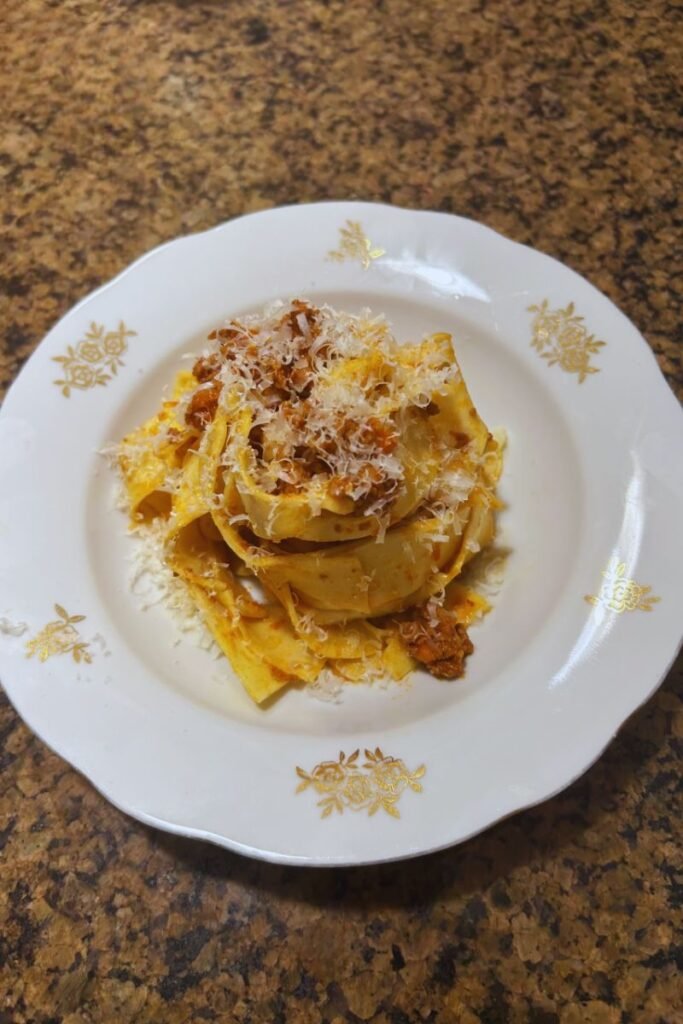
Let me tell you something about a real authentic Pasta Bolognese recipe. It has nothing to do with jarred spaghetti sauce you grew up with. Made from scratch, this slow-simmered meat sauce combines ground pork and veal with aromatic vegetables, wine, and a Parmesan rind for depth and richness. The first time I made it, the whole house filled with that incredible tomatoey, meaty aroma, and I realized I had been eating an impostor my whole life.
This traditional Italian sauce is all about patience and technique. Simple ingredients like ground meat, vegetables, and wine meld together over low heat into a rich, complex sauce that clings perfectly to pasta. No shortcuts, no fancy cuts, just a sauce that transforms everyday ingredients into something spectacular 😄.
Ingredients
Here’s what you need for this homemade Bolognese sauce. The ingredient list is straightforward, though you’ll need to commit about an hour to simmering. This makes enough sauce for 4-6 generous servings.
Ingredients for Authentic Bolognese Recipe
- 1 celery stalk, finely chopped
- 1 carrot, finely chopped
- 1 onion, finely chopped
- 1 clove garlic, minced
- 250g ground pork
- 250g ground veal
- 15g extra virgin olive oil
- 1 tbsp tomato paste
- 250ml tomato sauce
- 250ml beef stock
- 100ml red wine
- 3 bay leaves
- 1 Parmesan cheese rind (optional but highly recommended)
- Salt and pepper, to taste
For serving:
- 450g pappardelle pasta (wide ribbon pasta is traditional)
- Grated Parmesan cheese
- Extra virgin olive oil for drizzling
The combination of ground pork and ground veal is traditional and essential. The pork adds sweetness and fat, while veal provides depth and that meaty backbone. Don’t skip one or the other, you need both for authentic flavor. Most grocery stores sell them side by side in the meat section.
Substitution options: Don’t have pappardelle? Tagliatelle, fettuccine, or even rigatoni work well. Just avoid thin pasta like spaghetti or angel hair, Bolognese needs pasta substantial enough to hold the chunky sauce. No red wine? White wine works in a pinch, though red is traditional and adds deeper color. The Parmesan rind might seem weird, but save your rinds in the freezer specifically for recipes like this. It adds incredible umami depth.
The soffritto (celery, carrot, onion) is the aromatic foundation of Italian cooking. These three vegetables finely chopped and slowly cooked create the flavor base for countless Italian dishes. This is authentic Italian cooking where proper technique builds complex flavor from simple ingredients.
Step-by-Step Instructions
Let’s make some proper ragù Bolognese. This isn’t a quick weeknight dinner, it’s a weekend project that rewards patience with spectacular results. Pour yourself a glass of that red wine you’re using in the sauce, settle in, and embrace the slow-cooking process.
Step 1: Prep the Vegetables
Finely chop the celery, carrot, and onion. This is your soffritto, and the key word here is “finely.” You want small, even pieces that will melt into the sauce rather than chunky vegetables you’ll bite into later. Take your time with the knife work, it matters.
The traditional ratio for soffritto is roughly equal parts of each vegetable, creating balanced flavor where no single vegetable dominates. This foundation technique appears in countless Italian dishes because it works.
Step 2: Sauté the Aromatics
Heat the olive oil in a heavy-bottomed professional pan (ad) I swear by this specific one because the heat distribution is so even that your soffritto softens perfectly without ever scorching or sticking to the bottom!. Add the celery, carrot, and onion. Cook for 5-7 minutes until everything softens and the onion becomes translucent. You want them tender and fragrant, not browned.
Add the minced garlic and cook for another 30 seconds. If you prefer to press your own, I only use this heavy-duty professional garlic press (ad). I got so tired of the cheap handles snapping on me—this one is practically indestructible and has the power to crush the cloves without the struggle!. Garlic burns easily, so adding it toward the end prevents bitterness. When you can smell the garlic releasing its aroma, you’re ready for the next step.
Step 3: Brown the Meat
Add the ground pork and ground veal to the pan. Season generously with salt and pepper. Cook for 8-10 minutes, breaking up the meat with a wooden spoon until it’s browned and no longer pink.
You want actual browning here, not just gray cooked meat. That browning (the Maillard reaction for you science nerds) creates depth and complexity. Don’t rush this step. Let the meat develop color and those fond (browned bits) on the bottom of the pan, they’re pure flavor that we’ll capture in the next step. Ground veal
Step 4: Add Tomato Paste and Wine
Stir in the tomato paste and cook for 1 minute. This brief cooking caramelizes the tomato paste slightly, reducing acidity and concentrating its flavor. It’s a small step that makes a noticeable difference.
Pour in the red wine and let it simmer for 2-3 minutes, scraping up any browned bits from the bottom of the pan with your wooden spoon. This is deglazing, and it captures all those flavorful fond bits back into the sauce. You’ll see the liquid reduce and the alcohol will cook off, leaving behind wine’s fruity, tannic complexity.
Step 5: Add Liquids, Herbs, and Cheese Rind
Stir in the tomato sauce, beef stock, and bay leaves. Now here’s the secret weapon: add the Parmesan cheese rind directly into the sauce. Just drop it right in. It will slowly melt and infuse umami, saltiness, and depth as the sauce simmers.
Bring everything to a gentle simmer. You want lazy bubbles barely breaking the surface, not a rolling boil. This is traditional ragù technique, low and slow creates the magic. FYI, this is where patience becomes your main ingredient.
Step 6: Simmer the Sauce
Reduce the heat to low and cook uncovered for 45-60 minutes, stirring occasionally. The sauce should thicken considerably and the flavors should deepen and meld together. If it gets too thick, add a splash of stock or water to maintain a sauce-like consistency.
This long simmer is non-negotiable. Authentic Bolognese needs time for the meat to become tender, the vegetables to completely break down, and all those flavors to integrate. You’ll notice the sauce darkening, thickening, and smelling increasingly incredible as time passes. The extended cooking time allows proteins to break down and fat to emulsify into the sauce, creating that signature silky texture.
Before serving, remove the cheese rind and bay leaves. The rind will have softened considerably but shouldn’t be eaten. Bay leaves never soften enough to eat safely, so fish them out.
Step 7: Cook the Pappardelle
In the last 10 minutes of simmering, bring a large 8-quart professional stockpot (ad)(I love using this specific one because the depth is perfect for keeping long pasta like pappardelle from sticking, and it’s a total workhorse in my kitchen) to a rolling boil. Add 450g of pappardelle and cook until al dente according to package directions, usually 8-10 minutes for dried pasta, less for fresh.
Before draining, reserve about ½ cup of the starchy pasta water. This liquid is gold for adjusting sauce consistency. The starch helps the sauce cling to pasta beautifully. Then drain the pasta.
Step 8: Combine
Add the cooked pappardelle directly to the sauce in the pan. Don’t pour sauce over pasta on plates, combine them in the cooking vessel. Toss gently to coat every ribbon with sauce, adding a bit of reserved pasta water if needed to loosen things up.
This combining step is crucial in Italian pasta traditions. The pasta should be dressed in sauce, not swimming in it. Each strand should be glossy and coated, with just enough sauce clinging to provide flavor in every bite.
Step 9: Serve
Plate the pasta Bolognese, top with freshly grated Parmesan cheese, and drizzle with a touch of extra virgin olive oil if desired. Serve immediately while everything is hot and the sauce is at peak creaminess.
The wide ribbons of pappardelle are perfect for catching and holding this hearty meat sauce. Each twirl of your fork should deliver pasta, meat, vegetables, and cheese in perfect harmony. This is Italian comfort food at its absolute finest 🙂
Tips & Variations
This classic Bolognese recipe is pretty traditional, but there are some variations and tips worth knowing about.
Make it ahead: Bolognese actually tastes better the next day after flavors have had even more time to meld. Make a double batch, use half immediately, and freeze half for an easy future meal. It freezes beautifully for up to 3 months. Just thaw in the fridge overnight and reheat gently.
Dairy addition: Some recipes add milk or cream toward the end of cooking, which creates an even richer, more velvety sauce. Try adding ½ cup of whole milk in the last 15 minutes of simmering for a slightly different but equally delicious version.
Meat variations: Traditional recipes sometimes include pancetta or guanciale along with the ground meats. Diced and rendered at the beginning, these add smoky, fatty richness. Some cooks also add chicken liver for deeper, more complex flavor, very traditional but definitely an acquired taste.
Wine choices: Use a red wine you’d actually drink. It doesn’t need to be expensive, but it should taste good. Avoid “cooking wine” from the grocery store, it’s loaded with salt and tastes terrible. A decent Chianti, Sangiovese, or Merlot works perfectly.
Pasta options: While pappardelle is traditional, tagliatelle and fettuccine are equally authentic. In Bologna, they often serve ragù with fresh egg pasta, which has a tender texture that pairs beautifully with the sauce. Dried pasta works great too, just make sure it’s a substantial shape that can hold up to the chunky sauce.
Vegetable additions: Some cooks add mushrooms (finely chopped) along with the soffritto for earthy depth. Others add a pinch of cinnamon or nutmeg for warmth, subtle but noticeable additions that enhance rather than dominate.
Serving suggestions: Classic accompaniments include a simple green salad with lemon vinaigrette and crusty Italian bread for mopping up extra sauce. A glass of the same red wine you cooked with completes the meal perfectly. IMO, this is Sunday dinner perfection.
Why This Recipe Works
There’s a reason authentic Italian Bolognese has remained essentially unchanged for generations. The technique and ingredients just work.
The meat combination is genius. Pork and ground veal together create more complex flavor than either alone. Pork adds sweetness and fat that keeps the sauce from being too lean and dry. Veal provides deep, savory backbone. Together they create perfect balance.
The soffritto is essential. Those three humble vegetables cooked slowly until soft create an aromatic foundation that permeates the entire sauce. They add sweetness, depth, and complexity that you’d never get from just meat and tomatoes. This is traditional Italian sauce building at its finest.
The cheese rind is brilliant. This is one of those Italian grandma tricks that seems weird until you try it. The rind adds umami, saltiness, and richness as it slowly melts into the sauce over that long simmer. It’s an ingredient you’d normally throw away transformed into a secret weapon. According to Food & Wine, the rinds contain concentrated flavor that enhances soups, sauces, and braises.
Time creates complexity. You can’t rush Bolognese. That hour-long simmer isn’t optional, it’s when flavors meld, meat becomes tender, and the sauce transforms from a collection of ingredients into a cohesive, complex whole. Fast versions exist, but they’ll never taste like this.
It’s actually economical. Ground meat, vegetables, canned tomatoes, and pantry staples create a sauce that tastes expensive and sophisticated. One batch feeds a crowd or provides multiple meals. This is budget-friendly Italian cooking that doesn’t sacrifice quality.
The technique is forgiving. Once you get that gentle simmer going, Bolognese is pretty hands-off. Stir occasionally, adjust heat if needed, but mostly you just let it do its thing. Perfect for lazy Sunday cooking when you’re hanging around the house anyway.
It freezes perfectly. Make extra and freeze in portions. Having homemade Bolognese in your freezer is like having a culinary safety net. Bad day? Defrost Bolognese, boil pasta, dinner is solved. It’s the meal prep that doesn’t feel like meal prep.
Conclusion
This authentic pasta Bolognese recipe proves that traditional Italian pasta dishes reward patience and proper technique. Yes, it takes an hour of simmering. Yes, you need to actually brown the meat and cook the vegetables properly. But the result is this incredibly rich, complex meat sauce that tastes like you imported it directly from Bologna.
The beauty of classic Italian recipes like this is their timelessness. People have been making Bolognese essentially this way for generations because the technique works. Simple ingredients, proper cooking methods, adequate time, that’s the formula for spectacular results.
Want to impress dinner guests? Make this. Need Sunday dinner that’ll feed a crowd? This is it. Looking for Italian comfort food that feels special? You’ve found it. The leftovers are arguably even better, and having homemade Bolognese in your fridge or freezer is basically having edible gold on standby.
The homemade Bolognese sauce technique here is foundational, once you’ve mastered it, you understand how Italian meat sauces work. You can apply these same principles to other ragùs, varying meats and vegetables but keeping the slow-simmer technique that creates magic.
Make this on a weekend when you have time to tend the stove occasionally over an hour. Fill your house with those incredible cooking aromas. Pour wine, listen to music, stir the sauce, and enjoy the process. There’s something genuinely satisfying about slow-cooking that fast recipes just can’t replicate.
Try it, let me know how it turns out, and save those Parmesan rinds from now on. You’re going to want to make this again. And again. This traditional ragù has a way of becoming your signature dish, the thing people request when they’re coming over for dinner.
Now grab that ground meat and get cooking. Your pasta game is about to level up significantly.