
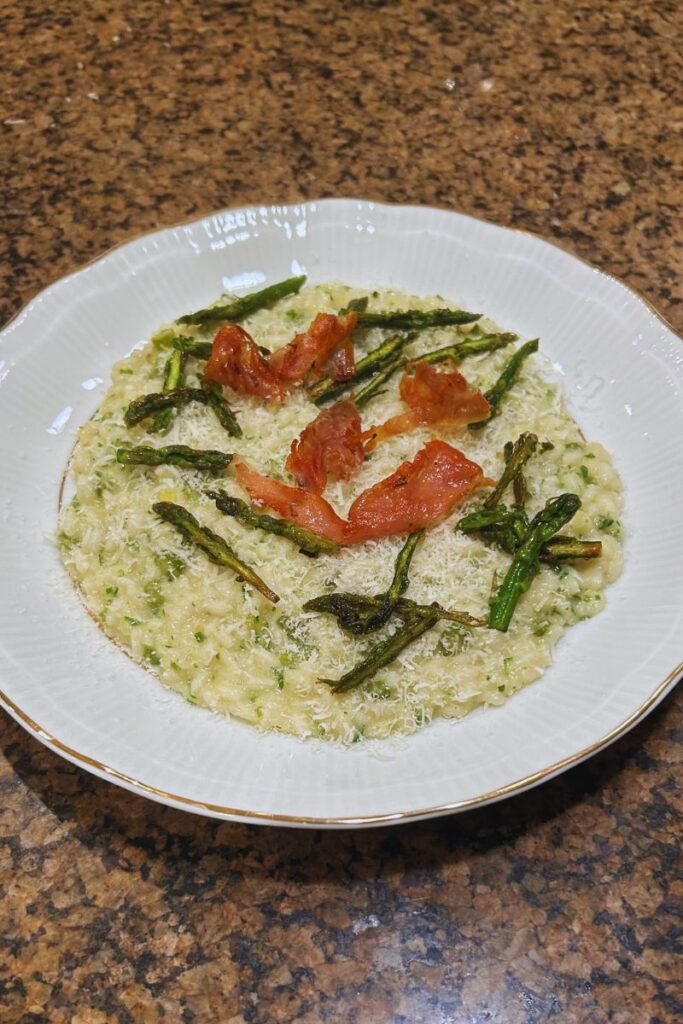
There’s something calming about making risotto, the slow stirring, the way the rice shifts from firm to creamy, and the smell of wine and herbs drifting through the kitchen. What many people miss is that it doesn’t need to be complicated. This asparagus and prosciutto risotto proves you can pull off a restaurant-style dish on a regular weeknight.
The flavors are simple and fresh. Asparagus brings that early-spring sweetness, crispy prosciutto adds a salty crunch, and the risotto turns into a silky base that blends everything together. It looks fancy, tastes great, and most of the work is just steady stirring. No long ingredient list or tricky steps, just approachable Italian comfort food anyone can make 🙂.
Ingredients
Ingredients for Asparagus and Prosciutto Risotto
For the risotto:- 300g arborio rice
- 150ml white wine
- 1 onion, finely diced
- 1 garlic clove, minced
- ~1–1.2L vegetable broth
- Extra virgin olive oil
- 30g cold butter (for finishing)
- 60–80g grated Parmesan cheese
- Salt and pepper
- 300g asparagus
- 2 bay leaves
- 3 sprigs thyme
- 1 sprig rosemary
- 2–3 parsley stems + finely chopped fresh parsley
- Extra virgin olive oil
- 2 slices prosciutto
What Makes This Risotto Different
Before we get cooking, let’s talk about why this particular approach works so well. Traditional risotto preparation involves endless stirring while gradually adding hot stock, ladle by ladle. That part’s true here too, but with some smart shortcuts and flavor-building techniques that elevate the whole dish.
The herb-infused broth is where real flavor development happens. By simmering your asparagus woody ends, parsley stems, and fresh herbs in the vegetable stock, you’re essentially making a custom asparagus broth. Those typically discarded asparagus bottoms contain tons of flavor, and steeping them with aromatics creates a foundation that permeates every grain of rice.
Cooking components separately might seem like extra work, but it gives you control over each element’s texture and doneness. The asparagus gets properly sautéed with garlic and herbs, the prosciutto crisps perfectly without burning the rice, and the risotto cooks evenly without interference. When everything comes together at the end, each component is at its peak.
The steaming technique for asparagus tips ensures they stay tender and bright green for garnishing. Covering them creates a mini-steam environment that finishes cooking them gently while preserving that gorgeous spring-green color. According to Serious Eats, preserving asparagus color is all about quick cooking and either shocking in ice water or using residual heat, exactly what we’re doing here.
Choosing Your Ingredients
Arborio rice is non-negotiable for proper risotto. This short-grain rice contains high levels of amylopectin starch that releases gradually during cooking, creating that signature creamy texture without adding cream. Other short-grain Italian rice varieties like Carnaroli or Vialone Nano work too, but arborio is the most widely available and totally reliable.
Asparagus should be fresh, firm, and relatively uniform in thickness so pieces cook evenly. Look for spears with tight, compact tips and smooth, unwrinkled stalks. The snap test works, if asparagus bends instead of breaking cleanly, it’s past its prime. Spring asparagus (March through June) is sweetest and most tender, though you can make this year-round with greenhouse asparagus.
Prosciutto brings that essential salty, savory element that balances the vegetables. Two slices might not sound like much, but when crisped up, they become intensely flavored and go a long way. If you can’t find prosciutto, crispy bacon or pancetta work similarly.
Vegetable broth forms the base liquid. Homemade is ideal, but good-quality store-bought works fine. Just avoid overly salty varieties since you’ll be reducing it and concentrating flavors. Low-sodium gives you better control over final seasoning.
White wine adds acidity and depth. Use something dry that you’d actually drink, Pinot Grigio, Sauvignon Blanc, or a dry Vermouth all work beautifully. The alcohol cooks off, leaving behind complexity and brightness.
Parmigiano Reggiano (real Parmesan, not the powdered stuff) provides that nutty, umami-rich finish. Buy a wedge and grate it fresh, pre-grated loses flavor and doesn’t melt as smoothly into the risotto.
Step-by-Step Instructions
Step 1: Prep the Asparagus
Start by addressing your asparagus. Grab each spear and bend it until it naturally snaps, this happens at the point where tender asparagus meets woody stem. Don’t throw those woody bottoms away. Toss them into your vegetable stock pot, they’re about to become flavor gold.
Take your asparagus tips and slice each one in half lengthwise. These will be your garnish, so set them aside in a separate bowl. Cut the remaining asparagus stems (the middle sections) into small pieces, roughly half-inch chunks. These go into the risotto itself.
Step 2: Prepare the Herb-Infused Broth
Warm your vegetable broth in a medium saucepan over low heat. Add those asparagus bottoms you saved, along with the parsley stems, bay leaves, thyme sprigs, and rosemary. Let this simmer gently for 10-15 minutes. You’re essentially making asparagus-herb stock that’ll infuse every bite of risotto with spring flavor.
After simmering, strain out all the solids. Keep the broth warm on the stove over very low heat, you’ll be ladling it into your risotto, and adding cold liquid would shock the rice and slow cooking. I keep mine on the back burner at barely a simmer throughout the risotto-making process.
Step 3: Cook Everything Separately (This Is Key)
Now comes the multi-tasking part, but don’t stress, it’s more about organization than complexity. Get two pans going.
In your main risotto pan:
Heat a good glug of olive oil over medium heat. Add your finely diced onion and cook until translucent but not browned, about 5 minutes. You want them soft and sweet, not caramelized.
Add the arborio rice and stir constantly for 1-2 minutes until the grains are coated in oil and slightly toasted. You’ll hear them start to crackle and they’ll turn slightly translucent around the edges. This toasting step is crucial, it helps the rice maintain structure and prevents mushiness.
Pour in your white wine and stir until it’s completely absorbed and evaporated. The pan will sizzle dramatically, this is good. You’re deglazing, picking up all those flavorful bits stuck to the bottom.
Now begins the traditional risotto technique. Add one ladle (about 1/2 to 3/4 cup) of your hot herb-infused broth. Stir frequently, not constantly, but regularly, until the liquid is mostly absorbed. According to Tasting Table, the constant stirring myth has been somewhat debunked (you don’t need to stir every single second), but you do need to stir regularly to release starch and prevent sticking.
Repeat this process: add a ladle of broth, stir regularly until absorbed, add another ladle. The rice should always be just barely covered with liquid, simmering gently but not violently boiling. This takes about 18-20 minutes total. You’re looking for rice that’s tender but still has a slight bite (al dente) in the very center.
In your second pan:
While your risotto is doing its thing, heat olive oil in a separate skillet over medium-high heat. Add your asparagus pieces (the chopped stems, not the tips yet), garlic, and fresh thyme and rosemary. Sauté until the asparagus is almost cooked through, about 5-7 minutes. You want it tender with a bit of bite remaining. Transfer to a bowl and set aside.
In that same pan, add your halved asparagus tips. Sauté them quickly over medium-high heat until they get some nice charred spots and bright green color, about 2-3 minutes. Immediately transfer them to a bowl and cover tightly with plastic wrap. The trapped steam will continue cooking them gently while preserving that gorgeous green color, a technique that works better than ice baths for small quantities.
Finally, in that same pan (see why we’re only using two pans total?), cook your prosciutto slices until crispy, about 2-3 minutes per side depending on thickness. The fat will render out and they’ll become beautifully crisp. Remove and set aside. If the pan isn’t burnt, deglaze it with a small splash of your broth, scraping up all those delicious browned bits, and pour that flavorful liquid into your risotto. Waste nothing.
Step 4: Finish the Risotto
When your rice is about 2 minutes away from done (tender but still slightly firm in the center), fold in your sautéed asparagus pieces and finely chopped fresh parsley. Stir them through and let everything cook together for those final 2 minutes. This allows the asparagus to warm through without overcooking.
Remove the pan from heat. This next part is crucial: add your grated Parmesan cheese. Start with about 60g and stir vigorously until it melts into the risotto. Taste and add more if you want, I usually go closer to 80g because I love that nutty Parmesan flavor.
Once the cheese is fully incorporated, add your cold butter (all 30g at once) and stir vigorously again. The cold butter creates an emulsion with the starchy cooking liquid, resulting in that glossy, restaurant-quality creaminess. This technique is called mantecatura in Italian, the final creaming step that makes risotto luxurious.
Here’s a chef trick: lift the pan slightly off the counter and tap the bottom firmly 3-4 times while stirring. This helps spread the butter and cheese throughout, creating an even creamier consistency. It looks a bit dramatic, but it works.
Taste and adjust seasoning with salt and pepper. Remember that Parmesan and prosciutto are both salty, so you might need less salt than you think.
Step 5: Garnish and Serve
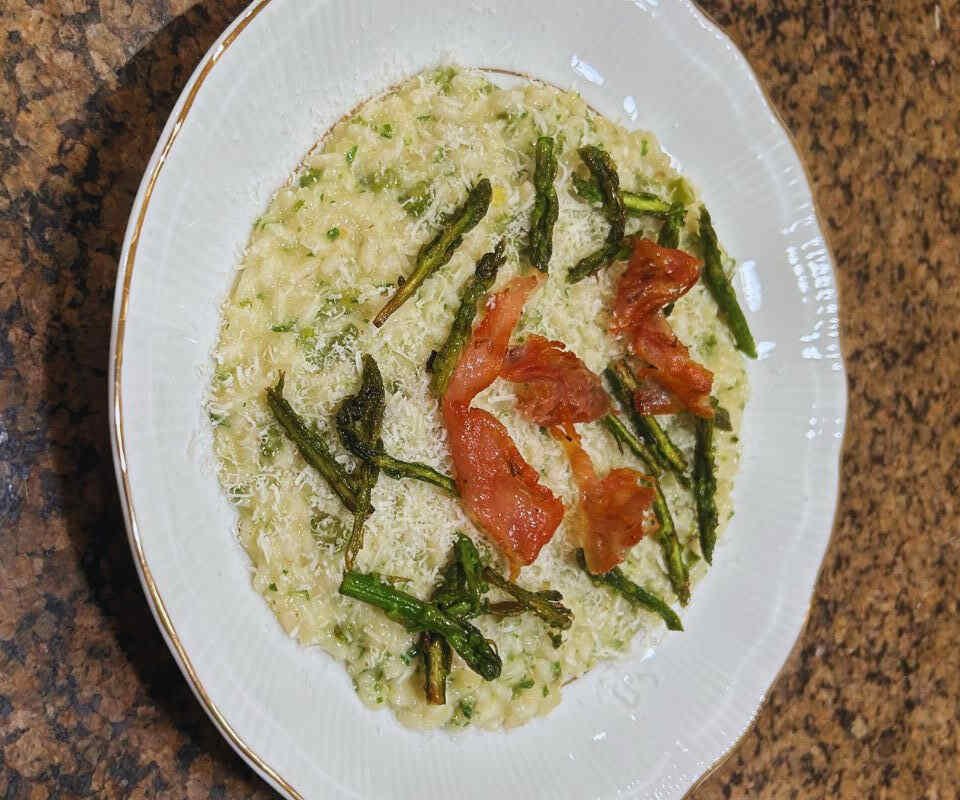
Plate your risotto in wide, shallow bowls, this isn’t a pile-it-high situation. Spread it out slightly so it flows across the plate. Arrange your steamed, charred asparagus tips on top artfully. Break up or tear your crispy prosciutto and scatter it over everything.
A final drizzle of really good extra virgin olive oil, a crack of fresh black pepper, and maybe a few shavings of Parmesan if you’re feeling fancy. Serve immediately, risotto waits for no one.
Tips for Perfect Risotto Every Time
Don’t rush the onion step. Properly softened onions create a sweet foundation. If they brown, they’ll add bitter notes that throw off the whole dish.
Keep your broth hot. Cold broth shocks the rice, lowering the cooking temperature and resulting in unevenly cooked rice and a gummy texture.
Stir regularly but not constantly. You need to agitate the rice enough to release starch (which creates creaminess), but you don’t need to stand there stirring nonstop like some recipes suggest. Every 30-45 seconds is fine.
Don’t overcook the rice. Risotto should be al dente, tender but with a slight firmness when you bite down. Mushy risotto is sad risotto.
Add cheese and butter off the heat. This prevents the fats from separating and creates a proper emulsion for maximum creaminess.
Serve immediately. Risotto continues cooking in its residual heat and will become gluey if it sits. This is a dish you plate and serve right away.
Variations and Substitutions
Make it vegetarian: Skip the prosciutto or replace it with crispy fried sage leaves for a different flavor profile.
Swap the asparagus: This technique works with other spring vegetables. Try fresh peas, fava beans, or even wild ramps if you can find them.
Add seafood: Sautéed shrimp or scallops instead of prosciutto creates an elegant seafood risotto. Add them in the last 2-3 minutes of cooking.
Go mushroom: Replace asparagus with a mix of sautéed wild mushrooms (or even just cremini) and you’ve got mushroom risotto.
Lighten it up: Use less butter and cheese, or replace some butter with a bit of mascarpone for richness with slightly less fat.
Storage and Reheating
Risotto is best eaten fresh, but leftovers keep for 2-3 days refrigerated in an airtight container. Reheat gently in a pan with a splash of broth or water, stirring frequently. You’ll need to add liquid because the rice continues absorbing moisture as it sits.
Alternatively, transform leftover risotto into arancini (Italian rice balls). Form cold risotto into balls around a cube of mozzarella, bread them, and fry until golden and crispy. Completely different dish, equally delicious.
Why This Recipe Works
The magic of risotto is in the technique, gradually adding liquid while stirring releases starch from the rice, creating natural creaminess without cream. The arborio rice is specifically bred for this purpose, with a starch composition that creates that signature texture.
By infusing the broth with asparagus and herbs, every addition of liquid brings more flavor. By cooking components separately, you control textures precisely. By finishing with cold butter and cheese off the heat, you create a proper emulsion that’s glossy and rich without being heavy.
The asparagus and prosciutto combination is classic Italian, salty, savory meat balanced by fresh, green vegetables. It’s a pairing that’s stood the test of time because it just works. The flavors complement without competing, and the textures contrast beautifully, creamy rice, tender asparagus, crispy prosciutto.
Final Thoughts
Look, risotto has this reputation for being fussy restaurant food that’s too complicated for home cooks. That’s nonsense. Yes, it requires attention, you can’t just walk away and check Instagram for twenty minutes. But it’s not difficult, it’s just involved. There’s a difference.
The actual techniques are straightforward: sauté, add liquid, stir, repeat. The magic happens through patience and proper timing, not culinary wizardry. Once you’ve made it a few times, the rhythm becomes second nature. You’ll stop thinking about each step and just do it.
This particular version, with its separately cooked components and herb-infused broth, might seem like extra steps. But each one serves a purpose and creates better results. The asparagus stays properly cooked instead of mushy. The prosciutto crisps perfectly. The broth tastes like spring. Everything comes together in the end as this cohesive, delicious whole.
Make this on a weekend when you have a bit of time to actually enjoy the cooking process. Pour yourself a glass of the same white wine you’re using in the risotto. Put on some music. Stand at the stove and stir and breathe in the amazing smells. Sometimes the best part of cooking isn’t just the eating, it’s the making.
Serves: 3-4 as a main course, 6 as a starter
Total time: About 50-55 minutes
Active time: About 30 minutes
Now grab that arborio rice and make yourself some proper Italian risotto. Your kitchen, and your dinner guests, will thank you.