
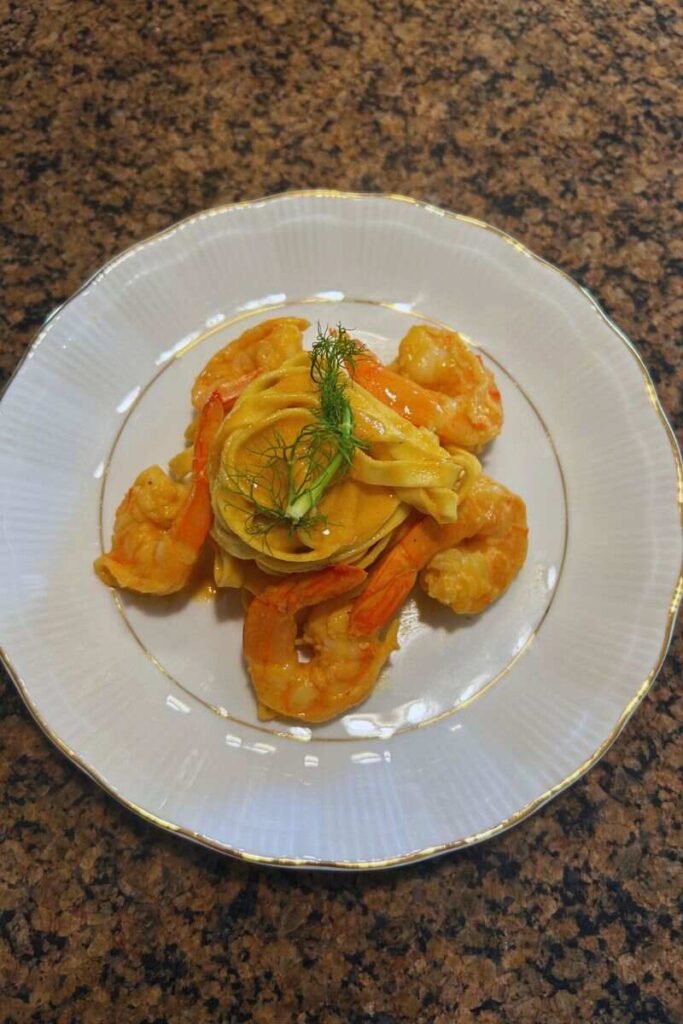
There’s something undeniably luxurious about rose shrimp pasta. The sweet, briny shrimp, the silky pink sauce, the long noodles — it gives off “coastal Italian restaurant” energy even if you’re making it at home on a random Tuesday. But what really makes it special is using the shrimp shells to build a quick stock that gives the sauce real depth.
Most people toss the shells without realizing they’re throwing away the best flavor. Simmering them creates a rich base that turns simple cream and tomato into a proper pink sauce. It’s not hard, it just takes a little patience — and the payoff is a dish that tastes like it took hours when it really didn’t.
Ingredients
Ingredients for Rose Shrimp Pasta
For the shrimp stock:- Shells and heads from 25-30 shrimp (about 1–1.5 pounds total)
- ½ onion, diced
- 1 celery stalk, diced
- ½ carrot, diced
- ½ fennel bulb, diced
- 1 tablespoon tomato paste
- 100ml white wine
- Small bundle of thyme
- ½ tablespoon chili flakes
- Salt & pepper
- Water to cover (about 4–5 cups)
- Extra virgin olive oil
- 400g tagliatelle or fettuccine
- Salt for pasta water
- Shrimp meat from above (peeled and deveined)
- ½ onion, diced (remaining half from stock ingredients)
- 60ml heavy cream (35% fat)
- 20g butter (optional but recommended)
- Extra virgin olive oil
- Salt & pepper
- Half a lemon
Why This Method Works
Before we start cooking, let’s talk about what makes this technique special, because it’s not just about following steps, it’s about understanding why each step matters.
Building stock from shells is fundamental to professional seafood cooking. According to culinary techniques documented by Serious Eats, extracting flavor from shells through slow simmering releases compounds that are water-soluble and fat-soluble, creating a base that’s exponentially more flavorful than plain seafood stock. The shells contain chitin, proteins, and aromatic compounds that, when cooked, provide that distinctive sweet-savory seafood flavor.
Blending and straining the stock is what separates restaurant-quality from home-cooking. When you blend the softened shells and vegetables, you’re breaking down cell structures and releasing even more flavor. Straining removes solids while keeping all that extracted essence. The result is a smooth, intensely flavored liquid that tastes nothing like store-bought seafood stock.
The cream and tomato combination creates the “rose” color and balanced flavor. Tomato paste provides umami and acidity that cuts through cream’s richness, while cream mellows tomato’s sharpness and adds luxurious body. Together, they create something greater than either component alone, that perfect pink sauce that coats pasta beautifully.
Finishing pasta in the sauce with starchy pasta water is essential. As cooking science explains, the starch released from cooking pasta acts as an emulsifier, binding sauce to noodles and creating that glossy, cohesive finish. Without pasta water, you’d have sauce sitting on top of noodles instead of integrated throughout.
Step-by-Step Instructions
Step 1: Prepare Your Shrimp
Start by peeling all your shrimp. Remove the shells completely and, if the shrimp came with heads attached, separate those too. Don’t discard anything, these shells and heads are liquid gold for your stock.
Devein the shrimp by making a shallow cut along the back and removing the dark vein. Set the cleaned shrimp meat aside in the refrigerator. Collect all shells and heads in a separate bowl, you’ll use these immediately for stock.
Step 2: Build the Shrimp Stock
This is where the magic begins, and it’s the step that separates this pasta from ordinary versions.
Heat a generous drizzle of extra virgin olive oil in a large pot over medium-high heat. Add your shrimp shells and heads. Sauté them, stirring occasionally, until they turn bright red and become fragrant, about 3-4 minutes. You’re toasting them essentially, which deepens their flavor and releases aromatics.
Add your diced vegetables, half the onion, all the celery, carrot, and fennel. This is your soffritto base that adds aromatic depth. Cook for 5-7 minutes, stirring occasionally, until the vegetables soften and start to take on some color.
Stir in the tablespoon of tomato paste and cook for 1-2 minutes. This step is crucial, cooking the tomato paste removes its raw edge and caramelizes its natural sugars, adding depth and umami to your stock.
Pour in the white wine. Let it bubble vigorously for 2-3 minutes until the alcohol evaporates and you can’t smell the sharp wine scent anymore. You should be able to lean over the pot without your nose tingling from alcohol vapors.
Add just enough water to cover everything, usually about 4-5 cups depending on your pot size. You don’t want to drown the ingredients because you want concentrated flavor. Add your thyme bundle, chili flakes, salt, and pepper.
Bring to a simmer, then reduce heat to low. Let this simmer gently for 25-30 minutes. Don’t rush this. You’re extracting every bit of flavor from those shells and vegetables. The stock should smell intensely of shrimp and aromatics.
After simmering, here’s the game-changing step: blend everything. Use an immersion blender directly in the pot, or transfer everything to a countertop blender (work in batches if needed for safety). Blend thoroughly until you’ve broken down the shells and vegetables into a chunky puree.
Strain this through a fine-mesh sieve, pressing on the solids with a spoon or ladle to extract every drop of flavorful liquid. What you’re left with is a smooth, coral-colored stock that smells incredible. Set this aside, it’s the foundation of your sauce.
Step 3: Cook the Shrimp
In a large skillet, heat a bit of olive oil over medium-high heat. Season your shrimp meat with salt and pepper on both sides.
Add the shrimp to the hot pan in a single layer. Don’t overcrowd them, work in batches if necessary. Cook for about 1-2 minutes per side until they’re just colored and starting to curl. They don’t need to be fully cooked through yet since they’ll finish cooking in the sauce.
Remove the shrimp to a plate and set aside. Don’t wipe out the pan, those browned bits stuck to the bottom are flavor you’ll want to capture.
Step 4: Build the Sauce
In the same pan you cooked the shrimp (those browned bits are important), add a small drizzle of olive oil if the pan looks dry.
Add your remaining diced half onion and cook over medium heat until translucent and softened, about 5 minutes. This sweetens the onion and builds another flavor layer.
Pour in your strained shrimp stock. Bring it to a simmer and let it reduce by about half. This concentrates the flavor even further and creates the right consistency for sauce. You’re looking for it to coat the back of a spoon lightly, not watery, but not thick like gravy either. This reduction takes about 8-10 minutes.
Once reduced, stir in your heavy cream. The stock and cream will blend into that beautiful rose color, pale pink with depth. Let this simmer gently for 2-3 minutes to marry the flavors.
Add your cooked shrimp back into the sauce. Let them simmer for just 1-2 minutes maximum. Remember, they’re already mostly cooked, and shrimp go from perfect to rubbery quickly. You’re just warming them through and letting them absorb some sauce flavor.
Taste and adjust seasoning. The stock is already seasoned, but cream dilutes saltiness, so you might need more salt. Add freshly ground black pepper if you want extra kick.
Step 5: Cook the Pasta
While your sauce is reducing, bring a large pot of water to a rolling boil. Salt it generously, it should taste like seawater. This is your only opportunity to season the pasta from within.
Add your tagliatelle or fettuccine and cook according to package directions, usually 8-11 minutes for dried pasta. You want it al dente, tender but still with a slight firmness when you bite through.
Before draining, reserve at least one cup of pasta cooking water. This starchy water is essential for the final step.
Step 6: Marry the Pasta and Sauce
Here’s where everything comes together. Instead of draining your pasta in a colander (which removes all that precious starchy water), use tongs or a spider strainer to transfer the pasta directly from the pot into your sauce.
Add about a quarter cup of pasta water to the pan. The sauce should look slightly loose, it’ll thicken as the pasta absorbs liquid and the starch works its magic.
Toss everything together over medium heat, lifting and turning the pasta so every strand gets coated. Keep tossing for 1-2 minutes. You’ll see the sauce thicken and cling to the pasta, creating that glossy, emulsified finish.
If the pasta seems dry or the sauce is too thick, add more pasta water a splash at a time. If it’s too loose, keep tossing over heat to reduce the liquid slightly.
If you’re using butter (and you should, it adds richness and helps create an even silkier texture), add it now. Toss until it melts completely and incorporates into the sauce.
Plating and Serving
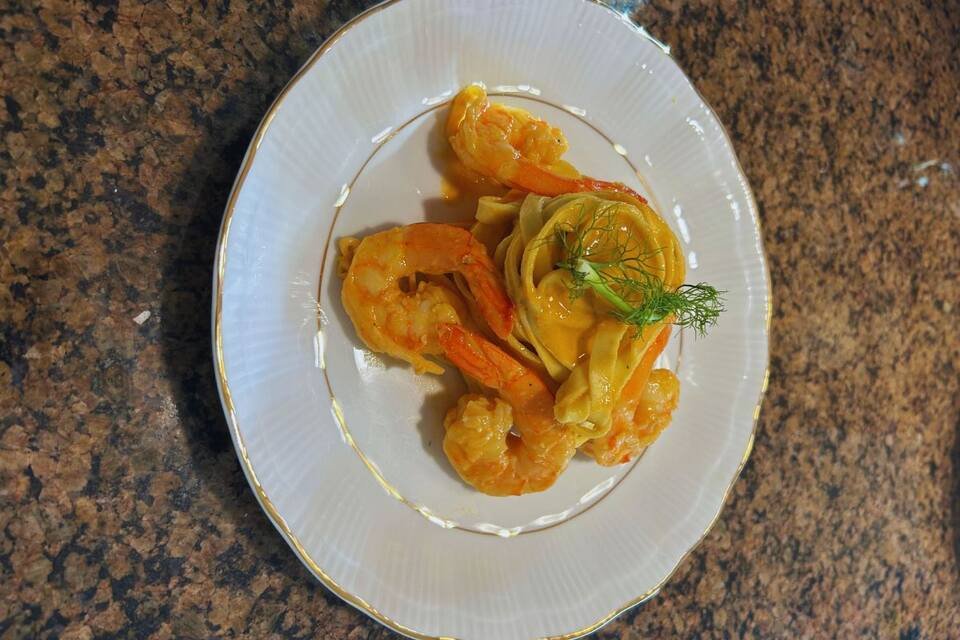
Twirl portions of pasta onto individual plates or into shallow bowls. Make sure each serving gets plenty of shrimp arranged on top.
Drizzle with your best extra virgin olive oil, just a touch for that fruity, peppery finish. A crack of fresh black pepper over the top adds both visual appeal and a subtle heat that complements the sweet shrimp.
Serve immediately. Pasta waits for no one, and this dish is at its absolute best when it’s still steaming, with the sauce glossy and the shrimp just cooked through.
Tips for Success
Don’t skip making the stock. I know it seems like extra work, but it’s the difference between good pasta and transcendent pasta. Those shells contain more flavor than the meat itself.
Don’t overcook the shrimp. They cook incredibly fast and become rubbery when overdone. Err on the side of slight undercooking when you first sear them, they’ll finish in the sauce.
Reduce your stock adequately. Watery sauce won’t cling to pasta and will taste diluted. Keep reducing until you can draw a line through it on a spoon that holds for a moment.
Use real pasta water. The starch in it is irreplaceable. It’s what makes restaurant-quality pasta sauce actually stick to the noodles instead of puddle at the bottom of the bowl.
Work quickly at the end. Once your pasta and sauce are combined, you want to plate and serve within minutes. The pasta continues absorbing liquid, and what seems perfect now might be dry in five minutes.
Variations and Substitutions
Different pasta shapes: While long noodles like tagliatelle, fettuccine, or linguine are traditional and beautiful, this sauce works wonderfully with short pasta like penne or rigatoni too. The tubes catch the sauce inside, creating little pockets of flavor.
Spice it up: The recipe includes chili flakes in the stock for subtle heat, but if you want more kick, add extra red pepper flakes to the finished sauce or serve with chili oil on the side.
Add vegetables: Blanched asparagus, fresh peas, or sautéed zucchini all complement shrimp beautifully. Add them to the sauce just before tossing with pasta.
Make it lighter: Skip the butter and use less cream (40ml instead of 60ml). You’ll still have a delicious sauce, just slightly less rich.
Lobster or scallops: This same technique works brilliantly with lobster shells (save them after eating lobster) or scallop side muscles. The stock-building process is identical.
Storage and Reheating
The stock can be made ahead and refrigerated for up to 3 days or frozen for 3 months. This actually makes weeknight cooking easier, make a batch of stock on the weekend, freeze it in portions, and you’ve got the base for quick pasta dinners whenever you want.
Fully assembled pasta keeps for 1-2 days refrigerated, though it’s definitely best fresh. Reheat gently in a skillet with a splash of water or cream to loosen the sauce. Don’t microwave, it makes the shrimp tough and the sauce separates.
Why This Recipe Works
This rose shrimp pasta succeeds because it respects three fundamental principles: building flavor from every available ingredient (those shells!), proper technique for sauce emulsification (pasta water and tossing), and not overcooking delicate proteins (shrimp cook fast).
The homemade stock is exponentially better than anything you could buy because it’s made from the exact shrimp you’re eating, creating a coherent flavor profile throughout. The reduction process concentrates that flavor to restaurant intensity. The cream and tomato combination creates balance, richness tempered by acidity, sweetness complemented by savory depth.
And the final pasta-water toss? That’s pure science and technique creating something that looks effortless but requires understanding. The starch emulsifies the fat and water phases, the heat activates the starch’s thickening properties, and the tossing incorporates air that makes everything lighter.
Final Thoughts
This rose shrimp pasta might seem involved with its stock-making and multiple steps, but break it down and it’s actually straightforward. The stock simmers largely unattended. The sauce comes together in minutes. The final assembly is quick.
What you get for that effort is a dish that tastes like it came from an expensive Italian restaurant, made with ingredients that most people literally throw away. There’s something deeply satisfying about creating restaurant-quality food through technique and understanding rather than just expensive ingredients.
Make this for a special dinner when you want to impress someone. Make it for yourself when you want to feel like you’re treating yourself to something luxurious. Just don’t make it with store-bought seafood stock and skip the shell-simmering, you’ll be missing the entire point.
Serves: 3-4
Total time: About 60 minutes (mostly unattended stock simmering)
Active time: About 25 minutes
Now go make yourself some proper shrimp pasta with sauce that actually tastes like the ocean. Your taste buds will thank you.