
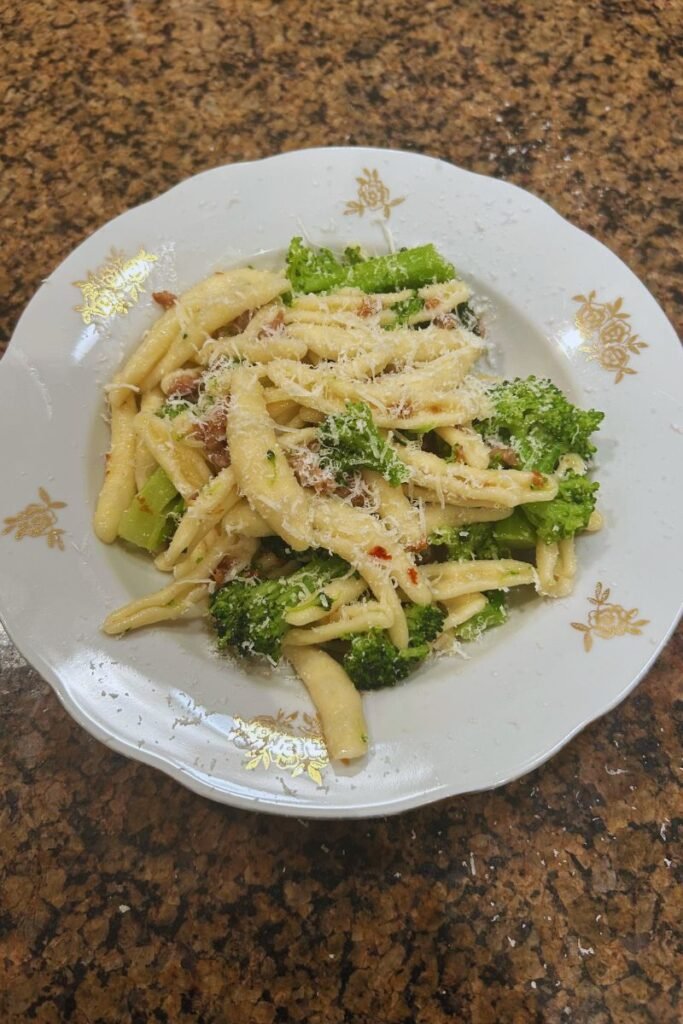
Some pasta dishes try too hard—seventeen ingredients, three pans, complicated technique. Then there’s pasta with broccoli and sausage, which achieves remarkable depth with just a handful of components and one smart trick: cooking the broccoli directly in the pasta water. This Italian sausage pasta represents Southern Italian cooking at its most practical—the kind of quick pasta recipe that feeds a family on a Tuesday night without tasting like a compromise.
This broccoli pasta recipe uses a technique called “pasta risottata”—finishing the pasta in a pan with sauce and starchy pasta water to create a creamy, cohesive dish without any cream. The fennel sausage adds richness and spice, the broccoli contributes sweetness and texture, the garlic and chili flakes provide aromatic heat, and the pasta water emulsifies everything into this silky, restaurant-quality sauce. It’s easy weeknight dinner cooking that looks and tastes like you put in way more effort than you actually did.
Ingredients
Here’s what you need for this pasta with sausage and broccoli. The ingredient list is refreshingly short, and everything is easy to find. This serves 4 people generously, or 3 very hungry people.
Ingredients for Pasta with Sausage and Broccoli
- 400g strascinati or orecchiette pasta
- 1 head of broccoli, cut into florets
- 2 Italian sausages with fennel
- ½ tablespoon chili flakes
- ¼ cup white wine (for deglazing)
- 4-5 cloves garlic, crushed
- Parmigiano cheese, optional but recommended
- Extra virgin olive oil
- Salt, to taste
The pasta shape matters here. Stracinati (also called strascicati) and orecchiette are both concave shapes from Puglia in Southern Italy that trap sauce and catch pieces of broccoli beautifully. If you can’t find these, use cavatelli, shells, or even penne rigate—you want something with texture and crevices, not smooth pasta. According to World of Pastabilities , these cup-shaped pastas excel at holding chunky sauces and vegetable pieces.
Broccoli should be fresh with tight, dark green florets. Cut it into small, bite-sized pieces so they cook quickly and integrate with the pasta. Don’t use frozen broccoli here—it releases too much water and won’t get that slightly caramelized texture you want.
Italian sausage with fennel is traditional and adds this distinctive sweet-licorice note that’s classic in Southern Italian cooking. The fennel seeds complement the slight bitterness of broccoli perfectly. If you can only find mild or hot Italian sausage without fennel, that works too—just add a pinch of fennel seeds yourself. Remove the casings before cooking so you can break the sausage into crumbles.
Garlic should be crushed or roughly chopped, not minced too fine. You want pieces that soften and become sweet and mellow, not burnt bitter bits. Fresh garlic makes a huge difference here—don’t substitute garlic powder.
White wine deglazes the pan after cooking sausage, lifting all those flavorful browned bits and adding acidity that brightens the dish. Use something drinkable—a Pinot Grigio or Sauvignon Blanc works perfectly. Not a wine person? Use chicken or vegetable broth instead.
Pasta water is the secret ingredient that makes this technique work. The starchy water emulsifies with olive oil to create a silky sauce that coats everything. According to A Big Green House, this starchy liquid acts as both a thickener and an emulsifier, binding fat and water into a cohesive sauce.
Substitution options: No fennel sausage? Use any Italian sausage or even spicy chorizo for a different flavor profile. Make it vegetarian by skipping the sausage and adding white beans or chickpeas for protein. Not a broccoli fan? This technique works beautifully with broccolini, cauliflower, or rapini (broccoli rabe). Gluten-free? Use your favorite gluten-free pasta shape—the technique stays the same.
This is traditional Italian recipes adapted for real home cooking. It’s the kind of comfort food recipes that work on busy weeknights but taste special enough to serve to company.
Step-by-Step Instructions
Let’s make this Italian pasta with broccoli. The recipe moves quickly once you start, so have everything prepped and ready. Total time is about 25-30 minutes from start to finish, most of which is hands-off pasta cooking. Perfect for quick dinner ideas when you’re hungry and don’t want to wait.
Step 1: Get Your Water Boiling
Fill a large pot with water—you want plenty of room for the pasta to move around. Add a generous amount of salt. The water should taste like the sea. This is your only opportunity to season the pasta itself from the inside, so don’t be shy.
Bring the water to a rolling boil over high heat. While it’s heating, prep your other ingredients so you’re ready to move quickly.
Step 2: Prep the Broccoli
Cut your broccoli into small florets, about bite-sized or slightly smaller. You want them roughly the same size so they cook evenly. Don’t throw away the stems—peel the tough outer layer and slice the tender core into small pieces. It’s delicious and there’s no reason to waste it.
Wash the broccoli thoroughly and set aside. It’ll go into the pasta pot later, so have it ready.
Step 3: Cook the Sausage
Remove the casings from your Italian sausages and break the meat into rough chunks. Heat a large, deep pan over medium-high heat and add a glug of extra virgin olive oil.
Add the sausage pieces to the hot pan and cook, breaking them up with a wooden spoon into smaller crumbles. You want them browned and golden, which takes about 6-8 minutes. Don’t stir constantly—let them sit and develop that caramelized crust.
Once the sausage is cooked through and nicely browned, pour in about ¼ cup of white wine to deglaze the pan. Scrape up all those flavorful browned bits stuck to the bottom. Let the wine cook for 1-2 minutes until the alcohol smell dissipates and the liquid reduces slightly.
Transfer the cooked sausage to a plate and set aside. Don’t clean the pan—those fond (browned bits) are pure flavor.
Step 4: Start the Pasta
By now your water should be boiling furiously. Add your stracinati or orecchiette pasta and stir immediately to prevent sticking. Set a timer for 2-3 minutes LESS than the package directions indicate for al dente. You want to undercook the pasta slightly because it will finish cooking in the pan with the sauce.
While the pasta cooks, move on to the next step.
Step 5: Build the Sauce Base
In the same pan you used for the sausage (or a separate large pan if that one’s too small), add a generous amount of olive oil—about 3-4 tablespoons. Heat it over medium heat.
Add your crushed garlic cloves and cook gently, stirring frequently, until they turn golden and fragrant. This takes 2-3 minutes. Watch carefully—garlic goes from perfect to burnt in seconds, and burnt garlic is bitter and ruins the dish. If you see it browning too fast, lower the heat.
Once the garlic is golden, add a ladle of pasta water (about ½ cup) to the pan. This creates your sauce base—the starchy water will emulsify with the olive oil and create a silky foundation. Let it simmer gently while the pasta finishes.
Step 6: Add the Broccoli
When your pasta is about 2-3 minutes away from being done (check your timer), add the broccoli florets directly into the boiling pasta water. That’s right—they cook together in the same pot.
This technique serves multiple purposes: the broccoli cooks quickly without needing a separate pan, it picks up seasoning from the salted water, and some of the florets break down slightly and release starches that help thicken the sauce. It’s efficient and improves the final dish.
Let the pasta and broccoli cook together for those final 2-3 minutes. The broccoli should be tender but still bright green with a bit of bite, not olive-drab and mushy.
Step 7: Bring Everything Together
Using a spider strainer or slotted spoon (or just drain carefully, reserving plenty of pasta water), transfer the pasta and broccoli directly into the pan with the garlic and sauce base. Add the cooked sausage back in along with the chili flakes.
Now comes the magic. Toss everything together over medium heat, adding more pasta water a little at a time. The pasta will absorb liquid and release more starch as you toss, creating a creamy, emulsified sauce that coats every piece.
Keep tossing and adding water as needed until you achieve a glossy, cohesive sauce that clings to the pasta without being dry or soupy. This takes 2-3 minutes of constant motion. The pasta is actually cooking slightly as you do this, finishing in the sauce and absorbing all those flavors.
The consistency you’re looking for is loose and creamy—it should look almost too saucy in the pan because it will thicken slightly as it sits.
Step 8: Finish and Serve
Remove the pan from heat and finish with a generous drizzle of your best extra virgin olive oil. This is where good oil makes a difference—it adds richness and a peppery finish you can taste.
Taste and adjust seasoning with salt if needed. Remember the pasta water was salted, the sausage has salt, and the cheese (if using) adds salt, so you might not need any.
Serve immediately in warm bowls. Top with grated Parmigiano cheese if using—the salty, nutty flavor is a perfect finishing touch. Some people add a lot, some just a sprinkle. It’s personal preference, but I highly recommend it.
Add an extra pinch of chili flakes for people who want more heat, and have the olive oil bottle on the table for those who want an extra drizzle.
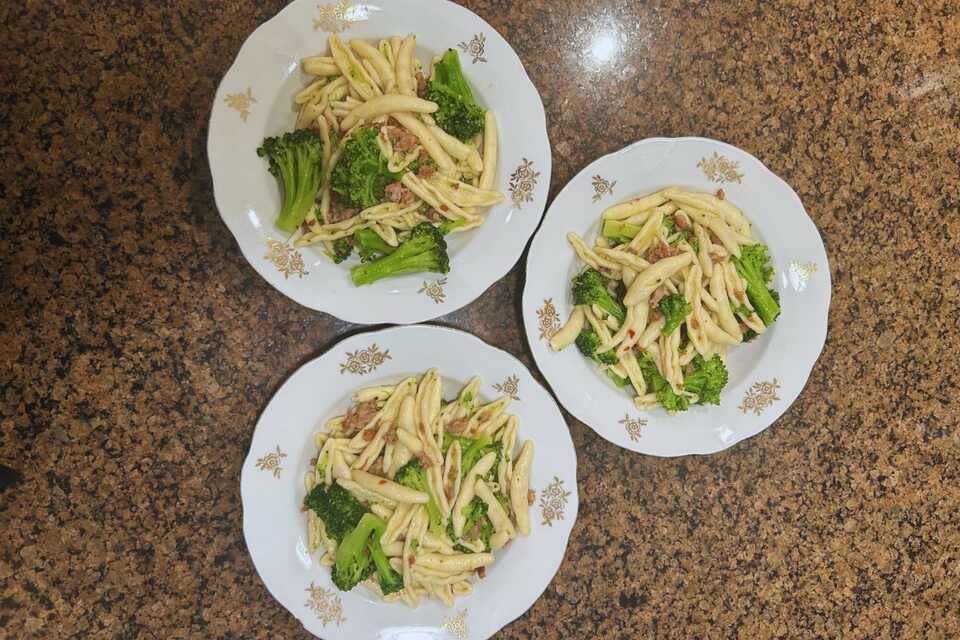
This broccoli and sausage pasta waits for no one—it’s best eaten immediately while the pasta is perfectly al dente and the sauce is glossy and cohesive.
Tips & Variations
This Italian sausage pasta recipe is wonderfully flexible based on what you have or prefer.
Pasta shape variations: While stracinati and orecchiette are traditional, cavatelli, shells, fusilli, or penne rigate all work beautifully. The key is choosing a shape with texture and crevices that hold sauce and catch vegetables. Avoid long, smooth pasta like spaghetti or linguine—they don’t work as well with this chunky preparation.
Vegetable options: Broccoli is classic, but broccolini cooks even faster and has a slightly sweeter flavor. Cauliflower works wonderfully with the same technique. Rapini (broccoli rabe) is traditional in Southern Italy and adds bitter, peppery notes—blanch it briefly before adding to the pasta. Asparagus cut into pieces works in spring.
Protein variations: Turkey sausage lightens it up. Spicy Italian sausage adds more kick. Crumbled pancetta or guanciale instead of sausage creates a different flavor profile. Make it vegetarian by using plant-based sausage or white beans for protein.
Heat level: Love spice? Double the chili flakes or add fresh hot peppers with the garlic. Keep it mild by reducing or skipping the chili entirely—the fennel sausage still provides plenty of flavor.
Make it creamier: Some people add a splash of heavy cream or mascarpone at the end for richness. This isn’t traditional, but it’s delicious. A pat of butter tossed in at the end adds silky richness without cream.
Cheese options: Parmigiano is classic, but aged Pecorino Romano adds sharper, saltier notes. A combination of both gives complexity. Some Southern Italian versions use ricotta salata—a firm, salty ricotta that grates beautifully.
Wine substitute: No white wine? Use a splash of vermouth (which is shelf-stable and keeps forever), chicken broth, or just more pasta water. The deglazing liquid adds flavor and acidity, but it’s not absolutely essential.
Garlic variations: Add anchovy fillets with the garlic for deep umami flavor—they melt into the oil and add complexity without tasting fishy. Or use garlic confit instead of fresh garlic for sweeter, mellower flavor.
Texture preference: Want the broccoli more tender? Add it to the pasta water 4-5 minutes before the pasta is done. Prefer it with more bite? Add it with just 1-2 minutes remaining. Some people roast the broccoli separately for caramelized edges, then toss it in at the end.
Common mistakes: Not salting the pasta water enough (bland pasta), burning the garlic (bitter sauce), not using enough pasta water when tossing (dry dish), overcooking the broccoli (mushy and gray), not tossing long enough (sauce doesn’t emulsify), serving it too dry (the sauce should be loose and glossy). Avoid these and you’re golden.
Why This Recipe Works
There’s a reason pasta with broccoli and sausage is a Southern Italian staple. The technique and ingredient combination just work beautifully together.
The pasta risottata technique creates restaurant-quality sauce. Finishing pasta in the pan with starchy pasta water and fat creates an emulsified sauce without any cream. It’s the same technique used in cacio e pepe and carbonara—simple but requiring attention. The starch acts as an emulsifier, binding water and oil into a silky coating.
Cooking broccoli in pasta water is genius. One less pan to wash, the broccoli picks up seasoning from the salted water, and some florets break down slightly and add body to the sauce. It’s efficient and actually improves the dish. This is practical Italian home cooking at its best.
The flavor combination is perfectly balanced. Rich, fatty sausage + slightly bitter broccoli + sweet garlic + spicy chili + bright wine = complex, satisfying dish where each component balances the others. Nothing dominates or gets lost.
It’s naturally economical. One package of pasta, one head of broccoli, two sausages, basic pantry items. You’re feeding 4 people for under $10-12. This is budget-friendly cooking that tastes anything but cheap.
Minimal cleanup. One pot for pasta and broccoli, one pan for everything else. That’s it. Compare this to recipes requiring multiple pots, baking sheets, and complicated timing, and you realize how smart this approach is.
It’s fast enough for weeknights. From start to finish, you’re eating in 30 minutes. That includes water boiling time. For working people who want real food without ordering takeout, this is perfect.
Leftovers are excellent. This reheats surprisingly well—add a splash of water or broth when reheating to loosen the sauce. It even works cold as a pasta salad with a squeeze of lemon and extra olive oil.
Conclusion
This pasta with broccoli and sausage recipe proves that quick Italian pasta recipes don’t need to sacrifice flavor for speed. It needs good ingredients, proper technique with the pasta water, and the confidence to keep things simple.
The beauty of easy pasta recipes like this is how they deliver complex flavors with minimal effort. Cook the sausage, soften some garlic, boil pasta and broccoli together, toss everything with starchy water until creamy. Done. No elaborate sauce-making, no complicated timing, no stress. Just straightforward Italian comfort food that tastes like you know what you’re doing.
Want to make something satisfying that doesn’t require an hour in the kitchen? Make this. Need a weeknight pasta that actually tastes good instead of just fast? This is it. Looking for Italian sausage recipes that work for busy families? You’ve found it.
The broccoli sausage pasta here is silky, flavorful, and deeply satisfying in that way only a well-made pasta dish can be. The technique of finishing pasta in the pan might seem fussy the first time, but once you master it, it becomes second nature and elevates every pasta dish you make.
Make this on a Tuesday when you’re tired and hungry. Make extra and pack it for lunch tomorrow. Serve it in big bowls with crusty bread for soaking up extra sauce. Grate a mountain of Parmigiano on top if that’s your thing. Pour whatever wine you used for deglazing, or just crack open a beer.
Try it, master the pasta water technique, and enjoy the fact that you can now make restaurant-quality pasta at home in less time than delivery would take. That’s a win.