
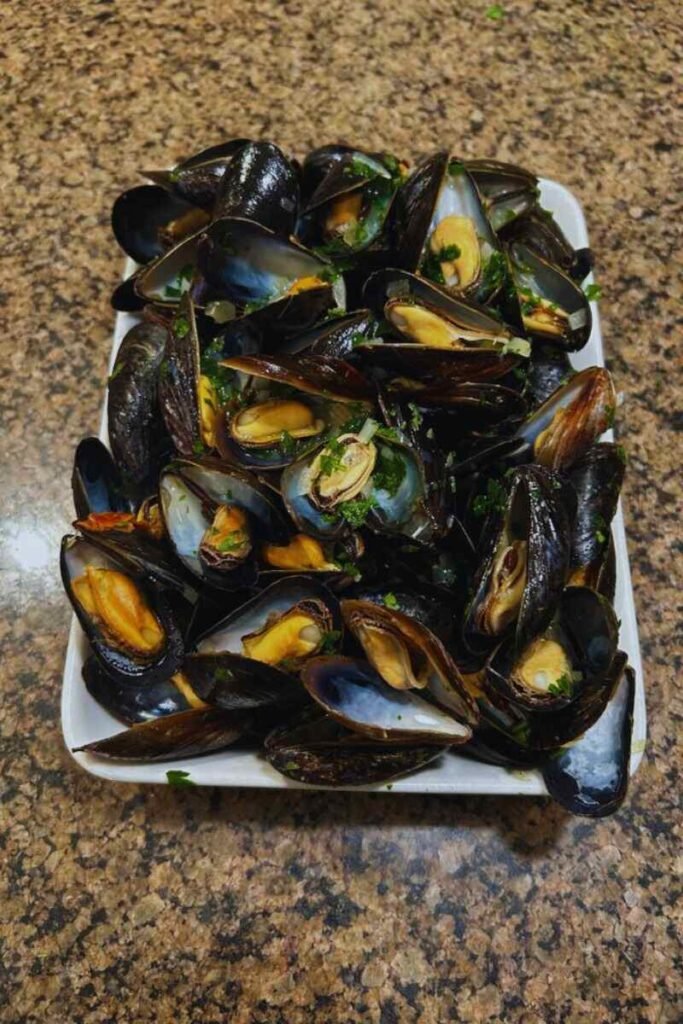
There’s something ridiculously satisfying about a giant pot of white wine mussels. Maybe it’s the theatrical steam when you lift the lid. Maybe it’s dunking crusty bread into that garlicky, wine-infused broth. Or maybe it’s the fact that this dish tastes like you spent hours in the kitchen when you actually spent about 20 minutes.
This is the recipe that French bistros have been serving for decades, moules marinière style with a kick of chilli. It’s simple, elegant, and designed to feed a crowd. 2.5 kg of mussels sounds like a lot, but trust me, once people start eating, they disappear fast. Mussels are mostly shell, so you need volume to satisfy a table.
I make this at least once a month, usually when I’m having friends over and want something impressive that doesn’t require precision or stress. You literally dump everything in a pot, wait a few minutes, and boom, dinner that looks like it came from a coastal European restaurant. 😋
Ingredients You’ll Need
Ingredients for White Wine Mussels
- 2.5 kg mussels, cleaned and debearded
- 1 onion, finely diced
- 3-4 garlic cloves, minced
- 1 handful parsley, finely chopped (include tender stems)
- 1 fresh chilli, finely chopped
- 300 ml white wine (dry, drinkable)
- Extra-virgin olive oil
- Salt & pepper, to taste
This recipe is all about simplicity and quality ingredients. Don’t overthink it.
2.5 kg mussels, cleaned and debearded: Fresh mussels are ideal, but good quality frozen work if that’s what you’ve got access to. Look for mussels that smell like clean ocean water, not fishy or funky. They should be tightly closed or close up when you tap them. Any that stay open are dead and need to go straight in the trash.
1 onion, finely diced: Yellow onions work perfectly. You want them small enough that they soften quickly and distribute throughout the broth. Don’t use red onion, it’s too sharp and overpowering with seafood.
3-4 garlic cloves, minced: Fresh garlic only. This isn’t the place for jarred minced garlic or garlic powder. The real stuff gives you that aromatic punch that makes the broth addictive.
1 handful parsley, finely chopped (include tender stems): Italian flat-leaf parsley is what you want. Curly parsley tastes like crunchy nothing. Don’t throw away those tender stems, they’ve got tons of flavor and should go into the pot with the aromatics.
1 fresh chilli, finely chopped: This isn’t traditional French, but it adds a subtle heat that elevates the whole dish. Use a red chilli (Fresno, Thai, or even jalapeño) depending on your heat tolerance. Remove the seeds if you want mild warmth, leave them in if you like it spicy.
300 ml white wine: Use something dry that you’d actually drink. Sauvignon Blanc, Pinot Grigio, or a dry Vermouth work beautifully. Don’t use “cooking wine” from the grocery store, that stuff is loaded with salt and tastes terrible. According to culinary experts at Serious Eats, the wine you cook with should be good enough to drink because its flavors concentrate during cooking.
Extra-virgin olive oil: You need a decent quality olive oil here since it’s the base of your aromatics. It doesn’t need to be your fancy finishing oil, but don’t use the cheapest stuff either.
Salt & pepper: For seasoning at the end. The mussels release their own brine, so you won’t need much salt.
Before You Start: What You Need to Know
Mussels cook insanely fast, which is both a blessing and a potential disaster. Once you start cooking, everything moves quickly, so prep everything first.
Get your mise en place ready. Dice your onion, mince your garlic, chop your chilli and parsley, and measure your wine before you turn on the stove. You don’t have time to scramble for ingredients once the mussels hit the pot.
Use a large pot. I’m talking BIG, like an 8-quart stockpot minimum. 2.5 kg of mussels takes up serious volume, and you need space for them to steam properly and for you to toss them around. If your pot is too small, they’ll cook unevenly.
Don’t overcook mussels. Overcooked mussels turn into rubber erasers that taste like disappointment. They’re done the literal second they pop open. Any longer and you’re ruining them.
Discard non-openers. If a mussel doesn’t open after 7-8 minutes of steaming, it was dead before cooking and isn’t safe to eat. Don’t try to pry it open. Just toss it.
Step-by-Step Instructions (The Real Way)
Alright, let’s make some seriously good white wine mussels.
Step 1: Prep Your Mussels
First things first, you need to clean and debeard your mussels. If you bought them from a good fishmonger, they might already be cleaned, but double-check anyway.
Rinse the mussels under cold running water, scrubbing off any barnacles, sand, or grit with a stiff brush. Some mussels have a “beard”, that stringy bit sticking out where the shell closes. Grab it firmly and pull it toward the hinge of the mussel to remove it. It should come off easily.
Give each mussel a quick inspection. Discard any with cracked or broken shells. Tap any open mussels against the counter, if they close up, they’re alive and good to use. If they stay open, they’re dead and need to go in the trash. According to the FDA’s seafood safety guidelines, proper selection and handling of shellfish is crucial to prevent foodborne illness.
Once cleaned, drain them well and set aside. Don’t leave them sitting in water or they’ll drown and die.
Step 2: Sauté the Aromatics
Heat a generous glug of extra-virgin olive oil in your large pot over medium heat. You want enough to coat the bottom nicely, about 3-4 tablespoons.
Add your diced onion and cook for about 3-4 minutes until it softens and turns translucent. You’re not trying to caramelize it, just take the raw edge off.
Add your minced garlic and chopped chilli. Sauté for about 30 seconds, just until fragrant. Don’t let the garlic brown or it’ll turn bitter and ruin your broth. This is the moment where your kitchen starts smelling incredible, FYI.
Toss in those parsley stems (save the chopped leaves for later). They’ll infuse the broth with subtle herbaceous flavor as the mussels steam.
Step 3: Add the Mussels
Add all 2.5 kg of mussels to the pot at once. Give them a good toss with a large spoon or just grab the pot handles and give it a shake to coat them in the aromatic oil mixture. You want every mussel making contact with those flavors.
Step 4: Add the White Wine
Pour in your 300 ml of white wine. It should sizzle when it hits the hot pot. Crank the heat up to high and immediately cover the pot with a tight-fitting lid.
The high heat plus the enclosed pot creates steam, which is what cooks the mussels. This isn’t a gentle simmer, you want aggressive steam happening in there.
Step 5: Steam the Mussels
Let them steam for 5-7 minutes. Give the pot a good shake every couple of minutes to redistribute the mussels and ensure even cooking. You don’t need to open the lid and stir, just grab the handles and give it a vigorous shake.
After about 4 minutes, lift the lid and check. Most mussels should be open by now. If they’re not, cover and give them another 1-2 minutes. Once all (or almost all) mussels have opened, they’re done.
If a few stubborn ones haven’t opened after 7-8 minutes total, don’t wait around for them. They’re duds. Remove and discard them.
Step 6: Finish with Fresh Parsley
Turn off the heat. Add your finely chopped parsley leaves and give everything a gentle toss to distribute it through the mussels and broth. The residual heat will wilt the parsley slightly and release its fresh, bright flavor.
Taste the broth and adjust seasoning if needed. The mussels are naturally salty, so you probably won’t need much salt. A crack of fresh black pepper is usually all you need.
Step 7: Serve Immediately
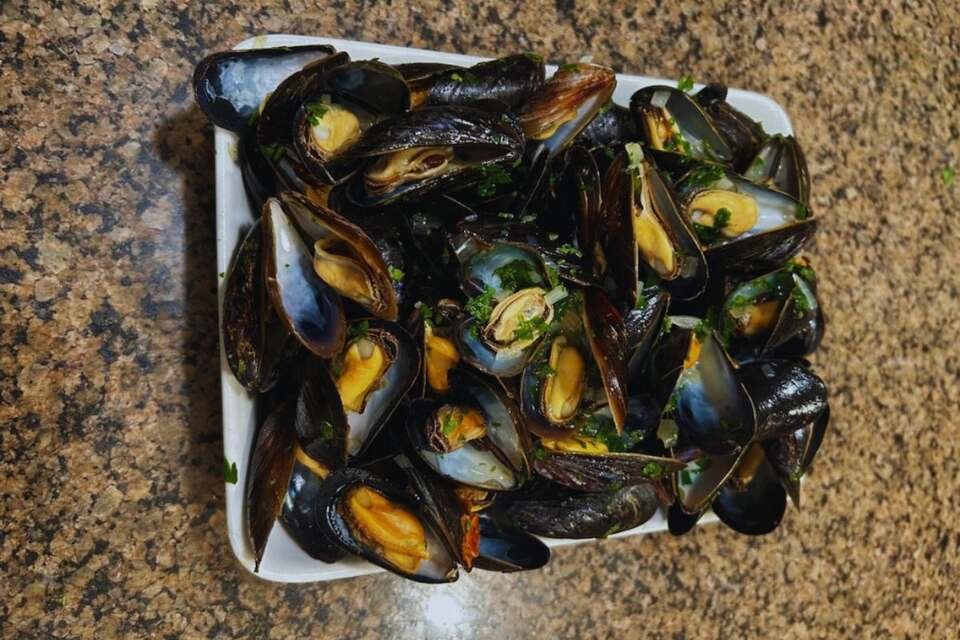
Transfer the mussels and all that glorious broth into large serving bowls. Serve immediately with thick slices of crusty bread, baguette, sourdough, ciabatta, whatever you’ve got. The bread is non-negotiable. That broth is liquid gold, and you need something to soak it up with.
Provide empty bowls for the shells and plenty of napkins. Eating mussels is messy and hands-on, which is part of the fun. Set out small forks or cocktail forks if you have them, though most people just use an empty shell as tweezers to pull out other mussels.
Common Mistakes and How to Avoid Them
Let me save you from the disasters I’ve experienced. Here’s what not to do.
Don’t skip cleaning the mussels. One sandy mussel ruins the whole pot. That gritty texture is disgusting and unfixable once it’s in the broth. Take the extra five minutes to clean them properly.
Don’t use cheap wine. I’m not saying buy a $50 bottle, but don’t use that $4 swill that tastes like vinegar. The wine is a major flavor component, and bad wine makes bad broth. Use something you’d actually drink.
Don’t crowd the pot. If your pot is too small and mussels are piled high, the ones on top won’t cook properly. Either use a bigger pot or cook in two batches.
Don’t keep cooking after they open. The second those shells pop open, mussels are done. Continuing to cook them makes them tough and chewy. Pull the pot off the heat as soon as most have opened.
Don’t forget the bread. I know I mentioned this already, but seriously, that broth is the best part of the dish. You absolutely need crusty bread to mop it up. Serving mussels without bread is like serving pasta without parmesan. Just wrong.
Tips for Perfect White Wine Mussels Every Time
Want to level up your mussel game? Here’s the insider knowledge.
Buy mussels the day you plan to cook them. They’re best when super fresh. If you need to store them overnight, keep them in the fridge covered with a damp towel (not submerged in water) and use them within 24 hours.
Add cream for a richer broth. After the mussels open, you can stir in 100-150 ml of heavy cream for a luxurious, restaurant-style sauce. This makes it more moules à la crème than marinière, but it’s delicious.
Experiment with herbs. Try adding fresh thyme, tarragon, or basil instead of or in addition to parsley. Each brings a different character to the dish.
Make it spicier. If you like heat, add more chilli or stir in a spoonful of harissa or red pepper flakes with the garlic.
Use the leftovers. If you somehow have leftover mussels (unlikely), remove them from their shells and toss them with pasta the next day. The broth makes an incredible pasta sauce.
Serve with fries. In Belgium, moules-frites (mussels with fries) is the classic combination. Crispy fries dipped in mussel broth is next-level good.
Frequently Asked Questions
Can I use frozen mussels?
Yes, but thaw them completely first and pat them dry. Frozen mussels release more liquid, so your broth might be slightly thinner. They also won’t have quite the same sweet, fresh flavor as live mussels, but they’ll still be good.
What if I can’t find fresh chilli?
Use red pepper flakes instead. Start with 1/2 teaspoon and adjust to taste. You can also skip the heat entirely if spicy isn’t your thing, the dish still works beautifully.
Can I make this without wine?
You could substitute with seafood stock or chicken stock with a splash of lemon juice and a tablespoon of white wine vinegar, but honestly, the wine really makes this dish what it is. It’s worth buying a cheap bottle just for cooking.
How do I know if mussels are fresh?
They should smell like clean ocean water, never fishy or ammonia-like. They should be heavy for their size (full of meat, not empty). Most should be tightly closed, and any open ones should close when tapped.
Can I add other seafood?
Absolutely. Clams work great and cook in about the same time. Shrimp can be added in the last 2-3 minutes of cooking. Just don’t overload the pot or everything cooks unevenly.
Why is my broth watery?
Either the mussels released a lot of liquid (common with older or frozen mussels), or your pot wasn’t hot enough. Make sure you’re using high heat for steaming. You can also let the broth simmer uncovered for a minute or two to reduce and concentrate it after removing the mussels.
How many people does this serve?
How many people does this serve?
Conclusion: Time to Impress Everyone
White wine mussels are one of those magical recipes that seem fancy and difficult but are actually stupidly easy once you understand the technique. The hardest part is cleaning the mussels, and even that takes less than 10 minutes.
This is the dish I make when I want to look like a culinary genius without actually working hard. Your guests see this massive pot of steaming mussels, smell the wine and garlic, and automatically assume you’ve got serious cooking skills. Let them believe it.
The combination of sweet mussels, aromatic wine broth, and that hint of chilli heat is just perfect. And the communal, hands-on eating experience makes it feel special and social. Everyone gathers around, dipping bread, cracking shells, and fighting over the last bits of broth.
Next time you want to make something impressive for a dinner party, skip the complicated recipes and make this instead. 20 minutes of actual work, restaurant-quality results, and guaranteed rave reviews.
Now go buy some mussels and a bottle of decent white wine. Your kitchen is about to smell amazing.