
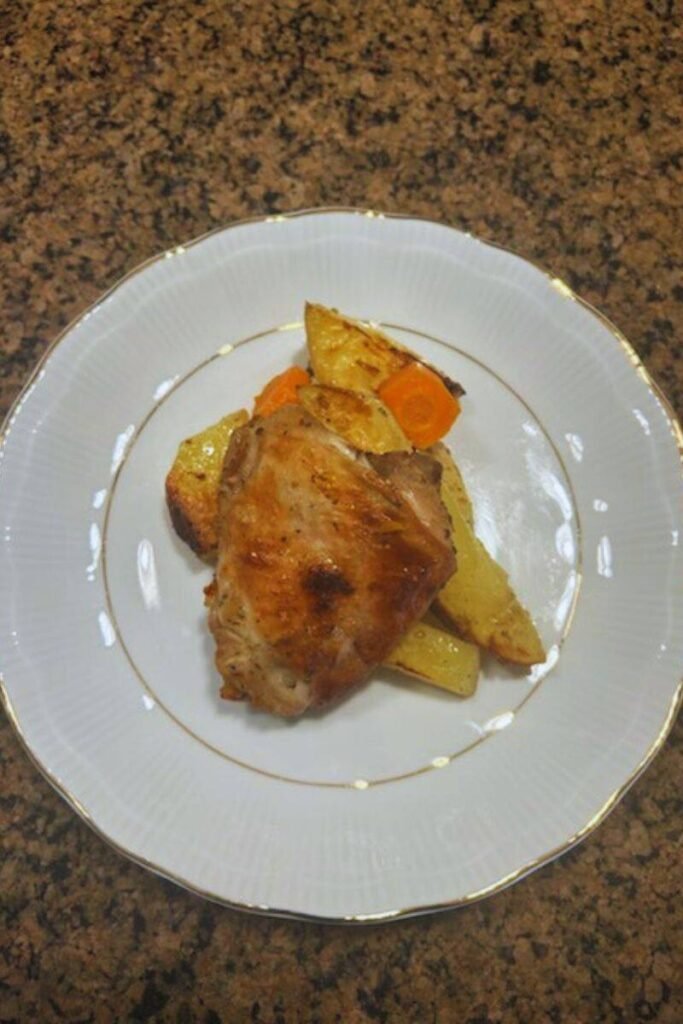
Let me tell you about the dinner that’s saved me more times than I can count. It’s a Tuesday night, you’re exhausted, and the last thing you want is a pile of dishes. Enter: lemon herb chicken & roasted potatoes, all cooked on one pan, with minimal effort and maximum flavor. The chicken gets perfectly golden, and the potatoes soak up every bit of those herb-infused pan juices.
This is proper comfort food that’s impressive enough for company. Everything roasts together, so the vegetables pick up flavor from the chicken while it stays juicy from the steam. I make this at least twice a month because it’s foolproof, feeds a crowd, and cleanup is just one pan 😳.
Ingredients You’ll Need
Ingredients for Lemon Herb Chicken & Yukon Gold Potatoes
- 4–8 chicken thighs, bone-in, skin-on (or boneless, adjust cooking time)
- 6–7 Yukon Gold potatoes, chopped into 1.5–2 inch chunks
- 2 carrots, cut into 1–2 inch pieces
- 2 celery stalks, chopped into 1-inch pieces
- 1 onion, sliced into wedges or half-moons
- 1 lemon, halved and juiced
- 1 tsp garlic powder, divided
- 1 tsp Montreal seasoning (or substitute with garlic powder, black pepper, pinch of dried dill)
- ½ tsp dried oregano, divided between chicken and vegetables
- 4–5 sprigs fresh thyme
- 2–3 sprigs fresh rosemary
- Olive oil, for coating
- Salt & pepper to taste
This recipe uses simple ingredients that work together beautifully. Nothing fancy or hard to find.
4-8 chicken thighs: Bone-in, skin-on thighs are ideal because they stay juicier and develop better flavor than breasts. The skin gets crispy and golden in the oven, and the bones add richness to the pan juices. You can use boneless if that’s what you prefer, but adjust the cooking time down by about 10 minutes.
6-7 Yukon Gold potatoes, chopped into chunks: Yukon Golds are perfect for roasting because they’re naturally buttery and hold their shape well. Cut them into roughly 1.5-2 inch chunks so they cook evenly with the chicken. Don’t peel them, the skin gets crispy and delicious.
2 carrots, cut into pieces: Cut them into similar-sized pieces as the potatoes (about 1-2 inches) so everything cooks at the same rate. Baby carrots work too if you’re feeling lazy.
2 celery stalks, chopped: Cut into 1-inch pieces. Celery adds aromatic depth and a subtle vegetal sweetness as it roasts. Don’t skip it.
1 onion, sliced: Yellow or white onion works great. Slice it into thick wedges or half-moons. The onion caramelizes slightly in the oven and adds sweetness to the pan juices.
1 lemon, cut in half and juiced: You’ll use the juice for marinating the chicken, then toss the squeezed halves into the pan. They roast alongside everything and release even more lemony flavor. It’s genius and waste-free.
1 tsp garlic powder, divided: Half goes on the chicken, half on the vegetables. Fresh garlic would burn at this roasting temperature, so powder is actually better here.
1 tsp Montreal seasoning: This is a blend of garlic, pepper, coriander, dill, and salt. It’s a shortcut to big flavor. If you don’t have it, substitute with equal parts garlic powder, black pepper, and a pinch of dried dill.
½ tsp dried oregano: Mediterranean herb that pairs perfectly with lemon and chicken. Divide it between the chicken and vegetables.
4-5 sprigs fresh thyme: Fresh herbs make a huge difference. Thyme is hardy enough to withstand roasting and infuses everything with earthy, slightly minty flavor.
2-3 sprigs fresh rosemary: Another robust herb that loves high heat. Rosemary and lemon together is a classic combination for good reason.
Olive oil: For coating everything. Don’t be stingy, it helps with browning and prevents sticking.
Salt & pepper to taste: Essential for bringing out all the other flavors.
Before You Start: What You Need to Know
This is an incredibly forgiving recipe, but a few tips will make it even better.
Don’t skip the marinating time. Even just 20 minutes makes a noticeable difference in flavor. The acid from the lemon helps tenderize the chicken while the seasonings penetrate the meat. If you’ve got more time, marinate for up to 2 hours in the fridge.
Cut vegetables uniformly. Size matters for even cooking. If your potato chunks are wildly different sizes, some will be mushy while others are still hard. Aim for consistency.
Use a large enough pan. Everything needs space to roast, not steam. If you overcrowd the pan, you’ll end up with soggy vegetables instead of crispy, caramelized ones. Use a large roasting pan or a rimmed baking sheet (at least 13×18 inches).
Chicken temp matters. According to USDA food safety guidelines, chicken needs to reach an internal temperature of 165°F (74°C) to be safe. Use a meat thermometer and check the thickest part of the thigh without touching bone.
Step-by-Step Instructions (The Real Way)
Let’s make this happen. Grab your ingredients and let’s go.
Step 1: Marinate the Chicken
In a large bowl, add your chicken thighs. Drizzle generously with olive oil, about 2-3 tablespoons. Season with salt and pepper (be generous, chicken can handle it), half a teaspoon of garlic powder, the full teaspoon of Montreal seasoning, and a quarter teaspoon of dried oregano.
Squeeze the juice from your lemon over the chicken. Roll those lemon halves around a bit to get every drop out. Set aside the squeezed lemon halves, you’ll use them later.
Mix everything with your hands to coat the chicken thoroughly. Every piece should be covered in that seasoned, lemony marinade. Let it sit for at least 20 minutes at room temperature. This is a good time to prep your vegetables and preheat the oven.
Step 2: Preheat the Oven
Set your oven to 400°F (200°C). This temperature is the sweet spot for getting crispy chicken skin while cooking the vegetables through without burning them.
Step 3: Prepare the Vegetables
In another large bowl, combine your chopped Yukon Gold potatoes, carrot pieces, celery pieces, and sliced onion. Drizzle generously with olive oil, about 3-4 tablespoons. You want everything lightly coated, not swimming in oil, but don’t be stingy either.
Season with salt, pepper, the remaining half teaspoon of garlic powder, and the remaining quarter teaspoon of oregano. Toss everything really well with your hands or a large spoon until every piece is evenly coated.
Step 4: Assemble the Pan
Spread the seasoned vegetables across your roasting pan or baking sheet in an even layer. Don’t pile them up, spread them out so they have room to breathe and caramelize.
Place the marinated chicken thighs on top of the vegetables, skin side up. The vegetables underneath will catch all those delicious chicken drippings and cook in them, picking up incredible flavor.
Tuck the fresh thyme sprigs and rosemary sprigs around the pan, distributing them throughout the vegetables. Nestle those squeezed lemon halves into the pan as well. As everything roasts, those herbs and lemon will release their oils and aromatics, infusing the whole dish.
Step 5: Roast
Slide the pan into your preheated 400°F oven. Set a timer for 40 minutes, but start checking around the 35-minute mark.
You’re looking for golden, crispy chicken skin and tender potatoes that give easily when pierced with a fork. The chicken should register 165°F on an instant-read thermometer when you insert it into the thickest part of the thigh without hitting bone.
If the chicken is done but you want extra crispy skin or more caramelization on the vegetables, turn on the broiler for the last 3-5 minutes. Watch it carefully during this time, broilers are aggressive and can go from perfect to burnt in 30 seconds.
The total cooking time will be somewhere between 40-50 minutes depending on the size of your chicken thighs and how crowded your pan is.
Step 6: Rest and Serve
Once everything is golden and cooked through, pull the pan out of the oven. Let it rest for about 5 minutes. This allows the chicken juices to redistribute so they don’t all run out when you cut into it.
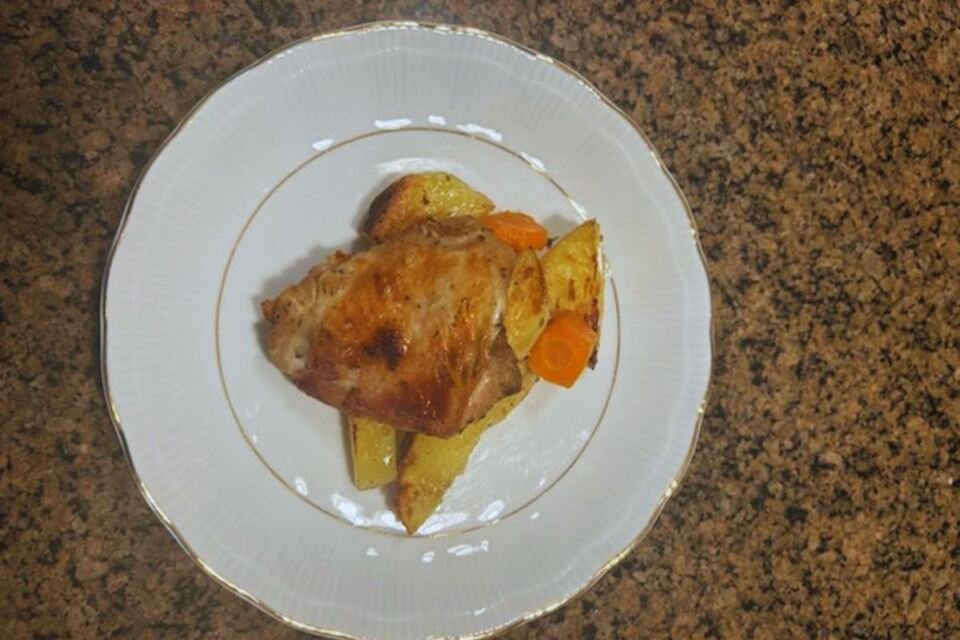
Spoon those gorgeous pan juices over the chicken and vegetables before serving. That liquid at the bottom of the pan is pure flavor, don’t waste it. You can also squeeze the roasted lemon halves over everything for an extra bright, citrusy punch.
Plate it up and serve hot. This is perfect as-is, but a simple green salad on the side rounds out the meal nicely.
Common Mistakes and How to Avoid Them
I’ve made this recipe dozens of times and messed it up in various ways. Learn from my failures.
Don’t use boneless, skinless chicken breasts. They’ll dry out at this temperature and cooking time. Thighs are fattier and more forgiving. If you absolutely must use breasts, reduce cooking time to 25-30 minutes and check temp frequently.
Don’t cut vegetables too small. Tiny pieces will burn and shrivel before the chicken is done. Keep them chunky, at least 1.5 inches.
Don’t forget to flip or rotate. Actually, wait, you don’t need to flip anything with this recipe. That’s the beauty of it. Just let it roast undisturbed. The chicken skin crisps up on top, the vegetables roast underneath. No flipping required.
Don’t overcrowd the pan. If you’re doubling the recipe, use two pans. Overcrowding creates steam instead of roasting, and you’ll end up with bland, soggy food.
Don’t skip the rest time. I know you’re hungry, but give the chicken 5 minutes after pulling it from the oven. Cutting into it immediately releases all the juices onto the plate instead of keeping them in the meat.
Tips for Perfect Results Every Time
Want to take this from good to great? Here’s the insider knowledge.
Dry the chicken skin. Pat the thighs dry with paper towels before marinating. Dry skin crisps up way better than wet skin. Moisture is the enemy of crispy.
Use parchment paper for easier cleanup. Line your pan with parchment before adding the vegetables. Everything still roasts beautifully, but cleanup becomes even easier.
Add more vegetables. Brussels sprouts, parsnips, sweet potatoes, or green beans all work great with this method. Just keep the sizes consistent so everything cooks evenly.
Try different herbs. Sage, tarragon, or marjoram all work beautifully here. Fresh herbs always taste better than dried when roasting.
Make it spicy. Add red pepper flakes to the marinade or toss some sliced jalapeños in with the vegetables for heat.
Finish with fresh herbs. Chop fresh parsley or additional thyme and sprinkle it over everything right before serving for a pop of color and fresh flavor.
Save the leftovers. This reheats beautifully. Store chicken and vegetables separately in airtight containers for up to 3 days. Reheat in a 350°F oven for 10-15 minutes.
Frequently Asked Questions
Can I use chicken breasts instead?
You can, but they require different cooking. Use boneless, skinless breasts, reduce cooking time to 25-30 minutes, and check for 165°F internal temp. They won’t be as juicy or flavorful as thighs, though.
Can I prep this ahead?
Yes! Marinate the chicken and prep the vegetables up to 24 hours ahead. Keep everything refrigerated separately, then assemble and roast when ready. Add 5-10 minutes to cooking time if starting with cold ingredients.
What if I don’t have fresh herbs?
Use dried instead. Replace each sprig of fresh thyme with 1/4 teaspoon dried thyme, and each sprig of rosemary with 1/2 teaspoon dried rosemary. The flavor won’t be quite as bright, but it’ll still be delicious.
My vegetables aren’t cooking as fast as the chicken. What do I do?
Cut them smaller next time, or give them a 10-minute head start in the oven before adding the chicken. You can also remove the chicken when it hits 165°F and let the vegetables continue roasting for another 10 minutes.
Can I use other types of potatoes?
Sure. Red potatoes or fingerlings work great. Russets are okay but can get too soft and mushy. Avoid waxy potatoes like new potatoes, they don’t roast as well.
How do I get crispier chicken skin?
Make sure the skin is completely dry before marinating. You can also start the chicken skin-side down for the first 20 minutes, then flip it skin-side up for the remaining time. Or blast it under the broiler for the last 3 minutes.
Can I add garlic cloves?
Absolutely. Toss whole, unpeeled garlic cloves in with the vegetables. They’ll roast until soft and sweet. Squeeze the roasted garlic out of the skins and spread it on bread or mash it into the potatoes.
Conclusion: Your New Go-To Weeknight Dinner
Lemon herb chicken with roasted potatoes is the kind of recipe you’ll come back to over and over. It’s reliable, delicious, and adaptable. Once you’ve made it a few times, you can riff on it endlessly, different vegetables, different herbs, different seasonings.
The best part? It genuinely tastes like you put in way more effort than you did. According to food scientists, roasting vegetables alongside meat creates complex flavors through the Maillard reaction and fat rendering, making one-pan meals both flavorful and efficient.
This is the dinner I make when I’m tired, when I have unexpected guests, or when I just want something comforting without much fuss. It works for casual family dinners and for impressing people who think you’re a culinary wizard.
Now go grab some chicken thighs and potatoes. Your oven is about to do all the heavy lifting while you relax with a glass of that wine you didn’t use for the mussels. Dinner’s basically cooking itself 🙂