
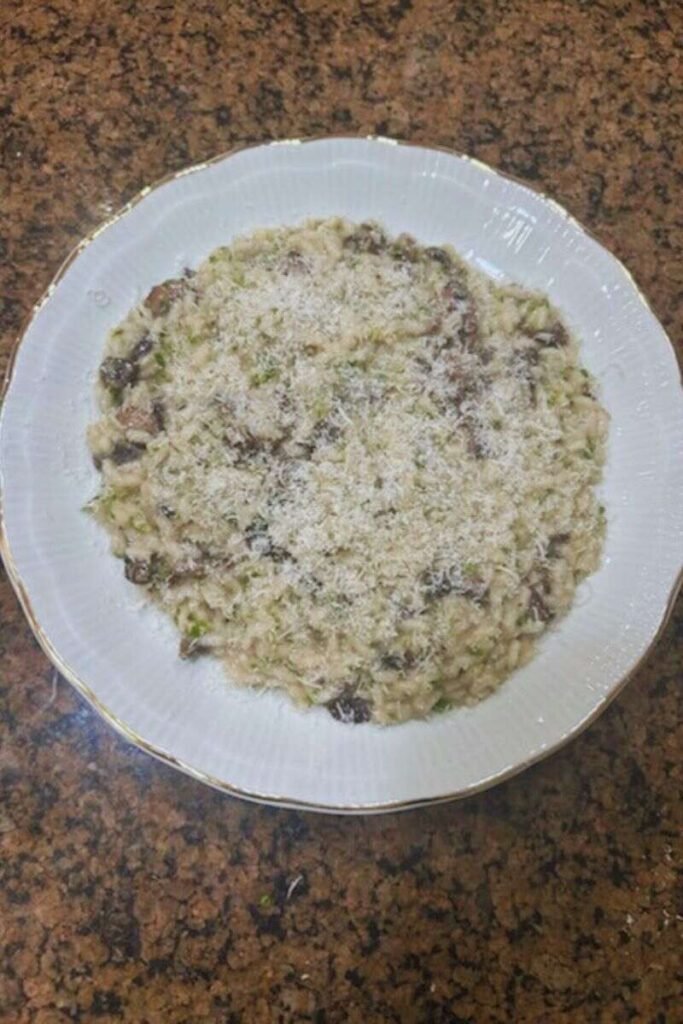
Risotto has this intimidating reputation that keeps people from making it. They think it’s some fancy Italian technique that requires culinary school training and perfect timing. But here’s the truth: risotto is just rice, stock, and patience. That’s it. The “secret” is standing there and stirring, which isn’t a secret at all, it’s just commitment.
I avoided making risotto for years because everyone said it was hard. Then I finally tried it and realized those people were either lying or they dramatically overcomplicated the process. Yes, you need to stir frequently. Yes, you add liquid gradually. But it’s not rocket science, and the payoff is absolutely worth the 30 minutes of active cooking.
This mushroom risotto is creamy, earthy, and rich without being heavy. The mushrooms get cooked separately first, which concentrates their flavor and prevents them from making the risotto watery. The final mantecatura (that’s the fancy Italian term for stirring in butter and cheese at the end) transforms the dish from “pretty good” to “holy crap, did I really make this?” 😲
Ingredients You’ll Need
Ingredients for Mushroom Risotto
Core Ingredients:- 300g Arborio rice (or Carnaroli / Vialone Nano)
- 350g mushrooms, sliced (cremini, shiitake, oyster, porcini, or button)
- 1–1.2L chicken stock, kept hot
- 150ml dry white wine (Pinot Grigio, Sauvignon Blanc, or dry Vermouth)
- 2 shallots, finely chopped
- 2 garlic cloves, crushed (for mushrooms)
- 1 sprig rosemary
- 3 sprigs thyme
- 30g cold butter, cubed
- Extra virgin olive oil
- Handful of parsley, finely chopped
- Freshly grated Parmesan cheese (at least 50–60g)
- Salt and pepper, to taste
Risotto is all about quality ingredients and proper technique. Don’t cheap out on the rice or stock, they’re the foundation of everything.
300g arborio rice: This is non-negotiable. Arborio rice has high starch content that creates risotto’s signature creamy texture. You cannot substitute long-grain rice, jasmine rice, or any other variety. Arborio, Carnaroli, or Vialone Nano are the only acceptable options. Arborio is easiest to find and works perfectly.
350g mushrooms, sliced: Use a mix if you can, cremini, shiitake, oyster, or even porcini if you’re feeling fancy. Plain button mushrooms work fine too. Slice them about 1/4 inch thick. Don’t go thinner or they’ll disappear into mush.
1-1.2L chicken stock: Homemade is ideal, but quality store-bought works great. The stock needs to be good because it’s the primary liquid flavoring your rice. Don’t use those concentrated cubes that taste like salt bombs. Get real stock or make your own. Keep it hot the entire time, adding cold stock to hot rice disrupts the cooking process.
150ml white wine (plus a small splash for mushrooms): Use something dry that you’d actually drink. Pinot Grigio, Sauvignon Blanc, or dry Vermouth all work beautifully. The wine adds acidity that balances the richness. According to food experts, the alcohol in wine helps extract flavors from aromatics that water-based stocks cannot.
2 shallots, finely chopped: Shallots are milder and sweeter than onions, perfect for risotto’s delicate flavor profile. Mince them fine so they dissolve into the dish.
2 garlic cloves, crushed: For the mushrooms. You’ll remove these after cooking, so just crush them with the flat of your knife, no need to mince.
1 sprig rosemary and 3 sprigs thyme: Fresh herbs add aromatic depth to the mushrooms. You’ll remove them before adding mushrooms to the risotto, so leave them as whole sprigs for easy extraction.
30g cold butter, cubed: Cold butter is crucial for the final mantecatura. Cut it into small cubes and keep it refrigerated until the last minute. The cold butter emulsifies into the hot risotto, creating that glossy, creamy finish.
Extra virgin olive oil: For cooking the mushrooms and shallots. Use decent quality oil, it matters.
Handful of parsley, finely chopped: Fresh Italian flat-leaf parsley adds brightness and color at the end.
Parmesan cheese, to taste: Real Parmigiano-Reggiano, freshly grated. Don’t use the pre-grated stuff in the green can. It tastes like cardboard and doesn’t melt properly. You want generous amounts, at least 50-60g, probably more.
Salt & pepper, to taste: Essential for building flavor at every stage.
Before You Start: What You Need to Know
Risotto demands your attention. You can’t start it and walk away. Clear your schedule for 30-40 minutes of active cooking.
Temperature control matters. Your stock needs to stay hot (just below a simmer) the entire time. Adding cold liquid to hot rice stops the cooking process and produces unevenly cooked grains. Keep the stock on a separate burner at low heat.
Stirring releases starch. The constant stirring isn’t just busywork, it agitates the rice grains, releasing their starch into the liquid. This starch is what creates risotto’s creamy texture. You’re not making rice pudding or soup; you’re creating an emulsion where starch, fat, and liquid combine into something magical.
The rice should be al dente. Risotto rice should have a slight bite in the center, never mushy or crunchy. This takes 18-22 minutes typically. Taste it frequently in the final 5 minutes to nail the texture.
Consistency is key. Finished risotto should be “all’onda”, wavy. When you shake the pan, the risotto should flow like lava, not sit there like a solid mass. It continues thickening after you remove it from heat, so err on the side of slightly too loose.
Step-by-Step Instructions (The Real Way)
Let’s make some restaurant-quality risotto. Pay attention to timing and technique.
Step 1: Heat Your Stock
Pour your chicken stock into a pot and bring it to a boil. Once boiling, reduce heat to the lowest setting that maintains a gentle simmer. Keep it there throughout the entire cooking process.
Having a ladle already in the stock pot makes things easier. You’ll be adding stock frequently, and fumbling for a ladle while your rice dries out is annoying.
Step 2: Cook the Mushrooms Separately
This is the step most recipes skip, and it’s why their mushroom risotto tastes watery and bland. We’re cooking mushrooms separately to concentrate their flavor.
Heat a wide pan (not the pan you’ll use for risotto, this is separate) over medium-high heat. Add olive oil and let it heat until shimmering. Add your sliced mushrooms, one chopped shallot, and a good pinch of salt and pepper.
Cook without stirring for 2-3 minutes to get some browning on one side. Then stir and continue cooking until mushrooms are soft and reduced, about 5-7 minutes total. They’ll release liquid, then reabsorb it as they cook.
Add the crushed garlic cloves, rosemary sprig, and thyme sprigs. Stir for 30 seconds until fragrant. Pour in a small splash of white wine (maybe 2-3 tablespoons) and let it steam for just 30-60 seconds. You want the alcohol to burn off, but you’re NOT reducing this liquid, you want to keep all those mushroom juices.
Remove and discard the rosemary, garlic cloves, and thyme sprigs. Set the mushrooms aside WITH all their cooking liquid. That liquid is flavor gold, don’t dump it.
Step 3: Start Your Risotto Base
In a separate wide, heavy-bottomed pan (this is your risotto pan), heat olive oil over medium heat. Add your second chopped shallot and cook for 2-3 minutes until soft and translucent. You’re not browning it, just softening.
Wide pans work better than tall pots because they provide more surface area for evaporation and allow the rice to cook more evenly.
Step 4: Toast the Rice
Add your arborio rice to the shallots. Stir constantly for 1-2 minutes until each grain is coated in oil and the rice smells slightly nutty. The grains will turn translucent around the edges but stay white in the center. This toasting step is crucial, it seals the exterior of each grain and helps them maintain structure during the long cooking process.
Don’t skip this step or rush it. You want that toasted flavor and properly coated grains.
Step 5: Deglaze with Wine
Pour in the 150ml of white wine. The pan should sizzle aggressively. Stir constantly and let the wine absorb almost completely, you want just a thin layer of liquid remaining. The alcohol needs to cook off, which takes 2-3 minutes.
The acidity from the wine balances the richness of butter and cheese you’ll add later. It also helps extract flavor compounds from the shallots.
Step 6: Add Stock Gradually
Here’s where the commitment starts. Add one ladleful of hot stock to the rice (about 1/2 cup). Stir frequently, not constantly, but often. Every 20-30 seconds, give it a good stir.
Once the liquid is mostly absorbed and you can drag your spoon across the pan leaving a trail that fills in slowly, add another ladle of stock. Repeat this process. Add stock, stir frequently, wait for absorption, add more stock.
The heat should be medium, you want a gentle simmer, not an aggressive boil. Too high and the liquid evaporates before the rice cooks. Too low and it takes forever.
Step 7: Add Mushrooms and Their Juices
After about 10-12 minutes (roughly halfway through cooking), add all your cooked mushrooms AND every drop of their cooking liquid to the risotto. Stir them in thoroughly.
This timing ensures the mushrooms don’t overcook while the rice finishes. Their juices add incredible depth to the risotto’s flavor. From this point forward, continue adding stock and stirring as before.
Step 8: Cook to Al Dente Perfection
Continue the stock-adding and stirring process for another 8-10 minutes. Total cooking time from first stock addition is usually 18-22 minutes. Start tasting the rice at 16 minutes.
You’re looking for grains that are tender but still have a tiny bit of firmness in the center. Not crunchy, not mushy, that perfect al dente texture. The risotto should be loose and creamy, flowing when you shake the pan.
If you run out of stock before the rice is cooked, switch to hot water. If your rice is done but it’s too thick, add more hot stock or water to loosen it. Texture matters more than using an exact amount of liquid.
Step 9: The Mantecatura (Finishing Touch)
This is where good risotto becomes great. Remove the pan from heat completely. Add your cold butter cubes, a generous handful of freshly grated Parmesan (at least 50g), and your chopped parsley.
Now stir vigorously for 30-60 seconds. You’re not just mixing, you’re beating air into the risotto while the cold butter emulsifies into the hot rice. This technique, known as mantecatura, creates a creamy, glossy texture without cream. The butter and cheese bind with the rice starch to form a luxurious emulsion.
The risotto should look almost fluffy and definitely glossy. Taste and adjust salt and pepper. Remember that Parmesan is salty, so you might not need much additional salt.
Step 10: Serve Immediately
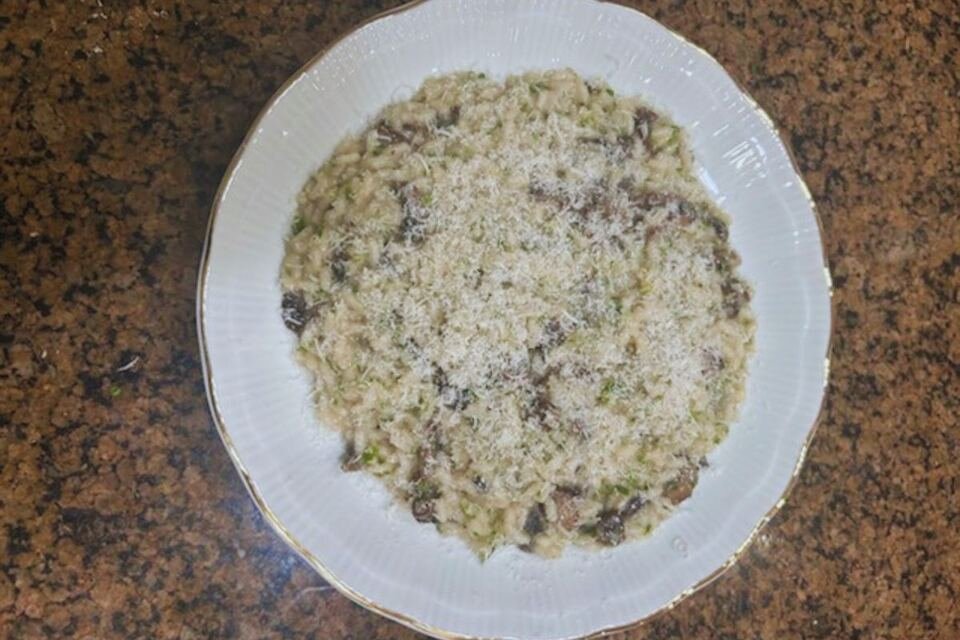
Risotto waits for no one. Plate it immediately into warmed bowls. Top with extra Parmesan and maybe a crack of black pepper.
The risotto will continue thickening as it sits, so serve it slightly looser than you think it should be. By the time it hits the table, it’ll be perfect.
Common Mistakes and How to Avoid Them
I’ve made every risotto mistake possible. Learn from my failures.
Don’t use cold stock. Adding cold liquid to hot rice stops the cooking process dead. Your rice will cook unevenly with hard centers and overcooked exteriors. Keep the stock hot the entire time.
Don’t walk away. Risotto isn’t technically difficult, but it requires your presence. You can’t start it and go check your phone for 10 minutes. The rice will stick and burn. Stay at the stove and stir.
Don’t add stock too fast. If you dump in multiple ladles at once, you’re basically just boiling rice in stock. The gradual addition and absorption is what develops the creamy texture. Be patient.
Don’t skip the final butter and cheese. The mantecatura is what separates restaurant risotto from boring rice. Those cold butter cubes and generous Parmesan transform the texture completely.
Don’t let it sit before serving. Risotto is meant to be eaten immediately. It continues thickening from residual heat, and the texture degrades within 10 minutes of finishing. Get everything else ready before you start cooking the risotto.
Don’t undercook or overcook the rice. Al dente is a specific texture. Crunchy is undercooked. Mushy is overcooked. Taste frequently in the final minutes and pull it at the right moment.
Tips for Perfect Risotto Every Time
Want to level up your risotto game? Here’s the advanced knowledge.
Use a mix of mushrooms. Combining varieties creates more complex flavor. Shiitake adds umami, oyster adds delicacy, cremini adds earthiness. Even mixing in a few dried porcini (rehydrated) adds massive depth.
Save that mushroom soaking liquid. If you use dried mushrooms, soak them in hot water and save the liquid. Use it as part of your stock. It’s intensely flavorful.
Make extra risotto base. The technique for making risotto works for any flavor combination. Once you nail the method, try adding different vegetables, proteins, or aromatics. Asparagus risotto, saffron risotto, seafood risotto, they all follow the same basic process.
Finish with a drizzle of good olive oil. Right before serving, add a tiny drizzle of your best extra virgin olive oil over the top. It adds a bright, fruity note that cuts through the richness.
Use real Parmigiano-Reggiano. The stuff in the green can is garbage. Real Parmesan has complex, nutty, sweet flavors that transform risotto. Buy a wedge and grate it fresh.
Keep the consistency loose. When in doubt, make it slightly too loose rather than too thick. It’s easier to let it sit for 30 seconds to thicken than to try adding liquid after it’s overdone.
Frequently Asked Questions
Can I make risotto ahead of time?
Not really. Risotto is best served immediately. Some restaurants par-cook it and finish to order, but at home, this doesn’t work well. The texture deteriorates significantly. Just commit to making it fresh when you’re ready to eat.
Can I use water instead of stock?
You can, but the flavor will be flat and boring. Stock provides the savory backbone. If you must use water, increase the amount of Parmesan and consider adding a bit of soy sauce or miso for umami depth.
What if I don’t have white wine?
You can skip it entirely and just use stock, or substitute with a tablespoon of white wine vinegar or lemon juice. The wine adds acidity and depth, so you’ll lose some complexity without it.
My risotto is too thick. What do I do?
Add more hot stock or hot water and stir vigorously. It should loosen up immediately. This is an easy fix as long as the rice isn’t overcooked.
My risotto is too thin/soupy. What do I do?
Let it sit off heat for 1-2 minutes. It’ll continue thickening from residual heat and starch. You can also return it to gentle heat and cook for another minute while stirring. Just don’t overcook the rice trying to thicken it.
Can I use vegetable stock instead of chicken stock?
Absolutely. Vegetable stock makes this vegetarian (just make sure your Parmesan is vegetarian-friendly). The flavor will be lighter but still delicious.
How do I reheat leftover risotto?
Add a bit of stock or water to a pan, add the risotto, and heat gently while stirring. It won’t be quite as creamy as fresh, but it’s edible. Some people make arancini (fried risotto balls) with leftovers, which is actually better than trying to reheat it as risotto.
Conclusion: You’ve Got This
Risotto isn’t the intimidating monster people make it out to be. It’s a straightforward technique that requires attention and patience, nothing more. The reward is a luxurious, creamy dish that tastes like you spent way more effort than you actually did.
The keys to success: hot stock added gradually, frequent stirring, proper rice selection, and that final mantecatura with cold butter and Parmesan. Nail those elements and you’ll make better risotto than most restaurants.
Make this once and you’ll realize risotto is actually a simple weeknight option, not just a special occasion dish. Sure, it takes 30 minutes of active cooking, but there’s something meditative about standing at the stove, stirring, and watching the transformation happen.
Next time you want to impress someone or just treat yourself to something special, make mushroom risotto. Pour yourself a glass of that wine you didn’t use in the recipe. Stand at the stove and stir. Thirty minutes later, you’ll have restaurant-quality Italian comfort food that proves you don’t need culinary school to cook like a pro.
Now go buy some arborio rice and good mushrooms. Your wooden spoon is waiting.