
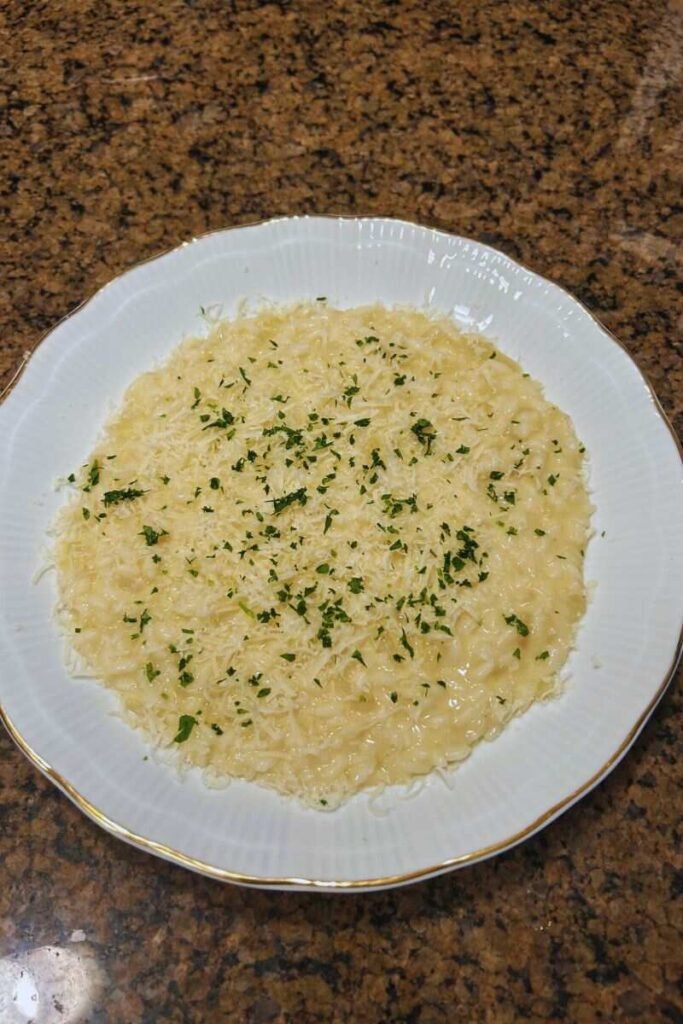
I used to think risotto was this mysterious, complicated dish that required chef-level skills and constant stirring for an hour. Then one night in a tiny restaurant in Parma, I watched the chef make it in about 20 minutes with maybe six ingredients, and it was the creamiest, most luxurious thing I’d ever eaten. No cream. No complicated techniques. Just rice, stock, butter, and exceptional Parmigiano-Reggiano doing what they do best together.
Real Parmesan risotto is deceptively simple, which means every detail matters. The right rice, proper stock temperature, vigorous stirring at the end, these aren’t fussy chef moves, they’re the difference between creamy perfection and disappointing rice porridge 😌. Let me show you how to make this properly.
What You’ll Need
Ingredients for Parmesan Risotto
For the Risotto:- 300g Arborio rice (or Carnaroli if available)
- 1 shallot, very finely chopped
- 1–1.2L chicken stock, kept hot
- 100ml dry white wine
- Extra-virgin olive oil
- Salt to taste
- 30g cold butter, cubed
- 60–80g Parmigiano-Reggiano, very finely grated
- Finely chopped fresh parsley (optional)
Quality matters enormously here. Use real Parmigiano-Reggiano, not “parmesan” from a container. Use good homemade or quality store-bought chicken stock, boxed broth works if it’s flavorful. According to Serious Eats, the quality of your stock directly determines the quality of your final dish since rice absorbs those flavors completely.
Kitchen Tools You’ll Need
A wide, heavy-bottomed pan or sauté pan (not a pot, you need surface area for even cooking), a ladle, a wooden spoon for stirring, a second pot for keeping stock hot, and a fine grater for the cheese. That’s it. Risotto doesn’t require special equipment, just proper technique.
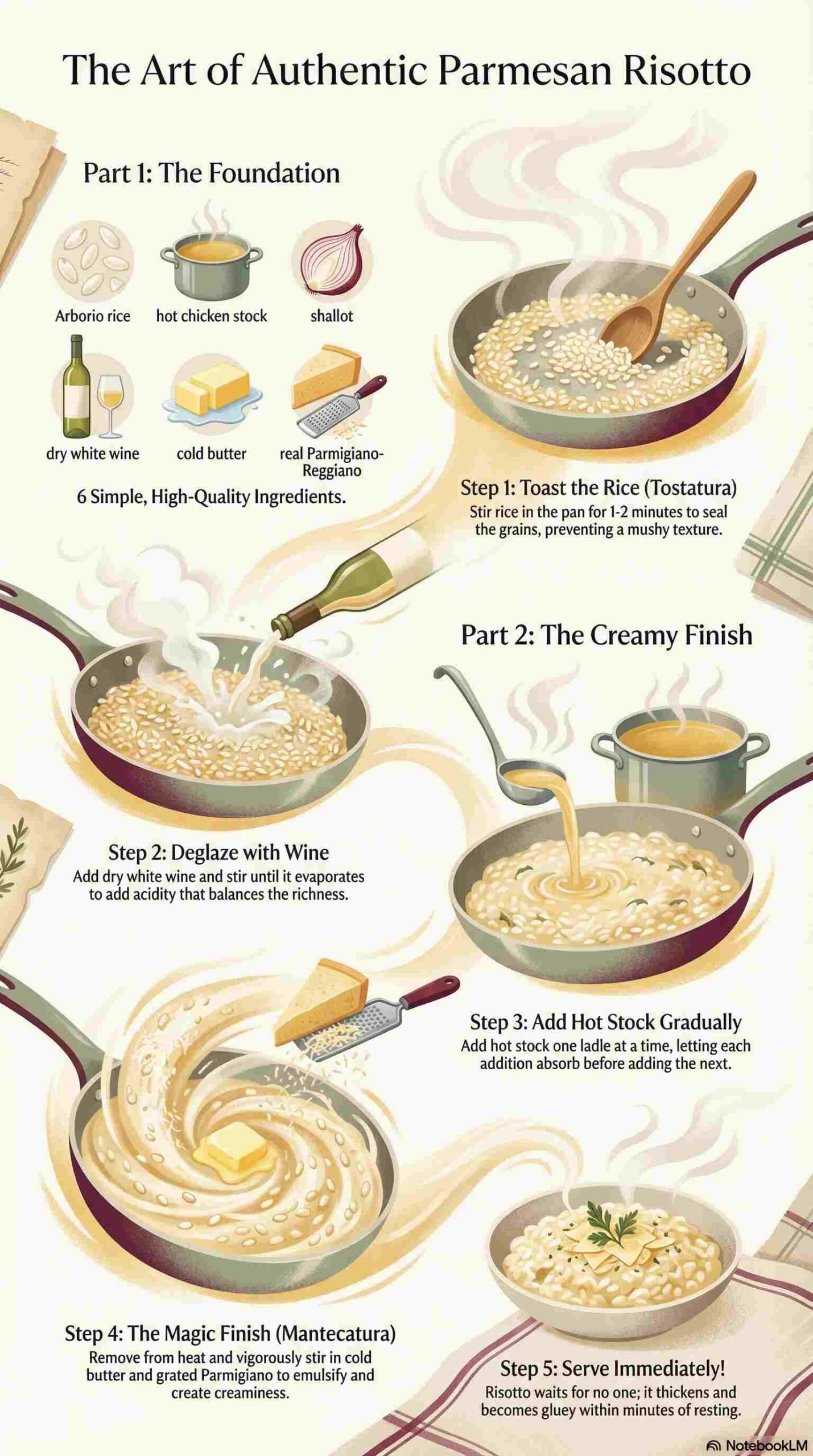
Step 1: Prepare the Base (Soffritto)
Heat a small drizzle of extra-virgin olive oil in your wide pan over medium-low heat. You want just enough to coat the bottom, maybe 2 tablespoons. Add the finely chopped shallot and cook gently until soft and translucent, about 3-4 minutes.
The key word here is “gently.” You’re sweating the shallot, not browning it. Without browning is crucial, browned shallots add color and bitter notes that don’t belong in classic risotto. The shallot should basically melt into soft, sweet aromatics that disappear into the background.
Why shallot instead of onion? Shallots have a more delicate, slightly sweet flavor that doesn’t overpower the Parmesan. You can use onion if necessary, but shallots are traditional and superior here.
Step 2: Toast the Rice (Tostatura)
Add the Arborio rice to the pan with the softened shallot. Stir constantly for 1-2 minutes until the grains are hot and you see them become slightly translucent around the edges. You’ll hear the rice start to crackle slightly, that’s good.
This toasting step (called tostatura in Italian) is essential. It seals the outer layer of each grain, helping the rice maintain structure while releasing starch. According to research on risotto preparation techniques, this initial toasting prevents the rice from becoming mushy while ensuring proper starch release for creaminess.
Don’t skip this step or rush it. The rice should smell toasty and look glossy from the oil before you add wine.
Step 3: Deglaze with Wine
Pour in the white wine all at once. It’ll sizzle and steam immediately. Stir until it evaporates completely, you’ll know it’s ready when the alcohol smell disappears and the pan looks almost dry again. This takes 2-3 minutes of constant stirring.
The wine adds acidity that balances the richness of butter and cheese. It also helps release any fond (browned bits) from the pan bottom, though if you cooked your shallot properly, there shouldn’t be much. Use a dry white wine you’d actually drink, nothing sweet, nothing you wouldn’t put in a glass.
Step 4: Cook the Risotto (The Main Event)
Now comes the part that gives risotto its reputation. Begin adding hot chicken stock one ladle at a time, probably about 3/4 cup per addition. Stir frequently (not constantly, but often), allowing each addition to be almost absorbed before adding the next.
Here’s what “almost absorbed” means: when you drag your spoon across the bottom of the pan, you should see the pan bottom for just a second before liquid flows back. That’s when you add the next ladle. Too early and you’ll make soup. Too late and the rice will cook unevenly.
Continue for about 16-18 minutes total cooking time from the first addition of stock. The rice should be creamy and al dente, tender but with a slight firm bite in the very center of each grain. Taste it. If it’s chalky or crunchy, keep going. If it’s mushy, you’ve gone too far (and sadly, there’s no fixing that).
The stirring serves multiple purposes: it releases starch from the rice, distributes heat evenly, and prevents sticking. But you don’t need to stand there stirring non-stop for 20 minutes. Frequent stirring (every 30-60 seconds) works fine. I usually stir for about 10 seconds, then let it cook undisturbed for 30-40 seconds, repeat.
Step 5: Mantecatura (The Magic Finish)
This step is what separates good risotto from extraordinary risotto. Remove the pan completely from heat, this is important. Add the cold butter (cubed so it melts evenly) and the finely grated Parmigiano.
Now stir vigorously, really go for it, until the risotto becomes glossy, creamy, and fluid. This aggressive stirring is called mantecatura, and it emulsifies the fat from the butter and cheese with the starchy liquid, creating that signature risotto texture. You’ll see it transform from separate grains in liquid to a unified, flowing, creamy mass.
The risotto should move in waves when you shake the pan, Italians call this all’onda (like a wave). If it’s too thick, add a splash more hot stock and stir it in. If it’s too loose, that’s actually fine, it’ll thicken slightly as it sits.
Taste and adjust salt if needed. The Parmigiano is salty, so you might not need any additional salt. But taste it, this is your last chance to get the seasoning right.
Step 6: Rest & Serve (Timing Is Everything)
Let the risotto rest for 30-60 seconds off heat. This brief rest allows the temperature to equalize and the texture to set slightly. Then serve immediately. Not in five minutes. Not after you set the table. Now.
Risotto waits for no one. It continues to absorb liquid as it sits, and what’s perfectly creamy now will be thick and gluey in ten minutes. Plate it up, finish with a light sprinkle of chopped parsley if you want a color contrast and fresh note, and eat it while it’s perfect.
According to La Cucina Italiana, proper risotto should be served all’onda, flowing like a wave when tilted on the plate, not sitting in a stiff mound. If your risotto doesn’t flow, you’ve either undercooked it or let it sit too long.
Why This Recipe Works (The Science of Risotto)
Arborio rice (or the superior Carnaroli) contains high amounts of amylopectin starch. When you stir risotto, you mechanically release this starch into the cooking liquid, creating a creamy suspension without any cream. The gradual addition of hot liquid allows this starch release to happen controlled over time.
The mantecatura at the end emulsifies fat (from butter and cheese) with the starchy liquid through vigorous agitation, creating a stable emulsion. This is why the texture is so different from other rice dishes, you’re essentially creating a savory rice custard through technique alone.
The cold butter added at the end is crucial. Cold butter emulsifies better than melted butter because the fat droplets are smaller and more stable. This technique comes from classic French cooking but Italians perfected it in risotto.
Common Mistakes I’ve Made (So You Don’t Have To)
Adding all the stock at once—did this my first attempt, ended up with rice soup. The gradual addition is non-negotiable.
Not keeping stock hot enough—adding cold stock to hot rice stops the cooking process and makes timing impossible. Keep that stock simmering in a separate pot.
Using pre-grated cheese—those containers contain anti-caking agents that prevent smooth melting. Grate your own Parmigiano right before using.
Stirring constantly like a maniac—you’ll wear yourself out and it’s unnecessary. Frequent stirring works fine.
Letting it sit before serving—made this for guests and plated it five minutes early. By the time we ate, it was a thick paste. Serve risotto immediately, period.
What to Serve With Parmesan Risotto
Honestly? This is rich enough to be a course on its own. In Italy, risotto is served as a primo piatto (first course) before the main protein course. A small portion (this recipe serves 4 as a starter) with a simple green salad after is perfect.
If you’re serving it as a main course, keep accompaniments minimal. Maybe some simply grilled vegetables on the side. A glass of the same white wine you cooked with. The risotto itself is the star, don’t compete with it.
What you don’t do: add protein directly to Parmesan risotto. No chicken, no shrimp, no mushrooms (that’s a different risotto). This is about celebrating rice, stock, butter, and cheese together. Let them shine.
Variations and Different Risottos
This Parmesan risotto (risotto alla Parmigiana) is the master recipe. Once you nail this, you can make any risotto by changing what you add:
Mushroom risotto: sauté mushrooms separately, add during the last few minutes of cooking Asparagus risotto: blanch asparagus, purée some for color, add chunks at the end Saffron risotto: add a pinch of saffron to the stock for risotto Milanese Seafood risotto: use fish stock, skip the cheese, add seafood at the end
But master this simple Parmesan version first. It’s the foundation of all risotto technique.
Storing and Reheating (Or Rather, Don’t)
Risotto doesn’t store or reheat well. The starches retrograde (re-crystallize) when cooled, and reheating never quite brings back the original texture. It’s edible but disappointing.
If you must store leftovers, keep them in an airtight container in the fridge for one day maximum. Reheat gently in a pan with additional stock, stirring constantly. It won’t be as good as fresh, but it’s acceptable. Better plan: make only what you’ll eat immediately.
Some people make risotto cakes (arancini) from leftovers, which is actually a great use for day-old risotto. But fresh risotto should be enjoyed fresh.
The Cultural Importance of Risotto
Risotto is one of those dishes where technique matters as much as ingredients. It’s a test of a cook’s patience, attention, and understanding of how starches behave. In professional kitchens, being able to make proper risotto is a benchmark skill.
The dish originated in Northern Italy, particularly Lombardy and Piedmont, where rice paddies flourish. Parmesan risotto showcases Parmigiano-Reggiano from Emilia-Romagna. It’s regional Italian cooking at its finest, simple ingredients, perfect technique, extraordinary results.
Final Thoughts
Making perfect Parmesan risotto changed how I think about cooking rice. You don’t need cream to make something creamy. You don’t need complicated ingredient lists to create sophisticated flavor. You need good ingredients, proper technique, and patience to do it right.
The first time I nailed it, when that butter and cheese emulsified into glossy, flowing perfection during mantecatura, felt like magic. It tastes clean and rich simultaneously, letting the nutty Parmigiano shine without heavy cream masking everything.
Is it better than cream-based rice dishes? That’s not the point. It’s different. It’s what Italians have perfected over centuries. It’s worth learning to make properly at least once.
So grab some Arborio rice, splurge on real Parmigiano-Reggiano, and make this correctly. Keep that stock hot. Stir frequently but not constantly. Do the mantecatura with enthusiasm. Serve it immediately. You’ll understand why this simple dish has such a revered place in Italian cuisine.
Now if you’ll excuse me, writing about this has made me desperately hungry, and I happen to have Arborio rice and good Parmigiano in my kitchen. Time to make dinner.