
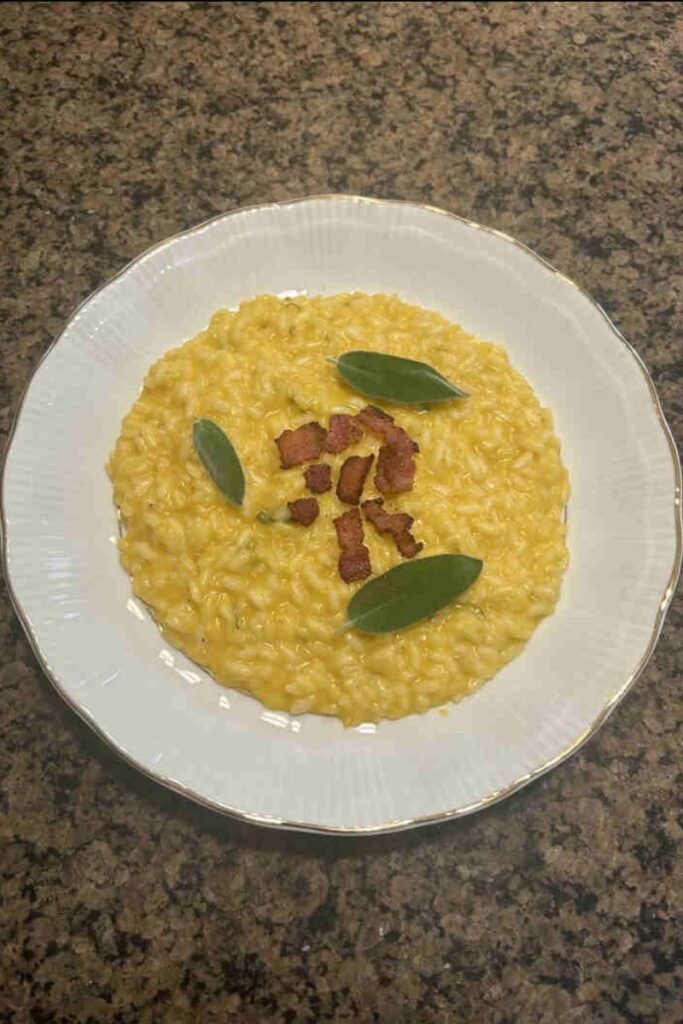
There’s something almost meditative about making risotto. You stand at the stove, stirring, adding stock ladle by ladle, watching ordinary rice transform into something creamy and luxurious. I first made this butternut squash sage risotto on a chilly October evening when I needed comfort food that felt special, and honestly? It delivered beyond my expectations.
This creamy risotto combines the sweetness of roasted butternut squash with earthy sage and crispy bacon for a dish that tastes like autumn in a bowl. It’s Italian comfort food that looks restaurant-quality but uses simple ingredients and straightforward technique 🙂. The kind of fall risotto that makes you want to light candles, pour wine, and pretend you’re dining in Tuscany instead of your kitchen.
Ingredients
Here’s what you need for this butternut squash risotto recipe. The ingredients are straightforward, though you’ll need to dedicate about 45 minutes to the process. This serves 4 people as a generous main course.
Ingredients for Butternut Squash Sage Risotto
- ½ butternut squash, peeled and cubed
- 5–6 garlic cloves, peeled (keep them whole)
- 20 ml extra virgin olive oil
- 1 onion, finely diced
- 350g Arborio rice (this is crucial, don’t substitute)
- 30g butter
- 150 ml white wine
- Vegetable stock, kept hot (you’ll need about 1–1.5 liters)
- 6–7 fresh sage leaves (plus extra for frying)
- 2 slices bacon, cut into small pieces
- Salt and black pepper, to taste
- Pinch of nutmeg
- Parmigiano Reggiano cheese, grated generously
The Arborio rice is absolutely non-negotiable. It’s a short-grain Italian rice with high starch content that creates risotto’s signature creaminess. Regular long-grain rice will never work, so don’t even think about it. You can find Arborio at any decent grocery store, usually in the international or rice aisle.
Substitution options: Want to make this vegetarian? Skip the bacon and add extra butter or some sautéed mushrooms for that umami depth. Going vegan? Use quality plant-based butter and nutritional yeast instead of Parmigiano. Don’t have butternut squash? Try kabocha squash or even sweet potato, though butternut gives you the sweetest, smoothest purée.
Fresh sage is important here. Dried sage won’t give you those gorgeous fried leaves that add visual appeal and textural contrast. Plus, frying fresh sage releases aromatic oils that dried just can’t match. This is authentic Italian cooking where ingredient quality genuinely matters.
Step-by-Step Instructions
Let’s make some proper risotto. This isn’t difficult, but it does require your attention for about 20 minutes of active stirring. Pour yourself a glass of wine (you’re using some in the recipe anyway), put on some music, and embrace the process. This is homemade risotto done the traditional way.
Step 1: Roast the Squash
Preheat your oven to 400°F (200°C). Peel and cut the butternut squash into 1-inch cubes, try to keep them roughly the same size so they cook evenly. Place the cubes and whole peeled garlic cloves on a baking sheet.
Drizzle everything with olive oil and season generously with salt and pepper. Roast until fork-tender, about 25-30 minutes. You want the squash to have some caramelized edges and the garlic to turn golden and soft. This roasting develops sweet, deep flavors that raw squash simply doesn’t have. The garlic becomes buttery and mellow, losing its sharp bite.
Step 2: Crisp the Bacon
While the squash roasts, cut your bacon into small pieces and cook in a pan over medium heat until properly crispy. You want real texture here, these crispy bits will add savory contrast to the sweet, creamy risotto. Transfer the bacon to a paper towel to drain and set aside.
Keep that pan with a little bacon fat in it. We’re going to use it for the next step, and that smoky flavor adds another dimension to the dish. FYI, this is optional if you’re trying to keep things lighter, but IMO it’s worth it for the extra richness.
Step 3: Fry the Sage Leaves
In the same pan with leftover bacon fat or a splash of olive oil, fry a few whole sage leaves for 10-15 seconds per side until crisp. They should sizzle immediately when they hit the fat. Watch them carefully, sage goes from perfectly crisp to burnt in literally seconds.
Remove the fried sage and place on paper towels to drain. These fried leaves are your garnish, so you want them looking beautiful and tasting incredible. They add this earthy, almost savory-sweet crunch that’s essential to the final presentation.
Step 4: Prepare the Base
Finely chop the remaining sage leaves and dice your onion. In a large, wide pan (this is your risotto pan, so make sure it’s substantial), sauté the onion and chopped sage in olive oil over medium heat until the onion becomes soft and translucent. This takes about 5-7 minutes.
Don’t rush this step. Properly softened onions add natural sweetness and create the flavor foundation. The sage infuses the oil, which then coats every grain of rice. This is the technique behind easy risotto recipes that actually taste restaurant-quality.
Step 5: Toast the Rice
Add the Arborio rice to the pan and toast for 1-2 minutes, stirring continuously. You’ll hear the rice change sound slightly as it toasts, and you might see the grains become a bit translucent around the edges. This toasting step is crucial, it seals the exterior of each grain, helping the rice maintain its structure while releasing starch.
Deglaze with white wine and let it simmer until mostly absorbed. The wine adds acidity that balances the dish’s richness and provides aromatic complexity. Plus, your kitchen will smell amazing. This is classic Italian risotto technique.
Step 6: Cook the Risotto
In a separate pot, keep your vegetable stock hot at a gentle simmer. This is absolutely critical. Cold stock will shock the rice, interrupt the cooking process, and potentially make your risotto gummy instead of creamy.
Gradually add a ladleful of hot stock to the rice at a time, stirring vigorously and allowing each addition to absorb before adding the next. Continue this process until the rice is creamy and al dente, about 16-19 minutes total.
This is where patience matters. You’re standing there, stirring, adding stock, stirring more. But this constant stirring releases starch from the rice, creating that signature creamy Italian risotto texture without any cream. It’s pure technique and starch magic. The rice should move in waves (all’onda in Italian) when you shake the pan.
Step 7: Make the Purée
While the risotto cooks (or beforehand if you’re organized), take your roasted butternut squash and garlic cloves and add them to a blender. Blend until completely smooth, seasoning with salt and pepper to taste.
This purée gives the risotto its gorgeous golden color and adds silky texture throughout. The roasted garlic contributes depth without being overpowering. You want it smooth enough to incorporate seamlessly, no chunks.
Step 8: Combine and Finish
Once your rice reaches that perfect al dente texture (tender but still with a slight bite in the center), stir the squash purée into the risotto along with a pinch of nutmeg and your reserved whole squash cubes if you saved some. Mix well and adjust seasoning as needed.
The nutmeg is subtle but important, it enhances the squash’s natural sweetness and adds warmth. Just a pinch though. Nobody wants to taste Christmas spice in their risotto 🙂
Step 9: Add Richness
Here’s the crucial final step called “mantecatura” in Italian cooking. Remove the pan from heat and stir in the butter and grated Parmigiano Reggiano until creamy and glossy.
This addition of fat and cheese is what transforms good risotto into spectacular risotto. The butter adds sheen and silkiness, while the cheese contributes salty umami depth that makes every bite memorable. This is gourmet risotto technique that separates home cooking from restaurant-quality results.
Step 10: Plate and Serve
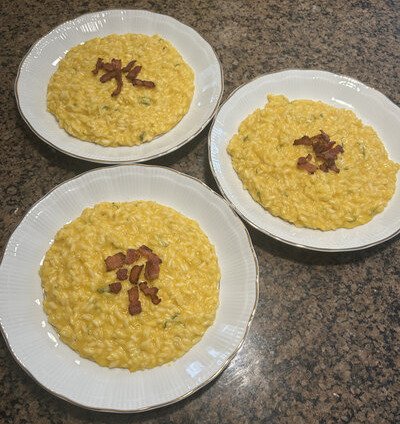
Spoon the risotto onto warm plates. Here’s a professional technique: gently tap the bottom of the plate to spread the risotto evenly. This stops the cooking process and gives you that elegant, spread-out presentation rather than a pile of rice.
Top each serving with crispy bacon, fried sage leaves, and a final generous sprinkle of Parmigiano Reggiano. Serve immediately while it’s at peak creaminess. Fall risotto recipes honestly don’t get better than this.
Tips & Variations
This seasonal Italian recipe adapts beautifully once you master the basic technique. Here are some ways to customize it based on what you have or what you’re craving.
Make it vegetarian: Skip the bacon entirely and add sautéed wild mushrooms instead. Porcini, cremini, or shiitake mushrooms provide earthy umami that replaces the bacon’s savory depth beautifully. Or just omit it, the squash and sage carry enough flavor on their own.
Add more vegetables: Wilted kale, roasted Brussels sprouts, or caramelized red onions would all work beautifully mixed in at the end. Just don’t overload it, you want the butternut squash to remain the star of this show.
Protein additions: Pan-seared scallops, grilled chicken breast, or even lobster would elevate this into truly special occasion territory. Cook your protein separately and place it artfully on top of the plated risotto for that restaurant presentation.
Make ahead strategy: Roast the squash, make the purée, and crisp the bacon hours ahead of time. Store everything in the fridge. When dinner time arrives, you only need to make the risotto itself, which still requires 20 minutes but at least you’ve prepped everything else. This makes weeknight dinner ideas more manageable.
Stock matters: Homemade vegetable stock makes a noticeable difference in final flavor, but quality store-bought works fine. Just avoid anything too salty since the stock reduces through evaporation and concentrates. The stock flavor becomes part of the rice, so start with something that tastes good on its own.
Wine choices: Any dry white wine works perfectly. Pinot Grigio, Sauvignon Blanc, or even dry vermouth. Don’t use sweet wine or anything heavily oaked. Honestly, whatever white wine you’re planning to drink with dinner probably works great for cooking.
Texture preferences: Some people like their risotto quite loose and almost soupy (all’onda style). Others prefer it firmer. Adjust the final consistency by adding extra stock if it’s too thick, or cooking a minute longer if it’s too loose. This is your risotto, make it how you like it.
Leftover magic: Got leftover risotto? Make arancini (fried rice balls) the next day. Form cold risotto into balls, bread them, fry until golden, and suddenly your leftovers become a completely new meal. Creative Italian cooking at its finest.
Why This Recipe Works
There’s a reason this became one of my go-to impressive dinner recipes when I want to show off without being stressed. Let me break down what makes this dish so successful.
The technique is foolproof once you understand it. Yes, risotto requires stirring and attention. But it’s not complicated. You’re just adding liquid gradually and stirring constantly. The ritual is almost meditative, and you’re rewarded with incredibly creamy results that feel like magic happened in your pan.
The flavors are perfectly balanced. Sweet roasted squash, savory bacon, earthy sage, rich cheese, and that subtle hint of nutmeg create complex flavor harmony where everything complements everything else. This is traditional Italian cooking at its best, simple ingredients, impeccable technique, balanced flavors.
It looks seriously impressive. That golden color from the squash purée, the crispy bacon pieces scattered on top, those fried sage leaves placed just so. This is restaurant-quality plating that anyone can achieve at home. Serve this at a dinner party and people will genuinely be impressed.
It’s actually a complete meal. Unlike many risottos that feel like side dishes, this has enough substance and protein (from bacon and cheese) to be completely satisfying as a main course. Add a simple arugula salad and you’re done. No need for multiple courses.
It showcases seasonal ingredients. Autumn recipes should taste like autumn, and this absolutely delivers. Butternut squash and sage are peak fall flavors that make you want to put on cozy sweaters and light candles. It’s comfort food that also happens to be sophisticated.
The texture is incredible. That creamy, flowing consistency with tender chunks of squash and crispy bacon creates textural interest in every bite. The fried sage adds crunch. The rice is creamy but maintains a slight bite. Everything works together perfectly.
It’s healthier than it tastes. Sure, there’s butter and cheese, but the bulk of this dish is butternut squash and rice. You’re getting vitamins, fiber, and complex carbs along with your indulgence. Healthy comfort food is genuinely possible when you let vegetables be the foundation.
Conclusion
This butternut squash sage risotto recipe proves that Italian comfort food can be both elegant and achievable at home. Yes, it requires some attention and dedicated stirring time. But the result is this incredibly creamy risotto that tastes like you went to culinary school when really you just followed directions and stirred patiently.
The beauty of classic risotto recipes is how they reward proper technique with spectacular results. You’re not just cooking rice, you’re coaxing starch out of grains to create naturally creamy sauce. You’re layering flavors through roasting, pureeing, and finishing with butter and cheese. It’s cooking as craft, and it’s deeply satisfying.
Want to impress dinner guests? Make this. Need a special meal for a cold evening? This is it. Looking for Italian dinner ideas that feel restaurant-quality? You’ve found your recipe.
The roasted butternut squash technique works for other risottos too. Once you’ve mastered this method, try roasted beet risotto with goat cheese, or mushroom risotto with truffle oil, or spring pea risotto with mint. The fundamental technique stays the same, only the featured vegetable changes.
Make this over the weekend when you have time to enjoy the process. Pour that glass of wine, put on your favorite playlist, and embrace the therapeutic rhythm of stirring risotto. There’s something genuinely calming about the ritual, and the reward at the end is absolutely worth every minute.
Try it, share your results, and let me know how it turns out. This recipe has become an autumn staple in my kitchen, and I think it’ll become one in yours too. Pair it with a simple salad dressed in lemon vinaigrette to cut through the richness, or serve it as an elegant first course before roasted chicken or fish.
Now grab that butternut squash and get cooking. Your fall dinner menu just got a serious upgrade.