
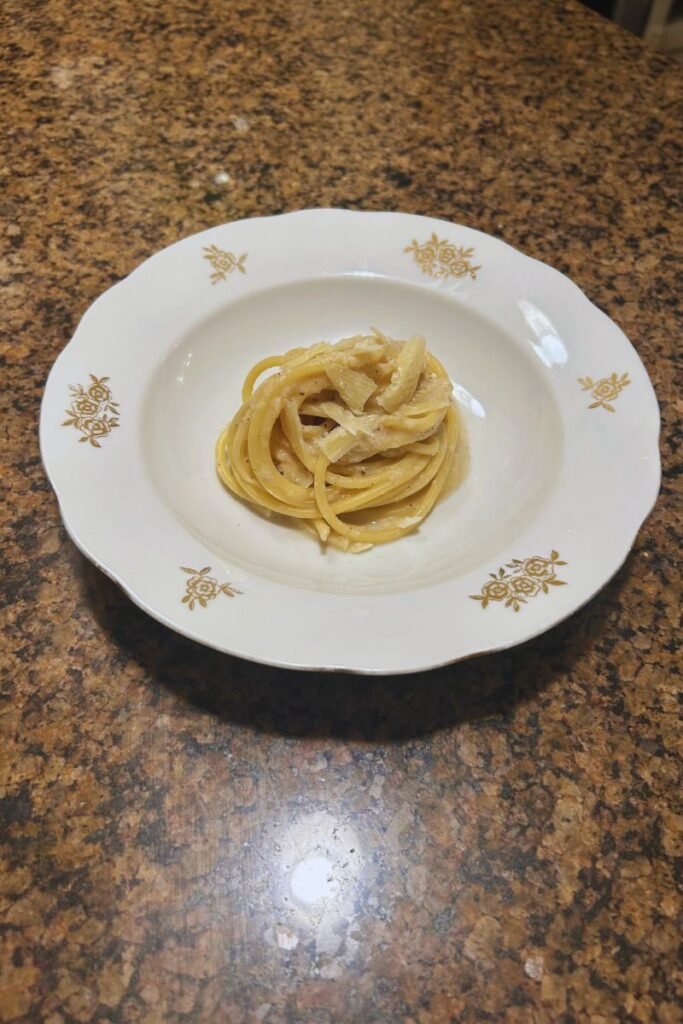
Three ingredients. That’s all you really need for this authentic Cacio e Pepe recipe: cheese, pepper, pasta. Yet this traditional Italian pasta still manages to trip up even experienced cooks. I’ve made it more times than I can count, and every so often the pecorino Romano cheese still decides to clump instead of melting into that smooth, glossy sauce everyone wants. But when it finally comes together, it feels like the easiest win in the world.
At its core, this is Roman pasta stripped down to pure technique. No cream, no butter, no tricks. Just heat, timing, and knowing how the cheese behaves. Recipes like this remind you why classic Italian recipes have stayed around forever: they rely on good ingredients and a little patience. It’s simple Italian cooking that looks easy on paper but rewards you only when you give it a bit of practice 🙂.
Ingredients
Here’s what you need for this Cacio e Pepe recipe. The list is laughably short, which means each ingredient matters enormously. No hiding behind complex sauces here. This serves about 4 people as a main course.
Ingredients for Cacio e Pepe
- 340g bucatini pasta (or spaghetti, tonnarelli, or any long pasta)
- 400g Pecorino Romano cheese, finely grated
- 16g freshly cracked black pepper (about 2–3 tablespoons)
- Salt for the pasta water
That’s literally it. Three ingredients plus salt. The simplicity is deceptive because the quality and technique matter way more than in complicated recipes where mistakes get masked by other flavors.
Pecorino Romano cheese is non-negotiable. Not Parmigiano. Not a blend. Pure pecorino Romano made from sheep’s milk. It has a sharp, salty, funky flavor that defines this dish. Using anything other than pecorino fundamentally changes the dish. Buy a wedge and grate it yourself, pre-grated cheese contains anti-caking agents that prevent proper emulsification.
Freshly cracked black pepper means you’re cracking whole peppercorns immediately before cooking. Pre-ground pepper loses aromatic oils and doesn’t provide the same flavor punch. Use a pepper mill, mortar and pestle, or smash peppercorns under a heavy pan. The coarse texture and fresh oils are essential.
Bucatini pasta is traditional, thick, hollow spaghetti that catches sauce beautifully. Spaghetti, tonnarelli, or even rigatoni work fine. The key is using quality dried Italian pasta that holds up to vigorous tossing. Fresh pasta gets too soft and doesn’t maintain the right texture.
Substitution options: Honestly? There aren’t many. You could use spaghetti instead of bucatini. You could adjust the pepper amount slightly based on preference. But substituting the cheese ruins the dish entirely. This is one recipe where you follow the traditional ingredients or you’re making something different.
The technique here is everything. You’re creating an emulsion of cheese, starchy pasta water, and fat from the cheese. Mess up the water temperature, add cheese too fast, or skip the vigorous tossing, and you get clumpy, separated sauce instead of creamy perfection. This is Italian comfort food that requires respect for technique.
Step-by-Step Instructions
Alright, let’s make proper Roman Cacio e Pepe. This recipe is fast, total time from start to plate is about 15 minutes. But those 15 minutes require your full attention. Put your phone down, have everything prepped, and focus. This is traditional Italian cooking where technique matters more than time.
Step 1: Prepare the Pasta Water
Bring a large pot of water to a rolling boil. Here’s where Cacio e Pepe differs from most pasta: season lightly with salt. Use less salt than you normally would because pecorino Romano is intensely salty. Too much salt in the water plus salty cheese creates an inedible mess.
The pasta water is crucial because it becomes part of your sauce. The starch released from cooking pasta acts as an emulsifier, helping cheese and water bind into smooth sauce rather than separating into greasy clumps. Save at least 2 cups of this liquid gold before draining.
Step 2: Toast the Pepper
While water heats, add your cracked black pepper to a large skillet or pan over medium heat. Toast it dry for 30-60 seconds until it becomes fragrant and you can smell those peppery aromatics filling your kitchen.
Add a ladle of hot pasta water to the pan to create a peppery “tea.” This step extracts flavor from the toasted pepper and creates the base for your sauce. Let it simmer gently while the pasta cooks. The pepper should infuse the water with its spicy, aromatic flavor.
Step 3: Cook the Pasta
Add your bucatini to the boiling water and cook until just shy of al dente. This means 1-2 minutes less than package directions suggest. The pasta will finish cooking in the pan with the sauce, so undercooking slightly is essential.
Before draining, reserve about 2 cups of that starchy pasta water. I cannot emphasize this enough, this water is not optional. It’s literally the ingredient that makes the sauce work. Set it aside where you can easily access it during the final steps.
Step 4: Create the Cheese Paste
This is where most people mess up, so pay attention. In a large bowl, mix your finely grated pecorino Romano with a few spoonfuls of hot (but not boiling) pasta water. Stir constantly until you achieve a smooth, creamy paste, not clumpy, not stringy, not grainy.
The water temperature is critical here. According to The Kitchn’s science breakdown of Cacio e Pepe, water around 60-70°C (140-160°F) works best. Too hot and the cheese seizes into clumps. Too cold and it won’t melt smoothly. This Goldilocks zone is where magic happens.
Work quickly and stir vigorously. You want a paste the consistency of thick cream. If it’s too thick, add tiny amounts of pasta water. If it gets clumpy, the water was too hot, start over with fresh cheese and cooler water. Yes, I’m serious. Clumpy cheese doesn’t fix itself.
Step 5: Combine Everything
Drain your pasta and add it immediately to the skillet with the peppery water. Toss to coat. This is where the real work begins. Gradually add more pasta water and your cheese mixture, tossing vigorously and constantly.
You need to toss like you mean it. Lift, flip, shake the pan. The vigorous motion helps emulsify the cheese with the pasta water, creating that glossy, creamy coating that defines authentic Cacio e Pepe. Add water in small amounts, you can always add more but you can’t take it back.
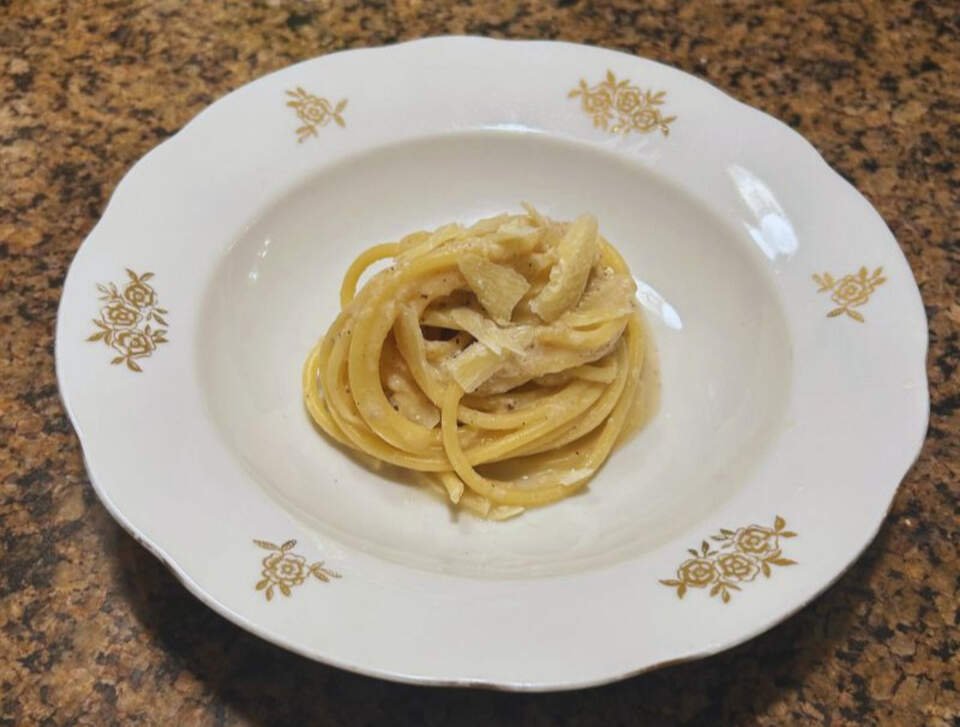
The sauce should cling smoothly to the noodles with no oil separation, no cheese clumps, no pooling liquid at the bottom. It should look almost creamy despite containing zero cream. When you lift pasta with tongs, sauce should coat each strand in a silky layer. This is creamy Italian pasta created purely through emulsification.
Keep the pan moving. Keep tossing. Keep adding small amounts of pasta water until the consistency is perfect. This takes practice to recognize, but you’ll know it when you see it, glossy, flowing, coating every strand evenly.
Step 6: Serve Immediately
Cacio e Pepe waits for no one. Plate immediately while the sauce is at peak creaminess. Top with extra cracked pepper and a light dusting of pecorino. Serve and eat right away.
The emulsion breaks as it cools, so reheating never works well. This is a dish you make fresh and eat immediately. Invite friends over or make a smaller batch, leftovers are disappointing compared to fresh preparation.
The texture should be creamy but not soupy, peppery but not overwhelming, salty but not unpleasant. Each bite delivers cheese, pepper, and pasta in perfect harmony. When you nail it, you’ll understand why Romans have been making this exact recipe for centuries.
Tips & Variations
Traditional Cacio e Pepe is pretty rigid, purists will tell you there’s only one correct way to make it. But here are some insights and slight variations worth knowing.
Pasta options: While bucatini is traditional, spaghetti works perfectly and is easier to toss. Tonnarelli (square spaghetti) is also traditional in Rome. Some people use rigatoni or other short pasta, though this changes the eating experience significantly. Long pasta twirls around forks and holds sauce differently than short cuts.
Cheese temperature: The biggest variable in success is getting cheese to incorporate smoothly. Some chefs temper the cheese bowl by warming it with hot water before adding the cheese paste. Others work directly in the warm pasta pot. Experiment to find what works in your kitchen with your tools.
The finish: Some recipes add a small knob of butter at the end for extra richness and glossiness. Purists scream about this, but it does make the sauce more forgiving and adds sheen. Your call whether authentication or reliability matters more.
Pepper amount: 16g seems like a lot of pepper, and it is. That’s what makes it Cacio e Pepe, literally “cheese and pepper.” But you can reduce it slightly if you’re not a pepper fanatic. Just don’t reduce it so much that you lose the defining characteristic.
The pasta water ratio: Getting this right takes practice. Too much water makes soupy pasta. Too little makes dry, clumpy pasta. Start conservative, you can always add more water but you can’t take it back. IMO, it’s better to undershoot and add gradually than to overshoot and ruin the texture.
Make ahead tips: You really can’t make this ahead. The emulsion breaks when cool and reheating never fully recovers the texture. However, you can grate your cheese, crack your pepper, and measure ingredients beforehand. Then actual cooking takes 15 minutes start to finish.
Common mistakes: Using pre-grated cheese (contains anti-caking agents), water too hot (cheese clumps), insufficient tossing (cheese doesn’t emulsify), too much salt (dish becomes inedible), serving slowly (emulsion breaks as it cools). Avoid these and you’re 80% of the way to success.
Why This Recipe Works
There’s a reason classic Italian pasta dishes like Cacio e Pepe have survived centuries without modification. The technique and ingredients just work.
The simplicity is genius. With only three ingredients, you taste each one clearly. The sharp, funky pecorino. The aromatic, spicy pepper. The wheaty pasta. Nothing hides, nothing overwhelms. It’s balanced perfection that more complex recipes often miss.
The technique is science. You’re creating an emulsion using pasta water starch as the emulsifier, cheese fat as the lipid, and pasta water as the aqueous phase. Temperature control keeps proteins from denaturing and clumping. Agitation creates uniform distribution. This is cooking as chemistry, and it’s fascinating.
It’s fast. Fifteen minutes from boiling water to plated pasta. That’s faster than delivery and way more satisfying. Perfect for weeknights when you want real food but don’t have hours to cook. This is quick Italian dinner done right.
It’s economical. Pasta, cheese, pepper. These are pantry staples that cost maybe $8-10 total for four servings of restaurant-quality food. Budget-friendly Italian cooking doesn’t mean sacrificing quality or flavor.
It teaches fundamental skills. Learning to make proper Cacio e Pepe teaches you about emulsions, pasta water usage, cheese behavior, and temperature control. These skills transfer to countless other dishes. It’s cooking education disguised as dinner.
The texture is perfect. That silky, glossy coating that clings to pasta without being heavy or greasy is the holy grail of pasta sauces. It’s light enough to eat a full portion without feeling stuffed, substantial enough to be satisfying. The mouthfeel is as important as the flavor.
It’s impressive. Serve this to dinner guests and they’ll think you spent way more time and effort than you actually did. The simplicity seems deceptively easy until people try making it themselves and realize how much technique matters.
Conclusion
This authentic Cacio e Pepe recipe proves that traditional Italian pasta doesn’t need ingredient lists longer than your arm. It needs quality ingredients, proper technique, and respect for the craft. Three ingredients, fifteen minutes, and you’ve created something that Romans have perfected over centuries.
The beauty of classic Italian recipes like this is how they reward practice. Your first attempt might produce clumpy cheese sauce. Your fifth attempt will be better. By your tenth, you’ll be making restaurant-quality Roman pasta that rivals anything you’d get in actual Rome. The learning curve is real but totally worth climbing.
Want to impress someone with your cooking? Make this. Need a fast weeknight dinner that feels special? This is it. Looking for simple Italian cooking that tastes extraordinary? You’ve found it. Just remember: quality pecorino, properly cracked pepper, the right water temperature, and vigorous tossing. Master those four elements and you’ve mastered Cacio e Pepe.
The technique here transfers to other Roman pasta dishes too. Once you understand emulsification and temperature control, you can make Carbonara, Amatriciana, and Gricia with confidence. They’re all variations on similar themes, quality ingredients, simple preparation, flawless execution.
Make this on a weekend when you have time to focus without distractions. Grate your cheese fresh, crack your pepper, and commit to the tossing. Don’t answer your phone, don’t check social media, just be present for fifteen minutes of active cooking. The payoff is a plate of pasta that’s greater than the sum of its parts.
Try it, let me know how it goes, and don’t get discouraged if your first attempt isn’t perfect. This dish has a learning curve, and that’s part of what makes it special. Anyone can follow a complicated recipe with twenty ingredients. It takes skill to make three ingredients taste this good 🙂
Now grab that pecorino and get cooking. Your pasta game is about to level up significantly.