
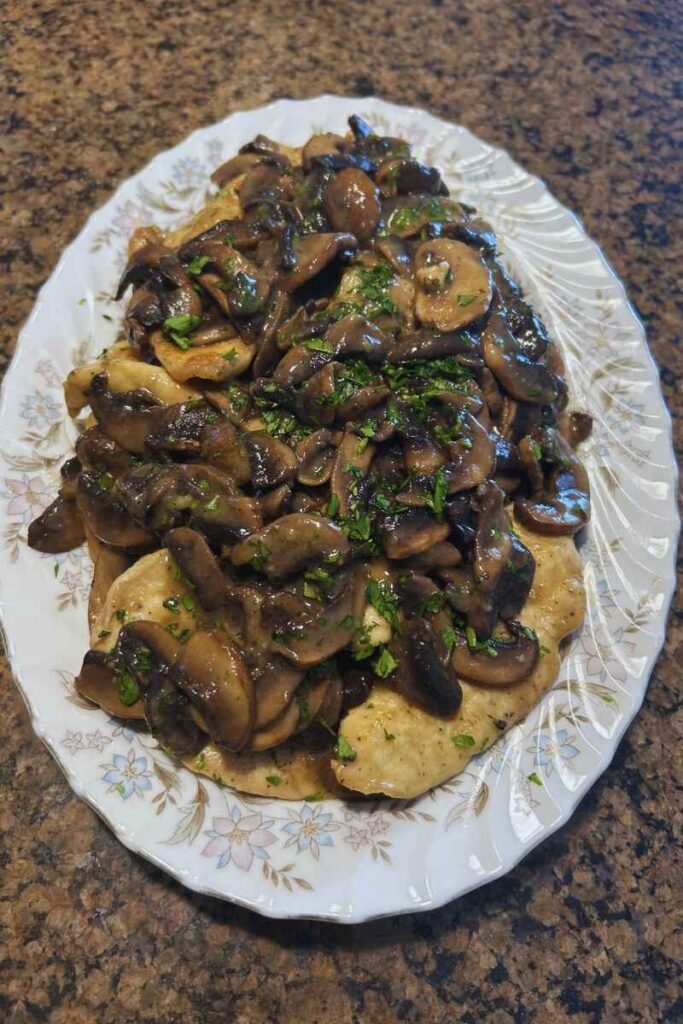
This Italian-inspired dish, Pan-Seared Chicken Scaloppine with Mushroom Sauce, transforms simple chicken breasts into elegant, restaurant-quality fare through classic technique: thin cutlets lightly floured and quickly seared, then finished in a rich mushroom and white wine pan sauce. The name “scaloppine” (sometimes spelled scallopini) refers to thinly sliced meat that cooks rapidly, developing a golden crust while remaining tender inside.
Mushrooms sautéed in the flavorful fond left from searing the chicken create earthy depth, while white wine deglazes the pan and reduces into a silky sauce enriched with butter at the finish. Fresh parsley adds brightness that cuts through the richness, resulting in a dish that balances elegance with approachability 🙂.
Understanding Scaloppine Technique
Scaloppine, derived from the Italian “scaloppa” meaning a thin slice of meat, represents one of Italian cuisine’s fundamental techniques. The method applies to veal (the classic version), chicken, pork, or turkey. Pounding meat thin serves multiple purposes: it tenderizes by breaking down muscle fibers, creates uniform thickness for even cooking, and increases surface area for better crust development. The thin cutlets cook in mere minutes, making scaloppine ideal for quick weeknight meals despite its refined appearance.
The flour dredging creates a delicate coating that browns beautifully and helps thicken the pan sauce later. Unlike heavy breading, this light dusting allows the meat’s flavor to dominate while providing textural contrast. The technique of deglazing the pan with wine captures all the flavorful browned bits (fond) stuck to the pan bottom, incorporating them into the sauce rather than discarding them with the pan.
Ingredients
Chicken with Mushroom Sauce
Ingredients
For the Chicken- 4 large boneless, skinless chicken breasts (approximately 800g to 1kg total)
- 75g all-purpose flour for dredging (approximately ½ cup)
- Salt and freshly ground black pepper to taste
- 3–4 tablespoons extra virgin olive oil for cooking
- 700g mixed mushrooms, sliced (cremini, shiitake, oyster, or button mushrooms)
- 3 garlic cloves, crushed or finely minced
- 600ml dry white wine
- 1 tablespoon unsalted butter (approximately 15g)
- 3–4 tablespoons fresh flat-leaf parsley, finely chopped
- Salt and freshly ground black pepper to taste
- Additional olive oil as needed
Ingredient Selection and Quality
Chicken Breast Preparation
Choose chicken breasts of similar size for uniform cooking. Organic or free-range chicken offers superior flavor and texture compared to conventional chicken, though either works functionally. Each breast should weigh approximately 200 to 250g.
To create thin cutlets, place each breast on a cutting board and, using a sharp knife held parallel to the board, slice horizontally through the breast to create two thinner pieces. Alternatively, place the whole breast between two sheets of plastic wrap or parchment paper and pound with a meat mallet (paid link) or heavy pan until approximately 6mm (¼ inch) thick. Uniform thickness is crucial, as thicker portions remain undercooked while thinner areas overcook.
Flour for Dredging
All-purpose flour works perfectly for the light coating required here. The flour should be spread in a shallow dish or plate for easy dredging. Some cooks season the flour itself with salt and pepper, though seasoning the meat before flouring works equally well.
Mushroom Selection and Preparation
The 700g of mushrooms creates generous quantity for both flavoring the sauce and serving as a substantial component alongside the chicken. Mixed mushroom varieties create more complex flavor than a single type:
Cremini mushrooms (baby bella) provide earthy, robust flavor and meaty texture. They’re widely available and affordable.
Shiitake mushrooms contribute umami depth and slightly chewy texture. Remove and discard the tough stems before slicing.
Oyster mushrooms offer delicate, almost seafood-like flavor and silky texture when cooked.
Button mushrooms (white mushrooms) are mild and versatile, though less flavorful than other varieties.
Exotic mushrooms like chanterelles, porcini, or morels would elevate this dish considerably but aren’t necessary for excellent results. Clean mushrooms by wiping with a damp cloth rather than washing under running water, which makes them waterlogged and prevents proper browning. Slice them approximately 5mm (¼ inch) thick for even cooking.
Wine Selection
The 600ml of white wine forms the sauce base, so quality matters significantly. Choose a dry white wine you would enjoy drinking. Avoid “cooking wines,” which contain added salt and inferior quality. Excellent choices include:
- Pinot Grigio for clean, crisp character
- Sauvignon Blanc for bright acidity
- Unoaked Chardonnay for fuller body
- Vermentino or Soave for Italian authenticity
The wine’s acidity balances the butter’s richness while its aromatic compounds infuse the sauce with complexity. According to the North American Olive Oil Association, pairing quality ingredients like good wine and olive oil significantly elevates simple preparations.
Butter and Parsley for Finishing
Butter added at the end, a technique called “mounting” (monter au beurre in French), enriches the sauce and creates silky texture through emulsification. Use unsalted butter so you control the dish’s salt level precisely. The butter should be cold or at room temperature, not melted.
Fresh flat-leaf (Italian) parsley is essential. Curly parsley has inferior flavor and tougher texture. Chop the parsley finely just before using to preserve maximum color and aroma.
Method
Prepare and Sear the Chicken
1. Prepare the cutlets: Pat the chicken cutlets completely dry with paper towels. Moisture prevents proper browning and causes flour to become gummy. Season both sides of each cutlet generously with salt and freshly ground black pepper.
2. Dredge in flour: Spread the flour in a shallow dish or plate. Working with one cutlet at a time, dredge both sides in flour, pressing gently to help it adhere. Shake off excess flour vigorously. The coating should be very light and even, not thick or clumpy. Too much flour creates pasty coating rather than delicate crust. Set the floured cutlets on a plate or clean surface.
3. Heat the pan: Place a large skillet, at least 30cm/12 inches in diameter (this is the one I use) (paid link) over medium-high heat. Add 3 tablespoons of olive oil and heat until it shimmers and flows easily across the pan but doesn’t smoke. The oil must be properly hot for good browning; adding chicken to insufficiently hot oil produces steaming rather than searing.https://amzn.to/4tzjmxT
4. Sear the chicken: Working in batches if necessary to avoid overcrowding (overcrowding lowers pan temperature and causes steaming), carefully lay the cutlets in the hot oil. Cook undisturbed for 2 to 3 minutes until the bottom develops golden-brown color. Flip and cook the second side for another 2 to 3 minutes until golden. The chicken doesn’t need to be completely cooked through at this stage, as it will finish cooking in the sauce later.
Transfer the seared cutlets to a clean plate and tent loosely with aluminum foil to keep warm. Don’t worry if some flour coating sticks to the pan; these browned bits will flavor the sauce.
Build the Mushroom Sauce
1. Cook the mushrooms: If the pan appears dry, add another tablespoon or two of olive oil. Add all the sliced mushrooms along with a generous pinch of salt. The salt helps draw out the mushrooms’ moisture. The pan will seem overcrowded initially, but the mushrooms release liquid and shrink considerably as they cook.
Cook over medium-high heat, stirring occasionally, for 8 to 10 minutes. Initially, the mushrooms will release considerable liquid. Continue cooking until this liquid evaporates and the mushrooms begin to brown. Proper browning develops deep, savory flavor through the Maillard reaction. Undercooked mushrooms taste raw and rubbery; properly cooked mushrooms are tender, concentrated, and richly flavored.
2. Add garlic: Once the mushrooms are nicely browned, add the crushed or minced garlic. Stir constantly and cook for approximately 30 seconds, just until the garlic becomes fragrant. Garlic burns easily, so add it after the mushrooms finish browning and cook it only briefly.
3. Deglaze with wine: Pour in the 600ml white wine. Immediately use a wooden spoon or spatula to scrape the bottom of the pan vigorously, loosening all the browned bits (fond) stuck there. These concentrated flavor deposits are essential to the sauce’s depth. The wine will bubble vigorously as it hits the hot pan.
4. Reduce the sauce: Let the wine simmer steadily for 5 to 8 minutes, stirring occasionally, until it reduces by approximately one-third to one-half. The alcohol will evaporate while the wine’s flavor concentrates. Taste the sauce; it should taste pleasantly acidic and complex, not harsh or overly alcoholic. If it still tastes very sharp or alcoholic, continue simmering for a few more minutes.
Finish the Dish
1. Return the chicken: Nestle the seared chicken cutlets back into the pan, spooning some sauce and mushrooms over them. Reduce the heat to medium or medium-low to maintain a gentle simmer. Cook for 3 to 5 minutes, turning the cutlets once, until they’re cooked through completely. The chicken is done when it reaches an internal temperature of 74°C (165°F) and the juices run clear when pierced. The thin cutlets cook quickly, so watch carefully to avoid overcooking, which makes them dry and tough.
2. Mount with butter: Once the chicken is cooked through, turn off the heat. Add the tablespoon of cold butter to the sauce and swirl the pan or stir gently until the butter melts completely and incorporates into the sauce. This creates a glossy, velvety texture and enriches the flavor. The sauce should coat a spoon lightly and appear silky rather than thin and watery.
3. Add fresh parsley: Sprinkle the finely chopped parsley over the entire dish and grind fresh black pepper over everything. The parsley adds bright, fresh flavor and visual appeal that contrasts beautifully with the golden chicken and earthy mushrooms.
Serve
Transfer the chicken cutlets to serving plates or a platter. Spoon the mushroom sauce generously over and around the chicken. Serve immediately while hot.
Technical Notes on Success
Several factors determine whether this dish achieves tender chicken and flavorful sauce:
Thin, uniform cutlets are essential: Thick or unevenly pounded chicken cooks unevenly, with thin portions drying out before thick portions cook through. Take time to create uniform thickness.
Don’t skip drying the chicken: Moisture on the surface prevents flour adhesion and inhibits browning. Pat thoroughly dry.
Proper pan temperature for searing: The oil must be hot enough to sear immediately upon contact. Test by adding a tiny pinch of flour; it should sizzle immediately. Too-cool oil produces pale, soggy coating rather than golden crust.
Cook mushrooms fully: Many home cooks undercook mushrooms, removing them while they’re still releasing liquid and have rubbery texture. Continue cooking until the liquid evaporates and browning begins.
Deglaze thoroughly: Scrape every bit of fond from the pan bottom. This concentrated flavor is too valuable to waste.
Don’t overcook the finished chicken: Once returned to the sauce, the thin cutlets need only a few minutes to finish cooking. Overcooked chicken breast becomes dry and stringy regardless of cooking method.
Mount with butter off-heat: Adding butter to boiling liquid causes it to separate rather than emulsify. Remove from heat first.
Serving Suggestions
This dish serves 4 people with one to two cutlets per person depending on size and appetite. It pairs well with various accompaniments:
Pasta or rice: Serve over or alongside buttered pasta (fettuccine, tagliatelle, or pappardelle work beautifully) or creamy risotto to soak up the sauce.
Polenta: Creamy polenta provides rustic, traditional Italian accompaniment that complements the dish perfectly.
Roasted or mashed potatoes: Either preparation works well, with mashed potatoes particularly good for absorbing the flavorful sauce.
Crusty bread: Essential for soaking up remaining sauce on the plate.
Green vegetables: Sautéed spinach, roasted asparagus, green beans, or broccoli rabe provide color and freshness.
Wine pairings: Serve the same white wine used in cooking, or choose another crisp, dry white. Pinot Grigio, Soave, or unoaked Chardonnay all work beautifully. Light reds like Pinot Noir are also acceptable if you prefer red wine.
Variations and Adaptations
This fundamental technique accommodates numerous variations:
Classic veal scaloppine: Replace chicken with thin veal cutlets for the traditional version (cook more briefly, approximately 1 to 2 minutes per side).
Pork scaloppine: Thin pork cutlets from the loin work identically to chicken.
Turkey scaloppine: Turkey breast cutlets are excellent and often more affordable than chicken.
Lemon addition: Add the juice of one lemon along with the wine for classic piccata character, or add lemon slices that cook in the sauce.
Capers: Stir in 2 tablespoons drained capers with the parsley for briny, complex flavor.
Cream enrichment: Add 125ml (½ cup) heavy cream after reducing the wine for richer, more luxurious sauce.
Different mushrooms: Use only one variety if preferred, or include dried porcini (rehydrated) for intense mushroom flavor.
Herb variations: Replace parsley with fresh thyme, tarragon, or basil for different aromatic profiles.
Marsala instead of white wine: Substitute dry Marsala for the white wine to create Chicken Marsala, a related classic.
Shallots instead of garlic: Replace garlic with finely minced shallots for more delicate onion flavor.
Bacon or pancetta: Cook diced bacon or pancetta before the chicken and use the rendered fat for searing. Leave the crispy bits in the sauce for smoky, savory depth.
Storage and Reheating
This dish is best served immediately, though leftovers keep reasonably well.
Refrigeration: Cool completely, then store in airtight containers with the sauce spooned over the chicken to keep it moist. Refrigerate for up to 2 days.
Reheating: Reheat gently in a covered skillet over low heat with a splash of wine, water, or chicken stock to prevent drying. Alternatively, reheat in the microwave at reduced power, checking frequently. The chicken will be slightly less tender than when freshly cooked but still good.
Freezing: Not recommended, as the delicate texture of thin chicken cutlets degrades significantly when frozen and reheated.
Cultural Context and Italian Cooking Philosophy
Scaloppine dishes represent the pinnacle of Italian home cooking: simple ingredients elevated through proper technique. The method appears throughout Italian cuisine, with regional variations using local wines, different meats, and seasonal additions. What remains constant is the fundamental approach of quick cooking, careful pan sauce construction, and balanced finishing.
This style of cooking exemplifies the Italian philosophy that technique matters as much as ingredients. The same chicken breast can be ordinary or exceptional depending on how it’s prepared. Pounding it thin, creating proper crust through flouring and high heat, building sauce from pan drippings, and finishing with butter and fresh herbs transforms everyday chicken into something restaurant-worthy.
The dish also demonstrates efficient cooking: using the same pan throughout builds layers of flavor while minimizing cleanup. Each step serves multiple purposes, creating efficiency without sacrificing quality.
This chicken scaloppine with mushrooms represents accessible elegance. The preparation requires no exotic ingredients or specialized equipment, yet produces results that satisfy both casual family dinners and occasions requiring something special. It’s cooking that honors tradition while remaining practical, connecting those who prepare it to generations of Italian cooks who understood that excellence emerges from mastering fundamentals rather than chasing complexity.