
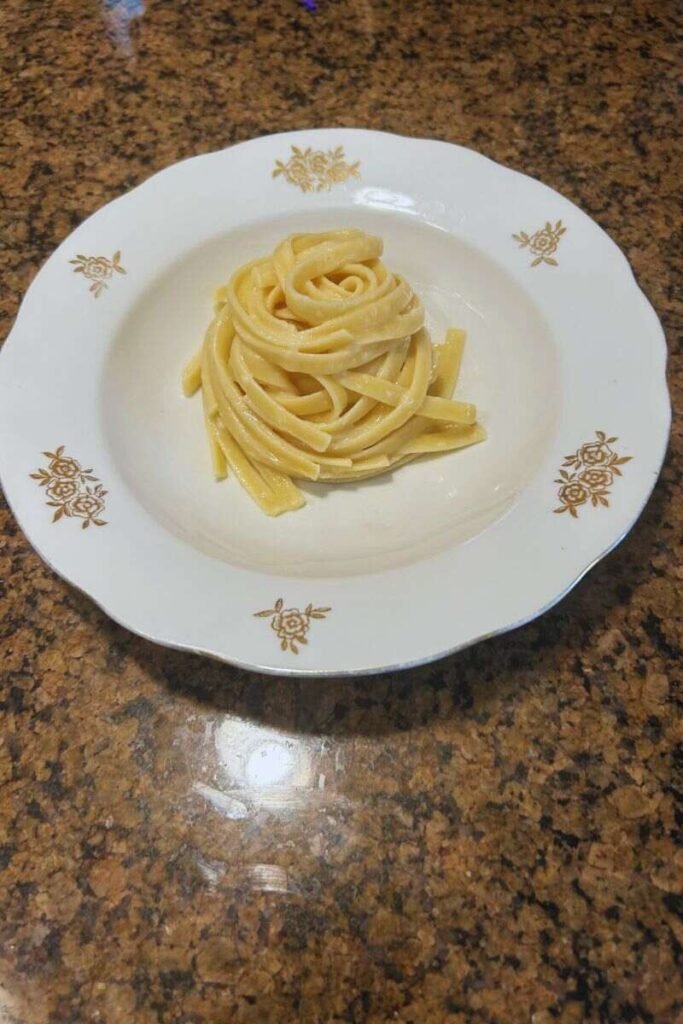
I’ll never forget the first time I ordered Fettuccine Alfredo in Rome, feeling pretty smug about knowing this “classic Italian dish.” The waiter looked at me like I’d just asked for pineapple on pizza. When it finally arrived, it wasn’t the thick, creamy sauce I knew from American restaurants—it was butter, cheese, and pasta water creating this impossibly silky coating. No cream. No garlic. No parsley. Just three ingredients doing what they do best.
That’s when I learned the truth: real Alfredo (properly called al burro) is nothing like what most of us have been eating. Created by Roman restaurateur Alfredo Di Lelio in 1908 for his pregnant wife who’d lost her appetite, the original recipe contains exactly three ingredients—butter, Parmigiano-Reggiano, and fresh egg pasta. The magic isn’t in adding more stuff. It’s in the technique. 🙂
What You’ll Need
Fettuccine Alfredo Ingredients (Al Burro)
For the pasta:- 400g fresh egg fettuccine
- Salt for pasta water
- At least 2 cups reserved pasta water
- 300g high-quality unsalted butter (room temperature)
- 300–350g Parmigiano Reggiano, very finely grated
That’s it. Seriously. If your recipe calls for cream, garlic, or herbs, you’re making something delicious but it’s not Alfredo. The history of Fettuccine Alfredo confirms that Alfredo Di Lelio’s original 1908 recipe used only these three ingredients—the simplicity was the point.
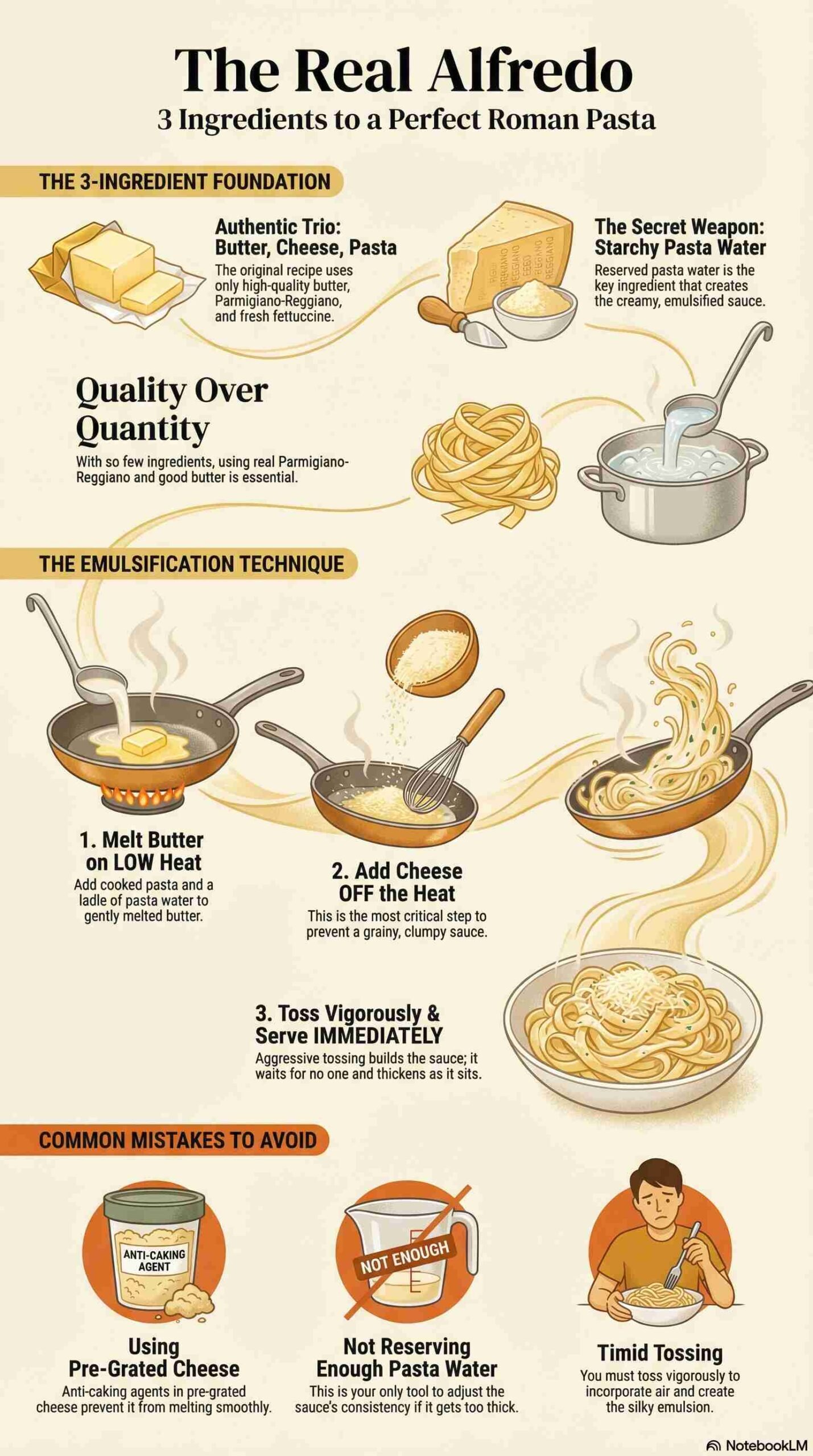
Quality matters enormously here. Use real Parmigiano-Reggiano, not “parmesan” from a shaker. Use good European-style butter with higher butterfat content if possible. Fresh egg pasta makes a difference over dried. With so few ingredients, mediocrity has nowhere to hide.
Kitchen Tools You’ll Need
A large pot for boiling pasta, a wide sauté pan or skillet (the wider the better for tossing), tongs or a pasta fork, a ladle for pasta water, and a fine grater for the cheese. You’ll be doing a lot of vigorous tossing, so make sure your pan is big enough.
Step 1: Cook the Pasta (Get the Water Right)
Bring a large pot of water to a rolling boil and salt it generously. We’re talking ocean-level salt here—the pasta water is your only chance to season the pasta from the inside. Taste it. It should taste pleasantly salty.
Cook the fettuccine until just al dente—slightly undercooked is actually better here because the pasta will finish cooking in the pan with the butter. Fresh pasta cooks fast, usually 2-4 minutes depending on thickness. Dried egg fettuccine takes longer, maybe 8-10 minutes. Check the package but trust your bite more.
Reserve at least 2 cups of pasta water before draining. This starchy water is absolutely critical—it’s what creates the creamy emulsion. Don’t skip this step or you’ll end up with greasy, separated sauce instead of silky magic.
Step 2: Prepare the Butter (Low and Slow)
Place your wide pan over very low heat. This is crucial—high heat will break the emulsion you’re about to create. Low heat keeps everything stable and silky.
Add all the butter and let it melt gently until soft and glossy. You want it completely melted but not bubbling, not browning, not sizzling. Just melted and warm. According to Italian culinary traditions, the gentle melting of butter is what distinguishes authentic Alfredo from the Americanized cream-based version.
If your butter starts to brown or smell nutty, your heat is too high. Brown butter tastes fantastic in other dishes, but it’s wrong here. You want pure, sweet butter flavor.
Step 3: Start the Emulsion (The Magic Moment)
Transfer the cooked pasta directly into the pan with the melted butter using tongs. Don’t drain it in a colander and then add it—go straight from pot to pan with some pasta water clinging to it. That residual water helps start the emulsion.
Add 1 ladle of pasta water immediately. This is where science meets cooking. The starchy pasta water, when vigorously mixed with fat (butter), creates an emulsion—a stable mixture of water and fat that coats each strand of pasta.
Toss vigorously using tongs or two forks. Lift, toss, turn, repeat. You’re not just mixing—you’re incorporating air and creating that creamy texture. The mixture should start looking glossy and cohesive, not separated or oily. Keep tossing until you see the transformation—the butter and water combine into a creamy, shiny coating.
Step 4: Add the Cheese (Off Heat is Critical)
Here’s where most people screw it up. Remove the pan completely from the heat before adding cheese. Heat causes Parmigiano to clump and become grainy. Off-heat addition keeps it smooth.
Add the Parmigiano in 3-4 additions, tossing constantly between each addition. Don’t dump it all in at once or it’ll clump. Sprinkle, toss vigorously, sprinkle more, toss again. The cheese melts into the butter-water emulsion, thickening and enriching it.
Add small splashes of pasta water as needed if the sauce gets too thick or starts looking separated. The pasta water is your adjustment tool. Too thick? Add a splash and toss. Still too thick? Add another. You’re aiming for silky, fluid, and glossy—it should coat the pasta like silk, not clump up like glue.
The sauce will look almost too loose at first. That’s fine. It thickens slightly as it cools, and the pasta continues absorbing it. Better to have it slightly loose in the pan than ending up with a stodgy, thick mass on the plate.
Step 5: Finish & Serve Immediately
Taste and adjust texture with pasta water only—no more cheese, no salt (the cheese is salty enough). If it needs more gloss, add a tiny splash of pasta water and toss once more.
Serve immediately. Not in five minutes. Not after you set the table. Now. Alfredo al burro waits for no one. The dish is best eaten warm (not hot, not cold), and the sauce continues to thicken as it sits. Italian saying: “Gli amici e i cibi devono essere caldi”—friends and food must be warm.
Plate it up, maybe add a tiny grating of extra Parmigiano on top if you’re feeling fancy, and eat it while the magic is still happening. This isn’t a dish you make ahead or reheat. It’s immediate gratification food.
Why This Works (The Science of Simplicity)
The genius of authentic Alfredo is the emulsion—the stable suspension of fat in water created by vigorous mixing. Pasta water contains starch that acts as an emulsifier, binding the butter and water together. The Parmigiano adds protein and more fat, further stabilizing and enriching the emulsion.
Cream—the American addition—isn’t needed because the emulsion itself creates creaminess. Adding cream actually dulls the flavor of the cheese and butter, which is why Italian chefs cringe at American versions. You’re covering up the main event with unnecessary richness.
The three-ingredient formula forces you to use quality products and proper technique. You can’t hide bad butter or mediocre cheese behind cream and garlic. Everything is exposed, which means everything needs to be excellent.
Common Mistakes I’ve Made (So You Don’t Have To)
Adding cheese over heat—did this once, ended up with grainy clumps instead of smooth sauce. Off-heat addition is non-negotiable.
Not reserving enough pasta water—ran out halfway through and had to add plain water, which doesn’t have the emulsifying starch. The sauce was thin and separated. Always reserve more than you think you need.
Timid tossing—I used to gently stir instead of vigorously tossing. Vigorous tossing incorporates air and creates the smooth emulsion. Be aggressive with it.
Using pre-grated cheese—those pre-grated bags contain anti-caking agents that prevent smooth melting. Grate your own Parmigiano right before using.
Letting it sit—made this for guests and plated it five minutes early while finishing other dishes. By the time we ate, the sauce had thickened into paste. Serve immediately, period.
What to Serve With Authentic Alfredo
Honestly? Nothing. This dish is rich enough to stand alone as a course. In Italy, pasta courses are served solo, not alongside other things. Maybe a simple green salad after, dressed lightly with lemon and olive oil to cut the richness.
If you must add something, keep it minimal. Some very simple sautéed vegetables as a separate side, perhaps. A glass of crisp white wine like Pinot Grigio or Verdicchio cuts through the butter beautifully.
What you absolutely don’t add: chicken, shrimp, broccoli, or any of the other proteins Americans love throwing on Alfredo. That’s a completely different dish and has nothing to do with what Alfredo Di Lelio created in 1908.
The American vs Italian Divide
The cream-heavy American version exists for a reason. When Italian immigrants and American chefs tried replicating Alfredo in the US, they didn’t have access to high-quality European butter or proper Parmigiano-Reggiano. To achieve richness, they added heavy cream. To boost flavor, they added garlic and herbs.
It became its own thing—still delicious, but fundamentally different. The Real Italian Restaurants guide notes that authentic Italian restaurants in Italy still serve only the original three-ingredient version, while American-Italian restaurants embrace the cream-based adaptation.
Neither is wrong, but they’re different dishes. If you want authentic Alfredo al burro, stick to the original formula. If you want American Alfredo, add that cream. Just know which one you’re making.
Storing and Reheating (Or Rather, Don’t)
This dish doesn’t store or reheat well. The emulsion breaks when refrigerated and reheated, separating into oily butter and dry cheese-coated pasta. It’s edible but not great.
If you absolutely must store leftovers, keep them in an airtight container in the fridge for one day maximum. To reheat, add a splash of water or milk (yes, milk in this case) and warm gently in a pan, tossing constantly. It won’t be as good as fresh, but it’s acceptable.
Better plan? Make only what you’ll eat immediately. The recipe scales easily—halve it for two people, double it for a crowd. Fresh is always better with Alfredo.
Final Thoughts
Making authentic Alfredo al burro changed how I think about pasta sauces. You don’t need a million ingredients or complicated techniques. You need three excellent ingredients, proper pasta water, and good emulsification skills. That’s it.
The first time I nailed it—when that butter and pasta water suddenly transformed into creamy, glossy sauce without any cream—felt like magic. It tastes cleaner and brighter than American Alfredo, letting the nutty Parmigiano and sweet butter shine without heavy cream masking everything.
Is it better than American Alfredo? That’s not the right question. It’s different. It’s what Alfredo Di Lelio made for his wife over a hundred years ago. It’s what Romans still eat when they want pasta al burro. It’s authentic not because authentic is always better, but because sometimes it’s worth experiencing something in its original form.
So grab some good butter, splurge on real Parmigiano-Reggiano, and make this properly at least once. Skip the cream. Trust the emulsion. Toss it vigorously. Serve it immediately. You’ll understand why Hollywood stars gave Alfredo a gold fork and spoon in 1927—this simple dish really is that good.
Now if you’ll excuse me, writing about this has made me desperately hungry, and I happen to have fresh fettuccine in the fridge. Time to melt some butter.