
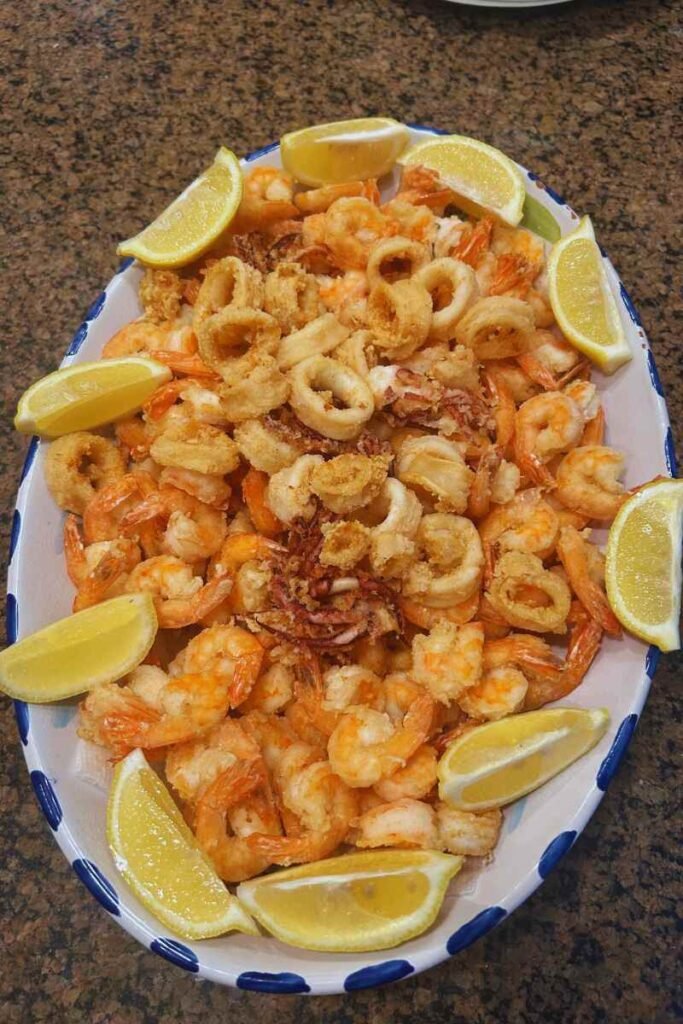
Last summer in Cinque Terre, I ate fritto misto di mare at a tiny restaurant overlooking the water, and it ruined me for every other fried seafood dish. The calamari was impossibly tender, the shrimp were sweet and crisp, and the whole thing was so light you could eat handfuls without feeling heavy. No thick batter, no grease, just perfectly fried seafood with a whisper-thin coating and a squeeze of lemon.
Real fritto misto isn’t the battered, heavy seafood basket you get at most restaurants. It’s delicate, crispy, and so simple that technique becomes everything. The Italian approach to frying seafood is all about respecting the ingredient—barely coating it, frying it fast and hot, and serving it immediately. Let me show you how to make this properly. 😊
What You’ll Need
Ingredients for Fritto Misto di Mare
For the seafood (serves 4):- 500g shrimp, peeled and deveined
- 400–500g calamari, cleaned and sliced into rings (include tentacles)
- 1/2 cup all-purpose flour
- 1/2 cup fine semolina flour
- Fine salt (for seasoning after frying, not before)
- Neutral frying oil (sunflower, canola, or peanut oil)
- Lemons, cut into wedges for serving
According to Serious Eats’ guide to buying and handling fresh seafood, properly fresh or well-frozen seafood tastes cleaner and sweeter because enzymatic breakdown and bacterial growth are minimized when fish is handled correctly from catch to kitchen.
Kitchen Tools You’ll Need
A wide, deep pan or Dutch oven for frying (cast iron works beautifully), a cooking thermometer (this is important—guessing oil temperature leads to greasy or burnt food), a slotted spoon or spider strainer, paper towels, and a wide bowl for coating. That’s it. Fritto misto doesn’t require fancy equipment, just proper technique.
Step 1: Prepare the Seafood (The Most Critical Step)
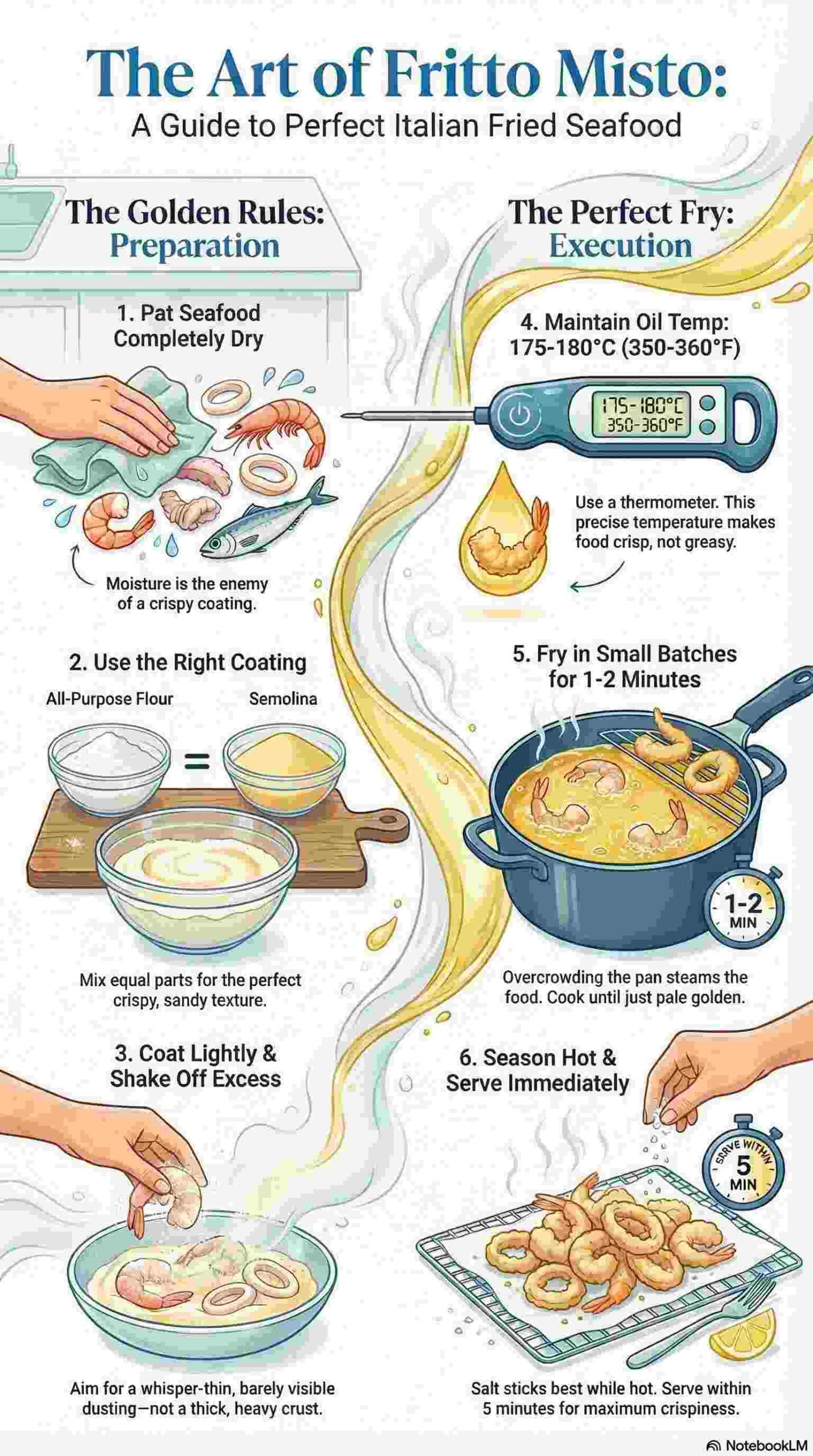
Pat the shrimp and calamari completely dry with paper towels. I’m not exaggerating when I say this is essential for crisp frying. Moisture is the enemy here. Even a little surface water causes oil to splatter, creates steam instead of crisp, and makes your coating soggy.
I usually lay the seafood on layers of paper towels and press more towels on top, changing them if they get soaked. The seafood should feel tacky-dry to the touch, not wet or slippery. This extra 30 seconds of drying makes the difference between mediocre and excellent fritto misto.
Why does this matter? Water and hot oil create steam. Steam makes things soft, not crispy. You want direct contact between hot oil and the food surface to create that immediate sear and crisp coating.
Step 2: Make the Coating (Simple But Specific)
In a wide bowl, mix the all-purpose flour and semolina flour in equal parts. The all-purpose flour provides structure and helps the coating stick. The semolina flour (the coarse flour used for pasta) adds extra crunch and prevents the coating from getting pasty or heavy.
Don’t add salt to this mixture. Salt draws moisture out of seafood, which we absolutely don’t want. You’ll season after frying when the food is hot and the salt will stick perfectly.
The semolina is key here—it’s what gives fritto misto that distinctive sandy, crispy texture that’s completely different from tempura or beer-battered fish. According to research on Italian frying techniques, the combination of fine and coarse flours creates multiple textures that stay crisp longer than single-flour coatings.
Step 3: Coat the Seafood (Light Touch Required)
Toss the seafood lightly in the flour mixture until just coated. The operative word is “lightly”—you want a thin, even dusting, not a thick crust. Work in batches if needed to keep the coating even.
Shake off excess flour thoroughly. I put the coated seafood in a mesh strainer and shake it gently, or just shake each piece individually over the bowl. The coating should be thin and dry, barely visible on the seafood. If you can see thick white patches of flour, you’ve got too much.
This isn’t fish and chips. You’re not looking for a substantial coating. Think of it as a whisper of flour that creates the thinnest possible barrier between seafood and oil, just enough to crisp up and provide texture contrast.
Step 4: Heat the Oil (Temperature Is Everything)
Heat oil in a wide, deep pan to 175-180°C (350-360°F). Use a cooking thermometer—this isn’t optional. Too cool and your seafood absorbs oil and gets greasy. Too hot and the coating burns before the inside cooks.
Pour enough oil to give you at least 2 inches of depth. Seafood needs room to float and move freely. I use about 2-3 cups of oil in a large cast iron skillet, more if using a Dutch oven.
Why this temperature matters: At 175-180°C, moisture inside the food immediately turns to steam, creating pressure that pushes oil away from the food surface. This is what makes food crispy instead of greasy. Drop below 160°C and oil seeps into the food. Go above 190°C and you burn the outside before cooking the inside.
Step 5: Fry in Batches (Patience Wins)
This is where most people mess up—they dump everything in at once and wonder why it’s not crispy. Fry shrimp and calamari separately, in small batches. I’m talking maybe 6-8 pieces at a time depending on your pan size. Overcrowding drops oil temperature dramatically, and you end up steaming instead of frying.
Calamari: 1-2 minutes total Drop the rings and tentacles in carefully. They cook fast—you’re looking for pale golden color and just-curled rings. Overcooked calamari is rubber, and there’s no fixing it.
Shrimp: 1.5-2 minutes total They’re done when they turn pink and the coating is light golden. Don’t wait for deep golden brown or they’ll be overcooked.
Fry until pale golden and crisp. Italian fritto misto is not deep brown—it’s a light, delicate golden. The coating should look sandy and barely colored. Do not overcrowd the pan—maintain at least an inch of space between pieces so oil can circulate.
Between batches, let the oil return to temperature. This takes 30-60 seconds. Use your thermometer. Frying at proper temperature is the difference between crispy and soggy, light and heavy.
Step 6: Drain & Season (Timing Matters)
Remove with a slotted spoon and drain briefly on paper towels—like 10-15 seconds, max. You’re not trying to absorb all the oil, just let excess drip off.
Here’s the crucial part: Season lightly with fine salt while still hot. The salt sticks to the hot, oily surface and doesn’t make the coating soggy. Wait until it cools and the salt just slides off or makes the coating soft.
Use fine salt, not coarse. Fine salt distributes evenly and doesn’t create overly salty spots. I hold the salt high and rain it down over the fried seafood in a thin, even shower.
Serve immediately. Not in five minutes. Not after you fry the next batch. Now. Fritto misto waits for no one—it’s at peak crispy perfection for maybe 5-10 minutes before it starts softening.
Why This Recipe Works (The Science)
The magic of fritto misto is in the technique, not complicated ingredients. Semolina flour creates a rougher surface than all-purpose flour alone, giving you more textural interest and better crunch. The coarse grains don’t absorb as much oil because they have less surface area contact.
High-heat frying at the proper temperature creates immediate crust formation. The Maillard reaction (browning) and moisture evaporation happen so fast that oil can’t penetrate. This is why properly fried food isn’t greasy—oil never gets inside.
Thin coating means the seafood flavor dominates. You taste shrimp and calamari first, with just a whisper of crispy texture around it. Thick batters mask seafood flavor—this enhances it.
Salting after frying keeps the coating crisp. Salt draws moisture. If you salt before or during frying, you’re fighting against your own crispiness. After frying, when the exterior is already dehydrated and crispy, salt just adds flavor without softening anything.
Common Mistakes I’ve Made (Learn From My Failures)
Not drying seafood enough—my first attempt was soggy because I skipped the thorough drying. Moisture ruins everything. Really dry it.
Frying too much at once—I got impatient and dumped half the shrimp in simultaneously. Oil temperature dropped 30 degrees, and I ended up with greasy, pale shrimp that weren’t crispy. Patience wins.
Using thick coating—used to think more flour = more crispy. Wrong. Thick coating gets pasty and heavy. Thin coating crisps beautifully.
Letting it sit before serving—made this for guests and plated everything before calling them to the table. By the time we started eating, it had lost half its crispiness. Serve it hot from the oil.
Not using a thermometer—guessed oil temperature based on “it looks hot” and ended up with inconsistent results. Bought a $12 thermometer and suddenly my frying success rate shot up dramatically.
What to Serve With Fritto Misto
Traditionally, fritto misto is served simply with lemon wedges. That’s it. The acidity of lemon brightens the fried seafood and cuts through any richness. Squeeze it generously over the hot food right before eating.
Some restaurants serve it with aioli or marinara sauce, but honestly? That’s gilding the lily. Good fritto misto needs nothing but lemon and maybe a sprinkle of fresh parsley if you’re feeling fancy.
For a complete meal, serve it with a simple green salad dressed with lemon vinaigrette. The fresh, bright salad contrasts beautifully with hot, crispy seafood. Some crusty Italian bread on the side soaks up any excess oil and lemon juice.
Wine pairing: crisp, cold white wine. Vermentino, Pinot Grigio, or Soave all work beautifully. The wine’s acidity mirrors the lemon and cleanses your palate between bites.
Variations and Additions
While shrimp and calamari are the classic combo, fritto misto can include other seafood. Small fish like anchovies, sardines, or whitebait work beautifully. Some versions add scallops (pat them EXTRA dry—they hold a lot of water).
You can also add vegetables—zucchini slices, lemon slices (yes, really), or sage leaves all fry up wonderfully with the same coating. The mix of seafood and vegetables is less traditional but delicious.
Different flours: some recipes use 100% semolina, others use rice flour instead of all-purpose. Rice flour creates an even lighter, crispier coating but can be more fragile. The 50/50 mix I’ve given you is the most reliable for home cooks.
The Cultural Context
Fritto misto di mare is classic Italian coastal cooking—simple ingredients, impeccable technique, immediate serving. It’s the kind of dish you find at seaside restaurants from Liguria to Sicily, each region adding its own local seafood to the mix.
The name literally means “mixed fried of the sea,” and it represents the Italian philosophy of respecting ingredients by doing as little as possible to them. You’re not hiding seafood behind batter or sauce—you’re enhancing it with the simplest preparation that adds texture while preserving flavor.
In Italy, fritto misto is often eaten as an appetizer or a light main course, usually at lunch rather than dinner. It’s beach food, summer food, celebration food. The Italian Trade Commission notes that proper fritto misto should be so light that you can eat a generous portion without feeling heavy.
Storage and Reheating (Spoiler: Don’t)
Let’s be real—fritto misto doesn’t store or reheat well. The coating loses its crispness within an hour of frying. Refrigerating and reheating turns it soggy and sad.
If you absolutely must store leftovers, keep them in the fridge for one day maximum. Reheat in a 200°C (400°F) oven for 5-7 minutes. It won’t be as good as fresh, but it’s better than microwaving (which makes it rubbery and soft).
Better strategy: make only what you’ll eat immediately. This recipe serves 4 generously. If cooking for 2, halve it. Fresh fritto misto is extraordinary. Leftover fritto misto is disappointing.
Final Thoughts
Making perfect fritto misto changed how I think about fried seafood. You don’t need thick batter or complicated seasonings. You need impeccably fresh seafood, the right coating, proper oil temperature, and the discipline to not overcrowd your pan.
The first time I nailed it—when that calamari came out tender and crispy with a coating so thin it was barely there—I understood why Italians are so particular about frying technique. It’s not about hiding seafood behind breading. It’s about creating the thinnest possible crispy shell that lets the seafood flavor shine through.
Is it better than heavily battered fish? That’s not the point. It’s different. It’s what Italians perfected over centuries of coastal cooking. It’s worth learning to make properly at least once.
So grab some fresh seafood, get your oil to the right temperature, and remember: thin coating, small batches, serve immediately. Those three rules will get you 90% of the way to perfect fritto misto.
Now if you’ll excuse me, writing about this has made me desperately hungry, and I happen to have shrimp in the freezer. Time to heat some oil.