
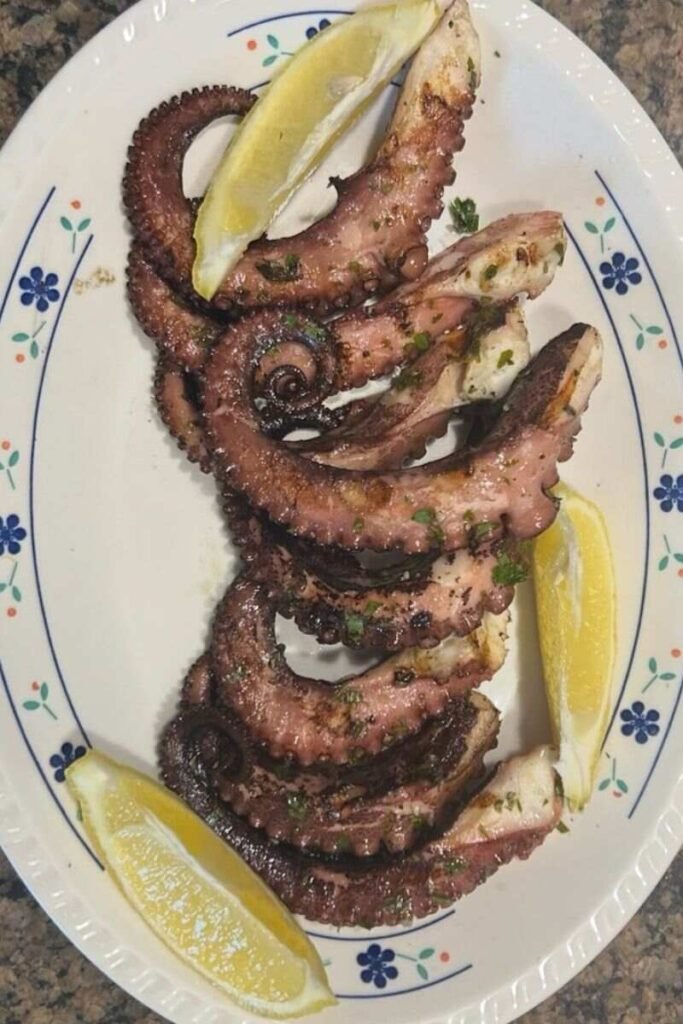
Last summer, I discovered Grilled Octopus with Garlic, Lemon Zest, Herbs & Peppercorns at a tiny Greek seaside spot, and honestly? It ruined me for all other seafood 😅. The char, the tenderness, and the way garlic and lemon worked together, it haunted me until I tried making it myself. My first attempt? Overcooked, rubbery, basically octopus jerky. But after a few tries (and some angry Googling), I finally got it right.
Octopus might look intimidating, but the process is simple: tenderize, cook gently, and finish with high heat. The reward? Tender, charred, garlicky perfection that makes you feel like you’re dining in Santorini, even if it’s just your backyard with a beer and some questionable patio furniture.
Ingredients You’ll Need
The ingredient list might look long, but most of this is aromatics for the cooking liquid. You’re building flavor from the ground up, and trust me, it matters.
Ingredients for Grilled Octopus with Garlic, Lemon Zest, Herbs & Peppercorns
For the octopus:- 1 whole octopus (2-3 pounds is ideal)
- A lot of coarse salt
- 1 large onion, roughly chopped
- 3 bay leaves
- 2 sprigs fresh thyme
- Lemon zest in wide strips (save the juice for later)
- 1 tsp whole black peppercorns
- 2 garlic cloves, crushed
- 4-5 tbsp extra virgin olive oil
- 3 garlic cloves, finely chopped
- Large handful of fresh parsley, chopped
- Freshly cracked black pepper
- Lemon wedges for serving
Kitchen Equipment
You don’t need anything fancy here. A large pot (big enough to fit your octopus comfortably), a decent grill or grill pan, tongs, a sharp knife, and a cutting board. That’s the whole setup. If you’ve got a basic kitchen, you’re already equipped.
Step 1: Clean & Tenderize (Don’t Skip This!)
Okay, this part feels weird the first time you do it, but it’s non-negotiable. Take your octopus and absolutely cover it with coarse salt. We’re talking a generous amount, this isn’t the time for restraint.
Now rub that salt into the octopus firmly for a full 5 minutes. Your arms might get tired. Do it anyway. This process breaks down the slime and starts tenderizing the meat. It’s basically a aggressive spa treatment for your seafood.
Rinse very thoroughly under cold water until the octopus feels completely clean, no sliminess, no grit, nothing. According to Taste with the Eyes, this salting technique is traditional in Mediterranean cooking and genuinely makes a difference in texture. I was skeptical until I tried it both ways. The salted version wins every time.
Step 2: The Slow Simmer (Where the Magic Happens)
This is where patience pays off. Fill your large pot with water and add your aromatics: large-diced onion, bay leaves, thyme, lemon skin strips, whole peppercorns, and 2 crushed garlic cloves. You’re essentially making a flavorful broth that’ll perfume the octopus as it cooks.
Bring everything to a rolling boil. Here’s a cool trick I learned from my Greek friend’s grandmother: dip the octopus into the boiling water three times before fully submerging it. Dip, lift, dip, lift, dip, submerge. This supposedly helps the tentacles curl nicely. Does it work? Honestly, I’m not entirely sure, but it hasn’t failed me yet, and it feels very authentic 🙂
Once fully submerged, reduce to a gentle simmer and cook for 45-60 minutes. You’re looking for fork-tender, not mushy, not tough. The timing depends on your octopus size. Smaller ones (under 2 pounds) lean toward 45 minutes; bigger boys need the full hour.
Test it by piercing the thickest part of a tentacle with a knife. It should slide in easily but still have some resistance. Think cooked potato texture, not mashed potato. When it’s ready, remove it from the pot and separate the tentacles from the head. I usually discard the head or save it for stock, but the tentacles are what we’re grilling.
Step 3: Garlic & Parsley Marinade (Flavor Bomb Time)
While your octopus cools slightly, mix up your marinade. In a bowl, combine 4-5 tablespoons of extra virgin olive oil (this is not the time for the cheap stuff), 3 finely chopped garlic cloves, a generous handful of chopped fresh parsley, and freshly cracked black pepper to taste.
The Food Network emphasizes that octopus benefits from bold, bright flavors since the meat itself is relatively mild. The garlic and parsley combo is classic Mediterranean for good reason, it complements without overpowering.
Toss your octopus tentacles in this marinade and let them hang out for 15-30 minutes. This gives the flavors time to penetrate. I usually use this window to prep my sides, grab a drink, or just stand there feeling accomplished. No judgment.
Step 4: Grill It (The Fun Part)
Heat your grill to medium-high. You want hot enough to get serious char but not so hot that you’re incinerating everything. If you’re using a grill pan indoors, same principle applies, get it properly hot before adding your octopus.
Grill the tentacles for 2-3 minutes per side. You’re looking for beautiful char marks and crispy edges while keeping the inside tender. The outside should have that slight crunch, and the inside should still be soft. That textural contrast is chef’s kiss.
Don’t move them around too much. Let them sit and develop that crust. Resist the urge to fidget with them every thirty seconds. I know it’s tempting, I do it too, but restraint pays off here.
Step 5: Finish & Serve (The Rewarding Part)
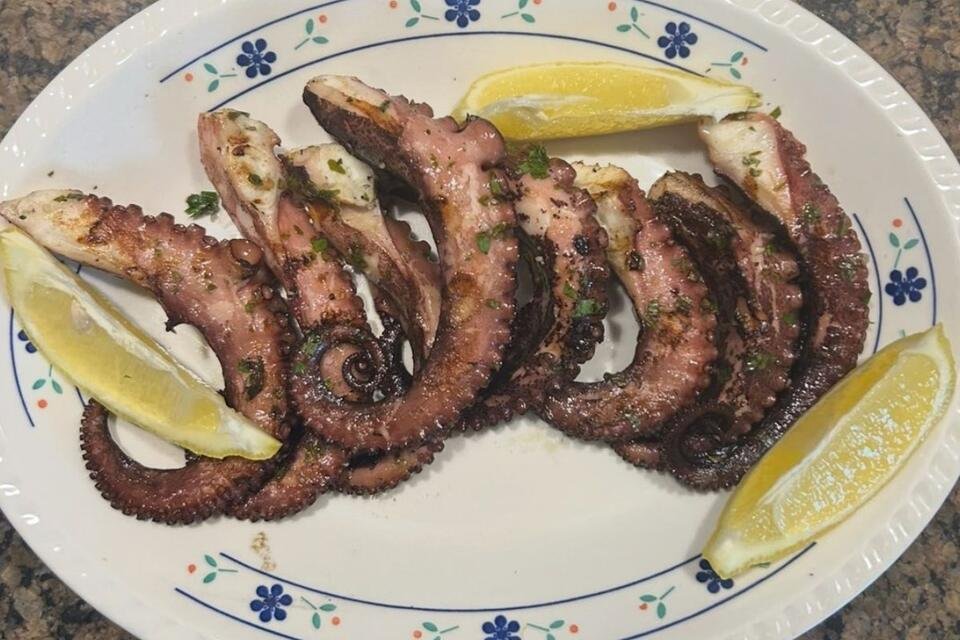
Transfer your grilled octopus to a serving plate. Drizzle with additional extra virgin olive oil, sprinkle with extra fresh parsley, and squeeze fresh lemon juice generously over everything. Serve with lemon wedges on the side because some people (like me) want even more lemon.
The combination of smoky char, bright lemon, pungent garlic, and grassy olive oil is basically edible summer. It works as an appetizer, a main course with sides, or honestly just standing at your kitchen counter with a fork.
Pro Tips From My Trial & Error Phase
Don’t rush the simmering. Undercooked octopus is rubber band city. Give it the full time it needs. You can always cook it longer; you can’t uncook it.
Save that cooking liquid. It makes an incredible base for seafood risotto or pasta. I freeze it in containers and pull it out when I need a flavor boost. Waste not, want not.
Pat the octopus dry before grilling. Excess moisture prevents proper charring. Give it a quick pat-down with paper towels after marinating.
Cut tentacles if they’re huge. Nobody wants to wrestle with a massive tentacle on their plate. Cut them into manageable 3-4 inch pieces before grilling if needed.
Room temperature is key. Don’t grill octopus straight from the fridge. Let it come to room temp first for even cooking.
What to Serve With Grilled Octopus
I’m a big fan of keeping sides simple so the octopus stays the star. Roasted potatoes with olive oil and herbs are classic. Greek salad with tomatoes, cucumbers, feta, and olives complements perfectly. Grilled vegetables like zucchini, peppers, and eggplant continue the charred theme.
Sometimes I just serve it with crusty bread and good olive oil for dipping. The bread soaks up all those garlicky, lemony juices, and honestly, that’s a complete meal right there. Add a glass of crisp white wine, and you’ve transported yourself to the Mediterranean without leaving home.
Common Mistakes (That I’ve Definitely Made)
Skipping the salt rub. I tried this once to save time. Big mistake. The texture was off, and there was residual sliminess. Don’t skip it.
Overcooking on the grill. Remember, the octopus is already cooked from simmering. You’re just adding char and warmth. Leaving it on the grill too long turns it tough and dry.
Using terrible olive oil. Look, I’m not saying you need $50 olive oil, but the flavorless stuff from a plastic jug isn’t going to cut it. This dish relies heavily on olive oil flavor, invest in something decent.
Not enough acid. Octopus needs brightness. If your dish tastes flat, it needs more lemon. I’ve never regretted adding extra lemon juice. Not once.
Storing & Reheating Leftovers
Leftover grilled octopus (if you’re lucky enough to have any) keeps in the fridge for 2-3 days. I usually eat it cold in salads, it’s fantastic with chickpeas, tomatoes, and a lemon vinaigrette. You can reheat it gently in a pan with olive oil, but don’t overdo it. A minute or two, max.
Some people say octopus doesn’t reheat well. Those people are wrong, but they’re also not entirely wrong. It won’t be quite as good as fresh off the grill, but it’s still delicious. The key is gentle heat, you’re warming it, not cooking it again.
Why This Recipe Works
The science behind this is actually interesting. According to The Serious Eats, octopus contains a lot of collagen, which needs low, slow cooking to break down properly. That’s why the long simmer is crucial. The salt rub begins tenderization, the gentle simmer finishes it, and the high-heat grill adds texture contrast without toughening the meat.
The aromatics in the cooking liquid infuse subtle flavor throughout. The garlic and lemon marinade adds punchy brightness. The char from the grill provides smokiness and textural interest. It’s a layered approach that builds complexity.
Final Thoughts
I’m not going to lie, grilled octopus used to intimidate the hell out of me. It seemed like restaurant food, something I’d never attempt at home. But once I actually tried it and realized it’s mostly just time and patience, it became a regular in my cooking rotation.
There’s something ridiculously satisfying about serving grilled octopus to friends and watching their faces. It feels fancy and impressive, but you and I know the truth: it’s actually pretty simple. The octopus does most of the work. You’re just there to not mess it up.
So grab an octopus next time you’re at the fish market (or order one online, yes, that’s a thing now). Follow these steps. Embrace the char. Don’t skimp on the garlic. And enjoy the fact that you’re about to eat something that tastes like vacation, even if you’re just in your regular dining room with your regular life.
Worth every minute of that salt rub, I promise.