
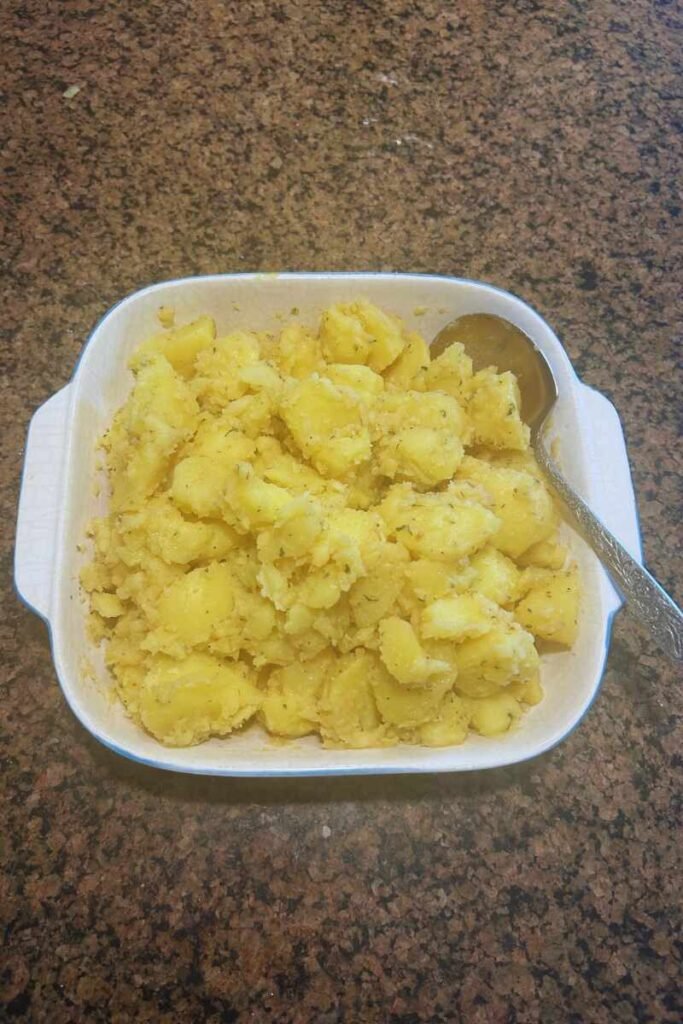
Let’s clear something up right away: if “potato salad” makes you picture a bowl of mushy potatoes smothered in mayo, it’s time for an upgrade. Italian potato salad is a whole different thing, and once you try it this way, there’s a good chance you’ll never crave the heavy version again.
There’s nothing fancy or pretentious about it. It’s just warm potatoes tossed with good olive oil, red wine vinegar, and fresh herbs so you actually taste the ingredients instead of hiding them. No cream, no mystery flavors, just clean, simple cooking that works every single time 😊.
The best part? It’s great warm, room temp, or cold straight from the fridge. It fits everything from weeknight dinners to picnics, and it avoids that risky mayo situation entirely.
Ingredients
Ingredients for Italian Potato Salad
For the potatoes:- 6–7 medium yellow potatoes (about 2.5–3 pounds)
- Generous amount of salt for the cooking water
- 1/3 cup extra virgin olive oil (use high-quality oil)
- 2–3 tablespoons red wine vinegar (adjust to taste)
- 1–2 teaspoons dried oregano
- 1 teaspoon garlic powder
- Salt to taste (about 1 teaspoon, adjust as needed)
What Makes Italian Potato Salad Different?
Here’s the thing about Italian cooking that I’ve come to appreciate over the years—it’s not about doing more, it’s about doing less but doing it better. While American potato salad relies on mayonnaise for its creamy texture and tangy flavor, Italian versions use a bright vinaigrette made with extra virgin olive oil and red wine vinegar.
This fundamental difference changes everything. Mayo-based salads are heavy, rich, and let’s be honest, they can get kind of one-note after a few bites. The Italian approach gives you brightness, tanginess, and a lighter feel that doesn’t leave you feeling stuffed after eating it.
Traditional Italian potato salad can include all sorts of additions—green beans, cherry tomatoes, capers, olives, fresh herbs—but this particular version strips it down to the absolute essentials. We’re focusing on perfectly cooked potatoes with a simple, flavorful dressing. Sometimes the best recipes are the ones that know when to stop adding ingredients.
Why This Recipe Works So Well
Before we get into the how-to, let’s talk about why this method produces such consistently good results. Understanding the science behind cooking makes you a better cook, period.
The warm potato factor: This is crucial. When potatoes are warm, their starches are more receptive to absorbing liquids. Think of them like little flavor sponges that are wide open and ready to soak things up. Once potatoes cool completely, their structure tightens up and they don’t absorb dressing nearly as well. You end up with dressing sitting on top of the potatoes rather than infused throughout them.
Boiling with skins on: Keeping the skins on during cooking serves multiple purposes. First, it prevents the potatoes from getting waterlogged. Second, it helps them hold their shape better. Third, it actually makes peeling easier when done right. The skin acts as a protective barrier, and when the potatoes are cooked through, it slides right off with minimal effort.
The vinegar trick: Adding acid to your cooking water or dressing while potatoes are warm does something interesting at the cellular level. The acid helps firm up the pectin that holds potato cells together, which means your potatoes stay intact and don’t turn to mush when you toss them. This technique has been proven by food scientists to significantly improve potato salad texture.
Choosing Your Potatoes
Not all potatoes are created equal, and choosing the wrong type can absolutely ruin your potato salad. Let me break this down.
Yellow potatoes (like Yukon Gold) are your best bet here. They’re what we call “waxy” potatoes, meaning they have less starch and more moisture than their russet cousins. This makes them perfect for potato salad because they hold their shape when cut, have a naturally creamy texture, and a slightly sweet, buttery flavor that works beautifully with simple dressings.
Avoid russet potatoes for this dish. They’re high-starch, low-moisture potatoes that break apart easily when boiled and tossed. They’re fantastic for mashing or baking, but terrible for potato salad. You’ll end up with a mushy, broken mess instead of distinct, tender chunks.
Red potatoes can work in a pinch—they’re also waxy potatoes. But yellow potatoes have that extra buttery richness that really makes this dish shine.
Look for potatoes that are roughly the same size so they cook evenly. Nobody wants some pieces undercooked and others falling apart.
Step-by-Step Instructions
Step 1: Prep and Boil the Potatoes
Start by giving your potatoes a thorough rinse under cold running water. You want to remove any dirt clinging to the skins. Don’t skip this step—you’re going to eat these skins (technically you’ll peel them, but they’re touching your potato while it cooks, so cleanliness matters).
Place your whole, unpeeled potatoes in a large pot. Cover them completely with cold water—they should be submerged by at least an inch. Here’s where most people go wrong: they don’t salt the water enough. You need to salt this water generously. I’m talking about making it taste like seawater. This isn’t just for flavor on the surface—the salt actually seasons the potatoes from the inside as they cook.
Bring the water to a boil over high heat, then reduce to a gentle simmer. You want bubbles breaking the surface, but not a rolling, aggressive boil that bounces your potatoes around and potentially cracks them.
Cook for 20-25 minutes, depending on the size of your potatoes. Start checking around the 18-minute mark by piercing the largest potato with a fork. When the fork slides in easily with just slight resistance in the very center, they’re done. You want them tender but not falling apart.
Pro timing tip: Slightly underdone is better than overdone. You can always cook them a bit more, but you can’t uncook mushy potatoes.
Step 2: The Peeling Process
Drain your potatoes in a colander and let them sit for just 2-3 minutes—enough time that you can handle them without third-degree burns, but not so long that they cool down completely.
Here’s where the magic happens. While the potatoes are still quite warm (use a kitchen towel to hold them if needed), the skins should slide off with almost no effort. You can use your fingers, a small paring knife, or even the edge of a spoon. The skin just peels away, revealing perfectly cooked potato underneath.
If you find the skins are sticking, your potatoes might have cooled too much. That’s okay—just be more patient with your peeling. It’ll take a bit longer, but you’ll get there.
Work relatively quickly through all the potatoes. We want them still warm when we dress them, remember?
Step 3: Cut Into Chunks
Once peeled, cut your potatoes into bite-sized pieces. I usually go for roughly 1-inch chunks, but this is really about personal preference. Some people like bigger pieces that show off the potato more. Others prefer smaller pieces that get more dressing coverage.
Here’s my take: larger chunks (about 1.5 inches) give you a better potato-to-dressing ratio and let you really taste the potato. Smaller chunks (around 3/4 inch) get more coating and are easier to eat. Split the difference at 1 inch and you’re in the sweet spot.
Try to keep your pieces relatively uniform in size. This isn’t just about aesthetics—it’s about ensuring every bite has a similar texture and flavor profile.
Step 4: Dress While Warm (This Is Critical)
Transfer your cut potatoes to a large mixing bowl. They should still be warm—if you can’t hold your hand on the bowl for more than a few seconds, that’s perfect.
Drizzle the olive oil over the warm potatoes. Don’t be timid here. The oil should coat the potatoes generously. Use a good extra virgin olive oil—you’ll actually taste it, so quality matters. Cheap, flavorless oil will give you cheap, flavorless potato salad.
Add the red wine vinegar next. Start with 2 tablespoons and you can always add more. The vinegar provides the tangy brightness that balances the richness of the oil and the earthiness of the potatoes. Some people like their potato salad more acidic, others prefer it more mellow. Taste and adjust.
Sprinkle on your dried oregano. Oregano is the classic herb for Italian potato salad, bringing that Mediterranean flavor that ties everything together. If your oregano has been sitting in your spice cabinet since 2019, it’s probably time for fresh stuff. Dried herbs lose their potency over time.
Add the garlic powder and salt. Garlic powder gets a bad rap, but in dishes like this where you want even distribution and don’t want raw garlic bite, it’s perfect. It gives you that garlicky background note without overwhelming anything.
If you’re using black pepper, add it now. Freshly ground is always better than pre-ground.
Step 5: The Gentle Toss
This is where technique matters. You want to mix everything together thoroughly so every piece of potato gets coated with dressing, but you don’t want to be so aggressive that you break up the potatoes.
Use a large spoon or silicone spatula and fold the potatoes gently, bringing the dressing up from the bottom and over the top. Rotate the bowl as you work. Take your time—this isn’t a race.
If a few pieces break up, that’s actually not a bad thing. Those broken bits help create little pockets where dressing can collect, and they add textural variety to the finished dish. But you don’t want mashed potato salad, so stay gentle.
Step 6: Rest Before Serving
Let your dressed potato salad sit for at least 10-15 minutes before serving. This resting period is crucial—it gives the potatoes time to fully absorb the dressing and lets all the flavors meld together.
During this time, the warm potatoes continue to soak up the olive oil and vinegar like little sponges. The oregano and garlic flavors infuse throughout. Everything just… comes together in a way that immediate serving doesn’t achieve.
After 10-15 minutes, give everything another gentle toss and taste. This is your last chance to adjust seasoning. Need more salt? Add it. Want more tang? Splash in a bit more vinegar. This is your potato salad—make it exactly how you like it.
Serving Temperature Options
One of the brilliant things about Italian potato salad is its versatility when it comes to serving temperature.
Warm (immediately after the rest period): This is wonderful for fall and winter meals. The warm potatoes have a comfort-food quality, and the olive oil is at its most aromatic when slightly heated.
Room temperature (after 30-60 minutes): This is my personal favorite and how it’s most commonly served in Italy. The flavors are at their peak—not muted by cold, not competing with warmth. Everything just tastes more balanced at room temperature.
Cold (from the refrigerator): Perfectly acceptable, especially in summer. The cold temperature makes it refreshing, though you might want to let it sit out for 10-15 minutes before serving so the olive oil isn’t quite so thick and the flavors open up a bit.
Unlike mayo-based potato salads that need to stay cold for food safety reasons, this vinegar-dressed version can safely sit at room temperature for several hours, making it perfect for picnics, potlucks, and outdoor gatherings.
Variations and Add-Ins
While I think this simple version is pretty much perfect as-is, here are some classic additions you might want to try:
Fresh herbs: Swap or supplement the dried oregano with fresh parsley, basil, or even mint. Add these at the end so they stay bright and fresh.
Capers: A tablespoon or two of capers adds a briny, salty punch that works beautifully with the vinegar.
Red onion: Thinly sliced red onion adds sharpness and crunch. If raw onion is too intense for you, soak the slices in cold water for 10 minutes first.
Olives: Kalamata or green olives, pitted and halved, add another dimension of flavor and saltiness.
Cherry tomatoes: Halved cherry tomatoes are a common addition in summer. Add them just before serving so they don’t make the salad watery.
Green beans: Blanched green beans are a traditional addition in some regions of Italy. Cook them until crisp-tender and toss them in with the potatoes.
But honestly? Try it the simple way first. You might find you don’t want to change a thing.
Storage and Make-Ahead Tips
This potato salad actually gets better after a few hours as the flavors continue to develop. You can absolutely make it ahead—in fact, I recommend it for meal prep or when you’re hosting and want one less thing to worry about day-of.
Refrigerator storage: Keep in an airtight container for up to 3 days. The potatoes will continue absorbing the dressing, so you might want to add a small splash of olive oil and vinegar when you serve leftovers.
Before serving leftovers: Let the salad come to room temperature for about 15-20 minutes. The olive oil solidifies in the fridge, and cold potatoes don’t have as much flavor as room temperature ones.
Don’t freeze: Potatoes change texture when frozen and thawed, becoming grainy and unpleasant. This isn’t a freezer-friendly dish.
Final Thoughts
Look, I get it. Changing up a classic dish you’ve been making or eating for years can feel risky. But this Italian-style approach to potato salad is genuinely worth trying. It’s lighter, brighter, and frankly more interesting than the mayo-heavy versions most of us grew up with.
The simplicity of this recipe is its strength. With just a handful of ingredients, each one needs to be good quality, and each one gets to shine. You taste the potatoes. You taste the olive oil. You taste the herbs. Nothing’s hidden under a blanket of mayonnaise.
Plus, there’s something deeply satisfying about making a dish that’s this simple but gets consistently rave reviews. People always ask for the recipe, and you get to tell them it’s just potatoes, olive oil, vinegar, and herbs. They never believe you until they try it themselves.
So grab some good yellow potatoes, break out your best olive oil, and give this a shot. Your picnic table, dinner party, or weeknight dinner will thank you. 🙂