
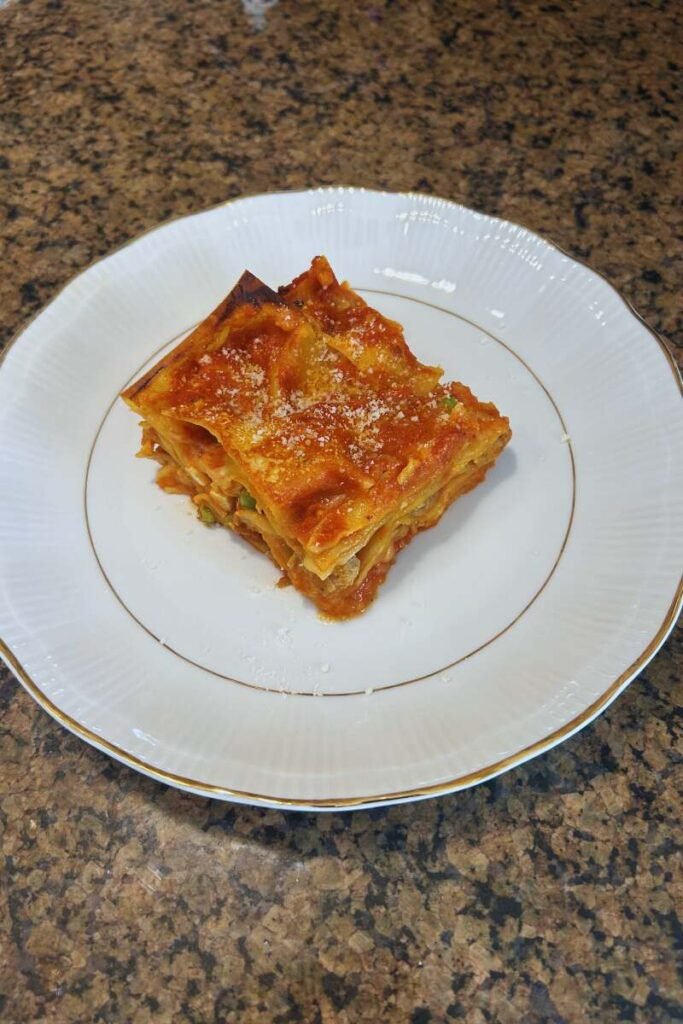
This Homemade Lasagna with Mini Meatballs and Pork Sauce transcends the standard version through layers of complexity: a rich pork bone tomato sauce, tender mini meatballs, sweet green peas, diced hard-boiled eggs, and generous amounts of mozzarella and Parmesan, all stacked between pasta sheets and baked until bubbling and golden.
The dish represents southern Italian festive cooking, particularly the elaborate preparations of Naples and Sicily, where lasagna becomes a celebration centerpiece requiring hours of work but delivering extraordinary results.
The pork bones enrich the sauce with deep, meaty flavor, while the mini meatballs provide textural interest and the unexpected boiled eggs add richness and tradition that connects to historical preparations where eggs signified abundance and celebration.
Understanding Italian Lasagna Tradition
Lasagna exists throughout Italy in countless regional variations, from the delicate, butter-based lasagne verdi of Bologna to the robust, ricotta-filled versions of southern regions. This version draws particularly from Neapolitan and Sicilian traditions, where lasagna often includes meatballs, hard-boiled eggs, and multiple meats to create an opulent dish served at weddings, holidays, and special family gatherings.
The inclusion of boiled eggs might seem unusual to those familiar only with standard lasagna, but it represents authentic southern Italian tradition. The eggs add richness, visual interest when sliced, and symbolic significance, as eggs historically represented luxury and festivity. Similarly, the pork bone-enriched sauce reflects the Italian philosophy of extracting maximum flavor from every ingredient, transforming simple bones into profound depth through patient simmering.
Ingredients
Ingredients for Lasagna with Mini Meatballs and Pork Sauce
For the Pasta and Assembly- 500g dried lasagna sheets (or fresh pasta sheets if available)
- 5 large eggs, hard-boiled, peeled, and diced
- 200g green peas (fresh or frozen)
- 400g mozzarella cheese, shredded or diced
- 150g Parmesan cheese, freshly grated (approximately 1½ cups)
- 2 tablespoons extra virgin olive oil
- 2 meaty pork bones (neck bones or rib bones, approximately 300 to 400g)
- 1 small onion, finely diced
- 2 garlic cloves, minced
- 800ml passata (strained tomato purée)
- 2 bay leaves
- Salt to taste
- Fresh basil leaves (optional but recommended)
- 200g ground veal
- 250g ground pork
- 2 tablespoons fresh flat-leaf parsley, finely chopped
- 50g Parmesan cheese, finely grated (approximately ½ cup)
- 1 large egg
- 60g breadcrumbs (approximately ½ cup)
- 2 to 3 tablespoons water (only if needed)
- Salt and freshly ground black pepper to taste
- Olive oil for frying
Ingredient Selection and Quality
Lasagna Sheets
Quality dried lasagna sheets made from durum wheat semolina provide reliable results. Italian brands offer superior texture and flavor to generic supermarket varieties. Choose standard lasagna sheets rather than no-boil versions, which often have inferior texture. Fresh pasta sheets, if available from Italian markets or made at home, create even more luxurious results with delicate, silky texture.
The standard lasagna sheets require pre-cooking (parboiling) before assembly unless the package specifically states “no-boil” or “oven-ready.” Check package instructions.
Pork Bones Selection
Meaty pork bones (neck bones or rib bones) provide the best combination of bone marrow richness and actual meat that can be picked off and added back to the sauce. Look for bones with substantial meat attached rather than bare bones. Fresh bones from a butcher offer superior quality to frozen or pre-packaged versions. The bones should smell fresh and the meat should appear pink-red, not gray or discolored.
If pork bones are unavailable, substitute with pork spare ribs, which provide similar flavor and the bonus of more meat to shred and incorporate into the sauce.
Ground Meat for Meatballs
The combination of veal and pork creates meatballs with superior texture and flavor. Veal contributes delicate, mild flavor and tender texture, while pork adds fat (typically 15 to 20% in ground pork) that keeps meatballs moist. If veal is unavailable or expensive, use all ground pork or a combination of pork and beef.
According to the USDA Food Safety and Inspection Service, ground meat should be handled properly and cooked to safe internal temperatures to prevent foodborne illness.
Cheese Selection
Mozzarella: Low-moisture mozzarella works best for baked pasta. Fresh mozzarella packed in water contains too much moisture that releases during baking, potentially creating watery lasagna. Shred block mozzarella yourself rather than buying pre-shredded, which contains anti-caking agents that inhibit melting.
Parmesan: Authentic Parmigiano-Reggiano, grated fresh, provides incomparably superior flavor to pre-grated domestic “parmesan.” The aged cheese contributes nutty, salty, umami depth essential to proper lasagna.
Passata Quality
High-quality passata uses vine-ripened tomatoes processed at peak ripeness. Italian passata, particularly from San Marzano tomatoes, offers superior sweetness and balanced acidity. Choose passata with minimal ingredients (ideally just tomatoes and perhaps salt), avoiding products with added citric acid, sugar, or excessive preservatives.
Boiled Eggs
Use fresh eggs for boiling. Older eggs actually peel more easily than very fresh eggs due to pH changes that occur during storage, but the difference is minor. The eggs should be boiled until completely hard (no jammy yolks) so they dice cleanly and distribute evenly throughout the lasagna layers.
Method
Prepare the Pork Bone Tomato Sauce
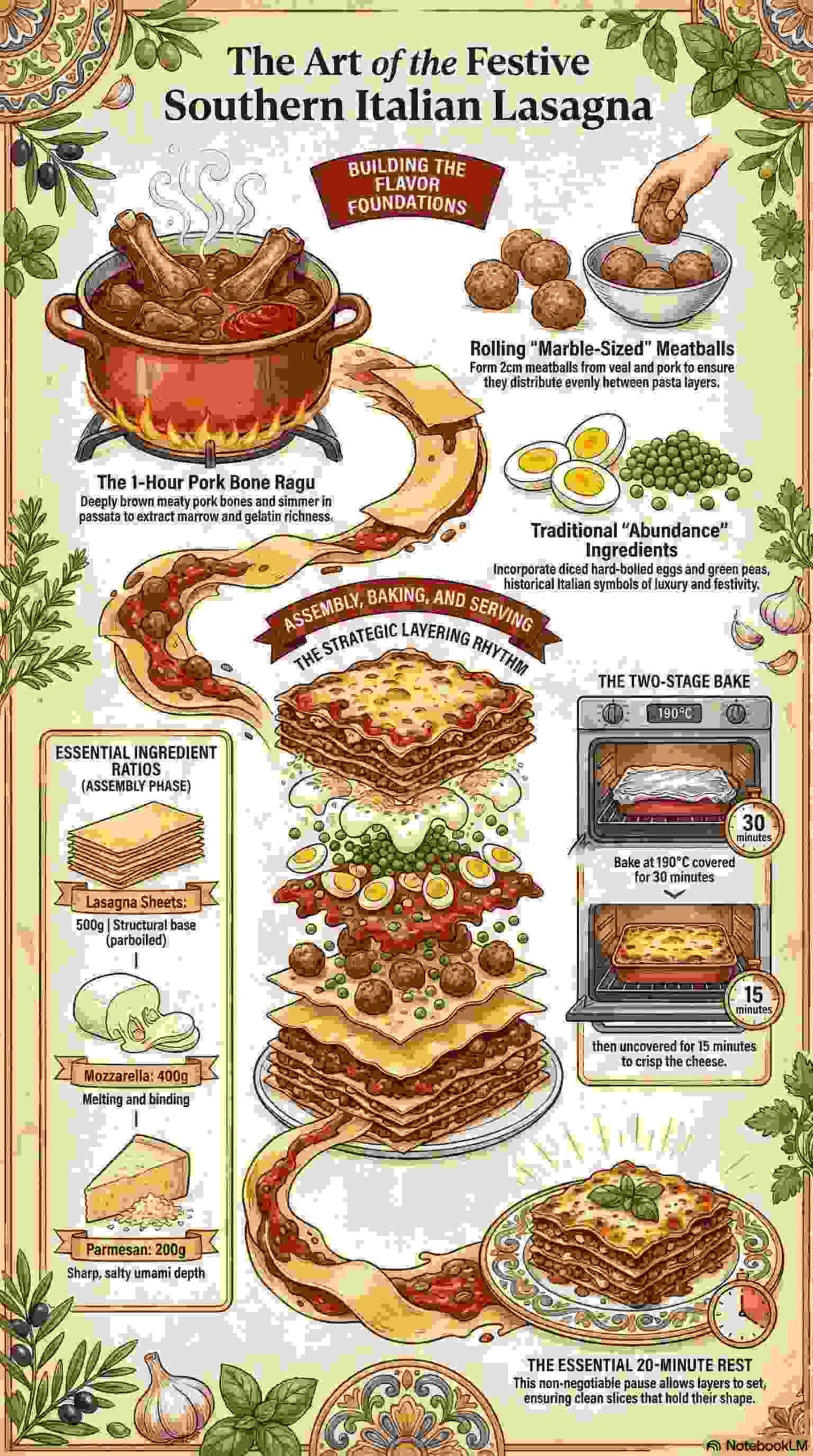
1. Brown the pork bones: Heat 2 tablespoons olive oil in a large, deep pot or Dutch oven over medium-high heat. Add the pork bones and brown them deeply on all sides, approximately 8 to 10 minutes total. Don’t rush this step. Deep browning creates flavorful fond on the pot bottom and develops complex flavor through the Maillard reaction. The bones should be richly browned, almost mahogany-colored.
2. Remove bones temporarily: Transfer the browned bones to a plate and set aside.
3. Sauté aromatics: Reduce heat to medium. Add the finely diced onion to the pot (with the flavorful browned bits still in the bottom) and cook, stirring occasionally, for 5 to 7 minutes until soft and translucent. Add the minced garlic and cook for approximately 30 seconds, stirring constantly, until fragrant but not browned.
4. Add tomatoes and bones: Pour in the 800ml passata, stirring to incorporate the browned bits from the pot bottom (this is deglazing, which captures all that concentrated flavor). Return the browned pork bones to the pot, nestling them into the sauce. Add the 2 bay leaves and season with salt to taste (start with approximately 1 teaspoon; you can adjust later).
5. Simmer slowly: Bring the sauce to a gentle simmer, then reduce heat to low. Cover partially (leaving a small gap for steam to escape) and simmer very gently for 1 hour, stirring occasionally. The sauce should barely bubble. During this time, the pork bones release gelatin, marrow, and flavor into the sauce, creating rich, complex character. The meat on the bones will become very tender.
6. Finish the sauce: After 1 hour, remove the pork bones and bay leaves. Pick any meat off the bones, chop it finely, and stir it back into the sauce (discard the bones and bay leaves). Taste and adjust salt. If desired, tear in a few fresh basil leaves. The sauce should be thick, rich, and deeply flavorful. You should have approximately 700 to 800ml of finished sauce.
Make the Mini Meatballs
1. Combine ingredients: In a large bowl, combine the ground veal, ground pork, chopped parsley, grated Parmesan, egg, breadcrumbs, and season generously with salt and freshly ground black pepper. Using your hands or a fork, mix gently just until all ingredients are evenly distributed. Avoid overmixing, which develops tough texture.
2. Assess consistency: The mixture should hold together when squeezed but not feel overly wet or sticky. If it seems too dry and crumbly, add water 1 tablespoon at a time (up to 3 tablespoons maximum) until it just holds together. If too wet, add more breadcrumbs 1 tablespoon at a time.
3. Roll meatballs: Using damp hands (moisture prevents sticking), roll the mixture into very small meatballs, approximately 2cm in diameter, roughly marble-sized or slightly smaller. They should be substantially smaller than standard meatballs, as they need to fit easily between lasagna layers and distribute throughout the dish. You should get approximately 40 to 50 mini meatballs. Uniform size ensures even cooking.
4. Brown the meatballs: Heat 2 to 3 tablespoons olive oil in a large skillet over medium-high heat. Working in batches to avoid overcrowding, add the meatballs and brown them on multiple sides, turning carefully, for approximately 4 to 6 minutes total. They don’t need to cook through completely, as they’ll finish in the oven. The goal is to develop browned exteriors and set their shape. Transfer browned meatballs to a plate.
Prepare Additional Components
1. Boil eggs if not done: If you haven’t already prepared the hard-boiled eggs, place 5 eggs in a pot, cover with cold water by 2 to 3cm, bring to a boil, then immediately remove from heat, cover, and let stand for 12 minutes. Transfer to ice water, cool completely, peel, and dice into small pieces (approximately 1cm cubes).
2. Prepare peas: If using frozen peas, let them thaw. If using fresh peas, blanch them briefly in boiling water for 2 to 3 minutes until just tender, then drain. The peas will cook further during baking, so they should be barely cooked at this stage.
3. Parboil lasagna sheets (if required): If using standard dried lasagna sheets that require pre-cooking, bring a large pot of well-salted water to a boil. Working in batches, cook the lasagna sheets for approximately half the time indicated on the package (typically 3 to 5 minutes for sheets that normally cook 8 to 10 minutes). The sheets should be pliable but still quite firm. Drain and lay flat on clean kitchen towels to prevent sticking. If using fresh pasta sheets or no-boil sheets, skip this step.
Assemble the Lasagna
1. Preheat oven: Set the oven to 190°C (375°F) and position a rack in the center.
2. Prepare the baking dish: Choose a large, deep baking dish (approximately 23 x 33cm or 9 x 13 inches, at least 7 to 8cm/3 inches deep). Lightly oil the bottom and sides.
3. Begin layering: Spread approximately 125ml (½ cup) of the pork ragu sauce across the bottom of the dish in a thin, even layer. This prevents the bottom pasta layer from sticking.
Lay lasagna sheets over the sauce, slightly overlapping if necessary to cover the entire bottom. Break sheets to fit if needed.
4. Build the layers: The layering pattern repeats multiple times. For each layer after the first pasta layer:
- Scatter some mini meatballs (approximately one-quarter of the total)
- Sprinkle some peas (approximately one-quarter of the total)
- Spoon sauce over (approximately 125 to 150ml per layer)
- Scatter some diced boiled eggs (approximately one-quarter of the total)
- Distribute mozzarella (approximately one-quarter of the total)
- Sprinkle Parmesan (approximately 2 tablespoons per layer)
- Top with another layer of pasta sheets
Repeat this layering pattern 3 to 4 times depending on your dish depth and number of pasta sheets, using the meatballs, peas, eggs, and cheeses relatively evenly throughout. Not every single layer needs every single component, but distribute them so each portion of lasagna will contain all elements.
5. Final top layer: For the top layer, use pasta sheets, then spread the remaining sauce generously over the entire surface. Cover completely with the remaining mozzarella and finish with a heavy, generous layer of Parmesan. The top should be well-covered with cheese, as this creates the golden, crispy top crust.
Bake and Rest
1. Bake: Cover the dish tightly with aluminum foil (if the cheese is close to the foil, lightly oil the underside of the foil to prevent sticking). Place in the preheated oven and bake for 30 minutes covered.
2. Uncover and finish: Remove the foil and continue baking for an additional 10 to 15 minutes until the top is golden brown and bubbling actively around the edges. The cheese should be melted completely with some browned spots. If you want more dramatic browning, broil for the final 2 to 3 minutes, watching carefully to prevent burning.
3. Rest before serving: Remove the lasagna from the oven and let it rest at room temperature for 20 minutes before cutting and serving. This resting period is essential. It allows the lasagna to set, the layers to firm up, and the sauce to be reabsorbed. Cutting into lasagna immediately causes it to fall apart and release liquid. The 20-minute rest creates clean, neat slices that hold together on the plate.
4. Serve: Cut the lasagna into squares using a sharp knife. Use a spatula to lift portions carefully onto plates. Each serving should show the distinct layers and contain meatballs, peas, eggs, and plenty of melted cheese.
Technical Notes on Success
Several factors determine whether this lasagna achieves proper structure and flavor:
Patient sauce simmering: The 1-hour simmer extracts maximum flavor from the pork bones. Shorter cooking produces thinner, less complex sauce.
Proper meatball size: The meatballs must be small enough to distribute throughout layers without creating large gaps or making the lasagna unstable.
Adequate sauce in each layer: Each layer needs enough sauce to keep the pasta moist during baking. Dry lasagna results from insufficient sauce.
Even component distribution: Distribute meatballs, peas, eggs, and cheeses relatively evenly so every portion contains all elements.
Generous top cheese layer: The heavy Parmesan and mozzarella on top create the appealing golden crust. Don’t skimp here.
Essential resting time: The 20-minute rest is non-negotiable for lasagna that slices cleanly and holds together.
Serving Suggestions
This lasagna serves 8 to 10 people as a main course. It’s a complete meal requiring minimal accompaniment:
Simple green salad: Lightly dressed bitter greens like arugula or radicchio provide refreshing contrast.
Crusty bread: Italian bread for soaking up any extra sauce.
Wine pairings: Medium to full-bodied Italian reds like Chianti Classico, Montepulciano d’Abruzzo, or Nero d’Avola complement the rich lasagna beautifully.
Storage and Make-Ahead
Advance assembly: The lasagna can be assembled completely up to 24 hours ahead, covered tightly, and refrigerated. Bring to room temperature for 30 minutes before baking, and add 10 to 15 minutes to the covered baking time.
Refrigeration: Leftover lasagna keeps refrigerated, tightly covered, for up to 4 days. Reheat individual portions in the microwave or reheat the entire dish covered in a 180°C (350°F) oven for 25 to 30 minutes.
Freezing: Lasagna freezes excellently for up to 3 months. Freeze either before or after baking. To freeze unbaked, assemble completely, wrap very tightly in plastic wrap and aluminum foil, and freeze. Thaw in refrigerator overnight before baking as directed. To freeze baked lasagna, cool completely first, then wrap and freeze. Thaw and reheat as above.
Cultural Context and Celebration Food
This elaborate lasagna represents Italian festive cooking at its most ambitious. In southern Italian homes, such preparations appear for major celebrations: weddings, Christmas, Easter, and important family gatherings. The labor-intensive nature makes the dish a gift of time and care, demonstrating love and respect for guests through the hours invested in preparation.
The multiple components and complex layering reflect abundance and prosperity. Each element contributes distinct flavor and texture, creating a dish far greater than the sum of its parts. The presentation of such lasagna at the table signals special occasion and brings families together around shared culinary heritage.
This lasagna with pork ragu and mini meatballs demonstrates how Italian cooking can be both humble and extravagant, using simple ingredients transformed through patient technique into something truly special. The interplay of rich meat sauce, tender meatballs, creamy eggs, sweet peas, and melted cheeses layered between pasta creates a dish that nourishes body, soul, and community bonds. It’s food that celebrates life’s important moments while connecting those who prepare and consume it to generations of Italian cooks who understood that the finest meals often require the greatest care.