
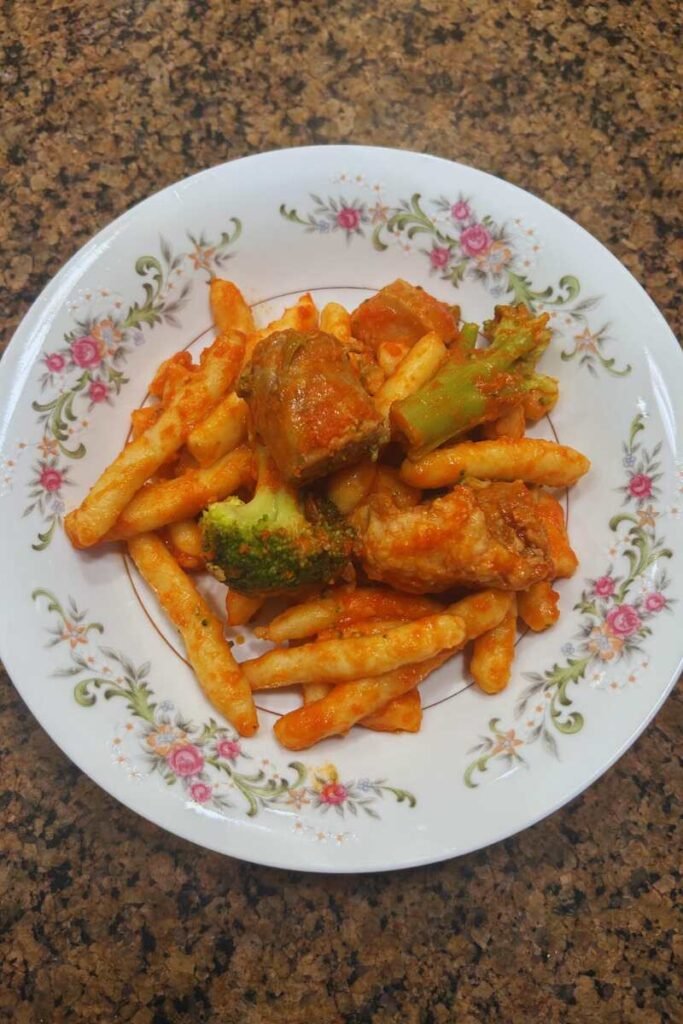
When Italian home cooking meets rustic comfort, you get Lolli Pasta Siciliana al Forno, a baked pasta dish that turns simple ingredients into a deeply satisfying meal. This recipe combines handmade lolli pasta, slow-simmered pork ragù, and tender broccoli, making it perfect for family dinners or Sunday gatherings.
What Makes This Dish Special
Lolli al forno isn’t your typical baked pasta. Instead of relying on béchamel or mountains of mozzarella, this recipe lets the quality of each component shine. The handmade lolli pasta, thick rustic pieces with irregular edges, clings beautifully to the rich tomato sauce that has been simmering with pork for hours. The result is a dish where every bite delivers texture, flavor, and the kind of satisfaction that only comes from food made with care.
The technique here is deliberate: undercooking the pasta before baking ensures it finishes perfectly in the oven while absorbing the sauce. Resting the assembled dish before baking allows the flavors to meld naturally, creating a cohesive final result rather than separate components sitting together.
Understanding the Components
The Pasta: Lolli
Lolli pasta is a traditional shape from central and southern Italy, characterized by its thick, hand-rolled form. Unlike delicate fresh pasta shapes, lolli is meant to be substantial, it holds up to robust sauces and baking without turning mushy. Making it by hand takes time, but the texture is incomparable to dried pasta in this application.
The dough uses a combination of egg and water, giving it structure while maintaining enough tenderness to remain pleasant to eat. According to So Culinarian, the key to successful fresh pasta dough is achieving the right hydration level and kneading until the dough becomes silky and elastic, exactly what this recipe calls for with its 8-10 minute kneading time.
The Sauce: Carne nel Sugo
This isn’t a quick tomato sauce. The method of browning whole pieces of pork before simmering them in tomato sauce for nearly two hours creates layers of flavor that define the dish. The pork shoulder becomes tender enough to pull apart with a fork, while the sausage infuses the sauce with its seasonings. Even the pork belly renders its fat into the sauce, adding richness without greasiness.
The technique of cooking tomato paste until it darkens is crucial, this caramelization removes any raw, metallic notes and creates depth. As explained in The Food Lab’s guide to better tomato sauce, allowing tomato paste to cook until it turns a brick-red color develops complex, sweet flavors that form the foundation of exceptional sauce.
The Broccoli
Broccoli in baked pasta might seem simple, but it serves multiple purposes. The florets add color, provide textural contrast to the soft pasta, and offer a slightly bitter note that balances the richness of the pork and sauce. Blanching them briefly keeps them vibrant and ensures they finish cooking perfectly in the oven without turning olive-green or mushy.
The Recipe
Serves 4–5
For the Lolli Pasta Dough:- 400 g 00 flour
- 1 egg
- 170 ml water
- 1 tbsp extra virgin olive oil
- Pinch of salt
- 700 ml passata
- 2 tbsp tomato paste
- ½ onion, small diced
- 1 medium hot sausage (kept whole or in large pieces)
- 200 g boneless pork shoulder, cut into large chunks
- 2 pieces pork belly
- 1 tsp chili flakes or 1 fresh chili
- Extra virgin olive oil
- Salt to taste
- Broccoli, cut into medium florets
- 40–60 g Parmigiano Reggiano, finely grated
Method
Making the Lolli Pasta
Begin with the pasta dough, as it needs time to rest. Create a well in the center of your flour on a clean work surface. Add the egg, olive oil, a pinch of salt, and half the water to the well. Using a fork or your fingers, begin incorporating the flour from the inner walls of the well, gradually adding the remaining water as needed until a shaggy dough forms.
Knead the dough for 8–10 minutes. This isn’t just about combining ingredients, you’re developing the gluten network that gives the pasta structure. The dough should transform from rough and sticky to smooth and elastic. When you press it with your finger, it should spring back slightly. Cover the dough with a damp cloth or plastic wrap and let it rest for 30 minutes at room temperature.
After resting, divide the dough into manageable portions. Roll each portion into ropes about the thickness of a pencil. Cut these ropes into short pieces, roughly 2–3 cm long. The beauty of lolli is its rustic nature, don’t worry about uniform sizes. These irregular pieces will catch sauce differently, creating varied textures in the final dish. Dust the shaped lolli lightly with flour and set aside on a tray.
Preparing the Tomato Sauce with Pork
Heat a generous amount of olive oil in a heavy-bottomed pot or Dutch oven over medium-high heat. Add the pork belly pieces first to render some of their fat, then add the pork shoulder chunks and whole sausage. The goal is deep browning on all sides, this creates fond on the bottom of the pot and develops the flavor foundation of your sauce. Don’t rush this step. Remove the browned meat and set aside.
Lower the heat to medium and add the diced onion to the same pot, scraping up any browned bits. Cook until the onion softens and turns translucent, about 5 minutes. Add the chilli (flakes or fresh) and tomato paste. This is where patience pays off: cook the tomato paste, stirring frequently, for 2–3 minutes until it darkens to a brick red and becomes very fragrant.
Return all the browned pork to the pot. Pour in the passata and add salt to taste. Stir gently to combine, ensuring the meat is mostly submerged. Bring to a gentle simmer, then reduce the heat to low. Cover the pot slightly (leave a small gap for steam to escape) and let it cook for 1½–2 hours. Check occasionally, stirring gently and adding a splash of water if it becomes too thick. The pork should be very tender, and the sauce should be rich but still loose enough to coat pasta easily.
Preparing the Broccoli
Bring a pot of well-salted water to a boil. Add the broccoli florets and blanch for 2–3 minutes, they should be vibrant green and just tender. Drain and set aside. If you prefer more textural contrast and a bit of roasted flavor, you can skip blanching and add raw florets directly to the baking dish, though they’ll need slightly longer in the oven.
Assembling the Dish
Bring a large pot of generously salted water to a boil. Add your lolli and cook very al dente, 1–2 minutes shorter than you normally would for pasta you’re serving immediately. The pasta will finish cooking in the oven while absorbing sauce. Before draining, reserve about a cup of the starchy pasta water.
Preheat your oven to 190°C (375°F).
Choose a wide, shallow baking dish or roasting tray, something that allows the pasta to spread in a relatively even layer. Spoon a thin layer of your pork sauce across the bottom. Remove the pieces of pork (shoulder, sausage, and belly) from the sauce and set them aside temporarily.
Add the drained lolli to the tray. Spoon additional sauce over the pasta and add a splash of the reserved pasta water, the starch in this water helps bind everything together. Toss gently but thoroughly until every piece of pasta is glossy and well-coated. The mixture should look slightly loose and saucy, not dry.
Sprinkle most of your grated Parmigiano Reggiano directly onto the pasta and toss once more. The residual heat will begin melting the cheese into the sauce, creating a creamy consistency without adding cream.
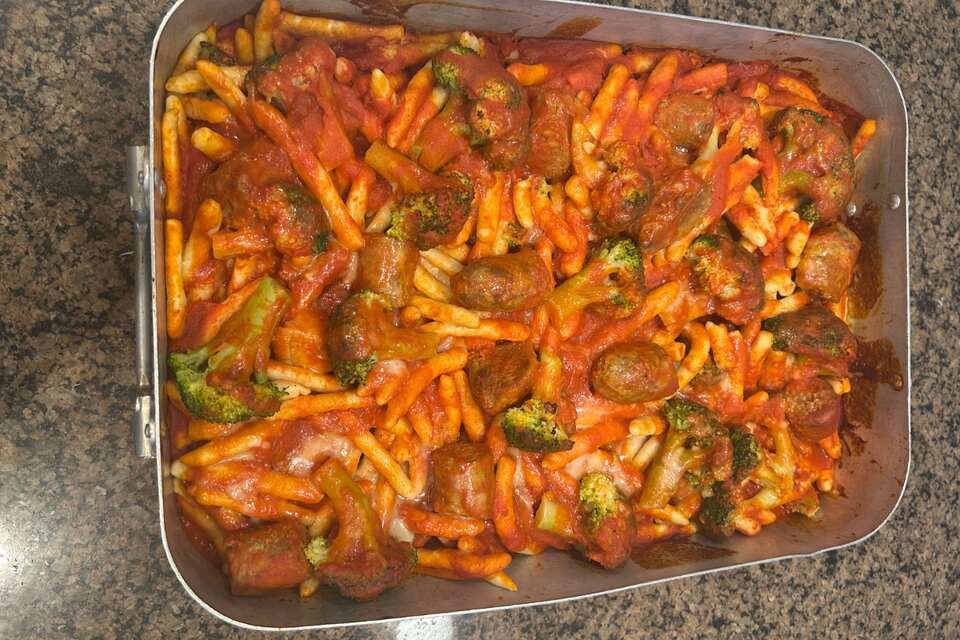
Arrange the blanched broccoli florets across the top of the pasta. Nestle the reserved pieces of pork, shoulder, sausage, and belly, among the pasta and broccoli. Spoon a little extra sauce over the meat to keep it moist during baking. If desired, add a very light final dusting of Parmigiano on top.
Here’s a step that many recipes skip but shouldn’t: let the assembled tray sit at room temperature for 5–10 minutes before baking. This brief rest allows the pasta to begin absorbing the sauce and the flavors to start mingling. It also helps the dish bake more evenly since you’re not putting ice-cold ingredients straight into the oven.
Baking
Place the uncovered tray in your preheated oven and bake for 20–25 minutes. What you’re looking for is a slight tightening of the sauce, lightly crisped edges on some of the pasta and broccoli, and meat that’s developed some color on top while staying juicy. The center should remain saucy rather than dried out.
Remove from the oven and let rest for 5 minutes before serving. This final rest allows the sauce to settle and makes serving much easier.
Serving and Storage
Serve this dish family-style, bringing the tray to the table and letting everyone help themselves. Make sure each serving includes pasta, sauce, broccoli, and at least one piece of the pork. The meat should be tender enough to pull apart with just a fork.
Leftovers keep well for 3–4 days in the refrigerator. Reheat in a moderate oven covered with foil, adding a splash of water or stock if the pasta seems dry. You can also freeze portions for up to 2 months, and thaw overnight in the refrigerator before reheating.
Tips for Success
The quality of your passata matters significantly in a sauce this simple. Look for brands with just tomatoes and perhaps salt, with no additives or flavor enhancers. San Marzano tomatoes or their derivatives offer the ideal balance of sweetness and acidity.
Don’t skimp on the browning stage for the pork. Those caramelized bits aren’t just color, they’re concentrated flavor that permeates the entire sauce.
If your pork releases a lot of fat during cooking, you can skim some from the surface of the sauce, but leave enough for richness. The fat carries flavor and helps create a glossy sauce.
Room temperature assembly is key. Cold pasta straight from draining won’t absorb sauce as readily, and the temperature differential can lead to uneven cooking in the oven.
The final rest before serving isn’t optional, it transforms the dish from components in a tray to a cohesive whole where sauce, pasta, and toppings have truly come together.
This lolli al forno represents Italian home cooking at its best: modest ingredients treated with respect and time, resulting in a dish that’s far greater than the sum of its parts. The handmade pasta, long-simmered sauce, and thoughtful assembly create layers of flavor and texture that satisfy in a way quick recipes simply can’t match.