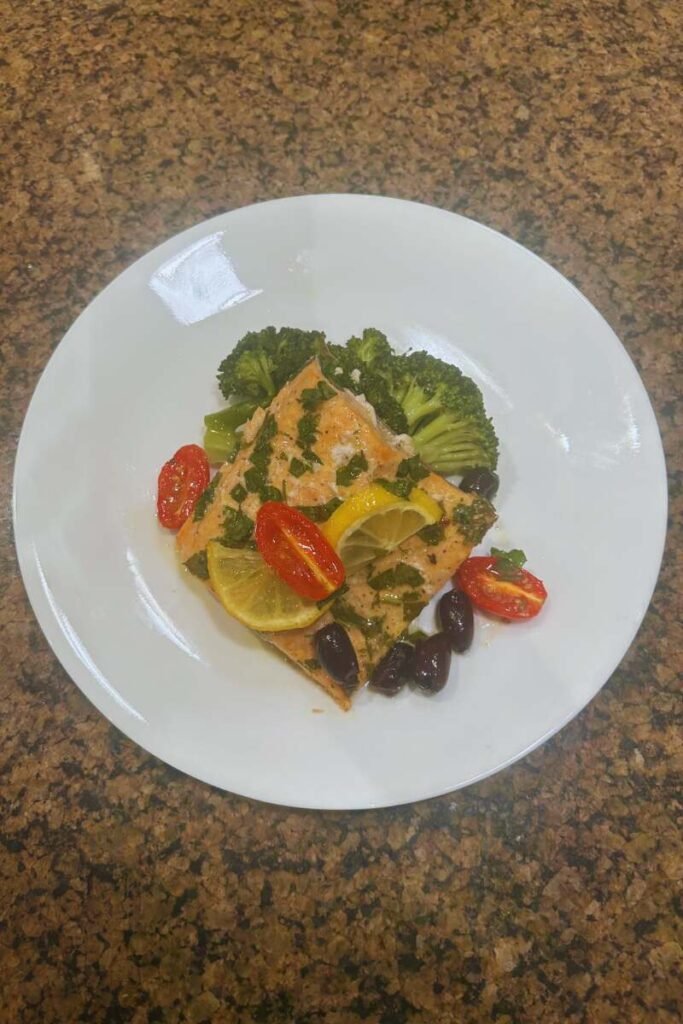
This dish exemplifies the Mediterranean approach to fish cookery: minimal intervention, maximum flavor through quality ingredients. Oven-Baked Trout Fillets with Lemon, Olives & Tomatoes plus Steamed Lemon Broccoli showcase this perfectly, as trout fillets bake with aromatic lemon slices, briny olives, and sweet cherry tomatoes, while steamed broccoli receives a simple lemon dressing.
The entire meal comes together in under fifteen minutes of active work, making it ideal for weeknight cooking without sacrificing sophistication 🙂.
Understanding Trout as a Cooking Medium
Trout belongs to the salmonid family, related to salmon but with more delicate flavor and finer texture. Its relatively thin fillets cook quickly and evenly, making it particularly suited to high-heat oven methods. The flesh contains moderate fat content compared to salmon, providing moisture without the pronounced oiliness that some find overwhelming in fattier fish.
Fresh trout should smell clean and oceanic, never fishy or ammonia-like. The flesh should appear translucent and slightly firm to the touch. Skin-on fillets are preferable for baking, as the skin protects the delicate flesh from direct heat and helps maintain moisture during cooking. According to Seafood Health Facts, trout provides excellent nutritional value with high-quality protein, omega-3 fatty acids, and essential vitamins while being lower in environmental contaminants than many larger fish species.
Ingredients
For the Trout
- 3 trout fillets (approximately 150-180g each), skin-on
- Salt and freshly ground black pepper
- 2-3 garlic cloves, thinly sliced
- Small handful fresh parsley, roughly chopped (approximately 3 tablespoons), divided
- 1 lemon, thinly sliced into rounds
- 150-200g cherry tomatoes, halved
- 80-100g pitted olives (green, Kalamata, or mixed), halved if large
- 3-4 tablespoons extra virgin olive oil
- Additional lemon wedge for finishing
For the Steamed Lemon Broccoli
- 400-500g broccoli florets, already steamed
- 2 tablespoons extra virgin olive oil
- Salt and freshly ground black pepper
- Juice of ½ lemon (approximately 1-2 tablespoons)
Ingredient Selection and Quality
Trout Selection
Wild-caught trout generally offers superior flavor to farmed varieties, with firmer texture and more pronounced taste. However, responsibly farmed trout from reputable sources can be excellent, particularly rainbow trout raised in clean, flowing water systems. The choice often depends on availability and budget.
Skin condition indicates freshness. The skin should appear shiny and intact, with scales adhering firmly. Any sliminess or dull appearance suggests age. The flesh should spring back when pressed gently, not leaving an indentation. If purchasing whole trout for filleting at home, look for clear, bright eyes and bright red gills.
Olive Varieties for Cooking
The olive variety significantly impacts final flavor. Kalamata olives from Greece provide deep, wine-like flavor with pronounced fruitiness. Green olives like Castelvetrano offer buttery, mild character. Niçoise olives contribute small bursts of intense, slightly bitter flavor. A combination of varieties creates complexity, though a single type works perfectly well.
Avoid canned black olives, which undergo processing that strips flavor and creates uniformly soft, bland texture. Quality jarred or fresh olives from a delicatessen counter provide vastly superior results.
Olive Oil Quality Matters
Extra virgin olive oil serves both as cooking medium and finishing element in this preparation. Its quality directly impacts the dish’s final taste. Look for olive oil labeled “extra virgin” with a harvest date (not just bottling date) within the past year. The oil should taste fruity, slightly peppery, and possibly bitter—these qualities indicate fresh oil high in beneficial polyphenols.
For finishing drizzles, consider using your best olive oil. The raw application showcases its flavor without the muting effects of heat. According to the North American Olive Oil Association, proper storage in a cool, dark place preserves olive oil quality, as light and heat degrade flavor compounds.
Lemon Considerations
Choose lemons that feel heavy for their size, indicating high juice content. Thin-skinned varieties like Meyer lemons provide sweeter, less acidic juice, while standard Eureka or Lisbon lemons offer classic bright acidity. For slicing, select lemons without thick, bumpy skin, as these contain less flesh relative to pith.
Organic lemons are preferable when using the peel or whole slices, as conventional lemons may have pesticide residues on the skin. Wash all lemons thoroughly before slicing.
Method
Prepare the Trout
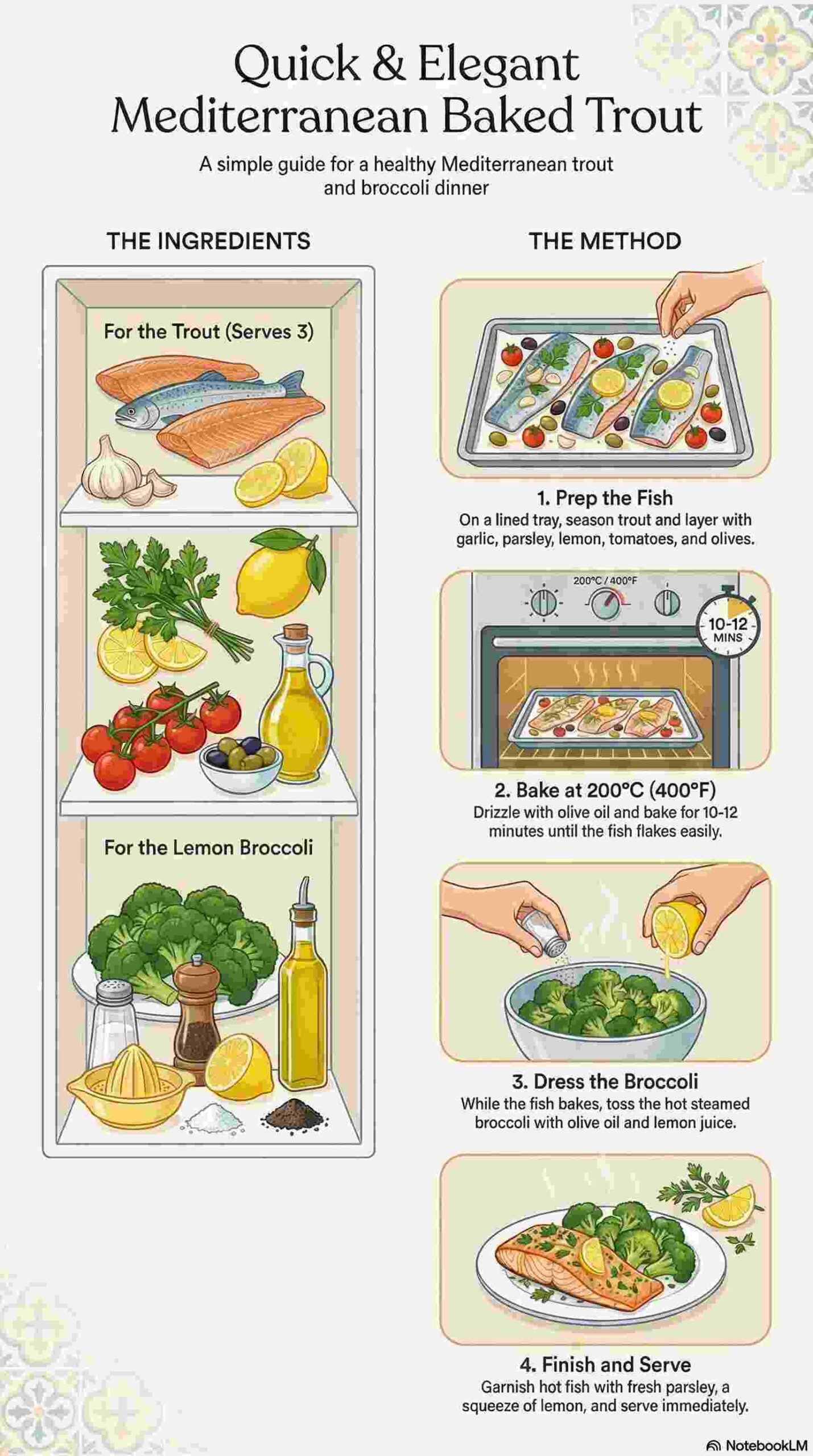
1. Preheat the oven: Set the oven to 200°C (400°F) and position a rack in the upper third of the oven. This temperature provides enough heat to cook the fish quickly while developing some surface color on the tomatoes and aromatics. The upper rack position brings the fish closer to the heat source, promoting better browning.
2. Prepare the baking tray: Line a baking sheet with parchment paper or aluminum foil for easy cleanup, or lightly oil the tray surface with olive oil. Parchment paper provides the easiest cleanup and prevents any sticking, while a lightly oiled metal surface conducts heat more efficiently, potentially creating slightly better browning on the bottom.
3. Arrange the trout: Place the three trout fillets on the prepared tray skin-side down, spacing them so they don’t touch. The skin acts as a barrier between the delicate flesh and the hot tray, preventing overcooking on the bottom while the top finishes. Spacing allows heat to circulate freely around each fillet, promoting even cooking.
4. Season generously: Season each fillet with salt and freshly ground black pepper. Be liberal with seasoning, as fish benefits from assertive salting. The salt penetrates the flesh during cooking, enhancing natural flavors rather than making the fish taste salty. Pepper adds subtle heat and aromatic complexity.
5. Add aromatics: Distribute the thinly sliced garlic evenly over the three fillets. Sprinkle approximately half of the chopped parsley over the fish, reserving the remainder for finishing. The garlic infuses the fish with aromatic flavor as it softens during baking, while the parsley provides fresh, herbaceous notes that withstand oven heat.
6. Layer the lemon slices: Arrange lemon slices over each fillet, slightly overlapping them if necessary. Each fillet should have 2-3 lemon slices covering most of the surface. The lemon serves multiple functions: it adds bright acidity, creates moisture that helps steam the fish gently, and provides visual appeal. The heat mellows the lemon’s acidity while concentrating its essential oils.
7. Distribute tomatoes and olives: Scatter the halved cherry tomatoes around the fillets on the tray, placing some directly on top of the lemon-covered fish as well. Distribute the olives similarly throughout the tray and over the fillets. The tomatoes release moisture as they bake, creating a light sauce, while their sugars concentrate and caramelize slightly. The olives contribute briny, savory depth that complements the fish’s mild flavor.
8. Drizzle with olive oil: Drizzle the extra virgin olive oil generously over everything—the fish, tomatoes, olives, and exposed tray surface. The oil conducts heat, promotes browning, prevents drying, and carries fat-soluble flavors throughout the dish. Use approximately 3-4 tablespoons total, ensuring even coverage.
Bake the Trout
1. Bake until just flaky: Place the tray in the preheated oven and bake for 10-12 minutes. The exact timing depends on the fillets’ thickness. Trout cooks quickly due to its delicate structure and relatively thin profile. The fish is done when the flesh turns opaque and flakes easily when prodded gently with a fork at the thickest part.
Overcooking fish is the most common error in fish cookery. Trout continues cooking from residual heat after removal from the oven, so slightly underdone is preferable to overdone. The internal temperature should reach 63°C (145°F) according to food safety guidelines, though many chefs prefer removing fish at 55-57°C (130-135°F) and allowing carryover cooking to finish it gently.
2. Optional broiling: For enhanced color and slight charring on the tomatoes and lemon, switch the oven to high broil for the final 1-2 minutes of cooking. Watch carefully, as the broiler’s intense heat can quickly burn delicate elements. This step creates appealing visual contrast and adds subtle caramelized flavors, but remains entirely optional.
Finish the Trout
1. Add fresh elements: Immediately after removing the tray from the oven, sprinkle the remaining fresh parsley over the fillets and vegetables. The residual heat warms the parsley slightly, releasing its aromatics without cooking it completely.
2. Brighten with lemon: Squeeze a small amount of fresh lemon juice over the fish and vegetables—just a few drops per fillet. This final acidic hit brightens flavors and balances the richness of the olive oil. Fresh lemon juice tastes markedly different from the baked lemon slices, providing vibrant acidity that cuts through the dish’s richness.
3. Final olive oil drizzle: Add a small drizzle of your best extra virgin olive oil over each fillet. This finishing drizzle, applied to hot but not cooking food, showcases the oil’s raw flavor. Use high-quality oil here, as its nuances remain intact without heat degradation.
Steamed Lemon Broccoli
Since the broccoli arrives already steamed and hot, the preparation involves only seasoning and dressing.
1. Season while hot: Transfer the hot steamed broccoli to a serving bowl. Season immediately with salt and freshly ground black pepper to taste. Hot vegetables absorb seasonings more readily than cool ones, and the heat helps distribute the salt evenly.
2. Add olive oil: Drizzle approximately 2 tablespoons of extra virgin olive oil over the broccoli. Toss gently to coat all florets. The oil adds richness, creates a pleasant mouthfeel, and helps carry the seasonings throughout the dish.
3. Finish with lemon juice: Squeeze the juice of half a lemon (approximately 1-2 tablespoons) over the dressed broccoli. Toss again to distribute. The lemon juice brightens the broccoli’s flavor and echoes the lemon elements in the fish preparation, creating cohesion between the components.
The key to this simple preparation is timing: dress the broccoli while it’s hot, allowing the heat to help the flavors meld and preventing the oil from congealing as it would on cold vegetables.
Technical Notes on Fish Cookery
Several principles govern successful fish preparation:
Minimal handling: Fish flesh is delicate and breaks apart easily when overworked. Once seasoned and arranged, avoid moving or flipping the fillets. The skin-side-down method eliminates the need for turning, which often causes delicate fillets to fall apart.
High, fast heat: Fish benefits from quick cooking at relatively high temperatures. Low, slow cooking tends to dry out fish and create unpleasant texture. The 200°C (400°F) temperature cooks trout thoroughly in 10-12 minutes while maintaining moisture.
Visual and tactile cues: Cooked fish turns from translucent to opaque and flakes easily along its natural segments. The flesh should feel firm but springy when pressed gently. Overcooked fish feels hard and dry, while undercooked fish remains translucent and overly soft.
Carryover cooking: Fish continues cooking after removal from heat due to residual heat in the flesh. Removing fish slightly before it reaches perfect doneness and allowing it to rest briefly produces better results than cooking completely in the oven.
Serving and Presentation
Serve the trout fillets directly from the baking tray for rustic appeal, or transfer carefully to individual plates using a wide fish spatula to maintain fillet integrity. Each portion should include one fillet with its accompanying lemon slices, along with a generous portion of the roasted tomatoes and olives.
The steamed lemon broccoli serves alongside, providing color contrast and textural variety. The combination creates a complete meal without the need for additional starches, though crusty bread for soaking up the tomato-olive-oil mixture is always welcome.
This meal serves three people as a main course. Scale quantities proportionally for larger groups, though very large batches may require multiple baking trays to prevent overcrowding.
Wine Pairings
The bright, acidic components and delicate fish call for wines with crisp acidity and restrained body:
White wines: Sauvignon Blanc, Vermentino, Albariño, or unoaked Chardonnay complement the lemon and tomato elements while matching the fish’s delicacy.
Light reds: Served slightly chilled, Pinot Noir or light Grenache work surprisingly well, particularly if you prefer red wine. Their low tannins won’t overwhelm the fish, while their acidity harmonizes with the tomatoes.
Rosé: Dry rosé from Provence provides versatility, offering enough body for the olives while maintaining the freshness needed for fish.
Variations and Adaptations
Alternative fish: This preparation works equally well with other delicate fish fillets including sole, flounder, branzino, or salmon. Adjust cooking times based on thickness—thicker salmon fillets may require 14-16 minutes.
Herb variations: Replace parsley with fresh dill, basil, cilantro, or a combination. Each herb creates different flavor profiles: dill emphasizes the fish’s freshness, basil adds sweetness, cilantro contributes brightness.
Additional vegetables: Add to the tray:
- Thinly sliced fennel for anise notes
- Halved small potatoes (parboiled first) for heartiness
- Zucchini rounds for additional vegetables
- Capers for extra brininess
Different olives and tomatoes: Experiment with olive varieties and try different tomato types. Grape tomatoes, quartered Roma tomatoes, or even sun-dried tomatoes (oil-packed, drained) create different results.
Spice additions: A pinch of red chili flakes adds gentle heat, while a small amount of za’atar or herbs de Provence creates different aromatic profiles.
Broccoli alternatives: Replace steamed broccoli with other vegetables:
- Steamed green beans with the same lemon dressing
- Roasted asparagus (prepare alongside the fish)
- Sautéed spinach or Swiss chard
- Steamed cauliflower
Storage and Meal Planning
This dish is best served immediately after cooking, as fish quality degrades with reheating. However, leftovers can be refrigerated in an airtight container for up to 24 hours. Leftover fish works well flaked into salads, mixed with pasta, or served cold with additional lemon juice.
The simplicity and speed of this preparation make it ideal for weeknight cooking. The entire meal, from start to finish, requires approximately twenty minutes when the broccoli is steamed while the oven preheats. This efficiency doesn’t compromise quality or flavor—rather, it exemplifies how proper technique and quality ingredients create excellent results without complexity.
This oven-baked trout with Mediterranean vegetables represents the convergence of simplicity and sophistication: a handful of quality ingredients, minimal technique, maximum flavor. The method respects the fish’s delicate nature while building complexity through layered aromatics and the concentrated flavors of roasted vegetables. It’s cooking that honors ingredients rather than obscuring them, producing results that satisfy without overwhelming.