
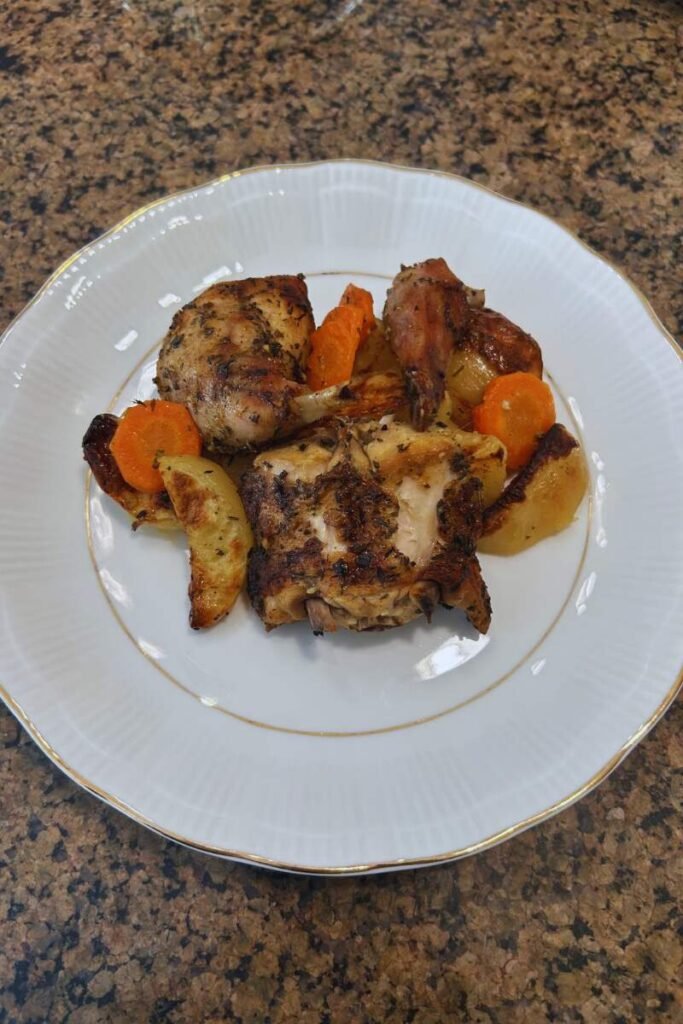
This Oven Roasted Rabbit with Potatoes and Vegetables is a rustic one-pan meal that combines tender rabbit pieces with golden potatoes and aromatic vegetables, all infused with garlic, herbs, and white wine. The rabbit marinates for several hours in lemon, wine, and Mediterranean herbs, helping the meat stay moist and deeply flavorful as it roasts.
As it cooks atop a bed of potatoes and vegetables, the rabbit releases its juices into the pan, creating a natural sauce that blends beautifully with the wine marinade for rich, savory depth. The result is a complete, hearty meal with minimal hands-on work but impressive farmhouse-style flavor 🙂.
Understanding Rabbit as a Cooking Medium
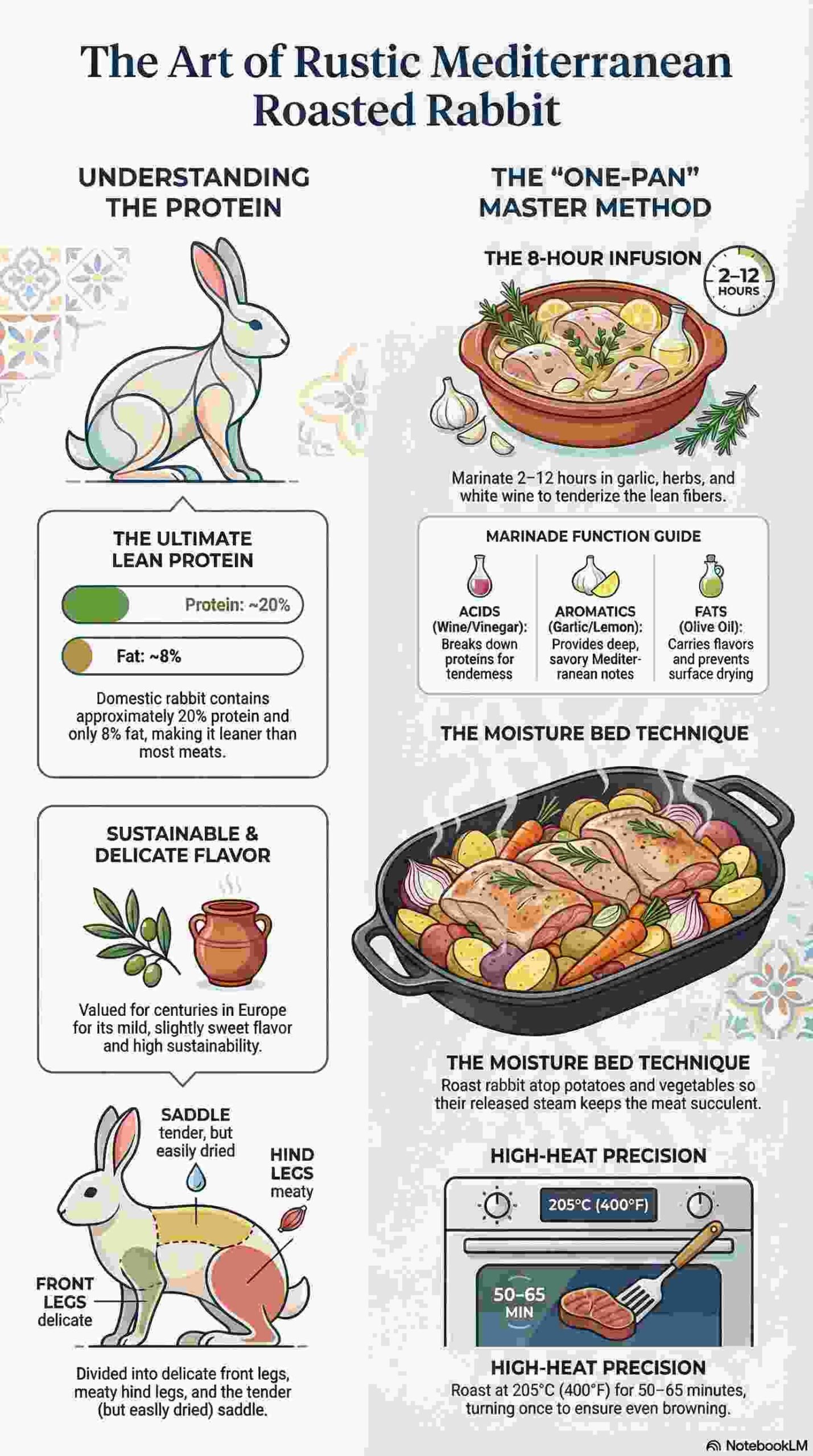
Rabbit meat offers delicate, slightly sweet flavor often compared to chicken but with finer grain and leaner composition. Domestically raised rabbit contains approximately 20% protein and only 8% fat, making it one of the leanest meats available. This low fat content means rabbit requires careful cooking to prevent dryness. Marinating before roasting and cooking atop moisture-releasing vegetables helps keep the meat tender and succulent.
Rabbit is divided into sections much like chicken: two front legs, two rear legs (the meatiest portions), and the saddle or loin section. The front legs are smaller and more delicate, while the hind legs provide substantial, flavorful meat. The saddle contains the tenderest meat but dries out most easily without proper technique. According to culinary tradition throughout France, Italy, and Spain, rabbit has been a dietary staple for centuries, valued for its mild flavor, nutritional profile, and sustainability compared to larger livestock.
Ingredients
Oven Roasted Rabbit with Potatoes and Vegetables
Ingredients
For the Rabbit and Marinade- 1 whole rabbit, cut into 6–8 pieces (approximately 1.2–1.5kg)
- Zest of 1 lemon (about 1 tablespoon)
- 4–5 garlic cloves, finely chopped
- 1½ teaspoons sweet paprika
- 2–3 tablespoons fresh rosemary, finely chopped
- 2 tablespoons fresh thyme leaves, chopped
- 3 tablespoons extra virgin olive oil
- 1 tablespoon apple cider vinegar
- 200ml dry white wine
- Freshly ground black pepper, to taste
- Salt, for seasoning before roasting
- 800g Yukon Gold potatoes, cut into wedges (about 5–6 medium potatoes)
- 1 large onion, diced
- 2 medium carrots, sliced into rounds
- 2 celery stalks, sliced
- 3–4 tablespoons extra virgin olive oil
- Salt and freshly ground black pepper, to taste
- 1 tablespoon garlic powder
- 1 tablespoon fresh rosemary, finely chopped
- 1 tablespoon fresh thyme, chopped
Ingredient Selection and Quality
Rabbit Selection and Preparation
Whole rabbits are available from specialty butchers, farmers markets, and increasingly from well-stocked grocery stores. Fresh rabbit should have pale pink flesh with no off odors. Frozen rabbit works equally well; thaw completely in the refrigerator for 24 hours before marinating. A typical rabbit weighs 1.2 to 1.5kg dressed and cuts into 6 to 8 pieces: two front legs, two hind legs, and the saddle divided into 2 to 4 pieces depending on size.
Many butchers will cut the rabbit for you upon request, which is convenient if you are unfamiliar with rabbit butchery. The pieces should be roughly similar in size to ensure even cooking, though the hind legs will naturally be larger than front legs. If purchasing a whole rabbit to butcher yourself, kitchen shears or a sharp chef’s knife work well for cutting through the joints.
Marinade Components and Their Functions
The marinade serves multiple purposes: tenderizing the lean meat, infusing flavor, and providing moisture during cooking. Each component contributes specific qualities:
Lemon zest adds bright citrus aromatics without the acidity that juice would contribute (which can make meat mushy if marinated too long).
Garlic provides pungent, savory depth that mellows during roasting.
Paprika contributes earthy sweetness and subtle color. Sweet paprika works best here; smoked paprika would create different character.
Fresh herbs (rosemary and thyme) are essential to Mediterranean flavor profiles. Fresh herbs have significantly more impact than dried in marinades. If you must substitute dried, use one-third the quantity specified.
Olive oil carries fat-soluble flavors into the meat and helps keep the surface moist during roasting.
Apple cider vinegar provides gentle acidity that helps tenderize the meat while contributing subtle fruity notes.
White wine adds acidity and aromatic complexity. Choose a dry white wine you would drink, such as Sauvignon Blanc, Pinot Grigio, or unoaked Chardonnay. According to the USDA Food Safety and Inspection Service, marinating meat properly in acidic mixtures can enhance both flavor and tenderness when done correctly.
Potato and Vegetable Selection
Yukon Gold potatoes work ideally for roasting due to their creamy texture, naturally buttery flavor, and moderate starch content. They hold their shape during extended roasting while developing crispy, golden exteriors. Russet potatoes can substitute but may become drier and more crumbly. Red potatoes also work well, maintaining firm texture throughout cooking.
Onions sweeten considerably during roasting, adding natural sugars that caramelize and enrich the pan juices. Yellow or white onions both work well.
Carrots contribute sweetness and earthy flavor while maintaining some texture even after extended roasting.
Celery provides aromatic backbone and subtle bitterness that balances the dish’s sweeter elements.
Herb and Seasoning Quality
Fresh rosemary and thyme are strongly preferred over dried for both the marinade and vegetable seasoning. The fresh herbs release essential oils during the long roasting time, creating layers of aromatic flavor that dried herbs cannot replicate. If using dried herbs as a last resort, reduce quantities by two-thirds and add them later in cooking to prevent bitterness.
Method
Marinate the Rabbit
1. Prepare the marinade: In a large bowl or baking dish, combine the lemon zest, finely chopped garlic, paprika, chopped rosemary, chopped thyme, 3 tablespoons olive oil, apple cider vinegar, white wine, and several grinds of black pepper. Whisk together until well combined. The marinade will appear somewhat thin and liquidy, which is correct. It should smell intensely aromatic from the garlic and herbs.
2. Coat the rabbit: Add the rabbit pieces to the marinade, turning each piece to coat thoroughly. Use your hands to rub the marinade into all surfaces of the meat, ensuring even coverage. The rabbit pieces should be well-coated with herbs and garlic visible on the surface.
3. Refrigerate: Cover the bowl or dish tightly with plastic wrap or transfer everything to a large zip-top bag, pressing out excess air. Refrigerate for at least 2 to 4 hours, though overnight marination (8 to 12 hours) produces superior results. Turn the pieces once or twice during marination if possible to ensure even exposure to the marinade.
Extended marination allows the flavors to penetrate deeply into the lean meat while the gentle acidity begins tenderizing the proteins. Do not marinate longer than 24 hours, as excessive exposure to acid can make the exterior texture mushy.
Prepare the Vegetables
1. Preheat the oven: Set the oven to 205°C (400°F) and position a rack in the lower third of the oven. This placement allows the vegetables on the bottom to roast properly while the rabbit above cooks evenly.
2. Cut the vegetables: Peel the potatoes if desired (leaving skins on is equally acceptable and adds rustic character and additional nutrients). Cut into wedges approximately 2 to 3cm thick at the widest point. Uniform sizing ensures even cooking. Dice the onion into roughly 2cm pieces. Slice the carrots into rounds approximately 1cm thick. Slice the celery similarly.
3. Season the vegetables: In a large roasting pan (approximately 23 x 33cm or 9 x 13 inches, or larger), combine the prepared potatoes, onion, carrots, and celery. Drizzle with 3 to 4 tablespoons olive oil and sprinkle with salt, black pepper, garlic powder, chopped rosemary, and chopped thyme. Using your hands or a large spoon, toss everything together thoroughly until the vegetables are evenly coated with oil and seasonings.
4. Arrange in the pan: Spread the seasoned vegetables in a relatively even layer across the roasting pan. They can overlap slightly but should not be piled deeply, as this prevents proper browning and creates steaming rather than roasting.
Roast the Rabbit and Vegetables
1. Season and arrange the rabbit: Remove the rabbit pieces from the marinade, reserving all the marinade liquid in the bowl. Pat the rabbit pieces lightly with paper towels to remove excess marinade (this promotes better browning), but leave the herbs and garlic clinging to the meat. Season both sides of each piece generously with salt. The rabbit was not salted during marination, so proper seasoning now is essential.
Arrange the seasoned rabbit pieces on top of the vegetables, spacing them evenly and trying to ensure each piece has some contact with the pan bottom or vegetables (not stacked on top of each other).
2. Add the marinade: Pour the reserved marinade over the rabbit and vegetables. The liquid will pool in the bottom of the pan, where it will create steam and eventually reduce into concentrated pan juices.
3. Roast: Place the pan in the preheated oven and roast for 50 to 65 minutes total. The exact timing depends on the rabbit pieces’ size, with smaller front legs cooking faster than larger hind legs. During roasting:
After 25 minutes: Turn the rabbit pieces over to ensure even browning on both sides. Check the vegetables and stir them if the edges are browning too quickly.
After 50 minutes: Check for doneness. The rabbit should be golden brown with slightly crispy skin. The meat should register 71°C (160°F) on an instant-read thermometer inserted into the thickest part of a hind leg. The potatoes should be tender when pierced with a fork and golden brown on the edges.
If the pan appears dry and vegetables are sticking or browning too quickly, add 60 to 125ml (¼ to ½ cup) water or additional white wine to the pan and continue roasting.
4. Final check: The rabbit is done when the meat is tender, pulls easily from the bone, and shows no pink near the bone when pierced with a knife. The vegetables should be soft and caramelized in spots.
Rest and Serve
1. Rest the dish: Remove the pan from the oven and let everything rest for 10 minutes before serving. This resting period allows the rabbit’s juices to redistribute throughout the meat rather than running out when cut. The vegetables continue cooking gently from residual heat.
2. Serve: Transfer rabbit pieces and vegetables to a serving platter or serve directly from the roasting pan for rustic presentation. Spoon the pan juices, which have concentrated and reduced during roasting, over the rabbit and potatoes. These juices contain all the aromatics from the marinade plus the rabbit’s rendered fat and vegetable flavors, creating a natural, intensely flavored sauce.
Technical Notes on Success
Several factors determine whether this dish achieves tender, flavorful rabbit and perfectly roasted vegetables:
Adequate marination time: The minimum 2 to 4 hours allows flavors to penetrate and acid to begin tenderizing. Overnight produces notably better results. However, do not exceed 24 hours, which can make the meat mushy.
Proper oven temperature: The 205°C (400°F) temperature is high enough to create browning and caramelization while gentle enough to cook the lean rabbit through without drying it out. Lower temperatures would extend cooking time and potentially dry the meat, while higher temperatures risk burning the exterior before the interior cooks.
Vegetable bed creates moisture: Cooking the rabbit atop vegetables serves multiple functions. The vegetables release moisture that creates a humid environment in the pan, helping keep the rabbit moist. As they roast, their natural sugars caramelize, enriching the pan juices. Finally, they absorb the rabbit’s rendered fat and the marinade, becoming incredibly flavorful.
Turning ensures even cooking: Rabbit pieces are irregularly shaped, and turning them halfway through roasting ensures both sides brown evenly and cook through at similar rates.
Pan juices are essential: The concentrated liquid at the pan bottom is not merely a byproduct but an integral component. Do not discard it. These juices contain the essence of all the dish’s flavors and should be spooned generously over the meat and vegetables when serving.
Serving Suggestions
This dish serves 4 people as a main course, with each person receiving 1 to 2 rabbit pieces plus generous portions of vegetables. The meal is complete as presented, though a few additions complement it well:
Crusty bread: Italian or French bread for soaking up the flavorful pan juices is traditional and highly recommended.
Simple green salad: Dressed bitter greens like arugula or frisée provide refreshing contrast to the rich, savory rabbit.
Polenta: Creamy polenta serves as an additional starch to soak up pan juices, traditional in northern Italian rabbit preparations.
Wine pairings: Medium-bodied white wines like Soave, Verdicchio, or white Burgundy complement rabbit’s delicate flavor without overwhelming it. Light to medium-bodied reds like Pinot Noir, Barbera, or Chianti also work well, particularly in cooler weather.
Variations and Adaptations
This basic technique accommodates numerous variations while maintaining the fundamental approach:
Different herbs: Replace rosemary and thyme with:
- Sage and bay leaves for earthier, more traditional Italian character
- Oregano and marjoram for Greek-influenced flavor
- Tarragon and parsley for French-style preparation
- Lavender (sparingly) for Provençal character
Additional vegetables: Include or substitute:
- Fennel bulbs, cut into wedges, for anise notes
- Bell peppers for sweetness and color
- Mushrooms (add halfway through roasting to prevent overcooking)
- Parsnips instead of or alongside carrots
- Cherry tomatoes (add for the final 20 minutes only)
Citrus variations: Replace lemon zest with orange or lime zest for different aromatic profiles.
Mustard addition: Add 1 to 2 tablespoons Dijon mustard to the marinade for sharper, more complex flavor and additional emulsification.
Different wines: White wine can be replaced with:
- Dry rosé for fruity character
- Dry vermouth for herbal complexity
- Light beer for malty sweetness
- Chicken or vegetable stock (non-alcoholic option)
Spice additions: A pinch of red pepper flakes, ground coriander, or fennel seeds adds different dimensions without overwhelming the dish’s Mediterranean character.
Chicken substitution: If rabbit is unavailable, this exact preparation works beautifully with chicken pieces (legs, thighs, and breasts), though chicken will cook faster (approximately 40 to 50 minutes total).
Storage and Reheating
Leftover roasted rabbit and vegetables store well and often taste even better the next day as flavors continue developing.
Refrigeration: Cool completely, then transfer to airtight containers and refrigerate for up to 3 days. Store any pan juices separately to prevent the vegetables from becoming soggy.
Reheating: Reheat gently in a covered baking dish in a 165°C (325°F) oven for 15 to 20 minutes until warmed through. Add a splash of water or wine to prevent drying. Alternatively, reheat individual portions in the microwave, though the oven method better preserves texture.
Freezing: The rabbit and vegetables can be frozen for up to 2 months. Cool completely, portion into freezer-safe containers, and freeze. Thaw overnight in the refrigerator before reheating as directed above. The texture of potatoes may change slightly after freezing (becoming grainier), though the flavor remains good.
Leftover uses: Shred leftover rabbit meat and combine with the roasted vegetables for pasta sauce, risotto, or pot pie filling. The concentrated pan juices make excellent soup or sauce bases.
Cultural Context and Culinary Heritage
Roasted rabbit with vegetables appears throughout Mediterranean and European cuisines, from French lapin rôti to Italian coniglio al forno to Spanish conejo asado. Each region brings slight variations in herbs, vegetables, and techniques, but the fundamental concept remains consistent: a lean, flavorful meat cooked with aromatics and vegetables to create a complete, satisfying meal.
Rabbit has sustained European populations for centuries, valued for its efficiency (rabbits reproduce quickly and require minimal space), mild flavor that accepts various seasonings, and lean, healthy meat. In rural areas throughout France, Italy, and Spain, roasted rabbit remains Sunday dinner fare, prepared with whatever vegetables the garden or market offers.
The one-pan approach reflects the practical wisdom of farmhouse cooking: minimal dishes, maximum flavor, and efficient use of oven heat. The vegetables serve simultaneously as aromatic bed, moisture source, side dish, and flavor base for pan juices, demonstrating the resourcefulness central to traditional European home cooking.
This oven-roasted rabbit with potatoes and vegetables represents rustic cooking at its finest: simple ingredients treated with respect, straightforward techniques handled with care, and time allowed to work its magic. The marination, the layering of rabbit over vegetables, and the slow roasting that builds caramelization and deep, concentrated flavor all come together to create a dish far greater than its humble components suggest.
It’s the kind of meal that nourishes both body and spirit, bringing warmth to the table and meaning to the process. Preparing and sharing it connects you to generations of European home cooks who refined these methods through necessity, tradition, and a genuine love of good food.