
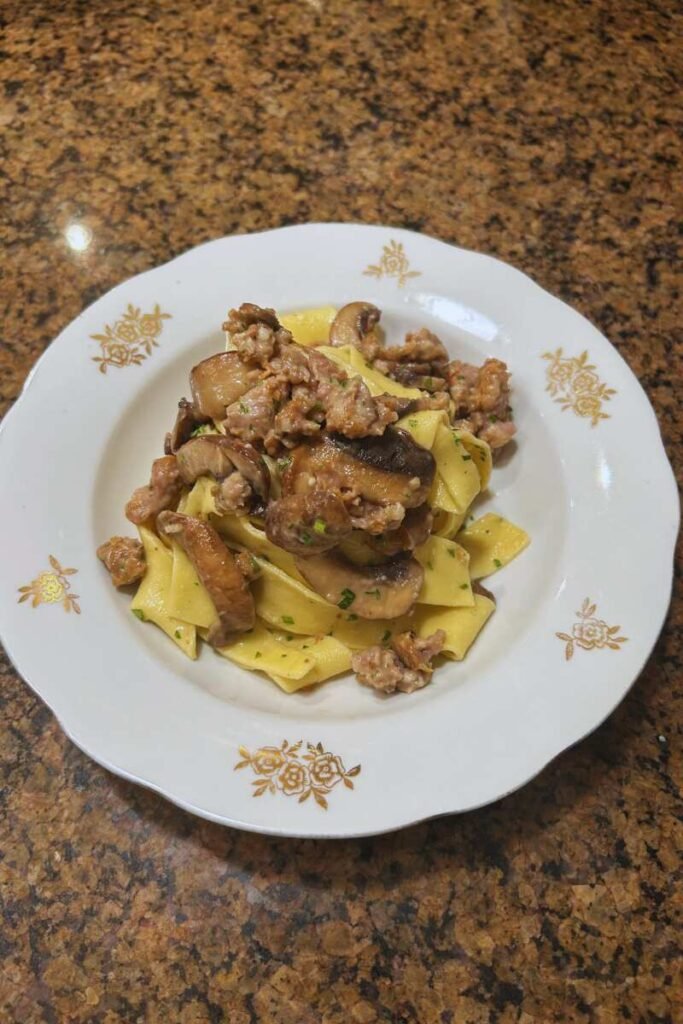
This Fresh Pappardelle with Fennel Sausage, Mushrooms, Garlic & Herbs recipe combines handmade pasta with a rich, savory sauce built on Italian fennel sausage, caramelized mushrooms, and aromatic herbs. The dish balances rustic flavors with refined technique, creating a restaurant-quality meal that showcases the superior texture and flavor absorption of fresh pasta over dried varieties.
Why Fresh Pasta Makes a Difference
Fresh pasta contains higher moisture content than dried pasta, typically around 30% compared to 12% in dried varieties. This moisture creates a tender, silky texture that absorbs sauce more effectively. According to the Our Cooking Journey, fresh egg pasta develops a porous surface during cooking that captures and holds onto sauces, making it ideal for rich, chunky preparations like this fennel sausage and mushroom combination.
The use of 00 flour, a finely milled Italian flour with lower protein content (around 8-9%) compared to all-purpose flour (10-12%), produces pasta with superior elasticity and a delicate bite. This flour type creates gluten networks that are strong yet tender, allowing the dough to roll thin without tearing while maintaining structural integrity during cooking.
Ingredients
Ingredients for Fresh Pappardelle with Fennel Sausage, Mushrooms, Garlic & Herbs
Fresh Pasta- 600g 00 flour
- 6 large eggs
- 1 tsp extra virgin olive oil
- Pinch of salt
- 1 medium hot Italian fennel sausage, casing removed
- 700g mushrooms, sliced
- 3–4 garlic cloves, minced
- 1 sprig thyme
- 1 sprig rosemary
- 300 ml dry white wine
- 50g Parmesan cheese, finely grated
- 50g Romano cheese, finely grated
- Handful parsley, finely chopped
- Pasta cooking water (as needed)
- Olive oil (for cooking)
- Extra virgin olive oil (for finishing)
- Salt & freshly cracked black pepper
Ingredient Selection and Quality Considerations
Choosing Mushrooms
The 700g of mushrooms provides substantial body and earthy depth to this sauce. Cremini mushrooms (baby bella) offer robust flavor with higher umami content than white button mushrooms, while a mix incorporating shiitake, oyster, or porcini adds complexity. Mushrooms should feel firm and dry to the touch, with no sliminess or dark soft spots indicating deterioration.
Mushroom preparation significantly impacts final texture. Slicing to consistent 5-6mm thickness ensures even caramelization. Never wash mushrooms under running water, as their porous structure absorbs moisture, preventing proper browning. Instead, wipe with a damp cloth or use a soft brush to remove debris.
Fennel Sausage Quality Markers
Italian fennel sausage should contain visible fennel seeds, garlic, and quality pork with a fat content around 20-30%. Higher-quality sausages list pork, salt, fennel, and spices as primary ingredients, avoiding fillers like breadcrumbs or excessive preservatives. The “medium hot” designation indicates moderate red pepper flake content, providing warmth without overwhelming the fennel’s sweet, anise-like character.
Wine Selection for Deglazing
Dry white wines with crisp acidity and minimal oak treatment work best for deglazing. Pinot Grigio, Vermentino, or unoaked Chardonnay complement the fennel and mushroom flavors without introducing competing elements. The wine should be of drinking quality; as the saying goes, if you wouldn’t drink it, don’t cook with it. The 300ml quantity provides sufficient liquid to lift browned bits (fond) while concentrating into a flavorful reduction.
Cheese Considerations
Combining Parmesan (Parmigiano-Reggiano) and Romano (Pecorino Romano) creates depth through complementary flavor profiles. Parmesan contributes nutty, umami-rich sweetness, while Romano adds sharper, saltier notes with slight tang. Grating cheese fresh rather than purchasing pre-grated versions ensures superior melting properties and flavor, as pre-grated products often contain anti-caking agents that prevent smooth emulsification.
Method
Make the Pasta
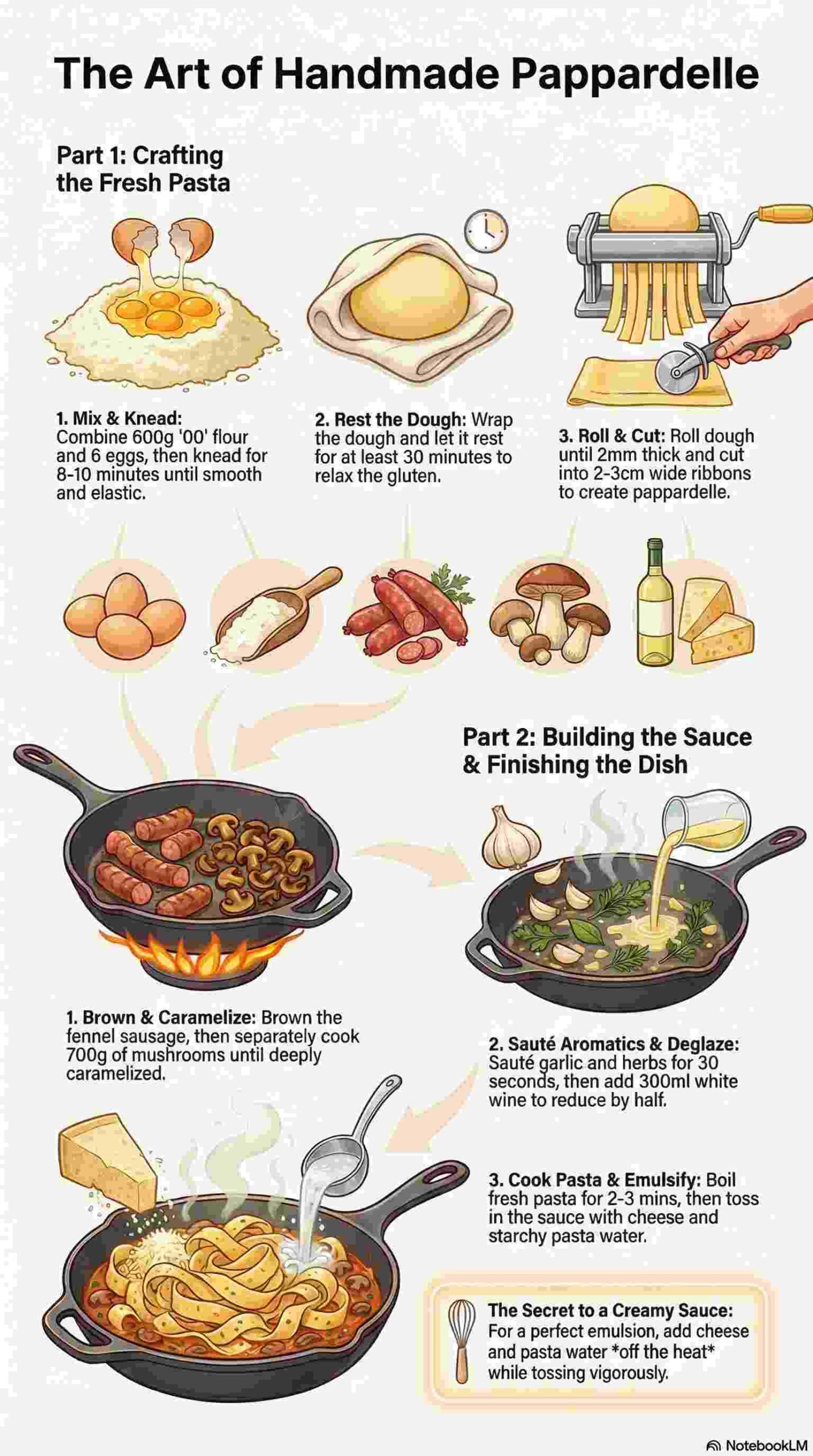
1. Create the flour well: Mound the 600g of 00 flour on a clean, smooth work surface. Form a well in the center approximately 15-20cm in diameter with walls high enough to contain the liquid ingredients. The well structure prevents eggs from escaping before incorporation begins.
2. Add wet ingredients: Crack all 6 eggs into the well’s center. Add 1 teaspoon extra virgin olive oil and a pinch of salt. The olive oil contributes subtle flavor while improving dough elasticity, making rolling easier.
3. Begin incorporation: Using a fork, beat the eggs gently, gradually incorporating flour from the inner walls of the well. Work slowly and deliberately, maintaining the well’s structure. As the mixture thickens, use your hands to continue mixing, pulling in flour until a shaggy, rough dough forms.
4. Knead the dough: Knead vigorously for 8-10 minutes. The dough transforms from rough and sticky to smooth, elastic, and slightly tacky. Proper kneading develops gluten networks essential for pasta that holds together during cooking. The dough should bounce back when pressed with a finger, indicating adequate gluten development.
5. Rest the dough: Wrap tightly in plastic wrap or cover with an inverted bowl. Rest at room temperature for 30 minutes minimum, up to 2 hours. Resting allows gluten to relax, making the dough significantly easier to roll and preventing shrinkage during shaping.
6. Roll and cut: Divide dough into 4 portions for manageability. Working with one portion at time (keeping others covered), roll the dough progressively thinner, either using a pasta machine starting at the widest setting and gradually reducing, or with a rolling pin until nearly translucent (about 2mm thick). Cut into pappardelle strips approximately 2-3cm wide and 20-25cm long. Dust lightly with flour to prevent sticking and form into loose nests. Fresh pasta can rest at room temperature for up to 2 hours or refrigerate up to 24 hours.
Build the Sauce Base
1. Heat the pan: Place a wide, heavy-bottomed sauté pan or skillet (30-35cm diameter) over medium-high heat. Add a thin coating of regular olive oil, swirling to coat the surface. The wide pan provides ample surface area for proper browning without overcrowding.
2. Brown the sausage: Remove sausage from casing and add to the hot pan in large chunks (3-4 pieces). Resist the urge to break it apart immediately. Allow the sausage to develop deep brown coloration on one side (3-4 minutes) before breaking into smaller pieces. This initial browning creates fond (browned bits) that concentrate flavor. Continue cooking until sausage is cooked through with golden-brown exterior, approximately 6-8 minutes total.
3. Cook the mushrooms: Push sausage to the pan’s perimeter, creating space in the center. If using a smaller pan, remove sausage temporarily to avoid overcrowding. Add mushrooms in a single layer if possible. Overcrowding releases moisture, causing mushrooms to steam rather than caramelize. Allow mushrooms to sit undisturbed for 3-4 minutes until the bottom surfaces turn golden brown.
Toss and continue cooking until mushrooms reduce by about half and develop rich color throughout, approximately 8-10 minutes total. According to The Daily Meal, mushrooms contain about 90% water, which must evaporate to achieve proper caramelization and concentrated flavor.
4. Season incrementally: Add salt and freshly cracked black pepper in small amounts during mushroom cooking. Salting too early draws out moisture, but light seasoning during cooking builds flavor complexity. Reserve final seasoning adjustment for the completed dish.
Garlic & Herbs
1. Reduce heat: Lower the burner to medium or medium-low. Garlic burns easily, turning bitter and acrid. The reduced temperature provides better control during this critical phase.
2. Add aromatics: Add minced garlic, the thyme sprig, and rosemary sprig directly to the pan. Lightly crush the herb sprigs with the back of a wooden spoon to release essential oils without completely breaking them apart.
3. Sauté briefly: Cook for 30-45 seconds only, stirring constantly. The garlic should become fragrant and just begin to turn translucent, but must not brown. Overcooked garlic introduces harsh, bitter notes that cannot be corrected.
Deglaze
1. Add wine: Pour the 300ml of dry white wine into the pan in a steady stream. The wine’s liquid immediately loosens the fond (browned bits) stuck to the pan bottom. These concentrated proteins and sugars contain substantial flavor that incorporates into the sauce.
2. Scrape and reduce: Using a wooden spoon or silicone spatula, scrape the pan bottom thoroughly, ensuring all browned bits dissolve into the liquid. Increase heat slightly to maintain a steady simmer. The wine should bubble actively but not violently boil. Reduce by approximately half, concentrating the wine’s flavor and reducing alcohol content, which takes 5-7 minutes. The finished reduction should coat the back of a spoon lightly.
Cook the Pasta
1. Boil water: Bring a large pot (6-8 liters) of water to a rolling boil. Add salt generously, approximately 2-3 tablespoons for this quantity. The water should taste noticeably salty, like seawater. Properly salted pasta water seasons the pasta internally and contributes to sauce emulsification.
2. Cook fresh pasta: Add pappardelle to boiling water, stirring immediately to prevent clumping. Fresh pasta cooks rapidly, typically 2-3 minutes depending on thickness. Test after 2 minutes by removing a strand and tasting. The pasta should be tender with slight resistance (al dente), not mushy. Fresh pasta goes from perfect to overcooked quickly; monitor closely.
3. Reserve pasta water: Before draining, reserve at least 1 cup (250ml) of the starchy cooking water. This water contains dissolved starch and salt that helps emulsify and adjust sauce consistency. Place a measuring cup in the pot before draining as a reminder.
Finish & Emulsify
1. Combine pasta and sauce: Using tongs or a spider strainer, transfer the cooked pappardelle directly from the pot into the sauce pan. Some residual cooking water clinging to the pasta aids in emulsification. If you’ve drained the pasta, add it to the sauce immediately.
2. Initial toss: Add a 60-80ml splash of reserved pasta water. Toss vigorously, lifting and turning the pasta to coat every strand. The starchy water begins binding the sauce to the pasta. Cook together for 30-60 seconds over medium heat, allowing flavors to meld.
3. Add cheese gradually: Remove the pan from heat. This prevents the cheese from seizing or becoming grainy. Add the grated Parmesan and Romano gradually, sprinkling 1-2 tablespoons at a time while tossing continuously. The residual heat melts the cheese while constant motion creates an emulsified, glossy coating. The starch in the pasta water acts as an emulsifier, keeping fat from cheese and oil suspended in the liquid rather than separating.
4. Add fresh herbs: Sprinkle the chopped parsley over the pasta and toss to distribute. Fresh herbs added at this final stage maintain their bright color and fresh flavor rather than turning dull or bitter from extended cooking.
5. Finish with extra virgin olive oil: Drizzle 1-2 teaspoons of high-quality extra virgin olive oil over the pasta. This finishing oil adds richness and a fruity, peppery note that complements the earthy mushrooms and fennel. Toss gently to incorporate without breaking the pasta strands.
6. Adjust consistency: Evaluate the sauce’s thickness. It should coat the pasta in a glossy, cohesive layer without pooling excessively at the bottom of the pan. If too thick, add reserved pasta water 2 tablespoons at a time, tossing after each addition until reaching the desired consistency. If too thin, continue tossing over low heat for 30-60 seconds to reduce slightly.
7. Final seasoning: Taste the pasta and adjust seasoning with additional salt and black pepper as needed. The cheeses contribute salt, so taste before adding more. The dish should have balanced seasoning throughout rather than tasting oversalted on the surface.
Technical Notes on Emulsification
The emulsification process during the finishing stage represents one of the most critical techniques in Italian pasta cookery. Emulsification creates a stable mixture of fat (from cheese and olive oil) and water (from pasta cooking liquid) that would normally separate. The starch released into pasta cooking water, primarily amylose, acts as an emulsifier by forming molecular bonds with both water and fat molecules.
Professional Italian chefs describe properly emulsified pasta sauce as having a texture known as “mantecato,” characterized by a creamy, glossy appearance without cream or butter. Achieving this requires specific technique: adding cheese off heat while tossing vigorously, using pasta water gradually, and maintaining constant motion to prevent separation.
Temperature control during emulsification is essential. Excessive heat causes cheese proteins to coagulate and separate from fats, creating a grainy, broken sauce. Insufficient residual heat fails to melt the cheese adequately, resulting in clumpy, unevenly distributed cheese rather than a smooth coating.
Serving and Presentation
Serve immediately in warmed shallow bowls or plates. Twirl portions into loose nests using tongs, creating height at the center. Garnish with additional grated Parmesan, a few grinds of black pepper, and a small drizzle of extra virgin olive oil if desired. Fresh pappardelle pasta is best enjoyed immediately; the superior texture diminishes as the pasta sits and continues absorbing liquid.
This dish serves 4-6 people as a main course, depending on portion size and accompanying dishes. The rich, satisfying nature of the sauce combined with fresh pasta creates a substantial meal requiring only a simple green salad and crusty bread as accompaniments.
Make-Ahead and Storage Considerations
Fresh pasta dough can be made 24 hours ahead and refrigerated, wrapped tightly in plastic wrap. Bring to room temperature 30 minutes before rolling. Cut pasta can rest at room temperature for up to 2 hours or refrigerate for 24 hours on a lightly floured surface, covered with a kitchen towel to prevent drying.
The sauce components can be partially prepared ahead. Brown the sausage and caramelize the mushrooms up to 4 hours in advance, refrigerating until ready to finish. When ready to serve, reheat the sausage and mushrooms, then proceed with adding garlic, herbs, and wine. This approach maintains quality while reducing last-minute preparation time.
Leftover pasta can be refrigerated for up to 2 days. Reheat gently in a pan with a splash of water or broth to rehydrate the pasta and refresh the sauce. Avoid microwaving if possible, as it creates uneven heating and rubbery texture.
Variations and Substitutions
Protein alternatives: Substitute sweet Italian sausage for less heat, or use ground pork seasoned with fennel seeds, garlic powder, and red pepper flakes. Pancetta or guanciale provide similar richness with different flavor profiles.
Mushroom varieties: Experiment with wild mushroom combinations when available. Porcini, chanterelles, hen of the woods (maitake), and black trumpet mushrooms add distinct flavors and textures.
Pasta shapes: While pappardelle’s wide ribbons capture chunky sauce beautifully, tagliatelle (narrower ribbons), fettuccine, or even fresh orecchiette work well with this preparation.
Vegetarian adaptation: Omit the sausage and double the mushrooms. Add white beans or chickpeas for protein and substance, and consider incorporating sun-dried tomatoes or roasted red peppers for additional depth.
Cream variation: For a richer preparation, add 100-150ml heavy cream along with the reduced wine. This creates a more indulgent sauce with velvety texture, though it departs from traditional Italian technique.
Pairing Recommendations
This dish pairs excellently with medium-bodied Italian red wines. Chianti Classico’s cherry notes and moderate tannins complement the sausage’s richness without overwhelming the mushrooms’ delicate earthiness. Barbera offers bright acidity that cuts through the dish’s fat content, while Dolcetto provides soft tannins and red fruit flavors that harmonize with fennel’s sweet notes.
For white wine enthusiasts, choose fuller-bodied options like Soave Classico or Gavi di Gavi, which provide sufficient weight to stand up to the sauce’s richness while maintaining refreshing acidity.
This fresh pappardelle recipe demonstrates fundamental techniques of Italian pasta cookery: handmade pasta construction, proper meat and vegetable caramelization, effective deglazing, and the crucial emulsification that transforms simple ingredients into a cohesive, restaurant-quality dish. Mastering these methods provides a foundation for countless pasta preparations, each showcasing the superior qualities of fresh, handmade pasta.