
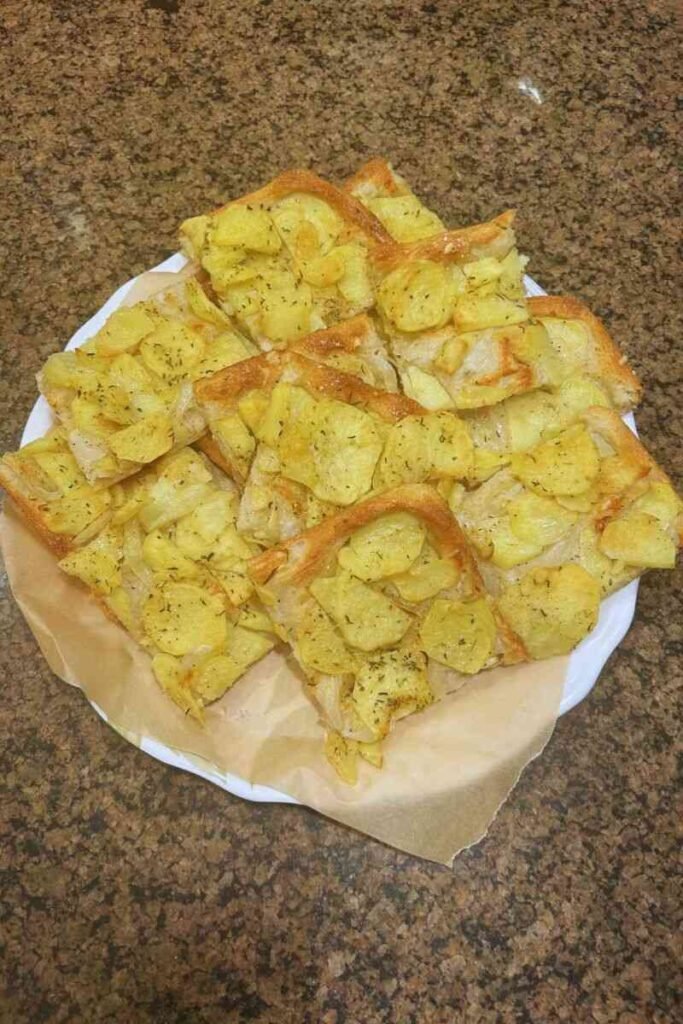
Pizza doesn’t always need sauce and loads of cheese to taste amazing. Some of the best pies are incredibly simple, like this potato pizza inspired by rustic Northern Italy. It’s a simple pizza recipe that uses thinly sliced potatoes, caramelized onions, fragrant rosemary, and a sprinkle of Parmigiano for an Italian potato pizza that proves less can truly be more. This is pizza bianca at its finest, the kind of easy homemade pizza Italian families have enjoyed for generations.
As it bakes, the potatoes get crisp on the edges and tender in the center, the onions turn sweet, and everything melts together into a rich, comforting vegetarian pizza that even meat-lovers want another slice of. It looks like something from a trattoria, tastes incredible, and only needs about 15 minutes of hands-on prep. Hard to beat that 😊.
Ingredients
Here’s everything you need for this potato pizza recipe. The ingredient list is wonderfully short, which means each component matters. This makes one large rectangular pizza that serves 3-4 people as a main course, or 6-8 as an appetizer.
Ingredients for Italian Potato Pizza
For the pizza:- 1 pizza dough (store-bought or homemade, about 1 pound)
- 4–5 medium potatoes, thinly sliced
- ½ onion, thinly sliced
- 1 handful Parmigiano cheese, grated (about ¼ cup)
- 20ml extra virgin olive oil (plus more for drizzling)
- ½ teaspoon oregano
- Salt, to taste
- Pepper, to taste
- Rosemary, optional (highly recommended)
The pizza dough can be homemade if you’re ambitious, but good quality store-bought dough from your grocery bakery or a local pizzeria works beautifully. Let it come to room temperature for 30 minutes before stretching, cold dough fights back and won’t stretch properly. According to Rolling Wonder, room temperature dough is more extensible and easier to work with because the gluten relaxes.
Potatoes are the star here. Use starchy potatoes like russets or Yukon golds that have a creamy texture when cooked. Waxy red potatoes work too but stay firmer, choose based on your preference. The key is slicing them extremely thin, about 1/8 inch or thinner. A mandoline makes this effortless, but a sharp knife and patience work fine.
The rinsing step is non-negotiable. Sliced potatoes release starch that turns gummy and prevents proper crisping. Soaking them in cold water for 30 minutes washes away excess starch, ensuring they bake up tender inside with crispy edges rather than turning gluey. This is the same technique Potato Goodness uses for, removing surface starch is crucial for texture.
Onion adds sweetness and aromatic depth. Yellow or white onions work best, they sweeten beautifully as they bake. Slice them thin so they soften completely without burning.
Parmigiano Reggiano brings salty, nutty umami that ties everything together. Don’t substitute with the powdered stuff, real Parmigiano melts properly and adds complexity. You don’t need much, just enough for flavor, not coverage.
Rosemary is listed as optional, but don’t skip it. Fresh rosemary adds this piney, aromatic quality that’s absolutely traditional with potatoes. If you only have dried rosemary, use about half the amount and crumble it between your fingers to release the oils.
Substitution options: No fresh rosemary? Dried works, or try fresh thyme. Want it richer? Add thin slices of fontina or mozzarella under the potatoes. Make it vegan by skipping the Parmigiano or using nutritional yeast. Use gluten-free pizza dough if needed. The basic formula is flexible, but the potato-prep technique (thin slicing, rinsing, drying) stays the same.
This is traditional Italian recipes at their most elemental, a handful of ingredients, minimal fuss, maximum flavor. It’s the kind of comfort food recipes that work for weeknight dinners but feel special enough for entertaining.
Step-by-Step Instructions
Let’s make this Italian potato pizza. The process is straightforward, and most of the time is hands-off baking. Total time is about 50 minutes from start to finish, with only 15 minutes of active work. Perfect for easy dinner ideas when you want something different.
Step 1: Prep the Potatoes
Peel your potatoes and slice them as thin as possible, aim for 1/8 inch or thinner. A mandoline slicer makes this easy and consistent, but a sharp knife works if you take your time. The thinner they are, the better they’ll cook through in the oven without burning the crust.
Place the sliced potatoes in a large bowl and cover them with cold water. Let them soak for 5-10 minutes. This rinses away surface starch that would otherwise make them gummy and prevent proper browning.
After soaking, drain the potatoes thoroughly and pat them completely dry with clean kitchen towels or paper towels. This is important, wet potatoes steam rather than roast, and they won’t crisp properly. Get them as dry as possible.
Step 2: Season the Topping
In a large bowl, combine your dried potato slices, thinly sliced onion, olive oil, oregano, salt, pepper, and rosemary (if using). Toss everything together with your hands until the potatoes and onions are evenly coated with oil and seasonings.
The oil serves multiple purposes, it helps conduct heat for better browning, adds richness, and helps seasonings stick to the potatoes. Don’t be stingy with salt here. Potatoes need seasoning, and it’s hard to add it effectively after baking.
If you’re using fresh rosemary, strip the leaves from the stem and chop them roughly. You want small pieces distributed throughout, not large chunks that taste overpowering. A teaspoon of chopped fresh rosemary is perfect.
Step 3: Prepare the Dough
Lightly oil a regular baking tray or sheet pan with olive oil. A rimmed half-sheet pan (about 13×18 inches) (paid link) works perfectly for this style of pizza.
Take your room-temperature pizza dough and place it on the oiled pan. Using your hands, gently stretch and press the dough to fit the pan. Start from the center and work outward, pressing with your fingertips to create an even layer. Don’t worry about making it perfectly rectangular, rustic shapes are part of the charm.
If the dough resists and keeps shrinking back, let it rest for 5-10 minutes, then continue stretching. This allows the gluten to relax. Once stretched, use your fingertips to create little dimples all over the surface, this helps prevent large air bubbles and creates texture.
Step 4: Add the Toppings
Spread your seasoned potato-onion mixture evenly over the stretched dough. Arrange the slices in a single layer if possible, overlapping slightly if needed. Don’t pile them too thick, you want them to cook through properly.
Sprinkle the grated Parmigiano evenly over the top. A light coating is all you need, this isn’t a cheese-bomb pizza. The Parmigiano adds flavor and helps the tops of the potatoes brown beautifully.
Drizzle a little extra olive oil over everything, maybe another tablespoon. This final drizzle helps the potatoes crisp and adds richness to the finished pizza.
Step 5: Bake
Preheat your oven to 400-425°F. The higher temperature is better if your oven runs cool or if you want extra crispy edges. If it runs hot, stick with 400°F to prevent burning before the potatoes cook through.
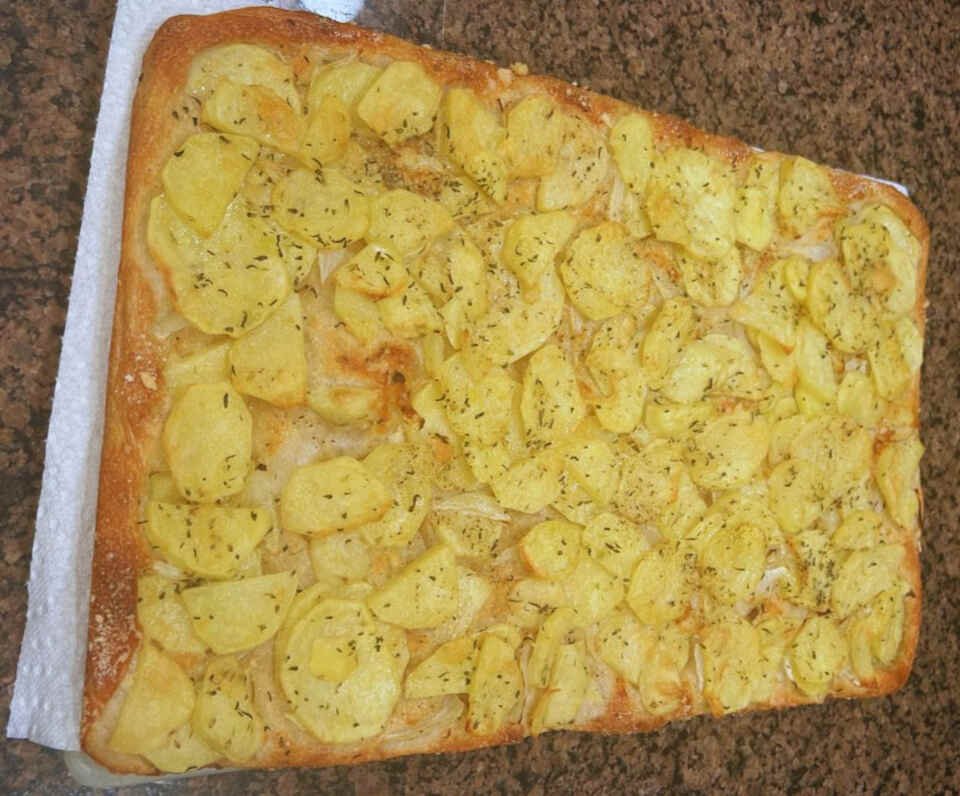
Place the pizza on the middle rack and bake for 30-35 minutes. You’re looking for potatoes that are tender when pierced with a knife, edges that are golden and slightly crispy, and a crust that’s golden brown underneath.
Check it at 25 minutes, if the edges are browning too fast but the potatoes aren’t tender, lower the temperature to 375°F and continue baking. If everything looks perfect at 30 minutes, pull it out. Ovens vary, so use visual cues more than exact timing.
The potatoes should be soft enough to easily pierce with a fork, with golden-brown edges. The onions should be softened and sweet, possibly with some caramelized bits. The crust should sound hollow when tapped on the bottom and be golden brown all over.
Step 6: Serve
Let the pizza rest for 2-3 minutes after removing from the oven, this lets the structure set slightly and makes slicing easier. Cut into squares or rectangles using a pizza cutter or sharp knife.
Drizzle with a bit more excellent extra virgin olive oil right before serving, this is when the good stuff makes a difference. Add a sprinkle of flaky sea salt if you have it, or freshly cracked black pepper for a little heat.
Serve hot, ideally straight from the oven when the potatoes are at their crispiest and the crust is still steaming. This is rustic Italian pizza that begs to be eaten with your hands, maybe with a simple arugula salad on the side and a glass of crisp white wine.
Leftovers keep in the fridge for 2-3 days. Reheat in a 375°F oven for 8-10 minutes to re-crisp the crust, don’t use the microwave unless you want soggy pizza.
Tips & Variations
This simple pizza recipe is endlessly adaptable based on what you have or what sounds good.
Potato variations: Yukon golds have the best flavor and creamy texture. Russets are more traditional and create fluffier interiors. Sweet potatoes work surprisingly well for a slightly different flavor profile, they caramelize beautifully and add sweetness that plays nicely with rosemary.
Cheese options: While this is a white pizza traditionally made without much cheese, you can add thin slices of fontina, mozzarella, or taleggio under the potatoes for extra richness. Gorgonzola crumbles added in the last 5 minutes of baking create a different flavor direction, sharp and creamy.
Herb variations: Fresh thyme works beautifully in place of rosemary. Sage would be traditional too, use it sparingly as it’s potent. A mix of herbs gives complexity. Avoid dried oregano if you’re using fresh rosemary, the flavors can clash. Choose one dried herb (oregano) OR fresh woody herbs (rosemary, thyme, sage).
Add protein: This is traditionally vegetarian, but crispy bacon or pancetta crumbles added before baking transform it into something more substantial. Thin-sliced prosciutto added right after baking (so it stays tender) is elegant and traditional.
Make it richer: Brush the stretched dough with garlic oil before adding toppings. Add cream cheese dots under the potatoes. Finish with truffle oil instead of regular olive oil for luxury.
Spice it up: Red pepper flakes sprinkled on before baking add pleasant heat. Fresh chili slices mixed with the potatoes work too.
Different shapes: Instead of a rectangular pan pizza, divide the dough into individual rounds and make personal-sized pizzas. Baking time reduces to about 20-25 minutes. This works great for parties where everyone can customize their toppings.
Dough options: Store-bought is convenient, but homemade pizza dough takes this to another level if you have time. No-knead dough prepared the night before offers the best of both worlds, minimal effort, maximum flavor.
Common mistakes: Not slicing potatoes thin enough (they won’t cook through), skipping the rinse step (gummy texture), not drying them (steaming instead of roasting), under-seasoning (bland potatoes), too much topping (soggy crust), wrong oven temperature (either burned edges or undercooked potatoes). Avoid these and your pizza will be perfect.
Why This Recipe Works
There’s something magical about potato pizza that surprises people who’ve never tried it. Here’s why this Italian comfort food works so beautifully.
The potato technique makes all the difference. Slicing thin, rinsing to remove starch, and drying thoroughly are the keys to texture success. This creates potatoes that are creamy inside with crispy, golden edges rather than gummy or raw. The technique might seem fussy, but it’s actually quick and makes the difference between mediocre and excellent.
Simplicity lets quality shine. With only a handful of ingredients, each one matters. This is where good olive oil, real Parmigiano Reggiano, and fresh herbs make obvious differences. You can’t hide behind layers of sauce and cheese, the potatoes, onions, and herbs are the show.
The flavor combination is timeless. Potatoes, rosemary, and Parmigiano is a classic Italian combination for good reason. The earthiness of potatoes, piney aromatics of rosemary, and nutty salt of aged cheese just work together. Add sweet onions and you have complexity from simplicity.
It’s surprisingly filling. Despite being vegetarian and relatively light on cheese, this pizza satisfies deeply. The potatoes provide substance and comfort while still feeling lighter than heavy meat-and-cheese pizzas.
It’s actually economical. Potatoes, an onion, a handful of cheese, and pizza dough. You’re making a meal that feeds 3-4 people for under $5-6. This is budget-friendly cooking that tastes sophisticated.
Texture contrast makes it interesting. The crispy crust, tender-creamy potatoes, sweet soft onions, and salty cheese create textural variety in every bite. It’s not one-note, it’s complex despite the simple ingredient list.
It’s naturally impressive. Serve this to people who’ve never had potato pizza and watch their reactions. It looks beautiful with overlapping potato slices, smells incredible with rosemary perfuming the air, and tastes surprisingly refined. It’s dinner party-worthy food that’s weeknight-easy to make.
Conclusion
This potato pizza recipe proves that rustic Italian comfort food doesn’t need elaborate ingredient lists or complicated techniques. It needs good ingredients, proper preparation, and the confidence to let simplicity shine.
The beauty of simple pizza recipes like this is how they deliver restaurant-quality results with minimal effort. Slice the potatoes, rinse and dry them, toss with seasonings, spread on dough, bake. Done. No complex sauce-making, no wrestling with multiple cheeses, no stress. Just straightforward Italian pizza that tastes like you traveled to a Ligurian hillside to learn it from someone’s nonna.
Want to make something that impresses without stressing you out? Make this. Need a vegetarian pizza that even meat-lovers will devour? This is it. Looking for easy dinner ideas that feel special? You’ve found it.
The Italian potato pizza here is crispy-edged, creamy-centered, aromatic with herbs, and deeply satisfying in that way only carbs-on-carbs comfort food can be. It’s the kind of thing you make once out of curiosity and then put into regular rotation because it’s just that good.
Make this on a weeknight when you want something different. Make it for a casual dinner party where everyone’s hanging out in the kitchen. Serve it with a bitter greens salad dressed in lemon and olive oil to cut the richness. Pour something crisp and Italian, a Pinot Grigio or Vermentino, or just crack open whatever beer you have.
Try it, master the potato-prep technique, and enjoy the fact that you can now make legitimately impressive pizza with ingredients you probably already have. That’s a skill worth having.