
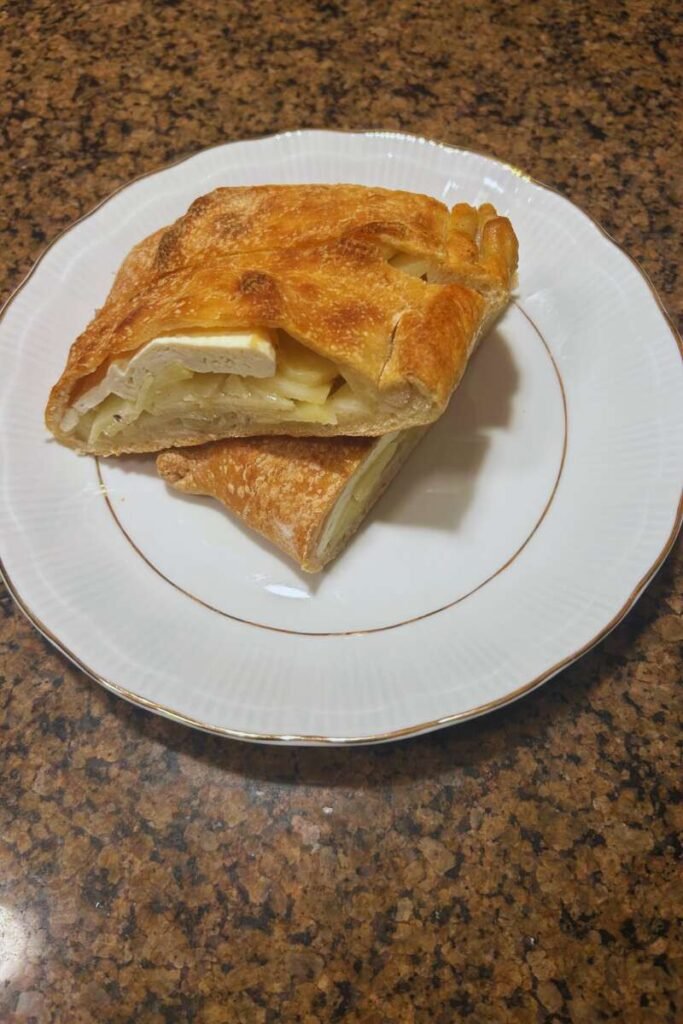
This Sicilian specialty from Ragusa represents rustic Italian baking at its most satisfying. Scaccia Ragusana with Ricotta and Potatoes features thin, elastic pizza dough wrapped around creamy ricotta, tender potato slices, and sweet onions, then baked until the exterior turns crisp and golden while the inside stays soft and rich.
Scaccia, also called scacce in dialect, differs from pizza or calzone because of its unique construction. The dough is rolled very thin, layered with filling, then folded or rolled several times to create distinct layers that become lightly flaky when baked. This version uses a simpler method that works well in a home kitchen while keeping the soul of the dish intact 🙂.
Understanding Scaccia in Sicilian Culinary Tradition
Scaccia originated as peasant food, created by resourceful cooks stretching limited ingredients into substantial meals. The name derives from the Sicilian dialect verb “scacciare,” meaning to chase away or drive out—possibly referring to how the dough is worked and stretched, or how a slice of scaccia chases away hunger. Different Sicilian regions produce variations: Ragusa favors ricotta and potato or tomato and cheese fillings, while Modica often includes sausage and broccoli.
Traditional scaccia uses dough enriched with olive oil or lard, making it more pliable than standard pizza dough and creating richer flavor. The dough must be elastic enough to stretch thin without tearing, yet strong enough to contain moist fillings without becoming soggy. According to culinary historians, scaccia represents the ingenuity of southern Italian cooking—transforming bread dough and simple, inexpensive ingredients into something considerably more complex than the sum of its parts.
Ingredients
Ingredients for Scaccia Ragusana con Ricotta and Potatoes
For the Dough- 500g pizza dough (homemade or quality store-bought)
- Extra virgin olive oil for brushing
- 450g fresh ricotta cheese (whole milk preferred)
- 4 medium Yukon Gold potatoes (approximately 600–700g)
- ½ white onion, very thinly sliced
- 4–5 tablespoons extra virgin olive oil
- Salt and freshly ground black pepper to taste
Ingredient Selection and Quality
Pizza Dough Considerations
Quality pizza dough forms scaccia’s foundation. Homemade dough offers superior flavor and texture, though good bakery or grocery store pizza dough works acceptably. The dough should contain flour, water, yeast, salt, and ideally olive oil. Avoid doughs containing excessive sugar or fat, which create different textures unsuitable for scaccia.
The dough must be at room temperature and well-rested before rolling—cold, under-rested dough springs back constantly, making it impossible to achieve the thinness required. If using refrigerated dough, remove it at least 1-2 hours before working with it. Dough that has completed its first rise and been punched down works ideally, as the gluten structure has developed but remains relaxed enough to stretch.
Ricotta Quality and Preparation
Fresh, whole-milk ricotta is essential. The cheese should taste sweet and clean, not sour or acidic, with a slightly grainy yet creamy texture. Italian or domestic artisanal ricotta from cheese shops provides superior results to mass-produced supermarket varieties, which often contain stabilizers that affect texture.
Ricotta contains significant moisture that can create soggy scaccia if not managed properly. If your ricotta seems particularly wet, drain it for 30 minutes to 1 hour in a fine-mesh strainer lined with cheesecloth, refrigerated. This removes excess whey that would otherwise release during baking. However, don’t drain it completely—some moisture is necessary for creamy texture.
Potato Selection
Yukon Gold potatoes work ideally for scaccia due to their naturally creamy texture, slightly buttery flavor, and moderate starch content. They hold their shape during baking while becoming tender without turning mealy. Russet potatoes can be substituted but may become drier and more crumbly. Red or fingerling potatoes work as well, though they create different texture and flavor profiles.
The potatoes must be sliced extremely thin—approximately 2-3mm (⅛ inch) or thinner. A mandoline slicer produces uniform, thin slices far more easily than knife work. Uniform thickness ensures even cooking; thick slices may remain hard while thin slices overcook. According to Food Safety News, potatoes should be handled and cooked properly to ensure food safety, particularly when layered in enclosed preparations like stuffed breads.
Onion Preparation
White or yellow onions work equally well—white onions tend toward sharper, cleaner flavor, while yellow onions offer more sweetness when cooked. The onions must be sliced very thin, almost translucent, so they soften and sweeten during baking rather than remaining crunchy or acrid. A mandoline or very sharp knife produces the best results.
Some cooks prefer to sauté the onions briefly before adding them to scaccia, which pre-softens them and develops sweetness through caramelization. This step is optional but guarantees tender onions in the finished product.
Olive Oil Selection
Extra virgin olive oil serves multiple functions in scaccia: it enriches the filling, helps conduct heat to cook the potatoes, prevents sticking, and creates golden, crispy exterior. Use a good-quality, fruity extra virgin olive oil—its flavor becomes part of the dish. Avoid “light” or refined olive oils, which lack flavor complexity.
Method
Prepare for Assembly
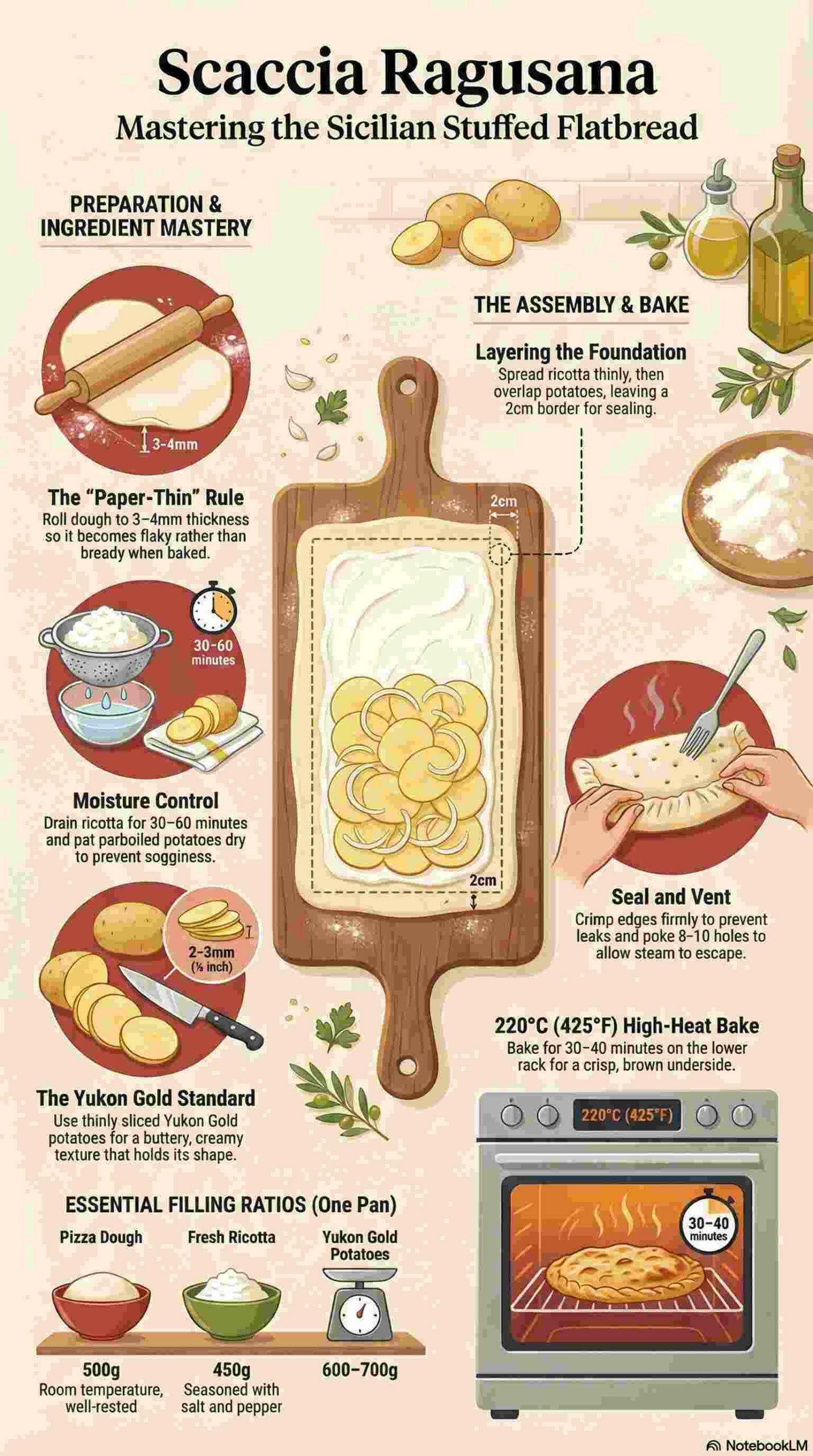
1. Preheat the oven: Set the oven to 220°C (425°F) and position a rack in the lower third of the oven. This high temperature creates the crisp, golden exterior characteristic of properly made scaccia. The lower rack position exposes the bottom to more direct heat, ensuring the underside becomes crispy rather than remaining pale and soft.
2. Prepare the potatoes: Peel the potatoes and slice them as thinly as possible using a mandoline or sharp knife—aim for 2-3mm (⅛ inch) thickness. Place the sliced potatoes in a large bowl and toss with 2 tablespoons olive oil, salt, and freshly ground black pepper.
For more reliable results, particularly with thicker potato slices, parboil the seasoned slices: bring a large pot of salted water to a boil, add the potato slices, and cook for 3-4 minutes until they just begin to soften but remain firm. Drain thoroughly and pat dry with kitchen towels. This step, while optional, ensures the potatoes cook completely inside the enclosed scaccia without requiring extended baking that might dry out or burn the crust.
3. Season the ricotta: Place the ricotta in a bowl and season with salt and freshly ground black pepper to taste. Start conservatively with approximately ½ teaspoon salt and several grinds of pepper, mixing gently to distribute. Taste and adjust—the ricotta should taste pleasantly seasoned but not overly salty, as salt intensifies during baking and the dough itself contains salt.
4. Prepare the onion: Slice the half onion as thinly as possible. Very thin slices will soften and almost melt into the filling during baking, adding subtle sweetness rather than distinct onion texture.
Assemble the Scaccia
1. Divide and roll the dough: Divide the pizza dough into two portions, making one slightly larger than the other (approximately 60% and 40%). The larger portion forms the bottom and sides, while the smaller portion creates the top. Let the divided dough rest for 5-10 minutes, covered with a kitchen towel, which relaxes the gluten and makes rolling easier.
On a lightly floured surface, roll the larger portion into a rough rectangle or circle, depending on your baking pan shape. Roll very thin—approximately 3-4mm (⅛ inch) thick. The dough should be thin enough to become crispy during baking but thick enough to support the filling without tearing. If the dough resists rolling and springs back, let it rest for another 5 minutes before continuing.
2. Line the pan: Generously oil a large baking sheet or rectangular baking pan (approximately 25x35cm or 10×14 inches) with olive oil. Carefully transfer the rolled dough to the pan, positioning it so excess dough drapes over all edges by approximately 2-3cm (1 inch). Press the dough gently into the pan corners and up the sides.
3. Layer the filling: Spread the seasoned ricotta evenly over the dough, leaving approximately 2cm (¾ inch) border around the edges. The ricotta layer should be relatively thin and even—thick clumps in some areas while other areas have none creates uneven flavor distribution.
Arrange the potato slices over the ricotta in slightly overlapping layers, covering the entire surface. Season lightly with additional salt and pepper if desired. Scatter the thinly sliced onion evenly over the potatoes. Drizzle 2-3 tablespoons of olive oil over everything, ensuring even coverage. The oil helps conduct heat to the potatoes and creates moisture that prevents the filling from drying out.
4. Roll the top: Roll the second, smaller portion of dough into a shape that matches your pan, again rolling very thin—approximately 3mm (⅛ inch). The dough should be large enough to cover the filling with slight overhang.
5. Seal the scaccia: Carefully place the rolled top dough over the filling, centering it so it covers evenly. Press gently to adhere the top to the bottom dough around the edges. Fold the overhanging bottom dough up and over the top dough edges, creating a sealed border all around. Press firmly to seal, crimping or folding the edges as you would for pie crust. The seal must be complete to prevent filling from leaking during baking.
6. Finish the top: Brush the entire top surface generously with olive oil—approximately 1-2 tablespoons. This creates golden, crispy exterior and adds flavor. Using a sharp knife or fork, poke 8-10 small holes or slits in the top to allow steam to escape during baking. Without these vents, steam builds up inside and may cause the top to puff excessively or even burst.
Bake the Scaccia
1. Bake until golden: Place the pan in the preheated oven and bake for 30-40 minutes, until the top becomes deeply golden brown and the bottom develops crispy, brown crust. The exact timing depends on dough thickness, filling moisture content, and oven characteristics. Check at 25 minutes—if the top is browning too quickly while the bottom remains pale, reduce oven temperature to 200°C (400°F) and continue baking.
The scaccia is done when:
- The top is evenly golden brown with some darker spots
- The edges appear crispy and pull slightly from the pan sides
- The bottom (check by carefully lifting a corner with a spatula) is brown and crisp, not pale or soft
- A knife inserted through the top meets no resistance from the potato layer
If the top browns sufficiently before the potatoes finish cooking, tent loosely with aluminum foil and continue baking.
2. Rest before cutting: Remove the scaccia from the oven and let it rest in the pan for 10-15 minutes before cutting. This resting period allows the filling to set slightly and the ricotta to firm up. Cutting immediately causes the filling to run and makes serving messy. The brief rest creates cleaner slices that hold together better.
Serve
Cut the scaccia into squares or rectangles using a sharp knife or pizza cutter. Serve warm or at room temperature. Scaccia can be eaten by hand like pizza, though the richer filling sometimes requires a fork. Each bite should contain crispy, golden crust, creamy ricotta, tender potato, and sweet onion.
Technical Notes on Success
Several factors determine whether scaccia achieves proper texture and flavor:
Thin dough is crucial: Thick dough creates bready, heavy scaccia rather than the desired balance of crispy exterior and soft interior. Roll as thin as possible without creating holes. If tears develop, patch them with small dough pieces pressed firmly in place.
Control moisture: Excess moisture in the ricotta or from undrained parboiled potatoes creates soggy scaccia. Drain ricotta if very wet, and dry parboiled potatoes thoroughly before assembly.
Seal completely: Any gaps in the edge seal allow filling to leak during baking, creating mess and reducing the finished scaccia’s moisture. Press edges firmly and check the entire perimeter before baking.
High heat is necessary: The high oven temperature creates crispy crust through rapid moisture evaporation and Maillard browning. Lower temperatures produce pale, soft crust without the desired texture contrast.
Steam vents prevent bursting: Enclosed fillings create steam during baking. Without vents, pressure builds and may burst the top or create large air pockets between layers. Multiple small vents distribute steam release evenly.
Serving Suggestions
Scaccia serves 6-8 people as a main course with salad, or 10-12 as part of an antipasto spread or buffet. Its rich, satisfying nature requires minimal accompaniment:
Simple green salad: Dressed arugula, mixed greens, or bitter greens like radicchio provide refreshing contrast to the rich scaccia.
Tomato salad: Fresh tomatoes with basil, olive oil, and salt offer acidity and brightness.
Roasted vegetables: Particularly vegetables that echo Sicilian flavors—eggplant, zucchini, peppers.
Cured meats: Prosciutto, salami, or capocollo complement the scaccia for a heartier meal.
Wine pairings: Light to medium-bodied Sicilian whites like Grillo or Catarratto balance the rich filling. Light reds like Frappato or Nero d’Avola also work well, particularly if serving with cured meats.
Variations and Traditional Alternatives
Scaccia accepts numerous filling variations, all following the same basic assembly method:
Tomato and cheese (scaccia pomodoro): Replace the ricotta-potato filling with crushed San Marzano tomatoes, caciocavallo or ragusano cheese (or pecorino), and fresh basil. This represents another classic Ragusana version.
Sausage and broccoli: Cooked crumbled Italian sausage layered with blanched broccoli florets and ricotta creates the Modicana variation.
Eggplant and tomato: Roasted eggplant slices with tomato sauce, mozzarella, and basil offer a vegetarian option with different flavor profile.
Greens and cheese: Sautéed Swiss chard, spinach, or escarole with ricotta and pecorino creates a traditional southern Italian combination.
Cauliflower variation: Replace potatoes with thinly sliced, parboiled cauliflower for lighter, slightly sweeter filling.
Add anchovies: Traditional versions sometimes include anchovy fillets layered with the other ingredients, adding salty, umami depth.
Herb additions: Fresh herbs like parsley, basil, or oregano mixed into the ricotta or scattered over the potatoes add aromatic complexity.
Cheese variations: Mix grated pecorino, caciocavallo, or aged provolone with the ricotta for sharper, more complex flavor.
Storage and Reheating
Scaccia stores and reheats reasonably well, though it’s best within a few hours of baking when the crust retains maximum crispness.
Room temperature storage: Cool completely, then wrap tightly and store at room temperature for up to 6-8 hours. The crust softens somewhat during storage as it absorbs moisture from the filling.
Refrigeration: Wrapped tightly, scaccia keeps refrigerated for up to 3 days. The texture becomes softer and more compact, though the flavor remains good.
Reheating: Reheat in a 180°C (350°F) oven for 10-15 minutes until warmed through. For crispier results, reheat directly on the oven rack rather than in a pan. Avoid microwaving, which makes the crust tough and rubbery.
Freezing: Scaccia can be frozen for up to 2 months. Cool completely, wrap very tightly in plastic wrap then aluminum foil, and freeze. Thaw overnight in the refrigerator, then reheat as directed above. The crust won’t be quite as crisp as fresh, but the flavor and general texture remain good.
Cultural Context and Home Cooking
In Sicilian homes and bakeries, scaccia appears as street food, casual meals, and celebration food. Bakeries sell it by weight, cutting generous portions from large sheet pans. Home cooks make it for family gatherings, using whatever fillings suit the season and pantry.
The dish reflects Sicily’s agricultural abundance and culinary creativity. Potatoes, introduced to Sicily in the 16th century, became staples in the island’s mountainous interior where wheat grew less successfully. Ricotta, produced from sheep or cow milk whey, provided inexpensive protein. Together with bread dough—the foundation of Sicilian home cooking—these humble ingredients created something far greater than their individual components.
This scaccia ragusana with ricotta and potatoes demonstrates how traditional regional Italian cooking transforms basic ingredients through technique and care. The contrast between crispy, golden crust and creamy, savory filling, the interplay of tender potatoes with sweet onions, and the satisfaction of pulling apart the layers creates an experience that honors its peasant origins while delivering sophisticated pleasure. It’s food that feeds both body and spirit, connecting those who make and eat it to generations of Sicilian cooks who perfected these methods through necessity and ingenuity.