
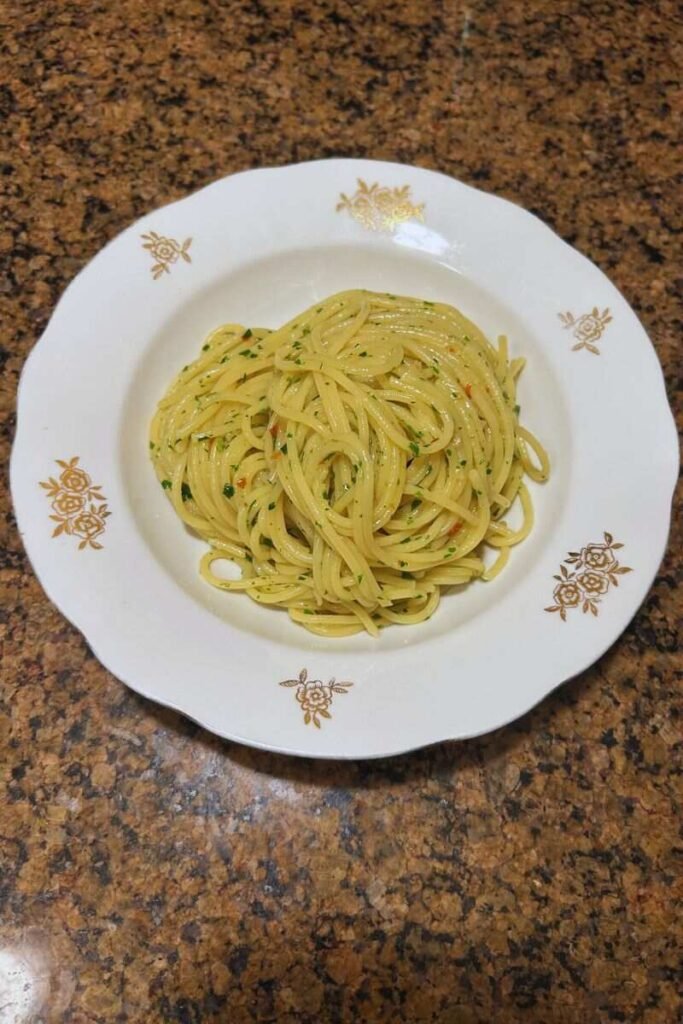
There’s something deeply satisfying about a dish that requires almost nothing yet delivers everything. Spaghetti aglio e olio e peperoncino is that dish, the kind of Italian pasta recipe that Italians make when they stumble home late at night and want something fast, delicious, and made entirely from pantry staples. No sauce simmering for hours, no complicated ingredients, just garlic, olive oil, chili, and pasta transformed into something unexpectedly sublime through proper technique.
This classic Italian pasta represents cucina povera, peasant cooking, at its finest. It originated in Naples as a meal for those who couldn’t afford expensive ingredients, but what started as necessity became beloved tradition. The aglio olio recipe is now considered one of Italy’s most iconic dishes, served everywhere from family kitchens to high-end restaurants. It’s easy pasta recipe material that tastes like you actually know what you’re doing 🙂.
Ingredients
Here’s everything you need for this spaghetti aglio olio. The ingredient list is almost suspiciously short, which is exactly the point. This serves 2-3 people generously.
Ingredients for Spaghetti Aglio e Olio
For the pasta:- 300g spaghetti
- Handful finely chopped parsley
- 2 parsley stems
- 1 teaspoon chili flakes or 1 fresh chili, finely sliced
- 3 garlic cloves, thinly sliced
- 2 garlic cloves, grated or pounded into a paste with salt
- Extra virgin olive oil (generous amount)
- Salt (for pasta water)
The pasta shape absolutely matters here. Spaghetti is traditional, not linguine, not penne, not rigatoni. According to Wikipedia’s entry on spaghetti aglio e olio, this Neapolitan dish is specifically made with spaghetti, which has the perfect surface area to hold the emulsified oil-and-water sauce. Long, thin noodles coat beautifully; short pasta just doesn’t work the same way.
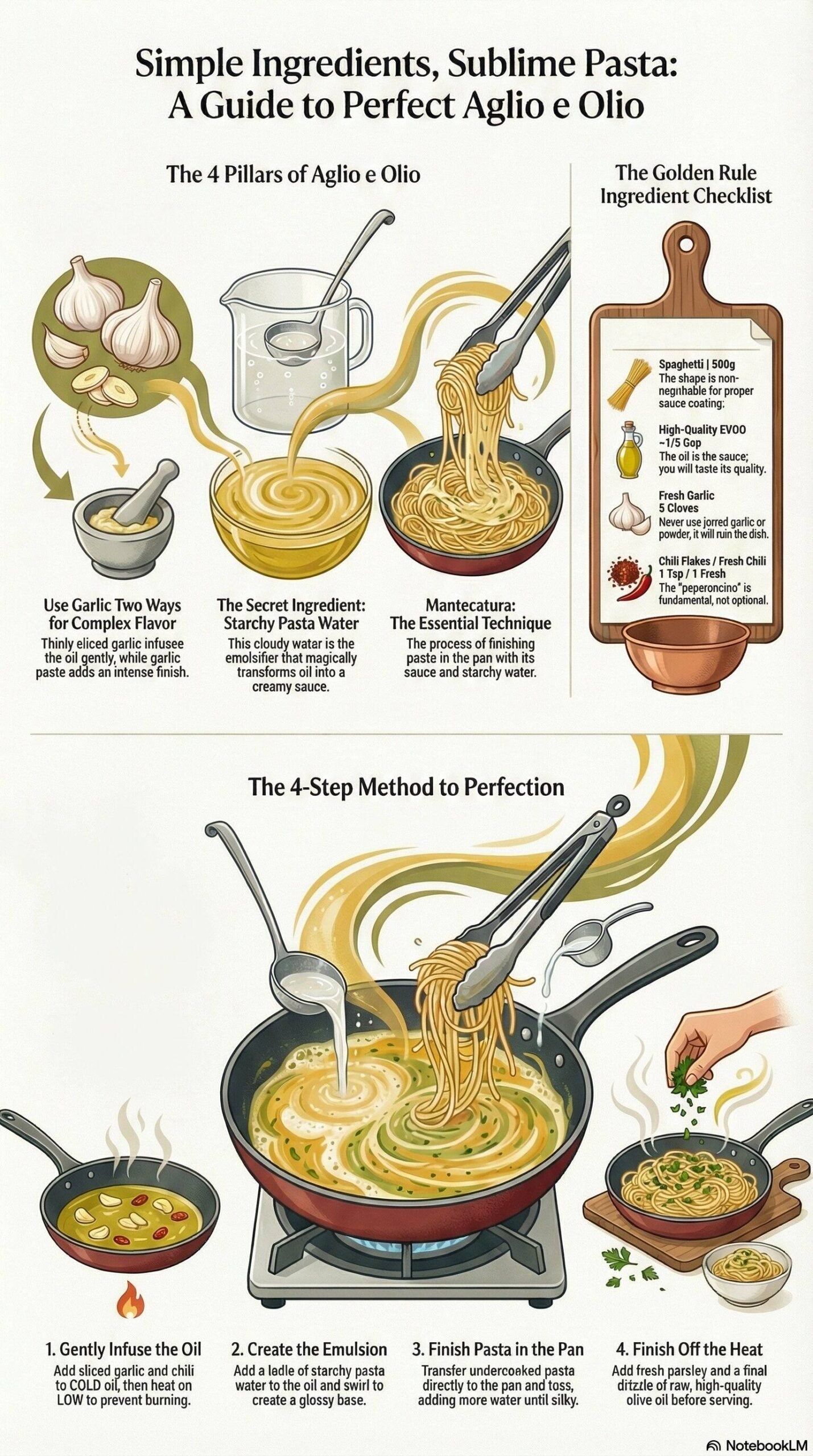
Garlic is prepared two ways here, which is genius. Sliced garlic infuses the oil gently without burning, while garlic paste adds intense flavor at the end. Fresh garlic is non-negotiable, jarred minced garlic or garlic powder will ruin this dish. You want that sharp, aromatic quality that only fresh cloves provide.
Extra virgin olive oil needs to be the good stuff. This is one of those rare dishes where oil quality is everything, you’ll taste it in every bite. Use a fruity, peppery Italian olive oil that you’d happily dip bread into. Cheap, bland oil produces cheap, bland pasta.
Chili adds essential heat. Dried chili flakes are traditional and convenient, but fresh chili (seeds removed, finely sliced) brings brighter flavor. Either works beautifully, just don’t skip it. The dish is technically called aglio, olio e peperoncino (garlic, oil, and chili pepper) because the heat is fundamental, not optional.
Parsley stems are used for infusing the oil, then discarded. The chopped parsley goes in at the end for freshness and color. This is the authentic Neapolitan way, though some minimalist versions skip parsley entirely.
Pasta water is the secret ingredient that isn’t listed but makes everything work. The starchy water emulsifies with the olive oil to create a silky sauce rather than a greasy puddle. According to Serious Eats’ explanation of pasta water science, the starch in pasta water acts as both an emulsifying agent and thickener, binding oil and water into a smooth, cohesive mixture that coats the pasta beautifully.
Substitution options: No fresh chili? Dried flakes work perfectly. Don’t like spice? Reduce the chili but don’t eliminate it entirely, you want some heat. No parsley? The dish still works without it, though you lose some traditional Neapolitan authenticity. Want to add protein? Italians sometimes include anchovies melted into the oil, or top the finished pasta with breadcrumbs for texture.
This is traditional Italian recipes that survive because they’re brilliant in their simplicity. It’s the kind of comfort food recipes that work on busy weeknights but impress dinner guests because the technique, not the ingredients, makes it special.
Step-by-Step Instructions
Let’s make this Italian garlic pasta. The recipe moves quickly once you start, so have everything prepped before you begin. Total time is about 15-20 minutes from start to finish. Perfect for quick dinner ideas when you’re hungry and don’t want to wait.
Step 1: Start the Pasta
Bring a large pot of water to a rolling boil. Add a generous amount of salt, the water should taste like seawater. This is your only opportunity to season the pasta from the inside, so don’t be shy.
Add the spaghetti and stir immediately to prevent sticking. Set a timer for 2 minutes less than the package directions indicate for al dente. You want the pasta slightly undercooked because it’ll finish cooking in the pan with the sauce.
While the pasta cooks, move on to building the sauce.
Step 2: Infuse the Oil
In a wide pan (large enough to eventually hold all the pasta), add a generous amount of extra virgin olive oil, about 1/3 to 1/2 cup. Don’t be stingy here. This isn’t a drizzle; it’s the base of your sauce.
Add the parsley stems, sliced garlic, and chili flakes (or fresh chili) to the cold oil. Place the pan over low heat and let everything gently infuse.
The key word here is gently. You want the garlic to soften and turn golden, releasing its flavor into the oil without browning or burning. This takes 3-4 minutes. The oil should barely bubble, if it’s sizzling aggressively, your heat is too high. Burned garlic tastes bitter and will ruin the entire dish.
The parsley stems add subtle herbal notes to the oil. They’ll be discarded later, so don’t worry about how they look.
Step 3: Build the Sauce
Once your garlic is soft and golden (not brown!), stir in the garlic paste. This adds intense garlic flavor that the sliced garlic alone can’t provide.
Cook briefly over low heat until fragrant, maybe 30 seconds. You just want it to bloom in the oil, not brown.
Step 4: Prepare for Emulsification
Remove and discard the parsley stems. They’ve done their job.
Add a ladle of pasta water (about 1/2 cup) to the pan and swirl to create a glossy base. The water will look cloudy and milky, that’s the starch, and it’s exactly what you want.
The mixture should emulsify into a creamy, cohesive sauce rather than separating into oil and water. If it’s still separating, add another splash of pasta water and keep swirling. The starch acts as a natural emulsifier, binding the water and oil molecules together.
Step 5: Finish the Pasta
By now your pasta should be al dente (or slightly under). Using tongs or a spider strainer, transfer the spaghetti directly into the pan with the sauce. Don’t drain it in a colander, you want some of that starchy pasta water clinging to the noodles.
Toss everything over medium heat for about 30 seconds to 1 minute, adding more pasta water as needed. The goal is to create a silky, cohesive sauce that coats every strand of pasta without being soupy or dry.
Keep tossing and adding water until you achieve a glossy, cream-like consistency. The pasta should look luxurious, not greasy. If it looks oily and separated, add more pasta water and keep tossing. If it’s too watery, let it cook a bit longer to reduce.
This technique is called “mantecatura” in Italian, the process of emulsifying pasta with its sauce using starchy water. It’s what separates amateur pasta from restaurant-quality results.
Step 6: Final Touch
Remove the pan from heat. Add the finely chopped parsley and toss to distribute.
Finish with a final drizzle of your best extra virgin olive oil, this is where really good oil makes a difference. The raw oil at the end adds fresh, peppery flavor that cooked oil can’t provide.
Taste and adjust seasoning if needed. The pasta water was salted, so you might not need more salt, but trust your palate.
Serve immediately in warm bowls. This spaghetti aglio e olio waits for no one, it’s best eaten the moment it’s made, when the emulsion is perfect and the pasta is steaming.
Tips & Variations
This aglio olio peperoncino recipe tolerates some customization based on what you have or prefer, though purists would argue it’s perfect as-is.
Pasta options: Spaghetti is traditional, but linguine works if that’s what you have. Spaghetti alla chitarra (square-cut spaghetti) is even better if you can find it, the shape holds sauce beautifully. Don’t use short pasta like penne or rigatoni, the sauce just doesn’t coat them properly.
Garlic intensity: Love garlic? Add more sliced cloves. Want it milder? Use only the sliced garlic and skip the paste. Thinner slices = stronger flavor, thicker slices = gentler garlic presence.
Heat level: Double the chili for serious spice. Use fresh Thai chilies for intense heat. Keep it mild with just a pinch of flakes. The heat should warm your palate, not destroy it.
Anchovy addition: This is a traditional Roman variation. Add 4-5 anchovy fillets to the oil with the garlic. They’ll dissolve completely, adding deep umami without tasting fishy. It transforms the dish into something even more complex.
Breadcrumb topping: Toast panko breadcrumbs in olive oil until golden and crunchy, then sprinkle over the finished pasta. This adds textural contrast and is common in southern Italy.
Lemon variation: Add lemon zest with the garlic paste and a squeeze of lemon juice at the end. This brightens everything and creates a slightly different dish (aglio, olio, e limone).
Protein additions: Sautéed shrimp tossed in at the end turns this into a restaurant-worthy seafood pasta. Crispy pancetta or guanciale adds richness (though this starts to become carbonara territory).
Cheese controversy: Traditional aglio e olio is served without cheese. However, some Italians (especially in Rome) add grated Pecorino Romano or Parmigiano Reggiano. It’s not authentic Neapolitan style, but it’s delicious.
Common mistakes: Using too little oil (creates a dry dish), burning the garlic (bitter flavor), adding pasta water too late (sauce won’t emulsify), over-tossing (pasta gets mushy), skipping the final raw olive oil drizzle (loses that fresh peppery finish). Avoid these and your pasta will be perfect.
Why This Recipe Works
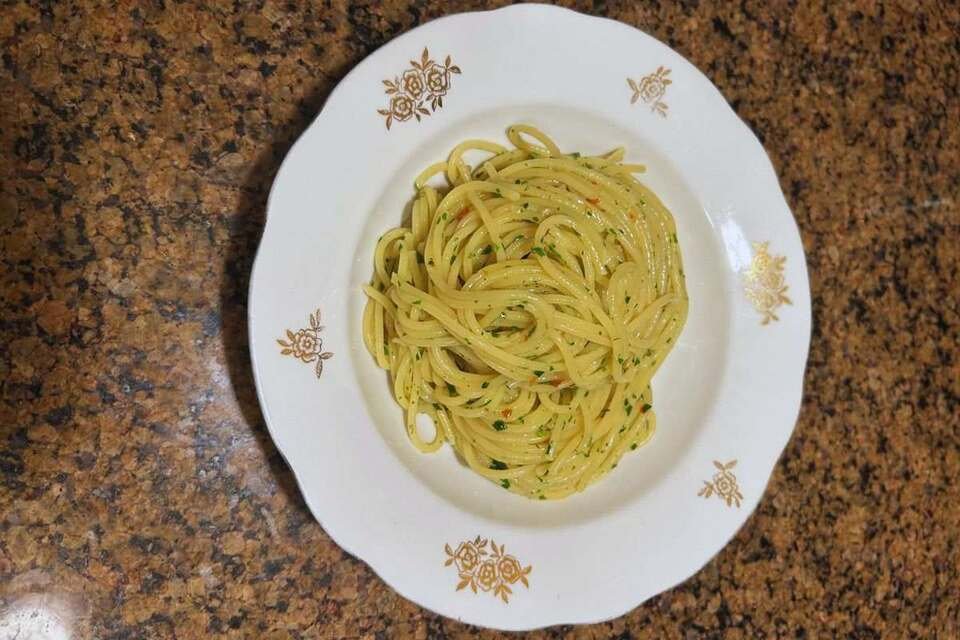
There’s a reason spaghetti aglio olio e peperoncino has been an Italian staple for generations. The simplicity reveals brilliant technique.
The emulsification technique creates restaurant-quality sauce. By finishing the pasta in the pan with starchy water and oil, you create a cohesive, silky sauce without any cream or butter. The starch molecules from the pasta water bind the oil and water together, preventing that greasy puddle problem that plagues so much home-cooked pasta.
Minimal ingredients mean maximum flavor. With only a handful of components, each one matters. Good olive oil tastes like good olive oil. Fresh garlic tastes like fresh garlic. There’s nowhere to hide mediocre ingredients, which forces you to use quality stuff, and the results prove why it matters.
The technique is easily replicable. Once you understand the emulsification principle, you can apply it to countless other pasta dishes. Cacio e pepe, carbonara, and dozens of other Italian classics use this same method. Master aglio e olio and you’ve unlocked a fundamental pasta technique.
It’s genuinely fast. From the moment water hits the stove to the moment you’re eating, this takes 20 minutes maximum. That’s faster than delivery and infinitely more satisfying.
It’s economical. Pasta, garlic, oil, chili, salt. You’re feeding 2-3 people for under $3-4. This is budget-friendly cooking that tastes anything but cheap.
The dish scales perfectly. Making it for one person? Easy. Making it for six? Just as easy. The ratios stay the same, and the technique doesn’t change.
Leftovers are acceptable (though not ideal). The emulsion breaks down as it sits, but you can revive it by reheating in a pan with a splash of water, tossing constantly. It won’t be quite as good as fresh, but it’s still delicious.
Conclusion
This spaghetti aglio, olio e peperoncino recipe proves that simple Italian pasta doesn’t need elaborate ingredients or complicated techniques. It needs good olive oil, fresh garlic, proper salt, and the willingness to master one technique: emulsification.
The beauty of easy Italian recipes like this is how they deliver complex flavors with minimal effort. Infuse oil with garlic and chili, toss pasta with starchy water until creamy, finish with fresh herbs and raw oil. Done. No sauce simmering for hours, no shopping for obscure ingredients, no stress. Just straightforward Italian comfort food that tastes like you know what you’re doing.
Want to make something impressive that takes almost no time? Make this. Need a weeknight pasta that uses pantry staples? This is it. Looking for traditional Italian dishes that reveal fundamental cooking techniques? You’ve found it.
The aglio olio pasta here is silky, garlicky, spicy, and deeply satisfying in that way only a well-made pasta dish can be. The technique of finishing pasta in the pan with its sauce might seem fussy the first time, but once you master it, every pasta you make improves dramatically.
Make this late at night when you’re hungry and the kitchen is bare. Make it for a date when you want to impress without seeming like you’re trying too hard. Serve it family-style with crusty bread and a simple green salad. Pour a crisp Italian white wine like Pinot Grigio or Vermentino, or just open whatever you have.
Try it, master the emulsification technique, and enjoy the fact that you can now make restaurant-quality pasta at home in less time than it takes to order delivery. That’s a skill worth having.