
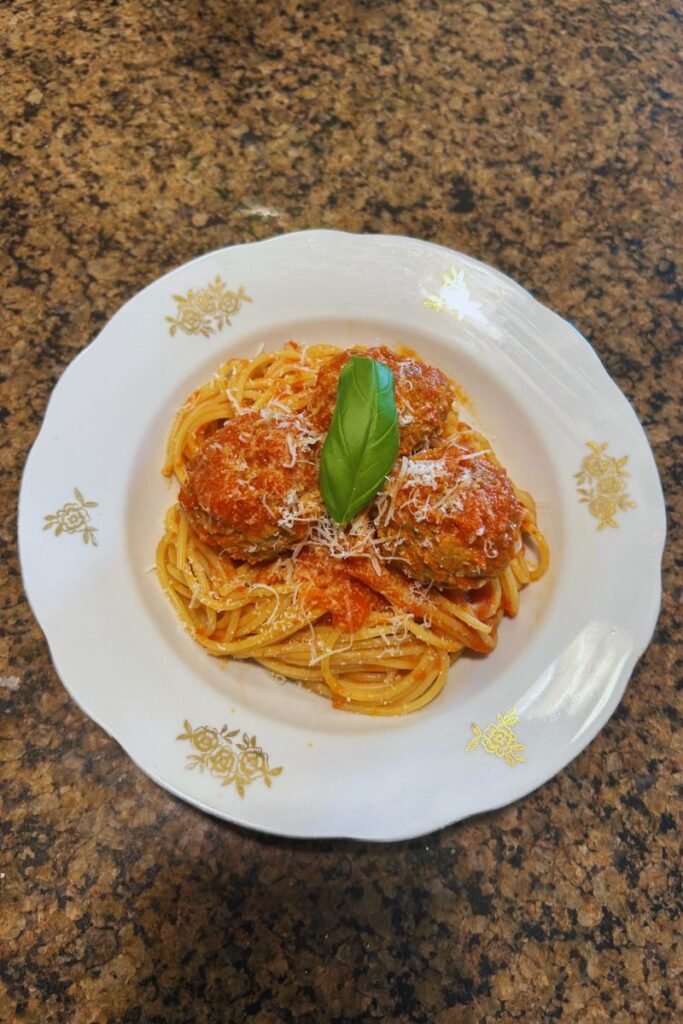
Let’s be honest: spaghetti and meatballs might not be authentically Italian, but it’s absolutely authentically delicious. This classic spaghetti and meatballs represents Italian-American comfort food at its finest, tender meatballs made from a blend of ground pork and beef, simmered in simple tomato sauce, served over perfectly cooked pasta. It’s homemade meatballs that actually hold together, traditional pasta dishes that feed a crowd, and the kind of family dinner recipes that get requested on repeat.
The beauty of easy Italian recipes like this is how they deliver maximum comfort with minimal fuss. Mix meat, roll balls, brown them, simmer in sauce, boil pasta. If you can follow directions and not overcook the meatballs into hockey pucks, you’ve got this. This is comfort food cooking that makes your house smell amazing and your people happy 🙂.
Ingredients
Here’s what you need for this spaghetti meatballs recipe. The ingredient list is straightforward and mostly pantry staples. This serves about 4-6 people depending on appetites.
Ingredients for Spaghetti and Meatballs
For the meatballs:- 350g ground pork
- 300g ground veal/beef (or just beef if you can’t find veal)
- 3 eggs
- Breadcrumbs (start with 1 handful, add more if needed)
- 2–3 stems parsley, chopped
- Parmesan cheese, grated (to taste, but be generous)
- Salt and black pepper
- 500ml tomato sauce (good quality jarred or homemade)
- 1 onion, small diced
- 400g spaghetti pasta
- Extra Parmesan cheese for serving
- Fresh basil for garnish (optional)
- Olive oil for cooking
The meat blend matters here. Ground pork and beef together create better flavor and texture than either alone. Pork adds fat and sweetness, beef provides depth and structure. According to The Kitchn’s guide to making meatballs, fattier meats like beef, lamb, and pork yield more tender meatballs, and using a combination creates more complex flavor than single-meat versions.
Ground veal is traditional in Italian-American meatballs but not always easy to find. Regular ground beef works perfectly fine, just make sure it’s not too lean. You want 80/20 or 85/15 ground beef, not that super-lean 90/10 stuff. Fat equals flavor and moisture.
Breadcrumbs act as a binder and keep meatballs tender by preventing proteins from binding too tightly. Fresh breadcrumbs work better than dried, but either functions. You’re looking for just enough to bind without making the mixture feel like meatloaf. Start conservative and add more if needed.
Parmesan cheese in the meatballs adds savory umami depth. Don’t skip it. Grate it fresh from a wedge, pre-grated cheese contains anti-caking agents that affect texture. This is one place where ingredient quality actually matters.
Substitution options: Can’t find veal? Use all beef. Want it leaner? Use ground turkey with pork (but add extra fat or the meatballs will be dry). Gluten-free? Use gluten-free breadcrumbs or crushed rice crackers. The formula is flexible as long as you maintain the right ratio of meat to binders.
This is traditional Italian cooking adapted for American kitchens and ingredients. Italians might scoff, but Italian-Americans have been making this exact dish for over a century. It’s become its own tradition, and honestly? It’s delicious enough that authenticity debates are pointless.
Step-by-Step Instructions
Let’s make some proper homemade Italian meatballs. This recipe moves quickly once you start, so read through everything before beginning. Total time is about an hour, with 30 minutes of that being hands-off simmering. Perfect for weeknight dinner ideas when you want something special without stress.
Step 1: Make the Meatball Mixture
In a large bowl, combine your 350g ground pork and 300g ground veal/beef. Add 3 eggs, 1 handful of breadcrumbs, salt, pepper, chopped parsley, and grated Parmesan.
Mix gently with your hands until just combined. This is crucial, don’t overmix. The more you work the meat, the denser and tougher your meatballs become. You want everything incorporated, but stop the second it’s mixed. Treat it like you’re folding cake batter, not kneading bread dough.
The mixture should hold together when you squeeze it but not feel pasty or dense. If it’s too wet and doesn’t hold shape, add more breadcrumbs a tablespoon at a time. If it’s too dry and crumbly, add a splash of water or milk. Getting the texture right at this stage makes everything easier.
Step 2: Shape the Meatballs
Roll the mixture into even-sized balls. Golf-ball size works great, about 1.5-2 inches in diameter. Consistent sizing ensures even cooking. Larger meatballs look impressive but take forever to cook through. Smaller ones dry out easily. Golf-ball size is the Goldilocks zone.
Keep a bowl of water nearby to wet your hands between rolling. This prevents sticking and makes shaping way easier. Place finished meatballs on a tray as you work. You should get about 16-20 meatballs from this recipe depending on exact sizing.
Don’t roll them too perfectly smooth. Slightly irregular surfaces create more browning area and better texture. They’re rustic Italian-American meatballs, not precision ball bearings.
Step 3: Sear the Meatballs
Heat a bit of olive oil in a large pan over medium-high heat. Add the meatballs and brown them on all sides. You’re not cooking them through, just creating a flavorful crust.
Work in batches if necessary to avoid crowding. Crowded pans steam rather than sear, and you’ll miss out on that delicious Maillard browning. Give each meatball space to breathe. This takes about 6-8 minutes total, turning them every couple minutes to brown evenly.
Remove browned meatballs and set aside. They’ll finish cooking in the sauce, so don’t worry that they’re not cooked through yet. That’s intentional. According to The Kitchn’s secret to tender meatballs, the panade (breadcrumbs soaked in liquid) and gentle simmering in sauce creates better texture than baking or cooking entirely from raw.
Step 4: Make the Sauce
In the same pan (don’t wash it, those browned bits are flavor gold), add a little more oil if needed. Add your diced onion and cook until soft and lightly golden, about 5-7 minutes.
The onions pick up all those browned bits from the meatballs (that’s called fond), creating deeper sauce flavor. Stir occasionally and let them actually soften and sweeten. Raw onions in tomato sauce taste harsh. Properly cooked onions add sweetness and body.
Pour in 500ml tomato sauce and season with salt and pepper. Bring to a gentle simmer. Taste and adjust seasoning, some jarred sauces need more salt, others are fine as-is. This is your chance to make it your own.
Step 5: Simmer Everything Together
Add your browned meatballs back into the sauce. Cover and simmer on low for 25-30 minutes until meatballs are cooked through and tender.
Low heat is crucial here. A rolling boil will toughen the meatballs. You want gentle bubbles, not volcanic eruption. The meatballs will finish cooking while absorbing sauce flavor, creating tender, flavorful results.
Occasionally spoon sauce over meatballs to keep them moist. The house will smell incredible during this simmer. This is the stage where you’re creating Italian comfort food magic through time and low heat.
Step 6: Cook the Pasta
About 10 minutes before meatballs finish simmering, bring a large pot of heavily salted water to a rolling boil. Add 400g spaghetti and cook until al dente according to package directions.
Al dente means the pasta has a slight bite in the center, not crunchy, not mushy. Most dried pasta takes 8-11 minutes. Start checking 1-2 minutes before package instructions suggest.
Before draining, reserve about 1 cup of pasta water. This starchy liquid is liquid gold for adjusting sauce consistency. Then drain the pasta.
Step 7: Serve or Combine
You have two serving options here. Traditional Italian-American style means tossing the spaghetti with some sauce, plating it, then topping with meatballs and more sauce. This looks restaurant-pretty and lets people control their pasta-to-meatball ratio.
Alternatively, add the drained spaghetti directly to the pan with meatballs and sauce. Toss everything together, adding splashes of pasta water if it seems dry. This creates more cohesive flavor but less formal presentation. Both methods work great, choose based on audience and occasion.
Step 8: Finish and Serve
Top with freshly grated Parmesan cheese. Be generous. If anyone complains about too much cheese, they’re wrong and you should reconsider that relationship 🙂
Add a fresh basil leaf if you want a clean garnish that adds aromatic brightness. Serve immediately while everything is hot and the pasta hasn’t absorbed all the sauce.
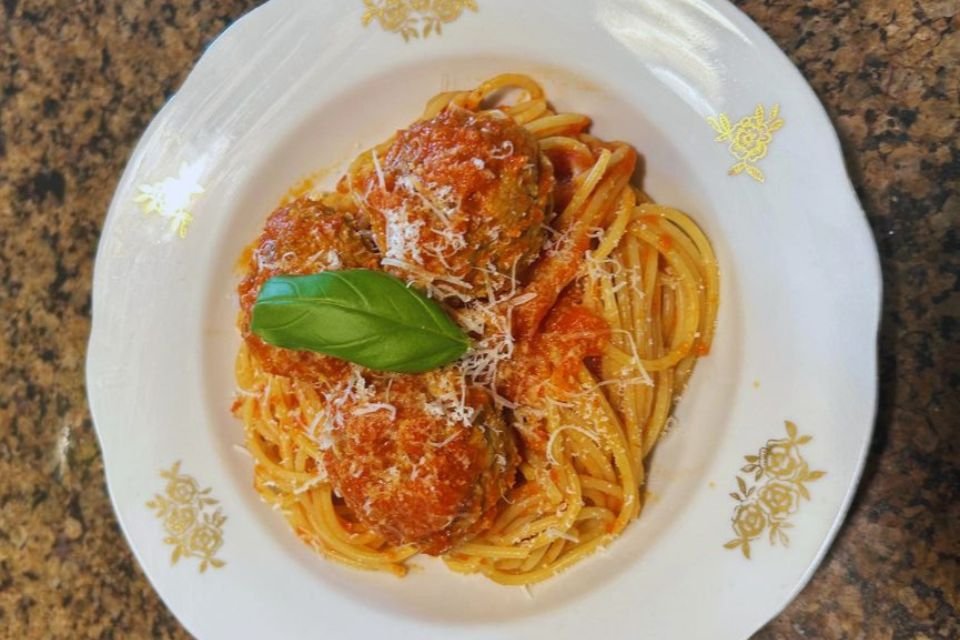
The texture should be saucy but not soupy, with tender meatballs that hold together but aren’t dense. Each bite delivers pasta, sauce, meat, and cheese in perfect harmony. This is family dinner recipes that actually get everyone to the table without complaints.
Tips & Variations
This classic meatball recipe is pretty forgiving, but here are some insights that make it even better.
Meat ratios: The 350g pork to 300g beef ratio works great, but you can adjust based on preference or availability. Some people prefer all beef (works fine, just less nuanced flavor). Others add ground Italian sausage to the mix for extra seasoning and fat.
Binding agents: Breadcrumbs and eggs are standard, but soaked bread (panade) works even better. Tear bread, soak in milk, squeeze out excess liquid, then mix into meat. This keeps meatballs incredibly moist and tender. It’s an extra step but makes noticeable difference.
Seasoning variations: This recipe keeps it simple with parsley, parmesan, salt, and pepper. Traditional additions include minced garlic, Italian seasoning, red pepper flakes, or fresh oregano. Add these to the meat mixture if you want more complex flavor.
Baking vs. pan-searing: You can bake meatballs at 400°F for 20 minutes instead of pan-searing. It’s less work and hands-off, though you lose that crusty exterior from searing. Your call whether convenience or texture matters more.
Sauce options: Good jarred marinara saves time and works great. Homemade tomato sauce elevates the dish but adds effort. You can also use crushed tomatoes, add garlic and Italian herbs, simmer longer. The meatballs are the star, sauce just needs to be good, not necessarily homemade.
Make ahead: Meatballs freeze brilliantly. Make double batches, freeze half before or after cooking. Drop frozen meatballs directly into simmering sauce, they’ll thaw and heat through in about 45 minutes. This is easy Italian recipes meal prep at its finest.
Pasta alternatives: Spaghetti is traditional, but any pasta shape works. Rigatoni or penne catch sauce inside tubes. Fettuccine creates different mouthfeel. Use what you have or prefer. Just cook it al dente and you’re fine.
Common mistakes: Overmixing meat (makes dense meatballs), using too-lean meat (dry meatballs), cooking at too high heat (tough exterior), not seasoning adequately (bland results). Avoid these and you’re golden. IMO, the biggest mistake is overcooking, low and slow wins the race here.
Why This Recipe Works
There’s a reason spaghetti and meatballs has been a beloved Italian-American comfort food staple for over a century. The formula just works.
The meat blend is genius. Pork and beef together create more complex, interesting flavor than either alone. The fat from pork keeps everything moist while beef provides structure and deep savory notes. Adding veal (when you can find it) makes them even more tender.
The two-stage cooking is key. Searing creates flavorful crust and Maillard browning. Simmering in sauce finishes cooking gently while infusing meatballs with tomato flavor. Each stage serves specific purposes that can’t be achieved in single-step cooking.
It’s genuinely comforting. Rich, tomatoey, meaty, cheesy, carb-loaded. This hits every comfort food button simultaneously. The texture contrast between tender meatballs, silky sauce, and slightly firm pasta creates satisfying mouthfeel.
It feeds a crowd economically. Ground meat, pasta, jarred sauce, basic ingredients. You’re feeding 4-6 people for under $15. That’s budget-friendly cooking that doesn’t taste budget.
It’s adaptable. Make it meatier with more meatballs, saucier with more tomato sauce, lighter with turkey instead of pork. Add vegetables to the sauce. Serve over polenta instead of pasta. The base recipe tolerates lots of customization.
Leftovers are amazing. Spaghetti and meatballs arguably tastes better the next day after flavors have melded overnight. Reheat gently with a splash of water or broth. Turn leftovers into meatball subs. Versatility extends value.
It teaches fundamental skills. Making meatballs, building sauce, timing pasta, these are foundational cooking techniques that transfer to countless other dishes. Learning to make proper homemade meatballs unlocks an entire category of cooking.
Conclusion
This classic spaghetti and meatballs recipe proves that Italian-American comfort food doesn’t need to be authentic to be absolutely delicious. It needs to be well-made, generously portioned, and served with enthusiasm.
The beauty of traditional pasta dishes like this is how they bring people together. Nobody sits alone eating spaghetti and meatballs quietly at their desk. This is food that demands you sit at a table, pass the parmesan, share stories, maybe argue about whether you call it sauce or gravy (it’s sauce, fight me).
Want to make something that impresses without requiring culinary school training? Make this. Need a family dinner recipe that gets actual enthusiasm instead of complaints? This is it. Looking for easy Italian recipes that taste like you spent all day cooking even though you didn’t? You’ve found it.
The homemade Italian meatballs here are tender, flavorful, and actually hold together (looking at you, every sad, crumbly meatball I made before figuring out proper technique). The sauce is simple but works. The pasta is just pasta, but it’s al dente and properly coated. Everything together creates more than the sum of parts.
Make this on a Sunday when you have time to let it simmer while you do other things. Make extra meatballs and freeze them. Invite people over and serve it family-style with crusty bread and a simple salad. Pour wine, turn on music, and enjoy the magic of a dish that’s been bringing people together for generations.
Try it, let me know how it goes, and don’t stress about whether it’s “authentic.” Italian-American cuisine is its own legitimate tradition with its own history and excellence. This dish represents that tradition perfectly, and it’s delicious enough to end any arguments about authenticity.
Now grab that ground meat and get cooking. Your comfort food game is about to level up significantly.