
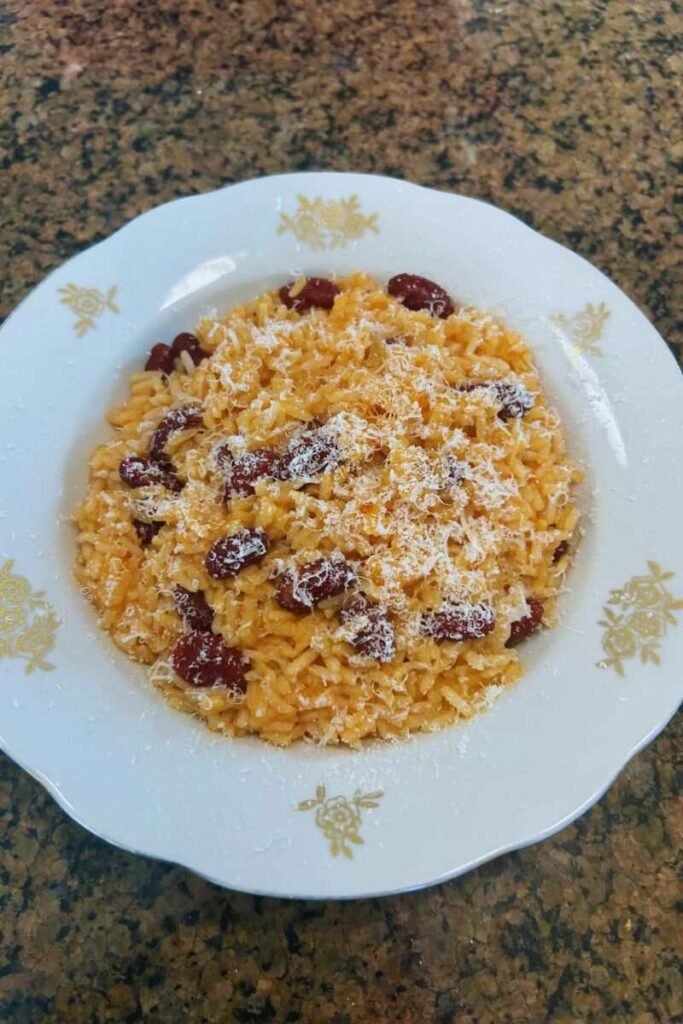
I made this dish on a Tuesday night when my fridge was looking depressingly empty and takeout felt like admitting defeat. All I had was some rice, a can of kidney beans, and tomato paste that had been judging me from the back of the fridge for weeks. Two hours later, I was scraping the pot clean and wondering why I’d been ordering expensive grain bowls when this existed.
This tomato rice with kidney beans is what comfort food should be, simple, satisfying, and surprisingly flavorful for something that uses mostly pantry staples. The rice soaks up that garlicky tomato sauce, the kidney beans add protein and substance, and that butter at the end? Pure magic. It’s the kind of dish that feels fancy enough for company but easy enough for a random weeknight when you can’t be bothered. 😋
What You’ll Need
Ingredients for Tomato Rice with Kidney Beans
For the Tomato Sauce:- ½ medium onion, small diced
- 2–3 fresh basil leaves
- 2 bay leaves
- 2 tbsp tomato paste
- 250 ml hot water
- 1 tsp chilli flakes
- Extra virgin olive oil
- Salt to taste
- 1 cup long-grain parboiled rice
- 2½ cups water
- 1 tsp salt
- 250g red kidney beans (cooked, canned, or soaked & cooked)
- 40g butter
- Parmesan cheese (optional but recommended)
The beauty of this recipe is its flexibility. You can use canned kidney beans for convenience or cook dried ones if you’re feeling ambitious. According to Valley Food, parboiled rice (also called converted rice) retains more nutrients than regular white rice and holds its shape better, making it perfect for dishes where you’re adding liquid after cooking.
Kitchen Tools You’ll Need
A medium saucepan for the rice, a separate pan for the tomato sauce, a wooden spoon or spatula, a lid for your rice pot, and measuring cups. That’s literally it. No special equipment, no complicated gadgets, just basic kitchen stuff you definitely already own.
Step 1: Make the Tomato Sauce (Build Your Flavor Base)
Add a generous glug of olive oil to a pan and warm it over medium heat. You want enough to coat the bottom well, maybe 2-3 tablespoons. Don’t be stingy here; this is where your flavor foundation starts.
Once the oil shimmers, add your small-diced onion. The key word here is “small”, you want tiny pieces that will basically melt into the sauce. Cook until the onion is soft and fragrant, about 4-5 minutes. You’re not looking for color necessarily, just that translucent, sweet stage where the raw onion bite is gone.
Add the tomato paste and this is where things get interesting. Cook it until it caramelizes and deepens in color. This usually takes 2-3 minutes of stirring. The tomato paste will darken from bright red to a deeper, almost brick-red color. You’ll smell it change too, it goes from sharp and acidic to sweet and concentrated. This step is crucial; it removes that metallic canned taste and develops serious umami.
Add the chilli flakes and stir for 10-15 seconds. Just long enough to bloom the spices and release their heat into the oil. Don’t skip this step even if you don’t like spicy food, one teaspoon isn’t that much, and it adds depth rather than fire.
Pour in 250 ml of hot water and watch the sauce come together. Add your bay leaves and basil leaves. The bay adds earthiness, the basil brings brightness. Lower the heat and let the sauce simmer gently while you deal with the rice. This slow simmer allows the flavors to meld and the sauce to thicken slightly. Stir occasionally to prevent sticking.
Step 2: Cook the Rice (Get This Right)
Wash your rice thoroughly until the water runs mostly clear. This removes excess starch that would otherwise make your rice gummy and clumpy. I usually rinse it 3-4 times, swirling the rice around in the water and draining. Yes, it’s tedious. Yes, it matters.
Bring 2½ cups of water to a boil in a separate pot. Once it’s at a rolling boil, add 1 teaspoon of salt. This is your only chance to season the rice from the inside, so don’t forget it.
Add your washed rice to the boiling water, then immediately lower the heat to the lowest setting. Give it one good stir to make sure nothing’s sticking to the bottom, then cover with a lid.
Here’s the important part: cook until the rice is almost done but leave it about 2 minutes undercooked. For most parboiled rice, this means cooking for about 15-17 minutes instead of the full 18-20. You want the grains tender but still with a slight bite in the center. This is crucial because the rice will continue cooking when you add the sauce and beans.
According to ResearchGate, parboiled rice retains its texture better and is less sticky because the starch in the surface layer gelatinizes during the parboiling process. This makes it ideal for dishes like this where you’re adding ingredients partway through cooking.
Step 3: Combine (Where Everything Comes Together)
Timing is everything here. When your rice is 1-2 minutes away from being fully cooked, add your kidney beans and the tomato sauce directly into the rice pot. If you’re using canned beans, drain and rinse them first. If you cooked dried beans, make sure they’re fully tender.
Stir everything gently to combine. You want the sauce distributed throughout the rice and the beans mixed in evenly, but you don’t want to break up the rice grains by stirring too aggressively. A folding motion works better than vigorous stirring.
Cook together for 2-3 minutes with the lid back on. This final cooking stage allows the rice to absorb some of the tomato sauce, the beans to warm through completely, and all the flavors to integrate. The rice will finish cooking during this time, and everything will meld into one cohesive dish.
You’ll know it’s ready when the rice is tender all the way through, the beans are heated through, and the sauce has been mostly absorbed but the dish still looks slightly moist. If it looks dry, add a splash of water or broth. If it looks soupy, cook uncovered for another minute or two.
Step 4: Finish (The Game-Changing Final Touch)
Remove the pot from heat. This is important, you want to add the butter off-heat so it emulsifies into the rice rather than just melting on top.
Add the 40g of butter all at once. Then stir gently until the butter is completely melted and the rice looks glossy and luxurious. This technique is called “mantecatura” in Italian cooking, and it transforms the dish from good to exceptional. The butter adds richness, creates a silky texture, and helps bind everything together.
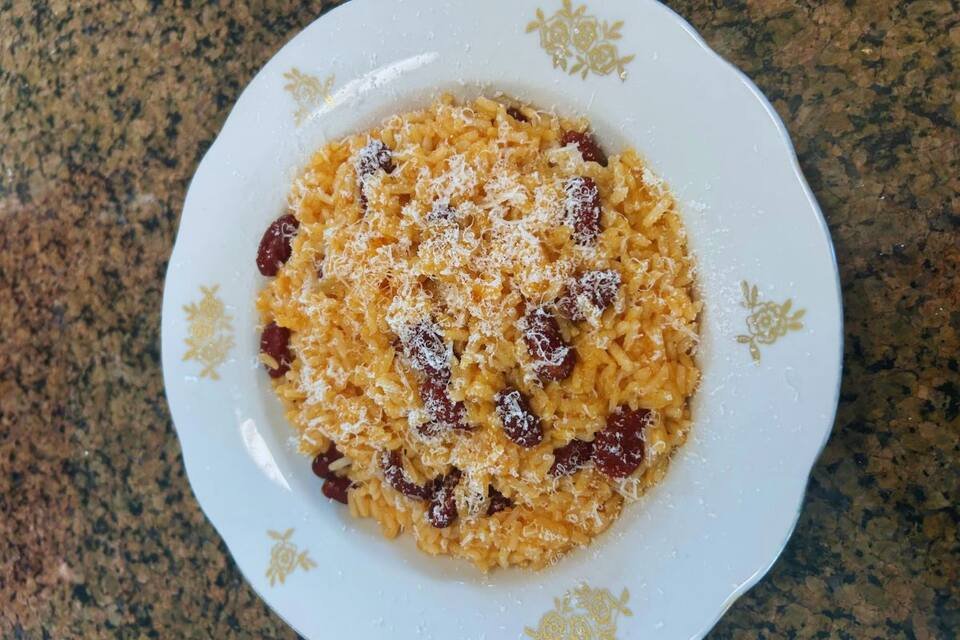
Finish with Parmesan cheese if you like. I’m firmly in the “always add cheese” camp, but technically it’s optional. Grate it fresh over the top—pre-shredded doesn’t melt the same way and often contains anti-caking agents that affect texture. A few tablespoons is usually enough, but honestly, who’s counting?
Let the dish rest for 2-3 minutes before serving. This allows the butter to fully incorporate and the rice to settle. Then dish it up and enjoy while it’s hot.
Pro Tips From My Trial-and-Error Phase
Don’t rush the tomato paste caramelization. I used to just toss it in and immediately add liquid, wondering why my tomato rice always tasted tinny. Cooking the paste until it darkens makes a massive difference in flavor depth.
Use hot water, not cold. Adding cold water to your caramelized tomato paste can cause it to seize up and become grainy. Hot water incorporates smoothly and maintains your cooking temperature.
Parboiled rice is worth using. I’ve tried this with regular white rice, jasmine rice, and basmati. They all work, but parboiled rice gives you the best texture, the grains stay separate and don’t get mushy even with the sauce addition.
Don’t skip the butter. I know 40g seems like a lot. I know you’re thinking “I’ll just use less.” Don’t. That butter is what transforms this from a rice dish into something special. If you absolutely must reduce it, go down to 30g, but no less.
The rice should be slightly undercooked before adding the sauce. If you cook it fully and then add the sauce, you end up with overcooked, mushy rice. That 2-minute buffer is crucial.
What to Serve With Tomato Rice and Kidney Beans
This is honestly a complete meal on its own, you’ve got carbs from the rice, protein from the beans, and enough richness from the butter to feel satisfied. But if you want to round it out, a simple green salad with lemon vinaigrette cuts through the richness beautifully.
Grilled or roasted vegetables work well on the side. I particularly like roasted broccoli or sautéed spinach with garlic. The slight bitterness of greens balances the sweetness of the tomato sauce. Some crusty bread for soaking up any extra sauce never hurts either 🙂
If you want to add protein directly to the dish, grilled chicken, Italian sausage, or even a fried egg on top all work beautifully. The runny yolk mixing with the rice is genuinely fantastic.
Variations and Customizations
Add more vegetables: Bell peppers, zucchini, or peas would all fit seamlessly into this dish. Add them when you add the onions so they have time to cook through.
Try different beans: Cannellini beans, black beans, or chickpeas would all work. Each brings a slightly different texture and flavor profile.
Make it spicier: Double the chilli flakes or add some fresh sliced chilies when you cook the onions. Or go the other direction and skip them entirely for a milder version.
Herbs variation: Swap the basil for oregano or thyme for a different flavor profile. Fresh parsley stirred in at the end adds brightness.
Vegan option: Skip the butter and Parmesan and add an extra tablespoon of olive oil at the end instead. It won’t be quite as rich, but it’s still delicious.
Storing and Reheating Leftovers
This rice keeps beautifully in the fridge for 3-4 days in an airtight container. Actually, I think it tastes better the next day after the flavors have had time to meld overnight. The rice absorbs more of the tomato sauce as it sits, becoming even more flavorful.
Reheating tips: Add a splash of water or broth when reheating, rice tends to dry out in the fridge. Microwave in 30-second bursts, stirring between each, or reheat gently on the stovetop with a bit of extra butter or olive oil.
You can freeze this for up to 3 months. Let it cool completely, portion it into freezer-safe containers, and freeze. Thaw overnight in the fridge before reheating. The texture won’t be quite as perfect as fresh, but it’s absolutely acceptable for meal prep purposes.
Why This Recipe Works
The magic here is in the layering of techniques. Caramelizing the tomato paste creates depth. Cooking the rice separately ensures proper texture. Adding the sauce partway through cooking allows the rice to absorb flavor without becoming mushy. Finishing with butter creates richness and glossy texture.
According to Serious Eats, the key to great rice dishes is proper liquid-to-rice ratios and knowing when to add additional ingredients. Adding wet ingredients too early makes rice soggy; too late means uneven flavor distribution. This recipe hits that sweet spot.
The kidney beans add not just protein but also a creamy texture as some of them break down slightly during the final cooking. They release starch that helps thicken the sauce and bind everything together.
The Cultural Context
This isn’t a traditional dish from any specific cuisine, but it draws inspiration from several. The tomato-rice combination is common in Spanish, Italian, and Middle Eastern cooking. The kidney bean addition has Caribbean and Latin American influences. The butter-finishing technique is decidedly Italian.
What you end up with is a fusion dish that takes the best techniques from multiple culinary traditions and creates something both familiar and unique. It’s comfort food that crosses cultural boundaries.
Final Thoughts
I’ve made this recipe at least thirty times since that first accidental Tuesday night creation. I’ve served it to friends who asked for the recipe. I’ve made it when I’m too tired to think. I’ve doubled it for meal prep. It works in every scenario.
There’s something deeply satisfying about making a complete, flavorful meal from mostly pantry staples. No exotic ingredients, no complicated techniques, no hour-long prep work. Just rice, beans, tomato paste, and a few aromatics creating something genuinely delicious.
The first time I added that butter at the end and watched the rice transform into something glossy and luxurious, I understood why Italian cooking emphasizes simple techniques done well. You don’t need twenty ingredients when you treat each component with respect and use proper method.
Is this the fanciest recipe ever? No. Will it win any culinary awards? Probably not. But will it feed you well, taste great, and make you feel like you’ve got your life together on a random weeknight? Absolutely.
So next time you’re staring at your pantry wondering what to make, remember this recipe. You probably already have everything you need. And if you don’t, the ingredients cost maybe five dollars total. That’s less than the worst takeout option and infinitely better.
Make the rice. Caramelize that tomato paste. Add the butter. Thank me later.