
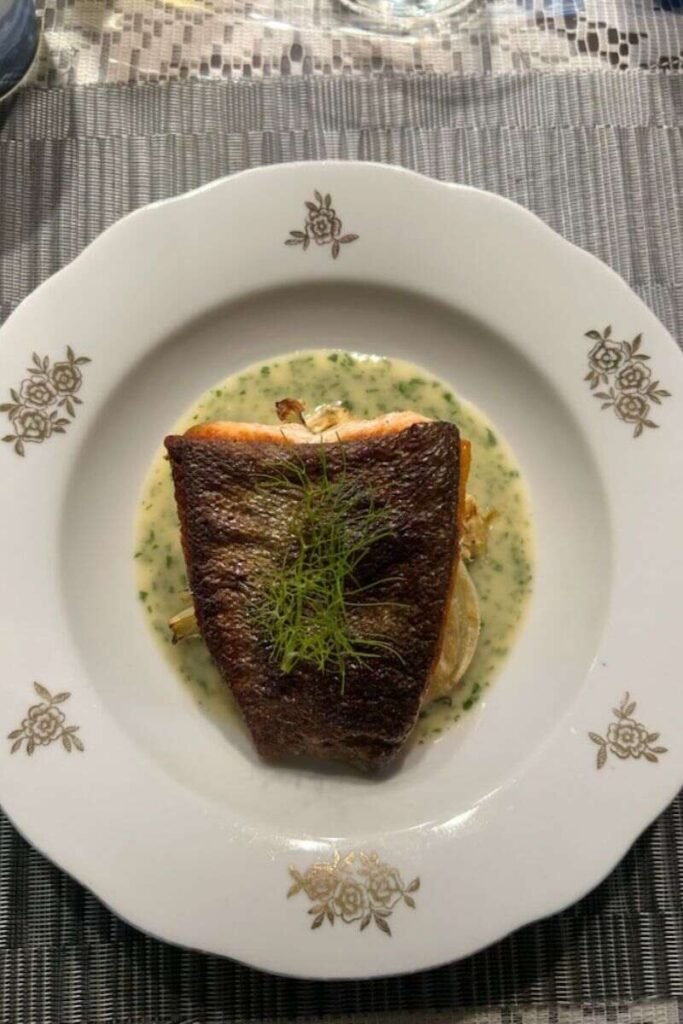
Beurre blanc sounds intimidating, doesn’t it? That fancy French sauce chefs make look effortless on cooking shows while you’re convinced it’ll split into a greasy mess the second you try it at home. Here’s the secret nobody tells you: beurre blanc is just butter, wine, and patience 🙂. It’s the perfect finishing touch for crispy trout with beurre blanc & roasted fennel, turning a simple fish dinner into something that looks like it came from a bistro.
I avoided making beurre blanc for years because everyone said it was temperamental and would “break” if you looked at it wrong. But once I tried it myself, I realized the warnings were a bit dramatic. Yes, you need to control the heat and whisk constantly, but it’s really not rocket science. Master it, and you’ll never go back to jarred sauces again.
Ingredients You’ll Need
This recipe uses simple ingredients, but quality matters. Don’t cheap out on the butter or wine, they’re the stars here.
Ingredients for Trout with Beurre Blanc and Roasted Fennel
For the Beurre Blanc:- 1 shallot, finely minced
- Knob of butter (about 1 tablespoon)
- 150ml dry white wine (Sauvignon Blanc or Pinot Grigio)
- 50ml white wine vinegar
- 250g cold butter, diced
- Chives or parsley, finely chopped
- Salt, to taste
- 1-2 trout fillets (skin on)
- Salt & pepper, to taste
- Extra virgin olive oil, for cooking
- 1 fennel bulb, thinly sliced
- Extra virgin olive oil, for roasting
- Salt & pepper, to taste
- Parmigiano Reggiano, for grating over the fennel
For the Beurre Blanc:
1 shallot, finely minced: Shallots are milder and sweeter than onions, perfect for delicate butter sauces. Mince it as fine as possible, you want it to dissolve into the sauce, not provide texture.
Knob of butter (about 1 tablespoon): This is just for cooking the shallot. The real butter comes later.
150ml white wine: Use something dry that you’d drink. Sauvignon Blanc or Pinot Grigio work beautifully. The wine provides acidity and body to the sauce.
50ml white wine vinegar: This adds brightness and helps balance the richness of all that butter. White wine vinegar is gentler than distilled vinegar.
250g cold butter, diced: This is the heart of beurre blanc. Use high-quality European-style butter with at least 82% butterfat if you can find it. The butter MUST be cold, straight from the fridge, cut into roughly 1-inch cubes. Cold butter is what creates the emulsion that makes this sauce glossy and stable.
Chives or parsley, finely chopped: Fresh herbs add color and a subtle oniony (chives) or grassy (parsley) note. I prefer chives with fish.
Salt to taste: For seasoning at the end. You won’t need much since butter is already salted.
For the Trout:
1-2 trout fillets (skin on): Fresh is ideal, but good quality frozen works. The skin must be on, crispy trout skin is one of life’s great pleasures. Rainbow trout or steelhead both work perfectly.
Salt & pepper: For seasoning the fish.
Extra virgin olive oil: For cooking. You need enough to create a thin layer in the pan.
For the Roasted Fennel:
1 fennel bulb, thinly sliced: Fennel has a subtle anise flavor that pairs beautifully with fish. Cut it into thin slices (about 1/4 inch) so it roasts evenly.
Extra virgin olive oil: For roasting.
Salt & pepper: Essential seasoning.
Parmigiano Reggiano: Real Parmesan for grating over the hot fennel. The residual heat melts it slightly, creating this amazing savory crust.
Before You Start: What You Need to Know
This dish requires timing and temperature control, but nothing you can’t handle. Here’s what you need to understand before starting.
Beurre blanc is an emulsion. You’re creating a stable mixture of fat (butter) and liquid (wine reduction) that shouldn’t naturally combine. The key is gradual incorporation and temperature control. Too hot and the emulsion breaks, leaving you with greasy, separated sauce. Too cold and the butter won’t incorporate. According to culinary science experts, the ideal temperature for butter emulsification is around 160-180°F, warm enough to melt butter but not so hot that the emulsion breaks.
Crispy fish skin requires dry surface and high heat. Moisture is the enemy of crispy skin. Pat that skin completely dry with paper towels before cooking. The pan needs to be hot enough to immediately sear the skin and render the fat layer beneath it.
Timing matters. Start with the fennel since it takes longest. Make the beurre blanc while fennel roasts. Cook the trout last since it needs to be served immediately. Everything comes together in the final 5 minutes.
The trout is cooked mostly skin-side down. Unlike other fish where you flip halfway through, trout cooks 80-90% on the skin side. The flesh side barely touches the pan. This ensures maximum crispiness.
Step-by-Step Instructions (The Real Way)
Let’s make this elegant dish. Follow the timing and you’ll have everything ready simultaneously.
Step 1: Roast the Fennel
Preheat your oven to 400°F (200°C). While it heats, prepare your fennel.
Cut off the fennel stalks and fronds (save the fronds for garnish if you want). Cut the bulb in half lengthwise, then slice it thinly, about 1/4 inch thick. You want pieces thin enough to caramelize but thick enough to maintain some texture.
Toss the fennel slices with a generous glug of olive oil (about 2-3 tablespoons), salt, and pepper in a bowl. Make sure every piece is coated. Spread them in a single layer on a baking sheet. Don’t crowd them or they’ll steam instead of roast.
Roast for 20-25 minutes, flipping once halfway through. You’re looking for tender fennel with golden, caramelized edges. The sugars in the fennel caramelize beautifully and the anise flavor mellows into something sweet and complex.
When you pull them from the oven, immediately grate Parmigiano Reggiano over the hot fennel. The residual heat partially melts the cheese, creating this incredible savory layer. Set aside and keep warm.
Step 2: Make the Beurre Blanc
While the fennel roasts, tackle the sauce. This is the part everyone’s scared of, but you’ve got this.
In a small saucepan, melt a tablespoon of butter over low heat. Add your finely minced shallot and cook gently for 2-3 minutes until completely soft and translucent. You want zero color on that shallot, browning adds bitterness to the delicate sauce.
Pour in the white wine and white wine vinegar. Increase heat to medium and simmer until the liquid reduces by about 90%. You should have roughly 2-3 tablespoons of syrupy liquid left. This concentrated reduction provides all the acidity and flavor for your sauce. This reduction takes 8-12 minutes depending on your pan size and heat.
Now comes the critical part. Reduce heat to the absolute lowest setting. Your pan should be warm but not simmering. Start adding your cold butter cubes one or two at a time, whisking constantly. Don’t dump all the butter in at once, you’ll get greasy soup instead of emulsified sauce.
As each butter cube melts and incorporates, add another. Keep whisking vigorously. The sauce should start looking creamy and glossy, almost like hollandaise. If it starts to look greasy or separated, your heat is too high. Pull the pan off the heat entirely and whisk vigorously until it comes back together, then return to even lower heat.
This butter incorporation takes 5-8 minutes. Be patient. Once all the butter is incorporated, you should have a smooth, velvety, pale yellow sauce. Stir in your chopped chives or parsley. Taste and adjust salt, you probably won’t need much.
Keep the sauce warm (but not hot) off the heat. You can hold it for 10-15 minutes if needed. If it starts to thicken too much, whisk in a teaspoon of warm water to loosen it.
Step 3: Cook the Trout
Now for the fish. This is the quickest part, so make sure everything else is ready.
Pat your trout fillets completely dry with paper towels, paying special attention to the skin side. Any moisture will prevent crisping. Season both sides generously with salt and pepper.
Heat a non-stick or well-seasoned pan over medium-high heat. Add enough olive oil to create a thin layer across the bottom, about 2 tablespoons. Let it heat until it shimmers.
Place the trout fillets in the pan skin-side down. Immediately press down gently with a fish spatula for about 10 seconds. This flattens the fillet and ensures even contact with the pan, preventing the edges from curling up.
Now leave it alone. Don’t touch it, don’t peek under it, don’t fidget. Let it cook undisturbed for 3-5 minutes depending on thickness. You’ll see the flesh change color from translucent to opaque, creeping up from the bottom. According to fish cooking experts, the key to crispy skin is patience, resist the urge to move the fish around.
When the flesh is about 80% opaque (you can see this from the side), flip the fillet. Cook for just 30-60 seconds on the flesh side. That’s it. The carryover heat will finish cooking the fish perfectly.
Remove immediately to a plate. The skin should be crackling-crisp and golden brown. If it’s pale and floppy, your pan wasn’t hot enough or you flipped too early.
Step 4: Plate Like a Pro
Now comes the fun part, making it look restaurant-quality.
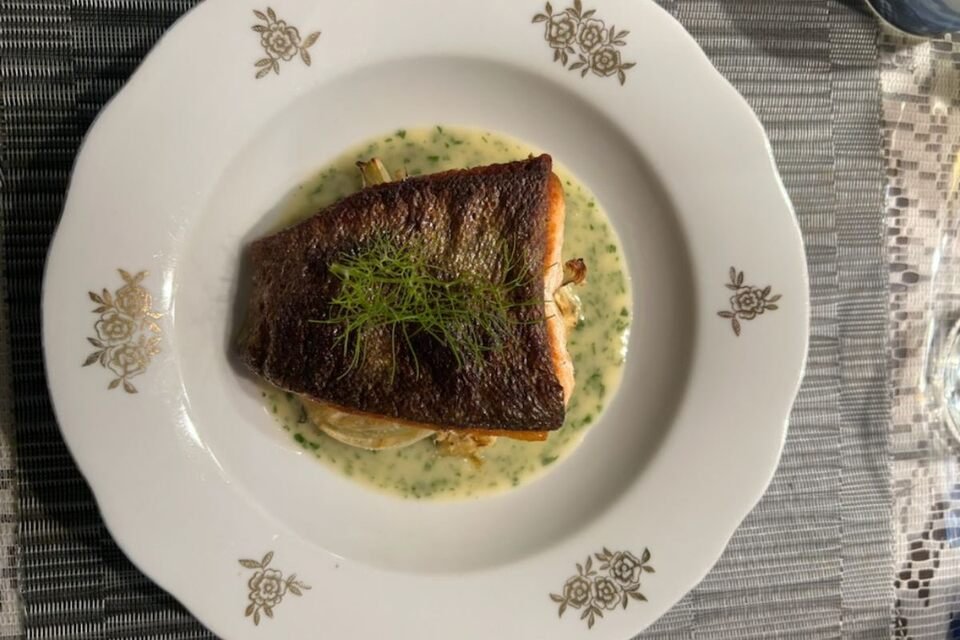
Spoon a generous pool of beurre blanc into the center of your plate. Don’t be shy, this sauce is why we’re here. Create a bed of roasted fennel on top of the sauce. Place your trout fillet on the fennel, skin-side up so everyone can see that beautiful crispy skin.
If you want to get fancy, sprinkle a few extra herbs on top, add a crack of black pepper, or even a tiny grate of lemon zest for brightness. Some people add a lemon wedge on the side, though honestly, the sauce provides all the acid you need.
Serve immediately. The contrast between hot, crispy skin and warm, velvety sauce is best enjoyed right now.
Common Mistakes and How to Avoid Them
I’ve broken more beurre blancs than I care to admit. Here’s how to avoid my failures.
Don’t let the beurre blanc get too hot. If you see it simmering or bubbling after you start adding butter, it’s too hot. Pull it off the heat immediately, whisk vigorously, and let it cool slightly before continuing. A broken sauce looks greasy and separated instead of creamy and emulsified.
Don’t rush the butter incorporation. Adding all the butter at once guarantees a broken sauce. Add it gradually, one or two cubes at a time, whisking constantly. The slow addition is what creates the stable emulsion.
Don’t cook trout too long. Fish continues cooking from residual heat after you remove it from the pan. Trout is done when it’s barely opaque throughout. Overcooked trout is dry and chalky, pull it early rather than late.
Don’t flip the trout too soon. If the skin isn’t golden and crispy, it’ll stick to the pan when you try to flip it. Be patient. When the skin is properly crisped, the fillet releases easily.
Don’t skip drying the fish skin. Wet skin = soggy skin. Pat it thoroughly dry before seasoning and cooking.
Don’t use low-quality butter. Beurre blanc is literally 90% butter. Cheap butter with low butterfat content produces inferior sauce. Splurge on good European-style butter.
Tips for Perfect Results Every Time
Want to level up your fancy fish dinner? Here’s the advanced knowledge.
Make extra beurre blanc. The sauce keeps for a day or two refrigerated and is incredible on other fish, chicken, vegetables, or even stirred into pasta. Gently reheat it over very low heat, whisking constantly.
Try different herbs. Tarragon is classic in beurre blanc. Dill works beautifully with trout. Experiment with what you like.
Add aromatics to the fennel. Toss in some garlic cloves or orange slices with the fennel before roasting. Both pair wonderfully with the anise flavor.
Use a splatter screen when cooking fish. Fish skin releases a lot of moisture and fat, which splatters everywhere. A splatter screen keeps your stove clean without affecting the cooking.
Score the trout skin. Making shallow diagonal cuts across the skin before cooking helps it crisp more evenly and prevents curling. Just don’t cut into the flesh.
Finish the sauce with lemon. A tiny squeeze of fresh lemon juice right before serving brightens the whole dish. Just a few drops, you don’t want to overpower the delicate butter flavor.
Frequently Asked Questions
Can I make beurre blanc ahead of time?
You can make it an hour ahead and hold it in a warm (not hot) spot. A thermos works great for holding temperature. Don’t refrigerate and reheat, the emulsion often breaks. Make it as close to serving time as possible.
My beurre blanc broke. Can I fix it?
Maybe. If it just started to separate, remove from heat and whisk in a tablespoon of cold cream or an ice cube. Whisk vigorously until it comes back together. If it’s completely broken into greasy butter and liquid, start over. Sorry.
Can I use salmon instead of trout?
Absolutely. The technique works for any skin-on fish fillet, salmon, sea bass, branzino, whatever. Adjust cooking time based on thickness.
What if I can’t find fennel?
Substitute with roasted asparagus, green beans, or even roasted cherry tomatoes. The sauce works with any vegetable.
Can I make this without wine?
Not really. The wine provides the acidic foundation for the sauce. You could try replacing with additional vinegar and some fish or chicken stock, but the flavor won’t be quite the same.
My trout skin isn’t crispy. What happened?
Most likely the skin was wet when it hit the pan, or your pan wasn’t hot enough. Make sure you dry the skin thoroughly and hear that immediate sizzle when the fish hits the pan.
How do I know when the trout is done?
The flesh should be opaque throughout and flake easily with a fork. For trout, the internal temperature should reach 145°F, but honestly, you can tell by looking, opaque and barely firm is perfect.
Conclusion: Time to Impress Everyone
Crispy trout with beurre blanc and roasted fennel sounds like the kind of dish that requires professional training. But now you know the truth: it’s just technique, timing, and confidence. The individual components are simple. Put them together and you’ve got restaurant-quality food.
The keys to success: cold butter gradually incorporated into warm reduction, completely dry fish skin meeting high heat, and proper timing so everything finishes together. Nail those elements and you’ll cook better fish than most restaurants.
This is the dinner you make when you want to show off, celebrate something special, or just treat yourself to something elegant. It’s fancy without being fussy, impressive without being impossible.
Make this once and you’ll realize that French cooking isn’t some mystical art form, it’s just good ingredients treated with care and attention. That beurre blanc you were scared of? It’s now in your repertoire. That crispy fish skin? You’ve got it down.
Next time you want to feel like a chef, grab some trout and good butter. Stand at your stove, whisk that sauce, and produce something genuinely beautiful. Forty-five minutes later, you’ll have a plate that looks like it came from a bistro and tastes even better.
Now go make some beurre blanc. Your whisk is ready, and honestly, so are you.