
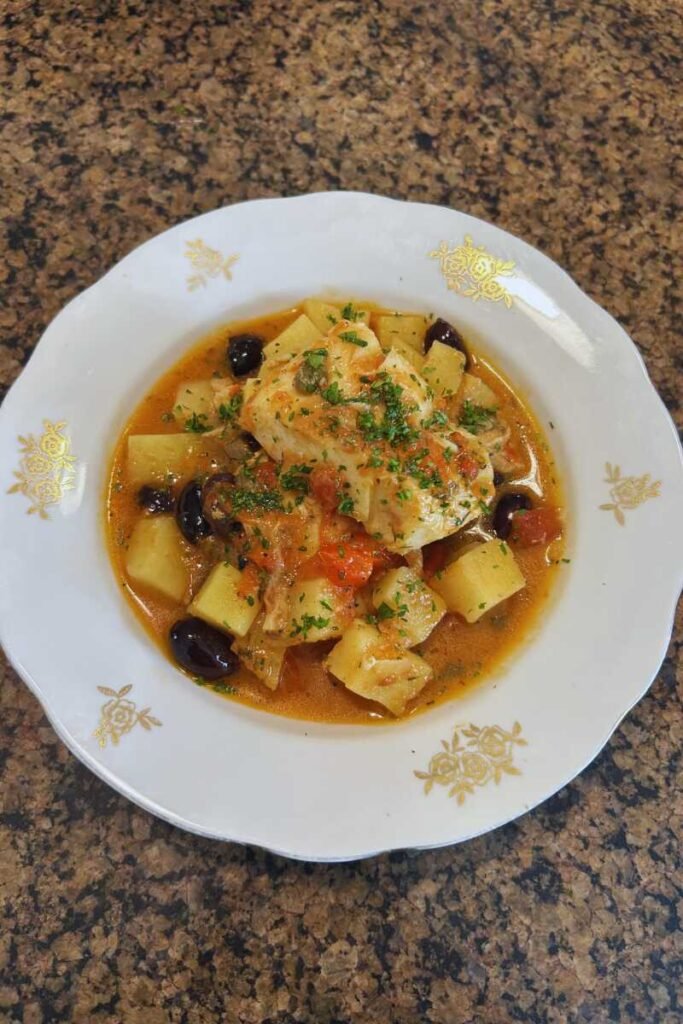
This Mediterranean fish braise combines delicate cod fillets with tender potatoes in a fragrant white wine broth enriched with tomatoes, briny olives, and sharp capers. The dish exemplifies the coastal cooking traditions of southern Italy and Greece, where fresh fish is gently simmered in aromatic liquids rather than aggressively seared or fried.
The result is supremely tender fish that flakes into large, moist pieces, surrounded by vegetables and a flavorful broth that invites crusty bread for soaking. Despite its refined appearance and complex flavors, the preparation is straightforward and forgiving, making it ideal for both weeknight dinners and casual entertaining.
Understanding Braising as a Fish Cooking Method
Braising typically refers to cooking meat slowly in liquid, but the technique adapts beautifully to delicate fish. Unlike meat, which requires extended braising to break down tough connective tissue, fish needs only brief, gentle cooking to transform from translucent to opaque and flaky. The surrounding liquid keeps the fish moist while infusing it with aromatic flavors from wine, herbs, and vegetables.
Cod works particularly well for braising due to its firm, substantial texture and mild flavor that accepts bold Mediterranean seasonings. The thick fillets hold their shape during cooking better than more delicate fish like sole or flounder. According to the Seafood Nutrition Partnership, cod provides excellent protein with minimal fat while being rich in vitamins B12 and B6, making it both delicious and nutritious when prepared properly.
Mediterranean White Wine Braised Cod with Potatoes
- Prep Time: 20 minutes
- Cook Time: 35 minutes
- Total Time: 55 minutes
- Servings: 6–8 people
Ingredients
For the Base and Broth- 3 to 4 tablespoons extra virgin olive oil
- 1 large onion, thinly sliced
- 100g crushed tomatoes (approximately ½ cup)
- 10 grape or cherry tomatoes, halved
- 800ml dry white wine
- 1 tablespoon dried oregano
- ½ tablespoon red chili flakes
- Salt and freshly ground black pepper, to taste
- 6 medium Yukon Gold potatoes, peeled and cut into 2 to 3cm cubes
- 10 cod fillets (approximately 120 to 150g each, about 1.2 to 1.5kg total)
- 75g Kalamata olives, pitted and halved if large (approximately ½ cup)
- 2 tablespoons capers, drained
- 3 to 4 tablespoons fresh flat-leaf parsley, finely chopped
- Juice of ½ lemon (optional but recommended)
- Extra virgin olive oil, for drizzling (optional)
Ingredient Selection and Quality
Cod Selection and Alternatives
Fresh cod should have firm, translucent flesh with a clean, oceanic smell. Avoid fish with any ammonia or fishy odor, which indicates age or poor handling. The flesh should spring back when pressed gently and appear moist but not slimy. Cod fillets typically come skin-on or skinless; either works for this preparation, though skinless is easier to eat.
If fresh cod is unavailable or prohibitively expensive, frozen cod works well. Thaw it slowly in the refrigerator overnight, never at room temperature or under hot water, which degrades texture. Other firm white fish substitute successfully: haddock, hake, pollock, halibut, or even monkfish all respond well to this braising technique.
Sustainable sourcing matters for cod, which has been historically overfished in some regions. Look for Pacific cod or Icelandic/Norwegian cod certified by the Marine Stewardship Council. Your fishmonger can advise on sustainable options.
Wine Selection for Braising
The 800ml of white wine forms the braising liquid’s foundation, so quality matters. Choose a dry white wine you would drink, as the cooking concentrates its flavors. Avoid “cooking wines” sold in grocery stores, which contain added salt and inferior quality grapes. Good choices include:
- Pinot Grigio or Pinot Gris for clean, crisp character
- Sauvignon Blanc for bright acidity and herbaceous notes
- Unoaked Chardonnay for rounder body
- Vermentino or Albariño for Mediterranean character
- Greek Assyrtiko for minerality and citrus
Avoid heavily oaked wines, which become bitter when reduced, and sweet wines, which create unbalanced flavor.
Potato Considerations
Yukon Gold potatoes offer creamy texture and naturally buttery flavor that complements the delicate fish. Their moderate starch content allows them to soften during braising while maintaining structural integrity. Red potatoes or fingerlings also work well, holding their shape beautifully. Avoid russet potatoes, which become mealy and may break apart during the relatively vigorous simmering required.
Cut the potatoes into uniform 2 to 3cm cubes so they cook evenly. Larger pieces may remain hard when the fish finishes cooking, while smaller pieces may disintegrate.
Olive and Caper Quality
Kalamata olives from Greece provide deep, wine-like flavor with pronounced fruitiness. Their meaty texture holds up well during cooking. Other high-quality olives work equally well: Niçoise, Gaeta, or even good green olives. Avoid canned black olives, which lack flavor complexity.
Capers contribute sharp, briny, slightly floral flavor that cuts through the dish’s richness. Capers packed in brine (not salt) are easier to use, requiring only draining before addition. Rinse them if they seem excessively salty. Smaller capers (nonpareil) tend to be more delicate and prized, but standard capers work perfectly in braised preparations.
Fresh Parsley and Lemon
Flat-leaf (Italian) parsley is strongly preferred over curly parsley, which has less flavor and tougher texture. The parsley added at the end provides bright, fresh contrast to the cooked elements. Chop it finely just before using to preserve maximum color and flavor.
Fresh lemon juice at the end brightens all the flavors, adding acidic lift that balances the wine’s richness and the fish’s mildness. Use fresh lemon only; bottled lemon juice has inferior flavor.
Method
Build the Aromatic Base
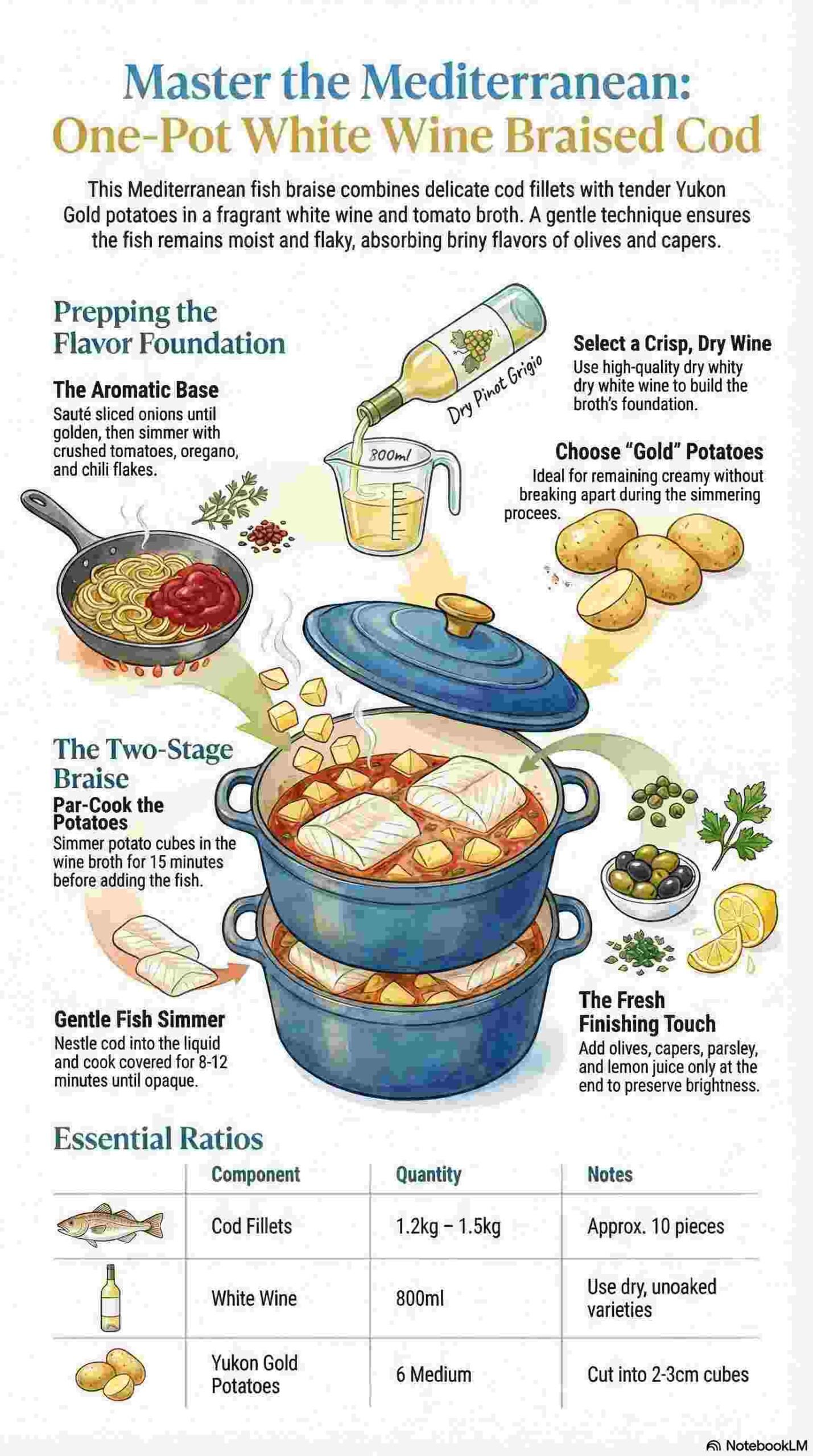
1. Sauté the onion: Heat 3 to 4 tablespoons of extra virgin olive oil in a wide, deep pot or large, deep sauté pan (at least 30cm/12 inches in diameter with sides at least 8cm/3 inches high) over medium heat. The wide surface area is important, as you will eventually nestle the fish pieces in a single layer. Add the thinly sliced onion and season with a pinch of salt. Cook, stirring occasionally, for 8 to 10 minutes until the onion softens completely and takes on light golden color in places. The slow cooking develops sweetness while eliminating harsh sulfurous compounds.
Proper onion cooking at this stage builds the dish’s flavor foundation. Rushed cooking produces sharp, unpleasant onion flavor, while patient cooking creates sweet, almost jammy character that enriches the entire broth.
2. Add tomatoes and aromatics: Stir in the crushed tomatoes and halved grape tomatoes. Cook for 3 to 4 minutes, stirring occasionally, until the fresh tomatoes begin to soften and release their juices. Add the dried oregano and red chili flakes, stirring to distribute evenly. The oregano should become fragrant within a minute as its essential oils release.
The tomatoes provide body to the broth while adding subtle acidity and sweetness. The combination of crushed and fresh tomatoes creates textural interest, with the crushed tomatoes melding into the liquid while the halved grape tomatoes maintain some structural integrity.
Cook the Potatoes
1. Add potatoes and wine: Add the cubed potatoes to the pot, stirring to coat them with the tomato-onion mixture. Pour in the 800ml white wine. The liquid should just barely cover the potatoes; if it doesn’t, add a small amount of water or additional wine. Season moderately with salt and pepper, keeping in mind that the olives and capers added later contribute significant saltiness.
2. Simmer the potatoes: Bring the liquid to a boil over medium-high heat, then reduce to a gentle simmer. Cook uncovered for approximately 15 minutes, stirring occasionally, until the potatoes are beginning to soften but retain some firmness when pierced with a fork. They should be about three-quarters cooked, as they will continue cooking alongside the fish.
During this simmering, the wine’s alcohol evaporates while its aromatic compounds concentrate. The potatoes release some starch into the liquid, creating body and helping the broth cling to the fish and vegetables later.
Braise the Cod
1. Season and add the fish: While the potatoes simmer, pat the cod fillets dry with paper towels. Season both sides of each piece lightly with salt and pepper. Once the potatoes are partially cooked, gently nestle the seasoned cod pieces into the simmering liquid, arranging them in a single layer if possible. They should be at least partially submerged in the liquid; if necessary, spoon some liquid over any exposed portions.
2. Cover and cook gently: Reduce the heat to maintain a very gentle simmer. The liquid should barely bubble; vigorous boiling will cause the fish to break apart. Cover the pot with a lid and cook for 8 to 12 minutes, depending on the fillets’ thickness. Cod is done when it turns opaque throughout and flakes easily when prodded gently with a fork. An instant-read thermometer inserted into the thickest part should read 63°C (145°F), though fish continues cooking from residual heat after removal from the stove.
Avoid overcooking, which makes cod dry and rubbery. The fish transforms from translucent to opaque white quite quickly, and it’s better to slightly undercook than overcook, as it will continue cooking in the hot broth even after you turn off the heat.
Finish the Dish
1. Add olives and capers: Two to three minutes before the fish finishes cooking, gently stir in the Kalamata olives and capers. They need only brief heating to warm through and release their flavors into the broth. Adding them earlier would cause the capers’ delicate flavor to dissipate.
2. Add fresh elements: Once the fish is cooked through, turn off the heat. Sprinkle the finely chopped parsley over the entire dish. If desired, squeeze the juice of half a lemon over everything, which adds bright, acidic lift that ties all the flavors together. The lemon is technically optional but highly recommended, as it provides the finishing touch that transforms the dish from very good to exceptional.
3. Rest briefly: Let everything sit for 2 to 3 minutes before serving. This brief rest allows the flavors to settle and meld while making serving easier, as the fish firms slightly and is less likely to break apart when transferring to plates.
Technical Notes on Success
Several factors determine whether this braise achieves tender fish and flavorful broth:
Gentle heat is essential: Once the fish is added, the liquid should simmer very gently, not boil vigorously. Aggressive heat causes the fish to break apart and become tough. Low, gentle heat produces supremely tender, moist fish.
Wide pan matters: A wide, relatively shallow pan allows you to arrange fish pieces in a single layer, ensuring even cooking. A narrow, deep pot requires stacking fish pieces, which leads to uneven cooking and makes serving difficult.
Timing the potatoes: The potatoes must be nearly cooked when the fish is added, as the fish cooks too quickly for raw potatoes to soften adequately. Partially cooking the potatoes first solves this problem elegantly.
Finishing elements are not optional: The fresh parsley and lemon juice added at the end are essential components, not mere garnishes. They provide brightness and freshness that balance the cooked elements and prevent the dish from tasting heavy or one-dimensional.
Don’t oversalt initially: Between the wine reduction, olives, and capers, this dish develops significant salinity during cooking. Season conservatively early on and adjust at the end if needed.
Serving Suggestions
This dish serves 6 to 8 people generously, with each person receiving at least one piece of fish plus potatoes and broth. The meal is nearly complete as presented but benefits from a few additions:
Crusty bread is essential: Thick slices of Italian, French, or sourdough bread for soaking up the flavorful broth are not merely accompaniment but an integral part of the experience. The bread-soaked-in-broth may be the best part of the meal.
Simple green salad: Lightly dressed bitter greens like arugula, escarole, or frisée provide refreshing contrast and cut through the dish’s richness.
Wine pairings: Serve the same white wine used for braising, or choose another crisp, dry white. Vermentino, Greco di Tufo, Assyrtiko, or Albariño all complement the Mediterranean flavors beautifully. Light rosés also work well.
Additional lemon wedges: Provide lemon wedges at the table for those who enjoy extra citrus brightness.
Extra virgin olive oil: A small pitcher of high-quality olive oil allows guests to drizzle additional richness over their portions.
Variations and Adaptations
This fundamental technique accommodates numerous variations:
Different fish: Substitute halibut, haddock, hake, sea bass, monkfish, or even salmon (though salmon’s richness creates a different character).
Shellfish additions: Add mussels, clams, or shrimp during the final 5 to 8 minutes of cooking for a seafood stew character.
Vegetable variations: Include or substitute:
- Fennel bulbs, sliced, for anise notes
- Bell peppers for sweetness
- Zucchini (add with fish, as it cooks quickly)
- Artichoke hearts
- Spinach or kale (wilted in during the final minutes)
Herb changes: Replace oregano with fresh thyme, bay leaves, or even saffron (a small pinch) for different aromatic profiles.
Spice adjustments: Increase chili flakes for more heat, or omit entirely for a milder dish. Add smoked paprika for depth.
Tomato alternatives: Use diced fresh tomatoes instead of crushed, or increase the quantity for a more tomato-forward dish approaching cacciucco (Tuscan fish stew).
Bean addition: White beans (cannellini or great northern) added with the potatoes create heartier texture and additional protein.
Cream finish: Stir in 125ml (½ cup) heavy cream at the end for richer, more luxurious broth (less traditional but delicious).
Storage and Reheating
This braise keeps and reheats reasonably well, though like most fish dishes, it’s best enjoyed immediately.
Refrigeration: Cool completely, then transfer to airtight containers and refrigerate for up to 2 days. Store the fish and vegetables in their broth to keep them moist.
Reheating: Reheat very gently on the stovetop over low heat until just warmed through, 5 to 8 minutes. Avoid boiling, which will overcook and dry out the fish. Alternatively, reheat individual portions carefully in the microwave at reduced power.
Freezing not recommended: Fish texture degrades significantly when frozen in liquid and reheated, becoming dry and stringy. If you must freeze, freeze only for up to 1 month and accept that texture will suffer.
Leftover uses: Flake leftover fish and combine with the potatoes and broth for fish chowder. Add cream and purée partially for a luxurious soup. Toss with pasta for a quick second meal.
Cultural Context and Mediterranean Tradition
Braised fish with potatoes appears throughout coastal Mediterranean cuisine, from Italian brodetto and Greek psarosoupa to Spanish suquet de peix and French bouillabaisse. Each region brings local fish, vegetables, and seasonings, but the fundamental concept remains consistent: gentle cooking in flavorful liquid that becomes as important as the fish itself.
These dishes emerged from fishing communities where daily catches were prepared simply but skillfully, honoring the fish’s delicate nature while creating substantial meals from modest ingredients. The addition of potatoes and bread transformed expensive fish into filling sustenance for working families.
The one-pot approach reflects practical wisdom: minimal dishes, maximum flavor extraction, and the creation of a complete meal in a single vessel. The broth captures all the flavors released during cooking, ensuring nothing is wasted and every component contributes to the whole.
This white wine braised cod with potatoes represents Mediterranean coastal cooking at its most essential: quality ingredients treated with respect, gentle technique that preserves delicacy, and bold seasonings that enhance rather than mask. The combination of tender fish, creamy potatoes, briny olives and capers, bright lemon and parsley, all swimming in fragrant white wine broth, creates a dish that satisfies on multiple levels while maintaining elegant simplicity. It’s food that nourishes and comforts, connecting those who prepare and consume it to generations of Mediterranean cooks who understood that the finest meals often emerge from the most straightforward preparations.