
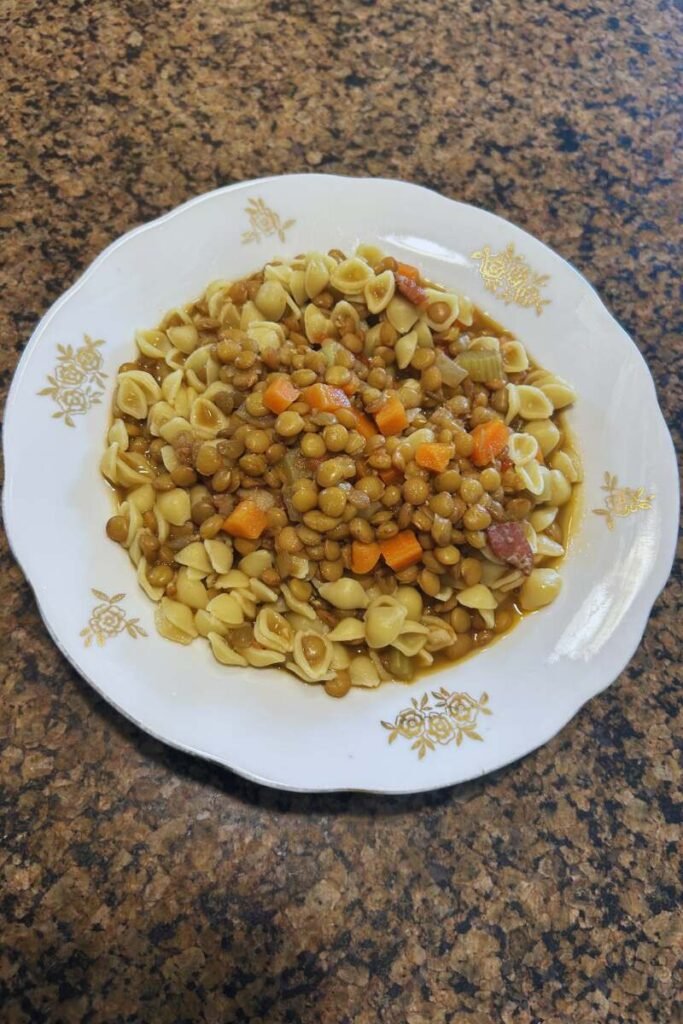
This Italian Lentil and Pasta Soup is a rustic comfort dish that combines earthy lentils with tender baby shell pasta in a hearty, flavorful broth enriched by bacon, aromatic vegetables, and tomatoes. The preparation represents cucina povera (peasant cooking) at its finest: humble ingredients transformed through patient technique into something deeply satisfying and nourishing.
Unlike soups where components cook separately, this one-pot method builds layers of flavor by cooking the lentils and pasta together, allowing the pasta to absorb the lentils’ earthy richness while releasing starch that creates a naturally creamy, cohesive consistency.
The result is a warming, substantial dish that straddles the line between soup and stew, perfect for cold weather and embodying the Italian philosophy that the finest meals often emerge from the simplest ingredients.
Understanding Pasta e Lenticchie Tradition
Pasta e lenticchie appears throughout Italian regions, particularly in central and southern Italy, with each area claiming its own variation. The dish reflects the resourcefulness of Italian home cooking, where dried lentils (a pantry staple) combine with small pasta shapes to create filling, economical meals.
Lentils have been cultivated in Italy for centuries, particularly valued for their quick cooking time compared to other legumes (they require no soaking) and their high protein and fiber content.
The technique of cooking pasta directly in the lentil broth rather than separately is intentional and important. The pasta absorbs flavors while its released starch creates natural creaminess without dairy. This method appears throughout Italian cucina povera, where every component contributes to the whole and nothing goes to waste.
Ingredients
Ingredients for Italian Lentil and Pasta Soup
For the Base- 2 cups (approximately 400g) dried brown or green lentils, rinsed
- 2 medium celery stalks, finely chopped
- 2 medium carrots, peeled and finely chopped
- 1 medium onion, finely chopped
- 2 slices bacon or pancetta, cut into small pieces
- 125ml (½ cup) crushed tomatoes or tomato passata
- 1.5 to 2 liters water or vegetable/chicken broth
- 2 bay leaves
- Salt and freshly ground black pepper to taste
- 2 to 3 tablespoons extra virgin olive oil (for finishing)
- 400g baby shell pasta (conchigliette) or other small pasta shapes (ditalini, tubetti, or small elbows)
- Freshly grated Parmigiano-Reggiano cheese
- High-quality extra virgin olive oil for drizzling
- Fresh lemon juice (optional but recommended)
- Fresh parsley, chopped (optional)
Ingredient Selection and Quality
Lentil Selection
Brown or green lentils work best for this preparation, as they hold their shape during extended cooking. French green lentils (lentilles du Puy) maintain particularly good texture but cost more. Avoid red or yellow lentils, which break down completely and create mushy consistency unsuitable for this dish.
Sort through the dried lentils and remove any small stones or debris before rinsing thoroughly in cold water. Unlike beans, lentils require no soaking and cook relatively quickly, typically 25 to 40 minutes depending on age and variety.
Bacon or Pancetta
Italian pancetta (unsmoked Italian bacon) provides authentic flavor, though American bacon works well and adds pleasant smokiness. The rendered fat becomes the cooking medium for the vegetables, contributing richness and depth. For vegetarian versions, omit the bacon and use 3 to 4 tablespoons olive oil instead, perhaps adding a Parmesan rind to the simmering lentils for umami depth.
Aromatic Vegetables
The trio of celery, carrot, and onion (soffritto in Italian, mirepoix in French) forms the aromatic foundation of countless Italian preparations. Chop the vegetables finely and uniformly so they soften completely and integrate into the dish rather than remaining distinct chunks. The slow cooking of these vegetables develops sweetness and complexity essential to proper flavor development.
Pasta Shape Selection
Small pasta shapes work best, as they’re proportional to the lentils and easy to eat with a spoon. Traditional choices include:
- Conchigliette (baby shells)
- Ditalini (small tubes)
- Tubetti (tiny tubes)
- Small elbows
- Orzo (though technically not pasta but rice-shaped)
Avoid large pasta shapes, which overwhelm the lentils, and very delicate shapes like angel hair, which break apart during the cooking process.
Broth vs. Water
Water produces perfectly acceptable results, allowing the lentils and vegetables to contribute all the flavor. Broth (vegetable or chicken) creates richer, more complex results. Homemade broth offers superior quality to commercial varieties, though good-quality store-bought broth works well for convenience. According to the USDA Food Safety and Inspection Service, proper storage and reheating of bean and pasta soups ensures food safety.
Method
Build the Flavor Base
1. Render the bacon: Place a large, heavy-bottomed pot or Dutch oven over medium heat. Add the chopped bacon pieces and cook, stirring occasionally, for 4 to 6 minutes until the bacon releases its fat and begins to crisp slightly. The bacon doesn’t need to be completely crispy, but it should brown lightly and render sufficient fat to coat the pot bottom. This fat becomes the cooking medium for the vegetables and contributes rich, savory flavor to the entire dish.
2. Cook the soffritto: Add the finely chopped onion, celery, and carrots to the pot with the bacon and rendered fat. Reduce heat to medium-low and cook, stirring occasionally, for 8 to 10 minutes until the vegetables soften completely and begin to develop light golden color in spots. This patient cooking is essential. Rushing this step by using high heat produces vegetables that brown on the surface while remaining raw inside, creating harsh rather than sweet, mellow flavor.
The vegetables should become very soft and almost jammy in texture, releasing their moisture and natural sugars. Season with a pinch of salt during cooking to help draw out moisture and promote even softening. This foundational step creates most of the dish’s depth and complexity, so invest the full time required.
Add Base Ingredients and Simmer
1. Add tomatoes: Stir in the crushed tomatoes or passata and cook for 2 to 3 minutes, stirring frequently, until the tomatoes darken slightly and begin to stick to the pot bottom. This concentrates the tomato flavor and removes raw acidity.
2. Add lentils and liquid: Add the rinsed lentils to the pot, stirring to combine with the vegetables and tomatoes. Pour in enough water or broth to just cover the lentils, approximately 1.5 to 1.75 liters (6 to 7 cups). Add the 2 bay leaves. The liquid level should be approximately 2 to 3cm (1 inch) above the lentils; exact amount varies based on pot size and evaporation rate.
3. Bring to boil and reduce to simmer: Increase heat to high and bring the mixture to a boil. Once boiling, reduce heat to low to maintain a gentle simmer. The liquid should barely bubble, not boil vigorously. Partially cover the pot with a lid, leaving a gap for steam to escape.
4. Simmer the lentils: Cook for 30 to 40 minutes, stirring occasionally, until the lentils are tender but still hold their shape. The exact timing depends on the lentils’ age and variety; older lentils take longer. Taste a lentil to check doneness. It should be completely tender with no chalky, hard center, but not mushy or falling apart.
During simmering, check the liquid level occasionally. If the mixture seems dry or the lentils aren’t covered, add water or broth 125ml (½ cup) at a time. The consistency at this point should resemble thick soup, not stew. If it’s too thick, add liquid; if too thin, continue simmering uncovered to reduce.
Cook the Pasta in the Pot
1. Add the pasta: Once the lentils are tender, add the baby shell pasta directly to the pot. Stir well to distribute the pasta throughout the lentils. Add additional water or broth if needed, approximately 250 to 375ml (1 to 1½ cups), to ensure the pasta has enough liquid to cook properly. The mixture should be soupy at this point; the pasta will absorb considerable liquid and release starch as it cooks.
2. Cook until al dente: Increase heat slightly to bring the mixture back to a gentle boil. Cook, stirring frequently to prevent sticking, for the time indicated on the pasta package minus 1 to 2 minutes (typically 8 to 10 minutes total for small pasta shapes). Frequent stirring prevents the pasta from clumping together or sticking to the pot bottom.
The pasta is done when it’s al dente (tender but with slight resistance when bitten) and the consistency has thickened considerably from the pasta’s released starch. The final consistency should be thick and creamy but still soupy enough to eat with a spoon. If too thick, add a splash of hot water and stir; if too thin (unlikely), continue cooking uncovered for a few more minutes.
Finish and Serve
1. Remove bay leaves: Fish out and discard the bay leaves.
2. Season: Taste and adjust seasoning with salt and freshly ground black pepper. The dish should be well-seasoned but not overly salty. Remember that the Parmigiano added at serving contributes additional salt.
3. Add finishing touches: Turn off the heat. Stir in 2 to 3 tablespoons of high-quality extra virgin olive oil, which adds richness and fruity flavor. If desired, add a squeeze of fresh lemon juice (approximately 1 to 2 tablespoons), which brightens all the flavors and provides acidic balance to the earthy lentils.
4. Rest briefly: Let the dish rest for 5 minutes before serving. This allows the flavors to settle and the consistency to thicken slightly as the pasta continues absorbing liquid.
5. Serve: Ladle the pasta e lenticchie into bowls. Top each serving with a generous amount of freshly grated Parmigiano-Reggiano, a drizzle of your best extra virgin olive oil, and if desired, a sprinkle of chopped fresh parsley and an additional grind of black pepper.
Technical Notes on Success
Several factors determine whether this dish achieves proper texture and flavor:
Patient vegetable cooking is essential: The 8 to 10 minute soffritto development creates the flavor foundation. Rushing produces harsh, underdeveloped taste.
Proper lentil cooking: The lentils should be completely tender before adding pasta. Undercooked lentils remain hard and unpleasant even after the pasta cooks.
Stir frequently once pasta is added: Small pasta shapes can stick together or to the pot bottom. Regular stirring prevents this.
Adjust consistency throughout: The dish transforms from soup to thick stew as it cooks. Add liquid as needed to maintain proper consistency at each stage.
Finishing oil and lemon matter: These aren’t optional garnishes but essential components that brighten and complete the dish.
Serve immediately: The pasta continues absorbing liquid as it sits. The dish tastes best served shortly after finishing.
Serving Suggestions
This recipe serves 6 to 8 people as a main course, or more as a starter.
As a complete meal: Serve with crusty bread for soaking up the flavorful broth and a simple green salad.
Starter course: Serve smaller portions as a primi (first course) before a lighter second course of fish or vegetables.
Leftover strategy: The dish thickens considerably overnight as the pasta absorbs liquid. Thin with water or broth when reheating.
Wine pairings: Medium-bodied Italian reds like Chianti, Barbera, or Montepulciano d’Abruzzo complement the earthy lentils and bacon beautifully.
Variations and Adaptations
Vegetarian version: Omit bacon and cook vegetables in 3 to 4 tablespoons olive oil. Add a Parmesan rind to the simmering lentils for umami depth (remove before serving).
Spicy variation: Add red pepper flakes with the vegetables or finish with a drizzle of chili oil.
Herb additions: Stir in fresh rosemary or thyme with the bay leaves, or finish with chopped fresh parsley or basil.
Sausage version: Replace bacon with Italian sausage (removed from casings and crumbled) for heartier character.
Different vegetables: Add diced zucchini, spinach, or kale during the final minutes of cooking.
Richer version: Stir in a Parmesan rind during lentil simmering and/or finish with a pat of butter along with the olive oil.
Different pasta: Try any small shape, though shells are traditional and their shape captures the lentils beautifully.
Smoother consistency: For a creamier texture, partially purée the lentils with an immersion blender before adding pasta.
Storage and Reheating
Refrigeration: Cool completely and refrigerate in an airtight container for up to 4 days. The dish thickens considerably during storage.
Reheating: Reheat gently on the stovetop over medium-low heat, adding water or broth to thin to desired consistency. The pasta will have absorbed liquid and may need significant thinning. Stir frequently to prevent sticking.
Freezing: Freeze before adding pasta for best results, as pasta texture degrades when frozen and reheated. Cool completely, freeze in airtight containers for up to 3 months. Thaw, reheat, and add pasta during reheating. Alternatively, freeze with pasta for up to 2 months, accepting that texture won’t be quite as good.
Make-ahead strategy: Prepare through the lentil simmering step up to 2 days ahead. Refrigerate, then reheat, add pasta, and finish just before serving.
Cultural Context and Cucina Povera
This pasta e lenticchie exemplifies cucina povera, the Italian tradition of creating flavorful, satisfying meals from humble, inexpensive ingredients. Lentils, among the most affordable proteins, combined with pantry staples like pasta and aromatics, fed Italian families for generations. The dish demonstrates that poverty of ingredients doesn’t mean poverty of flavor when proper technique transforms simple components.
In Italian tradition, lentils also carry symbolic significance, particularly around New Year’s Eve when pasta e lenticchie or lenticchie e cotechino (lentils and sausage) appears on tables throughout Italy. The lentils, resembling small coins, symbolize prosperity and good fortune for the coming year.
This Italian lentil and pasta soup demonstrates how fundamental techniques and patient cooking elevate everyday ingredients into something special. The layers of flavor built through careful soffritto development, the natural creaminess created by cooking pasta in the lentil broth, and the bright finishing touches of olive oil and lemon create a dish that nourishes both body and spirit.
It’s food that connects those who prepare and consume it to generations of Italian cooks who understood that the finest meals often require the simplest ingredients executed with care and love.