
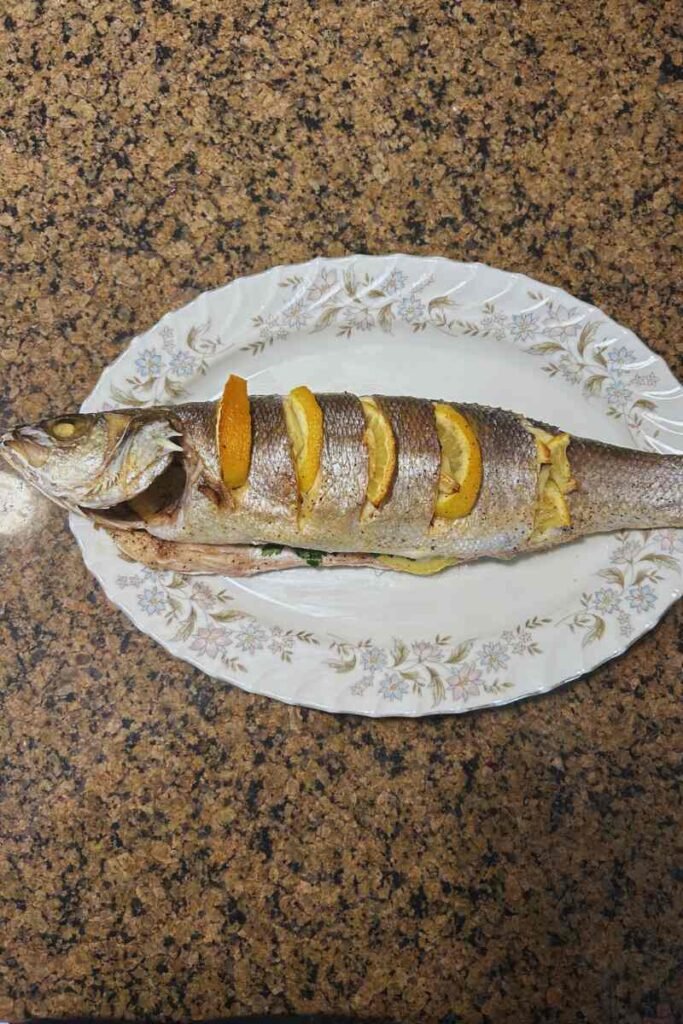
This Mediterranean preparation showcases whole sea bass at its finest: the fish roasted with aromatic lemon, garlic, and fresh parsley that infuse the delicate flesh with bright, herbaceous flavor. Cooking fish whole, rather than filleting it first, preserves maximum moisture and creates superior texture, as the skin and bones protect the meat from drying while imparting subtle flavor.
The scoring technique ensures even cooking and allows seasonings to penetrate deeply. Extra virgin olive oil bastes the fish during roasting, creating golden, slightly crispy skin while the interior remains moist and tender. The result is an impressive yet straightforward dish that honors Mediterranean coastal cooking traditions where simple preparations allow quality ingredients to shine.
Understanding Whole Fish Cookery
Cooking fish whole offers several advantages over fillets: the skin creates a protective barrier that seals in moisture; the bones contribute subtle flavor and gelatin that enriches the flesh; and the presentation creates drama at the table. Mediterranean cultures have prepared whole fish for millennia, recognizing that this method produces superior texture and flavor while minimizing waste.
Sea bass (branzino in Italian, loup de mer in French) ranks among the most prized fish for whole roasting due to its firm, white flesh, delicate flavor, and moderate fat content that prevents drying. The fish’s relatively simple bone structure also makes it easier to serve and eat compared to more complex species. Scoring the skin ensures even cooking by allowing heat to penetrate more deeply and quickly, preventing the common problem of overcooked exterior with undercooked interior near the bone.
Ingredients
Ingredients for Roasted Whole Sea Bass with Lemon and Herbs
- 3 whole sea bass (approximately 400 to 500g each), cleaned and scaled
- Large handful fresh flat-leaf parsley (approximately 30g or 1 cup loosely packed)
- 2 lemons, one sliced into rounds and cut in half, one cut into wedges for serving
- 3 to 4 garlic cloves, thinly sliced
- Salt to taste (approximately 1½ to 2 teaspoons total)
- Freshly ground black pepper to taste
- 4 to 6 tablespoons extra virgin olive oil
- Optional: fresh thyme or rosemary sprigs
Ingredient Selection and Quality
Sea Bass Selection and Preparation
Fresh, whole sea bass should have clear, bright eyes (not cloudy or sunken), bright red or pink gills (not brown or gray), shiny, intact scales, firm flesh that springs back when pressed, and a clean, oceanic smell (never fishy or ammonia-like). The fish should feel relatively stiff, not limp.
Size considerations: Individual fish weighing 400 to 500g (approximately 14 to 18 ounces) provide ideal single-portion servings. Larger fish (up to 1kg) can serve 2 to 3 people but require longer cooking times and more careful attention.
Cleaning and scaling: Most fishmongers will clean (gut) and scale the fish upon request, which is highly recommended unless you’re experienced with fish preparation. “Cleaned” means the internal organs have been removed through a slit in the belly. The fish should also be scaled (scales removed). If the fishmonger hasn’t removed the gills, you can do so by cutting them out with kitchen shears, though this is optional.
Rinse the cleaned fish thoroughly under cold water, inside and out, and pat completely dry with paper towels. Excess moisture creates steam rather than roasting and prevents proper browning.
According to the Seafood Nutrition Partnership, fish provides excellent lean protein and beneficial omega-3 fatty acids, making it both delicious and nutritious when properly prepared.
Alternative Fish Options
If sea bass is unavailable or prohibitively expensive, other whole fish that roast beautifully include:
- Branzino (Mediterranean sea bass, often farmed)
- Dorade (sea bream)
- Red snapper
- Black sea bass
- Striped bass
- Trout (rainbow or brown)
- Bronzini
Choose fish with firm, white flesh and mild flavor. Very oily fish like mackerel or sardines work but create different flavor profiles better suited to other preparations.
Herb and Aromatics
Parsley: Fresh flat-leaf (Italian) parsley is essential. Use a generous amount, as the herb’s fresh, slightly peppery character complements the delicate fish perfectly without overwhelming it. The parsley stuffed inside the cavity infuses the flesh from within while the parsley rubbed into the scores adds flavor to the exterior.
Garlic: Fresh garlic sliced thin distributes throughout the fish and mellows during roasting, becoming sweet and aromatic rather than harsh. Avoid pre-minced jarred garlic, which has inferior flavor.
Lemon: Fresh lemons provide both aromatic oils (from the peel) and bright acidity (from the juice). The sliced lemons inside the cavity perfume the fish from within. Choose thin-skinned lemons when possible, as thick-skinned varieties have less flesh.
Olive Oil Quality
Extra virgin olive oil serves multiple functions: it conducts heat, prevents sticking, bastes the fish during cooking, and contributes its own fruity, peppery flavor. Use good-quality extra virgin olive oil, though not necessarily your finest bottle, as high heat will mute delicate flavor nuances. Mediterranean olive oils (Greek, Italian, Spanish, or Turkish) provide appropriate character for this preparation.
Method
Prepare the Fish
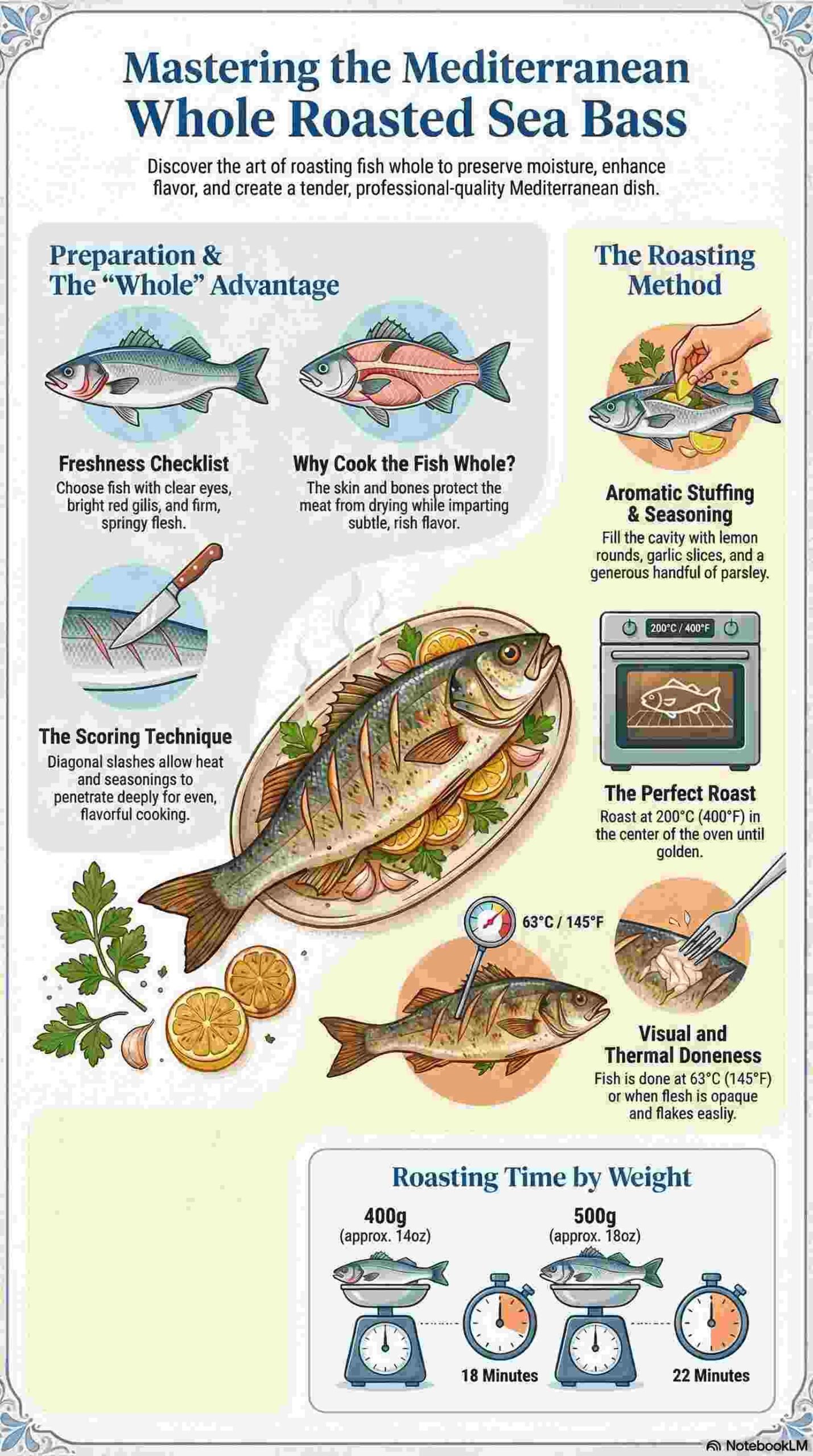
1. Preheat the oven: Set the oven to 200°C (400°F) and position a rack in the center. This moderate-high temperature cooks the fish through without excessive surface browning or drying.
2. Rinse and dry: Rinse the cleaned fish under cold running water, inside the cavity and outside, removing any remaining blood, scales, or debris. Pat completely dry inside and out with paper towels. Thorough drying is essential for proper browning and prevents steaming.
3. Score the fish: Using a very sharp knife, make 5 diagonal slashes on each side of each fish, cutting through the skin and into the flesh to a depth of approximately 5mm to 1cm (¼ to ⅜ inch). Space the cuts evenly from just behind the head to near the tail. The slashes should angle slightly from the top toward the belly.
Scoring serves multiple purposes: it allows heat to penetrate more quickly and evenly, preventing overcooked exterior with undercooked interior; it creates pockets for seasonings; and it helps the skin crisp by creating additional surface area. Make clean, decisive cuts rather than sawing, which tears the delicate flesh.
Season and Stuff
1. Season the fish: Season both the cavity and the exterior of each fish generously with salt and freshly ground black pepper. Use approximately ½ teaspoon salt per fish, distributed between interior and exterior. The seasoning should be noticeable but not excessive. Rub the salt and pepper into the flesh gently, including inside the scored slashes.
2. Prepare the stuffing: Roughly chop about two-thirds of the parsley. Keep the remaining one-third for rubbing into the exterior scores. Cut one lemon into rounds approximately 5mm (¼ inch) thick, then cut each round in half to create half-moon shapes.
3. Stuff the cavity: Open the belly cavity of each fish and stuff it with chopped parsley, lemon half-rounds (3 to 4 pieces per fish), and several slices of garlic. The cavity should be relatively full but not packed so tightly that it won’t close. The aromatics will perfume the fish from within as it cooks.
If desired, add a sprig or two of fresh thyme or rosemary to the cavity along with the parsley and lemon for additional aromatic complexity.
Season the Exterior and Prepare for Roasting
1. Place on baking tray: Arrange the stuffed fish on a large baking sheet or in a baking dish. If the fish are large or you’re cooking multiple fish, ensure they’re not touching or overlapping, which prevents even cooking. Line the tray with parchment paper or lightly oil it to prevent sticking.
2. Add aromatics to scores: Tuck small pieces of the remaining parsley and thin slices of garlic into the scored slashes on both sides of each fish. This distributes flavor throughout the flesh and creates attractive presentation.
3. Drizzle with olive oil: Drizzle extra virgin olive oil generously over each fish, using approximately 1½ to 2 tablespoons per fish. Use your hands or a brush to rub the oil all over the fish, ensuring complete coverage including the head and tail. The oil should coat the entire surface, which promotes browning and prevents sticking.
4. Final seasoning: Give the fish one last light sprinkle of salt and a few grinds of black pepper over the top.
Roast the Fish
1. Roast: Place the baking tray in the preheated oven and roast for 18 to 22 minutes, depending on the fish size. The timing varies based on several factors:
- 400g fish: approximately 18 minutes
- 500g fish: approximately 22 minutes
- Thicker, rounder fish: slightly longer
- Flatter fish: slightly shorter
2. Check for doneness: The fish is done when the flesh is opaque and flakes easily when tested with a fork at the thickest part near the backbone. The internal temperature should reach approximately 63°C (145°F) when measured with an instant-read thermometer inserted into the thickest part without touching bone.
Visual cues for doneness include:
- The skin appears golden and slightly crispy in spots
- The flesh at the thickest point (near the backbone) is opaque white rather than translucent
- The flesh flakes easily and separates from the bone when tested with a fork
- The eyes turn completely white (though this is less reliable)
Avoid overcooking, which makes fish dry and tough. When in doubt, err slightly on the side of underdone, as carryover cooking continues after removal from the oven.
3. Rest briefly: Remove the fish from the oven and let rest for 2 to 3 minutes. This allows the juices to redistribute and makes serving easier.
Serve
Transfer the whole roasted fish to a serving platter or individual plates. Garnish with fresh parsley sprigs and lemon wedges for squeezing over the top. The fish can be presented whole at the table for dramatic effect, then filleted and served to diners.
To serve whole fish: Using a fish spatula or fork and spoon, carefully remove the top fillet by running a knife or spatula along the backbone from head to tail, then gently lifting the fillet away from the bones. Remove and discard the backbone (it should lift away easily from the bottom fillet), then serve the bottom fillet. Alternatively, serve the fish whole and let diners help themselves, though this requires some skill navigating the bones.
Technical Notes on Success
Several factors determine whether whole roasted fish achieves proper texture and flavor:
Thorough drying is essential: Moisture on the surface prevents browning and creates steaming rather than roasting. Pat completely dry inside and out.
Proper scoring depth: Cuts should penetrate 5mm to 1cm deep, enough to allow heat penetration and seasoning without cutting so deeply you risk the flesh falling apart.
Don’t overcrowd the pan: Fish need space for air circulation. Overcrowding causes steaming rather than roasting.
Generous oil application: The oil is not optional; it conducts heat, prevents sticking, and creates appealing color and texture on the skin.
Correct oven temperature: The 200°C (400°F) temperature is ideal for fish of this size. Higher heat risks burning the exterior before the interior cooks; lower heat extends cooking time unnecessarily and can dry out the fish.
Accurate timing: Fish cooks quickly and the window between perfectly done and overcooked is narrow. Check early and often, especially the first time you prepare this dish.
Fresh, quality fish is paramount: No technique can rescue poor-quality fish. Start with the freshest fish available.
Serving Suggestions
This recipe serves 3 people with one whole fish per person, or can serve 4 to 6 if supplemented with substantial sides.
Traditional accompaniments: Roasted potatoes, steamed vegetables, simple green salad with lemon vinaigrette, or crusty bread.
Mediterranean sides: Roasted cherry tomatoes, sautéed spinach with garlic, white beans with olive oil, or grilled vegetables.
Grain options: Serve over or alongside rice pilaf, couscous, or farro for a more substantial meal.
Sauce options: While the fish is delicious with just lemon wedges, you can serve it with:
- Salsa verde (Italian green sauce with parsley, capers, anchovies, and olive oil)
- Lemon-butter sauce
- Aioli or garlicky mayonnaise
- Fresh tomato salsa
Wine pairings: Crisp white wines like Vermentino, Assyrtiko, Albariño, or Sauvignon Blanc complement the delicate fish and lemon beautifully.
Variations and Adaptations
Different herbs: Replace or supplement parsley with fresh fennel fronds, dill, cilantro, or basil for varied aromatic profiles.
Fennel addition: Stuff the cavity with thin fennel slices along with the lemon and herbs for subtle anise flavor.
Cherry tomatoes: Scatter cherry tomatoes around the fish on the baking tray; they’ll roast alongside and create a simple sauce.
Olives and capers: Add pitted olives and capers to the baking tray for Mediterranean character.
White wine addition: Pour approximately 125ml (½ cup) white wine around (not over) the fish before roasting. It creates moisture and adds flavor.
Spicy version: Add sliced fresh chili or red pepper flakes to the cavity or rub into the scores.
Asian-inspired: Stuff with ginger, scallions, and cilantro; drizzle with sesame oil and soy sauce instead of olive oil.
Grilled variation: This preparation works beautifully on the grill. Oil the grill grates well and grill over medium heat, turning once carefully, for approximately 8 to 10 minutes per side.
Storage and Reheating
Whole roasted fish is best consumed immediately but can be stored briefly:
Refrigeration: Cool completely, cover, and refrigerate for up to 2 days. The texture deteriorates somewhat during storage.
Serving cold: Leftover fish works well served cold or at room temperature with salad or as part of a buffet spread.
Reheating: Reheat gently in a 180°C (350°F) oven for 8 to 10 minutes until warmed through, though the fish won’t match the texture of freshly roasted.
Repurposing: Flake leftover fish and use in pasta, salads, fish cakes, or sandwiches.
Cultural Context and Mediterranean Tradition
Whole roasted or grilled fish appears throughout Mediterranean and coastal cuisines from Greece to Italy to Spain to Turkey and North Africa. The preparation reflects several cultural values: respect for the ingredient through minimal intervention, celebration of seasonality and local catch, and the social aspect of sharing a whole fish at the table.
In Mediterranean cultures, serving whole fish often signals special occasion or honored guests. The presentation creates a focal point for the meal, and the act of sharing the fish fosters connection and community. The technique also demonstrates culinary skill and confidence, as whole fish cookery requires more finesse than fillet preparation.
This whole roasted sea bass with lemon, garlic, and parsley exemplifies Mediterranean cooking philosophy: exceptional ingredients prepared simply to showcase their inherent qualities. The combination of aromatic herbs, bright lemon, and fruity olive oil enhances rather than masks the fish’s delicate flavor. It’s cooking that honors tradition while remaining accessible to home cooks willing to embrace whole fish preparation and master the straightforward techniques that produce impressive, delicious results.