
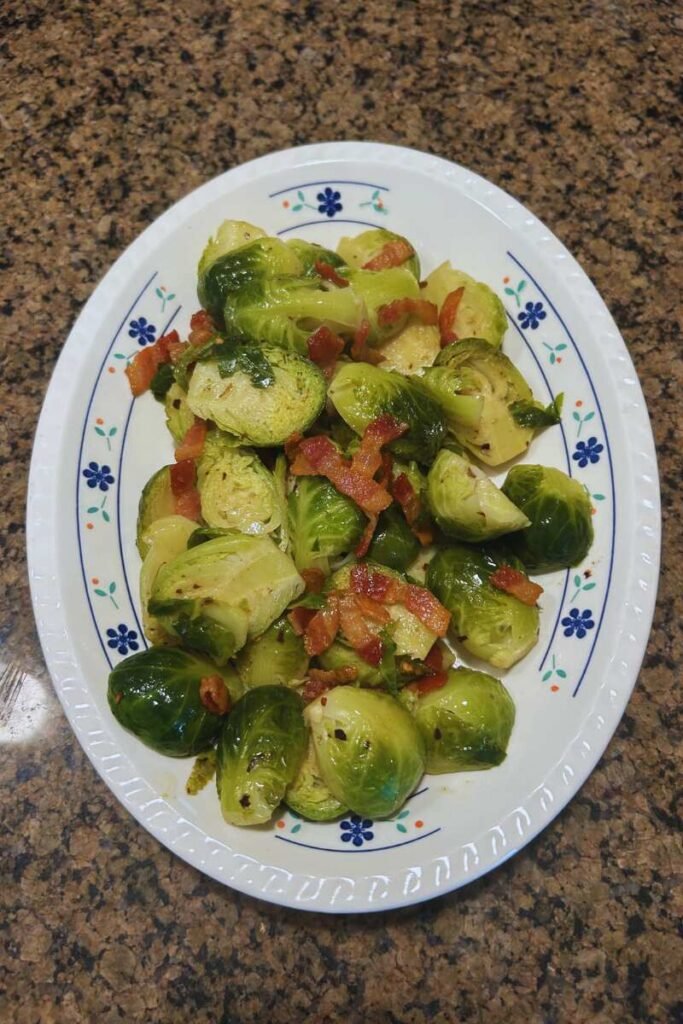
This Pan-Seared Brussels Sprouts with Bacon, Garlic & Chili recipe transforms bitter, often-maligned vegetables into irresistibly caramelized bites through proper technique. A brief boiling tenderizes the dense cores, while searing in bacon fat creates deeply browned, sweet exteriors. The rendered bacon provides smoky richness, garlic adds aromatic depth, and chili flakes contribute gentle heat that balances the sprouts’ natural slight bitterness.
This preparation exemplifies how fundamental cooking methods elevate humble ingredients into something crave-worthy. The combination of textures, crispy browned exteriors with tender interiors, and the interplay of savory bacon, pungent garlic, and sweet caramelized sprouts creates a side dish that converts even skeptical eaters.
Understanding Brussels Sprouts and Proper Cooking
Brussels sprouts, miniature cabbage-like vegetables belonging to the Brassica family, often suffer from poor cooking methods that emphasize their sulfurous compounds and create mushy texture. Proper preparation, whether roasting, sautéing, or the hybrid boil-then-sear method used here, develops natural sweetness through caramelization while maintaining appealing texture.
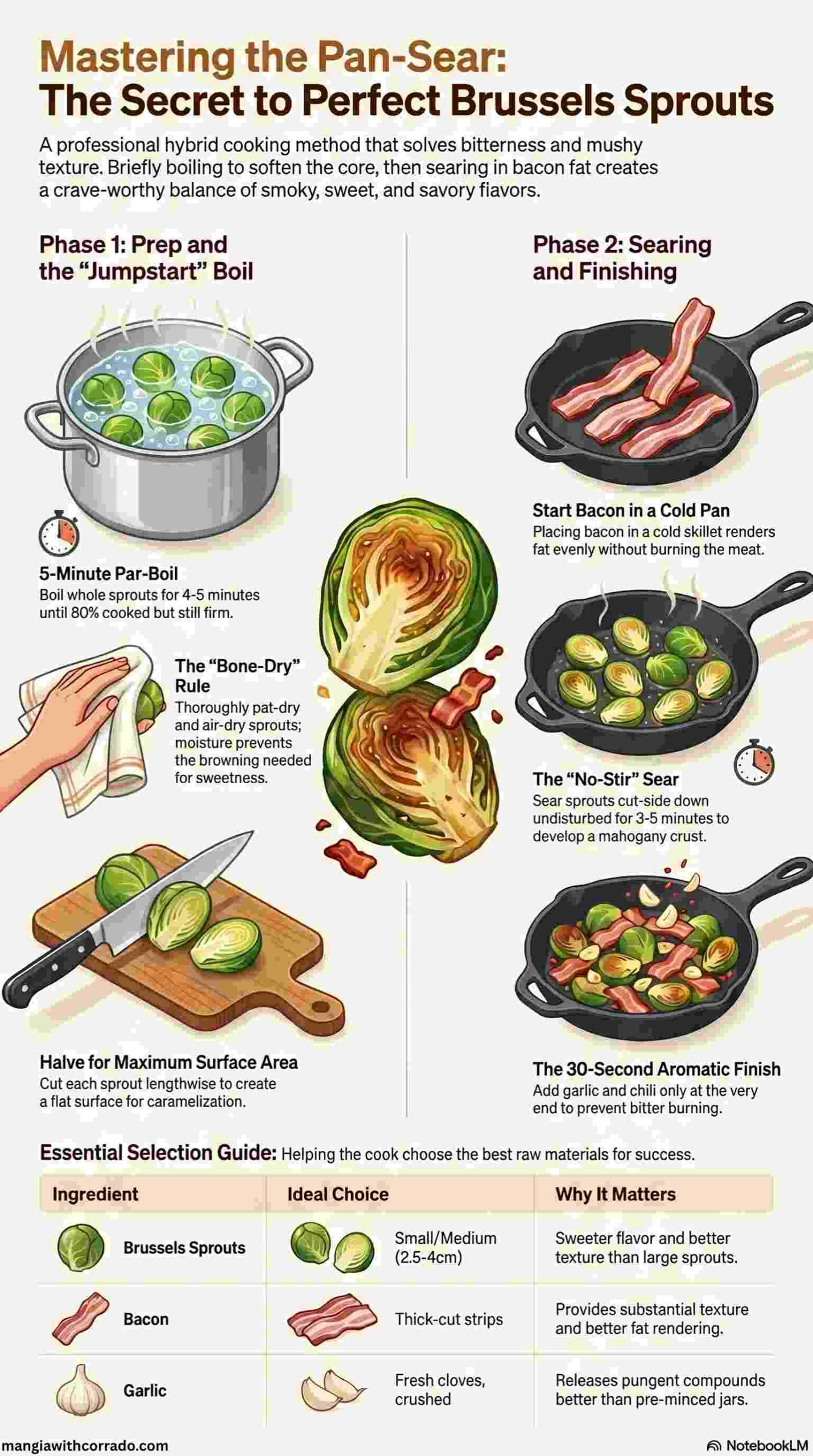
The two-step cooking technique serves specific purposes: boiling jumpstarts the cooking process, softening the dense cores that would otherwise remain hard while the exteriors burn. Thorough drying after boiling is essential; excess moisture prevents the Maillard reaction (browning) necessary for developing complex, sweet flavors. Searing the cut sides creates the golden-brown crust that makes Brussels sprouts truly delicious rather than merely acceptable.
Ingredients
Ingredients for Brussels Sprouts with Bacon, Garlic & Chili Flakes
- 450g Brussels sprouts (approximately 1 lb)
- 2 slices thick-cut bacon, cut into strips approximately 1cm wide
- 2 garlic cloves, crushed or finely minced
- ¼ to ½ teaspoon red chili flakes (adjust to taste preference)
- 1 to 2 tablespoons extra virgin olive oil (as needed)
- Salt to taste
- Freshly ground black pepper (optional)
Ingredient Selection and Quality
Brussels Sprouts Selection
Choose small to medium Brussels sprouts (approximately 2.5 to 4cm in diameter) for best flavor and texture. Very large sprouts tend toward stronger, more bitter flavor and require longer cooking. The sprouts should feel firm and dense with tightly closed leaves, bright green color (though some outer leaves may be yellowing, which is normal), and no soft spots or black discoloration.
Store Brussels sprouts loosely in a plastic bag in the refrigerator crisper for up to 1 week. According to the Harvard T.H. Chan School of Public Health, Brussels sprouts are rich in vitamin C, vitamin K, and fiber, and they contain plant compounds linked to potential health benefits.
Bacon Quality
Thick-cut bacon provides better texture and more substantial pieces than standard thin bacon, which can shrivel excessively and burn. Quality bacon from a butcher or specialty market offers superior flavor to mass-produced supermarket varieties. The bacon should contain visible lean meat interspersed with fat rather than being primarily fat with minimal meat.
Smoked bacon adds additional depth, though unsmoked bacon works well if you prefer milder flavor. For a lighter version, turkey bacon can substitute, though it won’t render as much flavorful fat.
Garlic and Chili
Fresh garlic cloves provide far superior flavor to pre-minced jarred garlic. Crushing releases more of the garlic’s pungent compounds than mincing, creating more assertive flavor. If you prefer milder garlic character, slice rather than crush.
Red chili flakes (also called crushed red pepper) contribute gentle, fruity heat. The amount is adjustable based on preference; start with less if uncertain about spice tolerance.
Method
Boil the Brussels Sprouts
1. Prepare the sprouts: Trim the stem ends of the Brussels sprouts, removing any discolored or wilted outer leaves. Don’t trim too much; just enough to remove the dried stem end. Rinse under cold water and drain.
2. Boil water: Fill a large pot with water and add approximately 1 tablespoon salt. Bring to a rolling boil over high heat.
3. Cook the sprouts: Add the whole Brussels sprouts to the boiling water. Cook for 4 to 5 minutes until just tender when pierced with a knife but still offering slight resistance. They should be approximately 80% cooked, as they’ll finish cooking during searing. Overcooking at this stage creates mushy texture.
4. Drain thoroughly: Drain the Brussels sprouts in a colander and shake well to remove excess water. Spread them on a clean kitchen towel or paper towels and pat dry. Let them air-dry for 2 to 3 minutes while you prepare the bacon. Thorough drying is crucial for achieving proper browning.
5. Cut in half: Once cool enough to handle, cut each Brussels sprout in half lengthwise from stem to top. The cut surface will be seared to create caramelized crust.
Cook the Bacon
1. Start with cold pan: Place the bacon strips in a cold large skillet (at least 25 to 30cm/10 to 12 inches in diameter). Starting with a cold pan allows the fat to render slowly and evenly rather than the bacon burning on the exterior while remaining raw inside.
2. Render slowly: Turn the heat to medium (not high) and cook, stirring occasionally, for 5 to 8 minutes until the bacon is crispy and has released most of its fat. The bacon should be well-browned and crispy but not burnt.
3. Remove bacon: Using a slotted spoon, transfer the cooked bacon to a paper towel-lined plate, leaving all the rendered fat in the pan. Don’t wipe out the pan; this flavorful fat is your cooking medium for the Brussels sprouts.
Sear the Brussels Sprouts
1. Heat the bacon fat: Leave the pan with the bacon fat over medium to medium-high heat. If you have less than approximately 2 tablespoons of bacon fat, add enough olive oil to reach that amount.
2. Arrange sprouts cut-side down: Carefully place the Brussels sprout halves in the pan cut-side down in a single layer. Work in batches if necessary to avoid overcrowding; the sprouts should not touch or overlap, as this causes steaming rather than searing.
3. Resist moving them: Let the sprouts sear undisturbed for 3 to 5 minutes until the cut surfaces develop deep golden-brown color. Resist the temptation to stir or flip them prematurely; proper caramelization requires sustained contact with the hot pan.
4. Check for browning: Lift one sprout with a spatula to check the color. The cut surface should be deeply golden brown, almost mahogany. If pale, continue cooking for another 1 to 2 minutes.
5. Stir and continue cooking: Once nicely browned on the cut side, stir the sprouts and continue cooking for another 3 to 5 minutes, stirring occasionally, until they’re browned in spots on multiple sides and most of the moisture has evaporated. The sprouts should feel dry in the pan rather than sitting in liquid or fat. If the pan seems excessively dry and the sprouts are sticking badly, add 1 tablespoon olive oil.
Season lightly with salt during this stage. Don’t oversalt, as the bacon contributes significant saltiness.
Add Aromatics and Finish
1. Reduce heat slightly: Lower the heat to medium or medium-low to prevent the garlic from burning.
2. Add garlic and chili: Push the Brussels sprouts to the sides of the pan, creating a space in the center. Add the crushed garlic and chili flakes to this cleared space. Cook for approximately 30 seconds, stirring the garlic constantly, until it becomes fragrant but doesn’t brown or burn. Burnt garlic tastes bitter and acrid.
3. Combine everything: Stir the garlic and chili throughout the Brussels sprouts, distributing evenly. Add the reserved crispy bacon back to the pan and toss everything together. Cook for another 30 seconds to 1 minute, stirring, to heat the bacon through and allow flavors to meld.
4. Final seasoning: Taste a Brussels sprout and adjust salt if needed. Add freshly ground black pepper if desired.
5. Serve immediately: Transfer to a serving dish or serve directly from the pan while hot. Brussels sprouts taste best served immediately while the exteriors maintain maximum crispness.
Technical Notes on Success
Several factors determine whether Brussels sprouts achieve proper texture and flavor:
Don’t overcook during boiling: The sprouts should be just tender, not soft. They’ll finish cooking during searing, and overcooked sprouts become mushy.
Thorough drying is essential: Moisture on the surface prevents browning and creates steaming rather than searing. Pat completely dry and let air-dry briefly.
Don’t overcrowd the pan: Overcrowded sprouts steam rather than sear. Cook in batches if necessary to maintain a single layer with space between sprouts.
Let them sit undisturbed initially: Constant stirring prevents the deep browning that develops flavor. Let them sear for several minutes before the first stir.
Watch the garlic carefully: Garlic burns easily and becomes bitter. Add it at the end and cook only until fragrant.
Proper pan size matters: Use a large pan (at least 25 to 30cm) so the sprouts have room to brown rather than steam.
Serving Suggestions
This recipe serves 4 people as a side dish.
Pairing with main courses: These Brussels sprouts complement roasted meats (chicken, pork, beef), grilled steaks, baked salmon, or serve as part of a vegetable-focused meal.
Holiday tables: Excellent for Thanksgiving, Christmas, or any celebration where you want an elevated vegetable side.
Meal prep: The sprouts can be boiled and halved up to 1 day ahead. Store refrigerated and bring to room temperature before searing.
Wine pairings: The bacon and caramelization make these Brussels sprouts substantial enough to pair with medium-bodied reds like Pinot Noir or lighter whites like Chardonnay.
Variations and Adaptations
Vegetarian version: Omit bacon and use 2 to 3 tablespoons olive oil or butter for searing. Add a vegetarian umami element like soy sauce, nutritional yeast, or a Parmesan rind cooked with the sprouts.
Balsamic addition: Drizzle with aged balsamic vinegar just before serving for sweet-tart complexity.
Nut additions: Toss with toasted pine nuts, sliced almonds, or chopped walnuts for textural contrast.
Cheese finish: Finish with grated Parmesan, Pecorino Romano, or crumbled blue cheese.
Maple-bacon version: Drizzle with a small amount of maple syrup along with the bacon for sweet-savory character.
Lemon brightness: Add lemon zest and a squeeze of lemon juice at the end for acidic brightness.
Different aromatics: Replace or supplement garlic with shallots, or add fresh thyme or rosemary with the garlic.
Pomegranate version: Toss with pomegranate arils before serving for bursts of sweet-tart flavor and beautiful color.
Asian-inspired: Replace bacon with diced pancetta or omit, and finish with soy sauce, sesame oil, and sesame seeds.
Storage and Reheating
Brussels sprouts are best served immediately but can be stored briefly:
Room temperature: Cooked Brussels sprouts keep at room temperature for up to 2 hours.
Refrigeration: Cool completely and refrigerate in an airtight container for up to 3 days. The texture softens during storage and won’t match freshly cooked sprouts.
Reheating: Reheat in a hot skillet over medium-high heat for 3 to 5 minutes, stirring occasionally, until heated through and slightly re-crisped. Oven reheating at 200°C (400°F) for 8 to 10 minutes also works. Avoid microwave reheating, which makes them soggy.
Nutritional Context and Brussels Sprouts Benefits
Brussels sprouts provide impressive nutritional value: high in fiber, vitamins C and K, folate, and antioxidants. They contain glucosinolates, sulfur-containing compounds that give them characteristic flavor and may have health benefits. The cruciferous vegetables’ strong flavors come from these compounds, which cooking methods like roasting and caramelizing can mellow while developing sweeter, more complex flavors.
The addition of bacon increases fat and sodium content significantly, though the small amount per serving (half a slice per person) remains reasonable. For lower-fat versions, use less bacon or the vegetarian adaptation.
Cultural Context and Brussels Sprouts Evolution
Brussels sprouts have undergone a cultural renaissance in recent decades, transforming from universally maligned cafeteria vegetables to trendy restaurant offerings. This shift reflects both improved cooking techniques (roasting and caramelizing rather than boiling into gray mush) and actual agricultural improvements, as newer Brussels sprout varieties have been bred to contain lower levels of bitter compounds.
The pairing with bacon represents modern American cooking’s embrace of fat as a flavor component and the understanding that Brussels sprouts’ slight bitterness pairs beautifully with rich, savory elements. This preparation style appears in restaurants from casual bistros to upscale establishments, demonstrating how proper technique elevates ingredients that were once dismissed.
These pan-seared Brussels sprouts with crispy bacon, garlic, and chili demonstrate how proper cooking methods transform vegetables from obligatory side dishes into crave-worthy components. The combination of tender-crisp texture, sweet caramelized flavor, smoky bacon, pungent garlic, and gentle heat creates complexity that belies the straightforward preparation.
It’s cooking that respects the ingredient while understanding that Brussels sprouts, like many vegetables, achieve their full potential through techniques that develop rather than merely preserve their inherent qualities.