
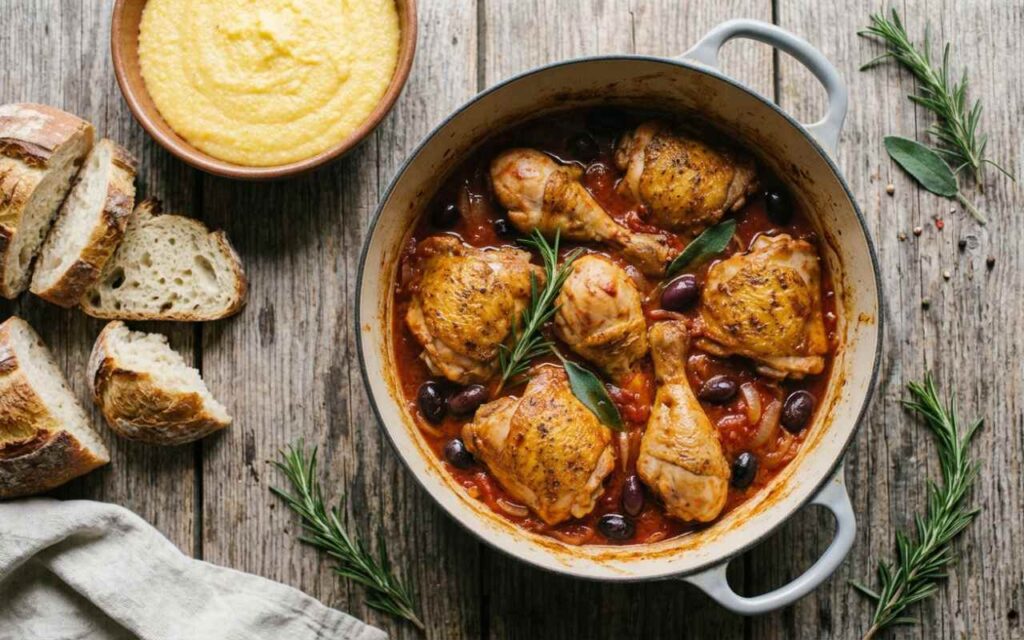
Cacciatore style cooking (alla cacciatora, meaning “hunter-style” in Italian) is a rustic braising method in which bone-in poultry, rabbit, or game is seared until golden and simmered slowly with aromatics, woody herbs, wine, and often tomatoes, olives, or mushrooms. Rather than a single rigid recipe, alla cacciatora describes a bold, savory-acidic flavor profile built from humble pantry and foraged ingredients.
While most North American menus feature pollo alla cacciatora as chicken simmered in a rich tomato-and-bell-pepper sauce, traditional Italian versions vary dramatically from region to region. In Tuscany, cacciatore leans deeply on sweet soffritto and Sangiovese or white wine; in Rome and Umbria, cooks often skip tomatoes altogether in favor of sharp white wine vinegar, rosemary, garlic, and briny anchovies.
Understanding how alla cacciatora balances caramelized meat juices, resinous herbs, and bright acidity lets you master this versatile technique with chicken, rabbit, pork, or even potatoes.
Quick-Glance Summary: Cacciatore Style Cooking
- Literal Translation: Alla cacciatora means “in the style of the hunter” (from cacciatore, hunter).
- Core Flavor Profile: Deeply savory, rustic, herbal, and bright, balancing browned meat fond, woody herbs (rosemary and sage), wine acidity, and sweet aromatics.
- Traditional Proteins: Bone-in, skin-on chicken (pollo), wild or farmed rabbit (coniglio), young lamb (abbacchio), pheasant, or quail.
- White (Bianca) vs. Red (Rossa): Pre-Columbian and Roman/Umbrian versions are cooked in bianco (white) with wine, vinegar, garlic, and herbs, whereas Tuscan and Italian-American versions are cooked in rosso (red) with crushed tomatoes and peppers.
- Classic Accompaniments: Creamy polenta, crusty country bread (pane sciocco), roasted potatoes, or thick tubular pasta like rigatoni.
Origins: How Hunters Cooked on the Trail and at Home
Alla cacciatora originated in central Italy (particularly Tuscany, Umbria, and Lazio) during the Renaissance as a practical way for hunters to cook wild game such as rabbit, hare, pheasant, or woodcock using provisions carried in a saddlebag or gathered along the trail.
Because hunters relied on shelf-stable items and wild herbs growing in the woods, the foundational pantry of cacciatore cooking consisted of olive oil, garlic or onion, wild rosemary, sage, bay leaves, wine, and vinegar.
Tomatoes did not enter Italian cacciatore recipes until well after New World crops became established in European kitchens during the late 17th and 18th centuries, which explains why tomato-free cacciatora bianca remains deeply rooted across central Italy today.
Anatomy of the Cacciatore Flavor Profile
Authentic cacciatore sauce achieves its signature depth by layering four distinct flavor pillars in a single heavy pot:
- Maillard Browning & Collagen Richness: Using bone-in, skin-on cuts (such as chicken thighs and drumsticks) rather than boneless breasts is essential. Searing the skin renders flavorful fat and builds a dark caramelized fond on the pan bottom, while simmering the bones releases natural gelatin that gives the sauce a silky body.
- Aromatic Base (Soffritto vs. Garlic): Northern and Tuscan versions start with finely diced onion, carrot, and celery softened slowly in olive oil, whereas Roman and southern versions rely on smashed whole garlic cloves and sweet onions.
- Resinous Woody Herbs: Unlike delicate basil dishes, cacciatore relies on sturdy herbs that withstand 40 to 60 minutes of simmering, specifically fresh rosemary, sage, and bay leaves.
- Bright Acidic Lift: Wine (dry white or medium-bodied red) and often a splash of red or white wine vinegar cut through the richness of braised meat and olive oil, giving the stew its lively finish.
Regional Cacciatore Styles Compared: Red vs. White vs. Italian-American
Comparing how different regions build alla cacciatora shows why two authentic Italian recipes can look completely different on the plate:
| Regional Style | Sauce Base | Signature Aromatics & Add-Ins | Flavor Character |
|---|---|---|---|
| Tuscan Pollo alla Cacciatora (Red) | Peeled plum tomatoes & dry red (Sangiovese) or white wine | Onion, carrot, celery soffritto, rosemary, sage, black olives | Balanced sweet-savory tomato sauce with herbal depth |
| Roman & Umbrian Cacciatora Bianca (White) | Dry white wine, white wine vinegar & stock (zero tomato) | Whole garlic cloves, fresh rosemary, salted anchovy fillets, capers | Tangy, briny, aromatic pan jus with crisp herbal notes |
| Italian-American Chicken Cacciatore | Crushed tomatoes, tomato paste & red or white wine | Sliced sweet bell peppers, cremini mushrooms, onions, oregano | Hearty, vegetable-packed red stew ideal over pasta |
The 1-Pound Cacciatore Ratio Blueprint
Because alla cacciatora is a flexible cooking method rather than a rigid formula, use these baseline ratios per 1 pound (450 g) of bone-in chicken or rabbit to build either style without a recipe:
- For Roman Cacciatora Bianca (White): 1 lb bone-in chicken thighs + 1 tbsp extra-virgin olive oil + 3 smashed garlic cloves + 1 sprig fresh rosemary + 1/2 cup dry white wine + 1 tbsp white wine vinegar + 1/4 cup chicken stock + 1 minced anchovy fillet (optional).
- For Tuscan Cacciatora Rossa (Red): 1 lb bone-in chicken thighs + 1 tbsp extra-virgin olive oil + 1/2 cup diced onion, carrot, and celery (soffritto) + 1 sprig rosemary and 3 sage leaves + 1/2 cup dry red (Sangiovese) or white wine + 1 cup crushed San Marzano or plum tomatoes + 1/4 cup pitted black olives.
Four Golden Rules for Cooking Authentic Cacciatore at Home
As highlighted in Giulia Scarpaleggia’s Tuscan Chicken Cacciatore guide, restraint and gentle heat control separate authentic alla cacciatora from heavy, over-spiced stews:
- Dry and Brown the Meat Thoroughly: Pat bone-in chicken thighs or drumsticks completely dry with paper towels, season with salt, and sear skin-side down in olive oil over medium-high heat for 6 to 8 minutes until deeply golden before removing them from the pan.
- Deglaze Before Adding Tomatoes: Pour in dry wine (and white wine vinegar if making Roman style) right after softening your aromatics, scraping every browned bit off the bottom of the Dutch oven with a wooden spoon until the liquid reduces by half.
- Simmer Gently to 175°F–185°F: Once the meat returns to the pot, maintain a lazy, gentle bubble (185°F to 195°F / 85°C to 90°C). While the USDA Safe Minimum Internal Temperature Chart sets 165°F (74°C) as the food-safety floor for poultry, dark-meat chicken thighs and drumsticks become tender and silky when braised to 175°F to 185°F (79°C to 85°C) so dense connective tissue melts completely into gelatin.
- Rest for 10 Minutes Before Serving: Letting the finished braise rest off-heat for 10 minutes allows meat fibers to reabsorb cooking juices and lets the olive oil and natural gelatin settle into a cohesive gloss.
What to Serve with Cacciatore
- Creamy Polenta: Soft yellow cornmeal polenta cooked with water, salt, and a touch of butter or olive oil is the classic northern and central Italian bed for soaking up cacciatore sauce.
- Crusty Country Bread: Thick slices of toasted sourdough or unsalted Tuscan bread (pane sciocco) let you perform la scarpetta (mopping up every drop of sauce from the bowl).
- Short Ridged Pasta: If serving pasta alongside Italian-American style cacciatore, choose sturdy shapes like rigatoni, penne rigate, or pappardelle that hold onto chunks of tomato, mushroom, and braised meat.
Frequently Asked Questions
Does authentic Italian cacciatore always have bell peppers and mushrooms?
No. While sliced bell peppers and button or cremini mushrooms are signature staples in Italian-American chicken cacciatore, classic Roman and purist Tuscan versions traditionally omit bell peppers (though regional Tuscan trattoria variations with sweet peppers and olives exist), relying primarily on aromatics, herbs, wine, olives, and either tomatoes or vinegar.
Should you use red wine or white wine for cacciatore?
Both are traditional depending on the region and sauce base. In Tuscany, cooks frequently use dry red wine (such as Chianti or Sangiovese) as well as dry white wine (Trebbiano or Vernaccia) in tomato-based cacciatora rossa, whereas Rome and Umbria favor crisp dry white wine paired with white wine vinegar for cacciatora bianca.
What is the best cut of chicken for chicken cacciatore?
Bone-in, skin-on chicken thighs and drumsticks are far better than boneless, skinless chicken breasts. Dark meat stays juicy through a 40- to 50-minute braise to 175°F–185°F, while the bones and skin enrich the sauce with natural collagen.