
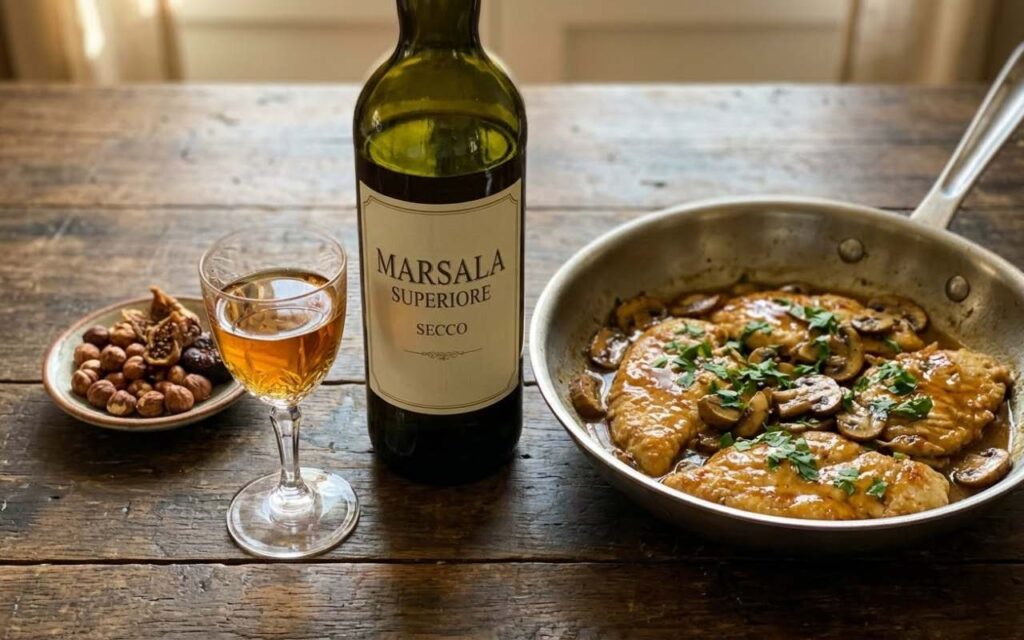
Marsala wine is a fortified Sicilian wine produced exclusively around the coastal port city of Marsala in western Sicily.
First popularized for export in 1773 by English merchant John Woodhouse and awarded official Denominazione di Origine Controllata (DOC) status in 1969, it is crafted primarily from native white grapes like Grillo, Catarratto, Inzolia, and Damaschino and fortified with grape brandy to bring a signature caramelized, nutty depth to Italian classics like Chicken Marsala, Veal Marsala, and zabaglione.
Choosing the right bottle for your kitchen requires reading two separate clues on the Italian DOC label: sweetness level (Secco vs. Dolce) and aging tier (Fine vs. Superiore). While aged Superiore bottles offer rich, velvety complexity for pan sauces, skipping heavily salted supermarket “Marsala cooking wine” in favor of authentic Sicilian producers like Florio or Pellegrino makes the single biggest difference in your final dish.
Quick-Glance Kitchen Summary
Marsala is classified under Sicily’s DOC rules by color (Oro gold, Ambra amber, or Rubino ruby), residual sugar, and minimum barrel aging. Knowing which combination belongs in savory pan sauces versus pastry creams prevents overly salty or cloyingly sweet results.
- Origin & Grapes: Fortified DOC wine from Marsala, Sicily, crafted from white Grillo, Catarratto, Inzolia, and Damaschino grapes (or red Perricone, Nero d’Avola, and Nerello Mascalese for Rubino).
- Legal Alcohol Minimums: 17.5% ABV minimum for Fine, and 18% ABV minimum for Superiore, Superiore Riserva, Vergine, and Stravecchio.
- Best for Savory Cooking: Dry (Secco) Marsala in either the Fine (1+ year aged) or Superiore (2+ years aged) tier.
- Best for Desserts: Sweet (Dolce) Marsala for tiramisu, Sicilian cannoli cream, and whipped zabaglione custard.
- Trusted Store Bottles: Look for Pellegrino Marsala Fine Dry (or Secco), Cantine Martinez Fine Secco, or Florio Vecchioflorio Marsala Superiore Secco.
Fine vs. Superiore Marsala: What the Aging Labels Mean
Under Sicilian DOC regulations detailed by Italian Wine Central, Fine and Superiore refer strictly to how long the wine ages in oak or cherry wood casks before bottling—not whether the wine tastes dry or sweet. Longer barrel aging concentrates the wine’s natural toasted almond, dried fig, and vanilla notes.
- Marsala Fine (Aged at least 1 year): The entry-level DOC tier, bottled at a minimum of 17.5% ABV and aged at least 12 months in wood (including a minimum of 8 months in oak or cherry casks). It delivers bright, straightforward dried-fruit and caramel notes, making it a reliable, budget-friendly workhorse for everyday pan sauces.
- Marsala Superiore (Aged at least 2 years): Bottled at a minimum of 18% ABV and aged at least 24 months in wood casks, producing a deeper amber hue, velvety body, and layered aromas of roasted hazelnut, honey, and warm spice. As noted in Wine Folly’s Marsala wine guide, stepping up to a dry Superiore bottle adds richer caramelized complexity to savory reductions without needing extra thickening agents.
- Collector & Sipping Tiers (Superiore Riserva, Vergine, and Stravecchio): All bottled at a minimum of 18% ABV, Superiore Riserva ages at least 4 years, Vergine (always dry, fortified only with grape spirit, and free of cooked must [mosto cotto] or sweeteners) ages at least 5 years in wood, and Stravecchio ages at least 10 years. Reserve these complex, expensive bottles for sipping after dinner alongside aged pecorino or dark chocolate rather than boiling them down in a skillet.
Dry (Secco) vs. Sweet (Dolce) Marsala: Which Bottle to Buy
Every aging tier of Marsala is further divided by residual sugar content, so always check the sweetness word printed near the bottom of the label before buying. Mixing up dry and sweet bottles is the most common mistake home cooks make when preparing Italian classics.
- Secco (Dry): Contains less than 40 grams of residual sugar per liter, tasting crisp, nutty, and savory-sweet—this is the essential bottle for Chicken Marsala, Veal Marsala, pork tenderloin, and sautéed cremini mushrooms.
- Semisecco (Semi-Dry): Contains between 40 and 100 grams of sugar per liter, offering a balanced off-dry profile that bridges savory glazes and fruit-based reductions.
- Dolce (Sweet): Contains more than 100 grams of residual sugar per liter, delivering rich toffee and raisin sweetness ideal for tiramisu, poached pears, Sicilian cannoli cream, and traditional zabaglione.
Marsala Wine Styles & Kitchen Uses Compared
| Marsala Label Term | Category & DOC Specs | Flavor & Aging Profile | Best Italian Recipe Use |
|---|---|---|---|
| Fine | Aging Tier (1+ yr, 17.5% ABV min) | Lighter caramel, bright dried fruit | Everyday pan sauces & deglazing |
| Superiore | Aging Tier (2+ yrs, 18% ABV min) | Deep amber, roasted nuts, rich body | Restaurant-style Chicken & Veal Marsala |
| Secco | Dry (<40g/L residual sugar) | Crisp, nutty, savory-sweet finish | All savory meats, mushrooms & reductions |
| Dolce | Sweet (>100g/L residual sugar) | Rich toffee, raisin, honeyed sweetness | Tiramisu, zabaglione & cannoli cream |
| Cooking Wine | Non-DOC Denatured Grocery Product | Heavily salted with added caramel color | Avoid (makes reduced sauces overly salty) |
Skillet Reduction Test: Cooking Wine vs. Fine vs. Superiore
Reducing three different bottles side by side in a stainless-steel skillet with sautéed cremini mushrooms and chicken stock shows exactly why label choice matters in the kitchen:
- Supermarket “Marsala Cooking Wine”: Sold in the vinegar aisle rather than the wine shop, denatured cooking wine is heavily salted so it can be sold without a liquor license, and often contains added caramel coloring and artificial flavors. When reduced by half in a pan sauce, that added sodium concentrates rapidly, leaving behind a harsh, overly salty brine that masks fresh herbs and mushrooms.
- DOC Marsala Fine Secco (e.g., Pellegrino Marsala Fine Dry or Martinez Fine Secco): Reduces cleanly within 4 to 5 minutes into a bright, golden-amber glaze with clean acidity and light dried-apricot notes. It requires a small pat of cold butter or a light flour dredge on the cutlets to give the finished sauce silky restaurant body.
- DOC Marsala Superiore Secco (e.g., Florio Vecchioflorio Marsala Superiore Secco): Because two full years in oak casks concentrate its natural glycerol and toasted nut compounds, Superiore Secco reduces into a glossy, mahogany-colored emulsion with noticeably deeper roasted-hazelnut richness and natural viscosity right in the pan.
How to Store Marsala Wine After Opening
Unlike standard red or white table wines that oxidize and turn to vinegar within three to five days, fortified Marsala wine keeps its flavor for 3 to 4 months after opening. Because the added grape brandy raises the alcohol level to 17.5%–18% ABV, it resists spoilage even at room temperature.
- Before Opening: Store upright in a cool, dark pantry away from direct stove heat.
- After Opening: Re-cork tightly and keep it in a cool dark cupboard—or place it in the refrigerator to preserve peak nutty aromatics for up to 4 to 6 months.
Frequently Asked Questions About Cooking with Marsala Wine
What is the best substitute for Marsala wine in cooking?
If you run out of dry Marsala (Secco), dry Madeira or dry Amontillado sherry makes the closest 1:1 substitute because both are fortified wines with similar nutty, caramelized depth. For a non-alcoholic swap, combine 1/2 cup white grape juice or apple cider with 1 tablespoon brandy extract (or vanilla extract) and 1 teaspoon sherry vinegar to mimic the acidity and richness.
Can I use sweet Marsala for Chicken Marsala?
You can use sweet (Dolce) Marsala in a pinch, though it will make your pan sauce noticeably sweeter than traditional restaurant versions. To balance the extra sugar, add an extra splash of low-sodium chicken broth and a squeeze of fresh lemon juice at the end of simmering to brighten the sauce.
Is Marsala wine red or white?
Most cooking Marsala is made from white Sicilian grape varieties (Grillo, Catarratto, Inzolia, and Damaschino) that turn golden (Oro) or deep amber (Ambra) during barrel aging and cooked-must (mosto cotto) additions. A rarer ruby-colored style called Marsala Rubino is crafted from red Perricone, Nero d’Avola, and Nerello Mascalese grapes, though amber and gold bottles remain the standard for classic Italian recipes.