
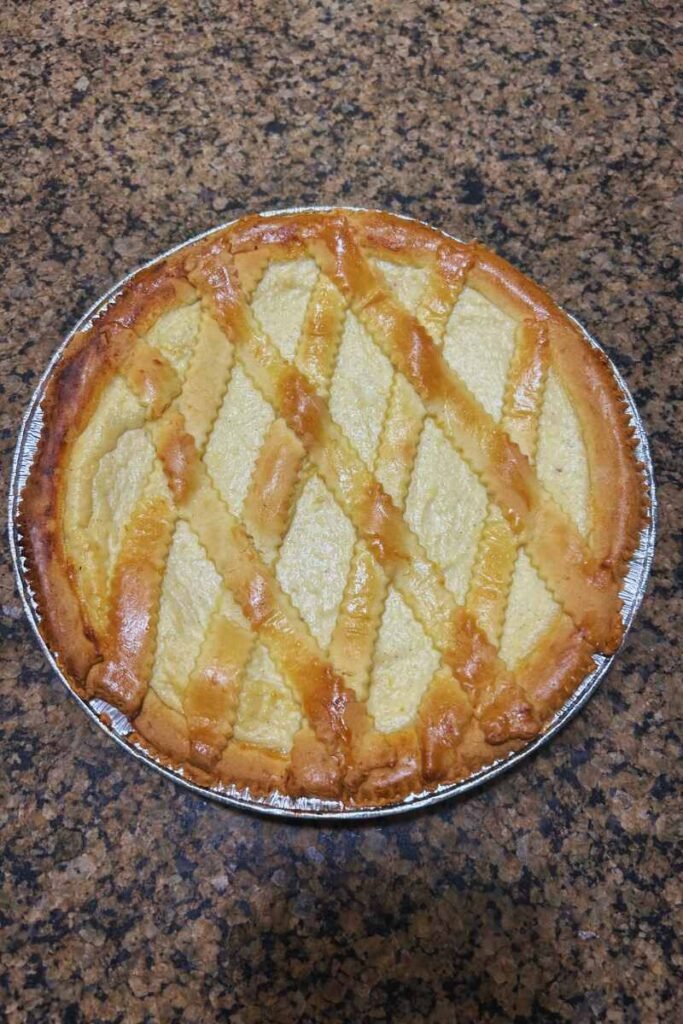
This Sicilian ricotta pie, distinct from the more elaborate cassata cake, showcases creamy ricotta filling infused with warm spices, citrus, and a hint of Kahlúa, all encased in tender, orange-scented pastry. The dish represents southern Italian baking at its most comforting: a simple yet elegant preparation that transforms everyday ricotta into a celebration dessert.
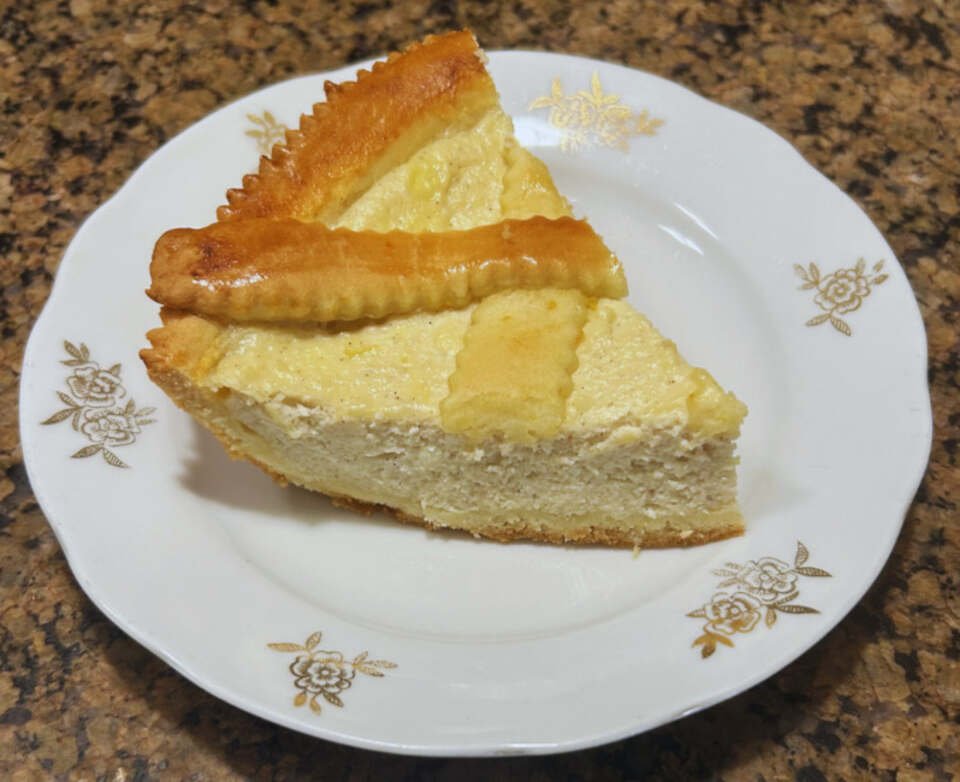
Unlike American ricotta cheesecake with its dense, creamy texture, Sicilian cassata pie maintains lighter, more delicate character through its spiced filling and tender crust. The combination of cinnamon, nutmeg, lemon zest, and vanilla creates complexity that elevates the mild ricotta, while the optional lattice top adds rustic charm.
This version appears at Easter tables, weddings, and special family gatherings throughout Sicily and Italian-American communities.
Understanding Sicilian Cassata Tradition
The name “cassata” refers to multiple Sicilian desserts, causing considerable confusion. The elaborate cassata siciliana is a layered cake with ricotta filling, marzipan, and candied fruit. Cassata al forno (baked cassata) or crostata di ricotta refers to this simpler ricotta pie baked in pastry crust. Both share Sicilian origins and ricotta as their primary ingredient, but they’re fundamentally different preparations.
This ricotta pie version appears in Sicilian home kitchens far more frequently than the elaborate cake, as it requires less time and specialized ingredients while delivering equally satisfying results. The combination of ricotta with warm spices reflects Sicily’s Arab influences, as cinnamon and nutmeg figure prominently in the island’s sweets due to centuries of cultural exchange.
Ingredients
Ingredients for Traditional Sicilian Cassata Pie
For the Ricotta Filling- 450g whole-milk ricotta, well drained
- 3 large eggs
- 100 to 150g granulated sugar (approximately ½ to ¾ cup), adjusted to taste
- Zest of 1 lemon (approximately 1 tablespoon)
- 2 pinches ground nutmeg (approximately ⅛ teaspoon)
- 1 teaspoon ground cinnamon
- 1 teaspoon vanilla extract (or ½ teaspoon vanilla bean paste)
- 1 to 2 tablespoons Kahlúa or other coffee liqueur (or rum, Marsala, or omit for alcohol-free)
- 190g all-purpose flour (approximately 1½ cups)
- 2 small eggs (or 1 large egg plus 1 yolk)
- Zest of ¾ orange (approximately 2 teaspoons)
- Juice of ¾ orange (approximately 60ml or ¼ cup)
- 60ml vegetable oil (approximately ¼ cup)
- 150g granulated sugar (approximately ¾ cup)
- 1½ teaspoons baking powder
- 50g mini chocolate chips or chopped dark chocolate (traditional addition)
- 40g candied citrus peel, finely chopped (traditional)
- Powdered sugar for dusting before serving
Ingredient Selection and Quality
Ricotta Quality and Preparation
Whole-milk ricotta provides essential richness and creamy texture. Part-skim ricotta works but produces slightly drier, less luxurious results. Fresh ricotta from Italian markets or cheese shops offers superior flavor and texture compared to mass-produced supermarket varieties.
Critical draining step: Ricotta contains considerable moisture that must be removed to prevent watery filling. Place the ricotta in a fine-mesh strainer lined with cheesecloth set over a bowl. Refrigerate for at least 2 hours, or preferably overnight, allowing excess whey to drain. The ricotta should reduce in volume and become noticeably thicker and drier. Skip this step at your peril; wet ricotta creates soupy filling that won’t set properly.
Some cooks place weight (a small plate with a can on top) on the ricotta to press out moisture more efficiently.
Spice Quality
Freshly grated nutmeg tastes dramatically superior to pre-ground, offering warm, complex aromatics that pre-ground cannot match. If possible, grate whole nutmeg on a microplane or small grater just before using. Ground cinnamon should be relatively fresh (purchased within the past year) for best flavor. According to the USDA Food Safety and Inspection Service, proper handling of eggs and dairy products in baking ensures both safety and quality in finished desserts.
Citrus Selection
Use fresh oranges and lemons, not bottled juice or dried zest. The citrus provides essential brightness and aromatic character. Choose fruit that feels heavy for its size (indicating high juice content) with relatively thin, smooth skin. Organic citrus is preferable when zesting, as conventional fruit may have pesticide residues and wax coatings.
Kahlúa or Liqueur Addition
Coffee liqueur (Kahlúa) adds subtle coffee notes and complexity without making the filling taste overtly of coffee. Traditional Sicilian versions might use Marsala wine, rum, or orange liqueur instead. The alcohol largely evaporates during baking, leaving behind nuanced flavor. For alcohol-free versions, simply omit or replace with strong espresso or vanilla extract.
Method
Prepare the Orange Pastry Dough
1. Mix wet ingredients: In a large bowl, whisk together the 2 small eggs and 150g sugar until well combined and slightly frothy, approximately 1 to 2 minutes. The sugar doesn’t need to dissolve completely but should be evenly distributed.
2. Add oil and citrus: Add the vegetable oil, orange zest, and orange juice to the egg mixture. Whisk until smooth and homogeneous. The mixture should be relatively thin and pourable.
3. Add dry ingredients: In a separate bowl, whisk together the flour and baking powder. Add the flour mixture to the wet ingredients all at once. Using a wooden spoon or spatula, mix until the dough just comes together. It will seem quite soft and slightly sticky initially.
4. Knead briefly: Turn the dough out onto a lightly floured surface and knead gently for 1 to 2 minutes, just until smooth and cohesive. Don’t overwork the dough; excessive kneading develops gluten and creates tough pastry. The dough should be soft, pliable, and slightly sticky but manageable. If excessively sticky, add flour 1 tablespoon at a time; if too dry, add water 1 teaspoon at a time.
5. Rest the dough: Form the dough into a ball, wrap in plastic wrap, and let rest at room temperature for 15 to 20 minutes. This resting period relaxes the gluten and makes the dough easier to roll. The dough can rest up to 1 hour at room temperature or overnight in the refrigerator (bring to room temperature before rolling if chilled).
Prepare the Ricotta Filling
1. Smooth the ricotta: Place the well-drained ricotta in a large bowl. Using an electric mixer or vigorous whisking by hand, beat the ricotta for 1 to 2 minutes until smooth and creamy. Breaking up any lumps creates silky filling texture.
2. Add flavorings (except eggs): Add the sugar (start with 100g/½ cup; you can add more after tasting), vanilla extract, lemon zest, cinnamon, nutmeg, and Kahlúa to the ricotta. Mix thoroughly until all ingredients are evenly distributed and the mixture is smooth.
3. Taste and adjust: This is the critical moment. Taste the filling and adjust sweetness, adding more sugar if desired. The filling should taste slightly sweeter than you want the finished pie, as baking will mute the sweetness somewhat. Adjust other flavorings if desired (more cinnamon, vanilla, etc.).
4. Add eggs: Once you’re satisfied with the seasoning, add the 3 eggs and mix until just combined and smooth. Don’t overmix after adding eggs, which can incorporate excessive air and create cracks during baking. The filling should be thick, creamy, and pourable.
5. Optional additions: If using, fold in mini chocolate chips or finely chopped candied citrus peel. These traditional additions provide textural interest and additional sweetness.
Assemble the Pie
1. Preheat oven: Set the oven to 175°C (350°F) and position a rack in the center.
2. Prepare the pan: Lightly butter or oil a 23 to 25cm (9 to 10 inch) pie dish or springform pan. The springform makes removal easier but isn’t essential.
3. Divide the dough: Pinch off approximately one-quarter of the dough and set aside for the lattice top (if making). Keep it wrapped in plastic to prevent drying.
4. Roll the bottom crust: On a lightly floured surface, roll the larger portion of dough into a circle approximately 3 to 4mm (⅛ inch) thick and large enough to line the bottom and sides of your pie dish with slight overhang. The dough is quite soft and forgiving; if it tears, simply press it back together. Don’t roll too thin, as the filling is heavy and thin dough may break.
5. Line the pan: Carefully transfer the rolled dough to the prepared pie dish, pressing it gently into the bottom and up the sides. Trim any excessive overhang, leaving approximately 1cm (½ inch) extending beyond the rim. Don’t worry about perfect edges; rustic appearance is traditional and charming.
6. Add the filling: Pour the ricotta filling into the pastry-lined dish, spreading it evenly with a spatula. The filling should come nearly to the top of the crust but not overflow.
7. Create lattice (optional): Roll the reserved dough into a rectangle and cut into strips approximately 2cm (¾ inch) wide. Arrange the strips over the filling in a lattice pattern (lay half the strips parallel across the filling, then weave the remaining strips perpendicular to create a basket-weave pattern). Alternatively, simply lay strips across the top in a rustic pattern without weaving. Press the strip ends gently into the bottom crust edge to seal.
Some cooks prefer to fully cover the top with dough instead of lattice, cutting a few slits for steam to escape. Either approach works beautifully.
Bake
1. Bake: Place the pie in the preheated oven and bake for 40 to 50 minutes, until the filling is set (it should jiggle only very slightly when gently shaken), the crust is light golden brown, and the edges appear slightly puffed. The exact timing depends on your oven and the depth of your filling.
2. Check for doneness: The filling is done when:
- The edges are set and lightly puffed
- The center jiggles only very slightly (like barely-set custard) when gently shaken
- A knife inserted near the center comes out relatively clean
- The crust is golden brown
Avoid overbaking, which creates dry, tough filling. Slight underbaking is preferable to overbaking.
3. Cool completely: Remove the pie from the oven and place on a wire rack. Let cool to room temperature, at least 2 to 3 hours. The filling continues setting as it cools and must be completely cool before slicing, or it will be too soft and fall apart. For cleanest slicing, refrigerate the cooled pie for several hours or overnight before serving.
Serve
Dust the cooled pie generously with powdered sugar just before serving. Cut into wedges and serve at room temperature or slightly chilled. The pie tastes best the day after baking, when the flavors have had time to meld.
Technical Notes on Success
Several factors determine whether cassata pie achieves proper texture and flavor:
Drain ricotta thoroughly: Wet ricotta creates watery, soupy filling that won’t set. Drain for at least 2 hours, preferably overnight.
Taste filling before adding eggs: Once eggs are in, you can’t taste-test safely. Adjust sugar and flavorings before egg addition.
Don’t overwork the dough: Brief kneading creates tender pastry. Excessive kneading develops gluten and produces tough crust.
Don’t roll dough too thin: The soft dough and heavy filling require slightly thicker crust (3 to 4mm) than typical pie dough.
Cool completely before slicing: Warm filling is too soft to slice cleanly. Complete cooling allows proper setting.
Avoid overbaking: Overbaked filling becomes dry and grainy rather than creamy. Slight jiggle in the center when done is correct.
Serving Suggestions
This pie serves 8 to 10 people as dessert.
Serving temperature: Room temperature or slightly chilled from refrigeration both work beautifully. Avoid serving cold directly from the refrigerator, as the flavors are muted when very cold.
Accompaniments: Serve plain with espresso or coffee, or accompany with fresh berries or whipped cream.
Special occasions: Traditional for Easter, but appropriate for any celebration or Sunday dessert.
Beverage pairings: Espresso, cappuccino, sweet dessert wines like Moscato d’Asti or Vin Santo, or coffee liqueur.
Variations and Adaptations
Chocolate chip version: Fold mini chocolate chips into the filling for the classic variation.
Candied fruit: Traditional versions include finely chopped candied orange or citron peel.
Almond variation: Add ½ teaspoon almond extract along with the vanilla.
Orange filling: Replace lemon zest with orange zest for different citrus character.
Wheat berry addition: Some traditional versions include cooked wheat berries (grano cotto) in the filling for texture and symbolism (particularly for Easter).
Different liqueurs: Amaretto, rum, Marsala, or Grand Marnier can replace Kahlúa.
Lighter filling: Replace one whole egg with two egg whites for slightly lighter texture.
Different spices: Some versions use only cinnamon, omitting nutmeg. Others add a pinch of ground cloves.
Storage
Room temperature: The pie keeps at room temperature, covered, for 6 to 8 hours.
Refrigeration: Refrigerate covered for up to 4 days. The pie actually improves after a day as flavors meld. Bring to room temperature before serving or serve slightly chilled.
Freezing: Freeze the baked, cooled pie tightly wrapped for up to 2 months. Thaw overnight in the refrigerator. The texture remains good after freezing, though not quite as perfect as fresh.
Make-ahead strategy: Bake the pie 1 to 2 days ahead for best flavor and convenience.
Cultural Context and Sicilian Tradition
This cassata pie represents Sicilian baking traditions where ricotta, Sicily’s signature fresh cheese made from sheep or cow milk, appears in countless sweet and savory preparations. The spices reflect Arab influences from centuries of cultural exchange, while the technique demonstrates Italian resourcefulness in creating celebration desserts from everyday ingredients.
In Sicilian and Italian-American families, ricotta pie appears at Easter, weddings, baptisms, and Sunday dinners. Making the pie is often a family activity, with recipes passed through generations and each cook adding personal touches (more cinnamon, chocolate chips, different liqueur) that make their version distinctive.
This traditional Sicilian cassata pie demonstrates how simple ingredients, when treated with care and proper technique, create something special. The creamy, spiced ricotta filling encased in tender orange pastry produces a dessert that satisfies without overwhelming, honoring tradition while remaining accessible to home bakers.
It’s food that connects those who make and eat it to generations of Sicilian cooks who understood that celebration desserts need not be elaborate to be excellent.