
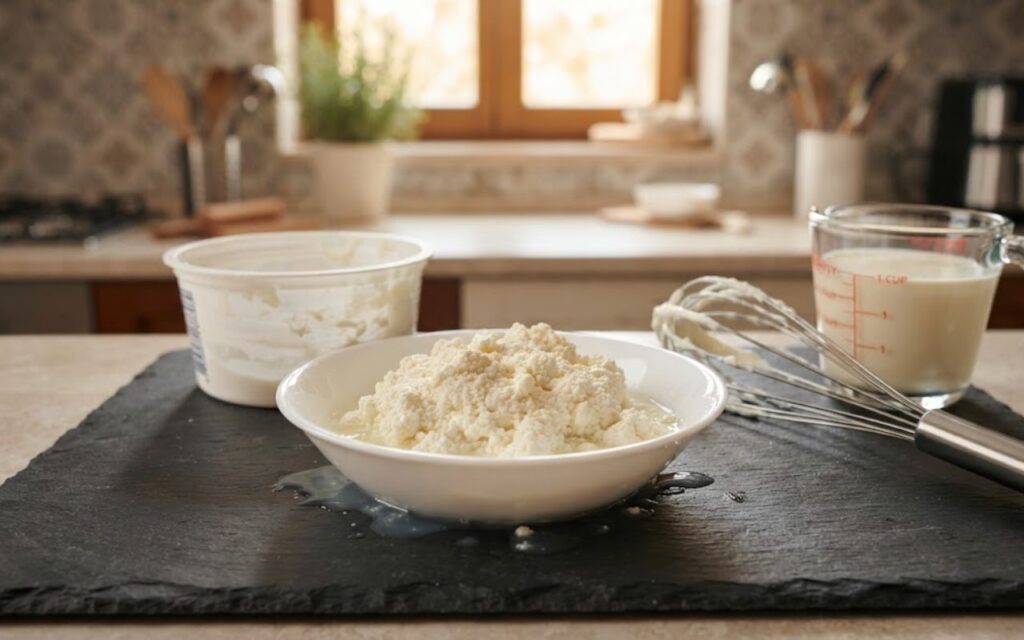
Can you freeze ricotta cheese without turning it into a watery, ruined mess? Yes, you can freeze it, but freezing fundamentally alters the structure of the cheese. Once thawed, ricotta loses its pillowy, spreadable character and becomes visibly separated and grainy.
Freezing works well if you plan to bake the cheese into hot casseroles like lasagna, manicotti, or stuffed shells. However, thawed ricotta should never be used in raw, fresh applications like cannoli cream, crostini spreads, or fresh dips. Understanding how ice crystals change dairy proteins allows you to freeze, thaw, and rescue the cheese effectively.
Quick-Glance Kitchen Summary
Freezing ricotta breaks its emulsion and causes watery whey to separate from the milk proteins once thawed. You can salvage the cheese for hot, baked dishes by draining excess whey beforehand, freezing it in airtight flat portions, and vigorously whisking in an egg or starch binder before baking.
- Optimal freezer duration: Two to three months at 0 degrees Fahrenheit.
- Texture recovery target: Baked pasta fillings, meatballs, pancakes, and yeast doughs.
- Applications to avoid: Cannoli fillings, cheesecakes, fresh toast spreads, and cold salads.
- Primary repair binder: One large egg or one egg yolk per 15 ounces of thawed ricotta.
- Secondary moisture absorber: One tablespoon of cornstarch or two tablespoons of grated Pecorino Romano.
Why Frozen Ricotta Turns Watery and Grainy
Whole milk ricotta contains roughly 72 to 74 percent water, while part-skim varieties often exceed 78 percent water. Commercial brands like Galbani or Polly-O use starter cultures, vinegar, or citric acid to coagulate milk proteins into fine curds. When this mixture freezes, that high volume of free water expands into jagged ice crystals.
These expanding ice crystals puncture the delicate casein protein network that holds the curds and milk fats together. As the cheese thaws, the damaged protein matrix can no longer trap moisture, causing the liquid to bleed out in a process known as syneresis. The remaining solid curds clump tightly together, leaving behind a gritty, separated paste sitting in a pool of clear whey.
Part-skim ricotta suffers significantly worse texture damage than whole milk ricotta because it lacks sufficient milk fat to buffer the curds. Whole milk versions, or traditional whey-based artisan brands like Calabro that include whole milk, hold up slightly better due to their higher lipid content. Even so, no amount of freezing trickery will keep thawed ricotta as smooth as a fresh, unopened container.
Where Thawed Ricotta Works and Where It Fails
The physical separation caused by freezing means you must choose your recipes carefully. Heat and structural binders help mask textural flaws, while uncooked recipes expose them immediately.
| Attribute | Fresh Ricotta | Thawed Ricotta |
|---|---|---|
| Curd Consistency | Smooth, creamy, and uniform. | Loose, pebbly, and separated. |
| Moisture Retention | Traps natural whey within curds. | Releases standing liquid immediately. |
| Fresh Spreads | Delivers light, velvety mouthfeel. | Feels wet and unpleasantly grainy. |
| Baked Pasta Fillings | Melts into soft, uniform layers. | Requires egg or starch binders to hold structure. |
| Pastry Fillings | Holds piped shape in pastries. | Weeps water and softens crisp shells. |
Home cooks frequently complain on culinary forums about runny lasagna layers after using frozen ricotta. This happens because the thawed cheese expels its trapped water directly into the baking dish as it heats. The liquid dilutes your tomato sauce and turns your pasta sheets mushy.
To avoid this, limit thawed ricotta strictly to hot recipes that feature eggs, melted mozzarella, or dry breadcrumbs. It works reliably in baked ziti, stuffed pasta shells, Italian meatballs, and drop biscuit doughs. Keep it completely away from cannoli cream, cassata cakes, and fresh fruit parfaits.
How to Prep and Pack Ricotta to Stop Ice Damage
Prepping the cheese before it enters the freezer minimizes the amount of free water available to form damaging ice crystals. Never throw an unopened plastic grocery tub straight into the freezer. The factory headspace traps air, promoting freezer burn, while the pooled whey freezes into large ice sheets across the top.
Line a fine-mesh sieve with cheesecloth or a clean basket coffee filter, set it over a bowl, and dump the fresh ricotta into it. Let it drain in your refrigerator for at least two hours to shed excess surface water. If you are freezing homemade ricotta, let it hang until it stops dripping entirely.
- Portion the drained curds into recipe-ready amounts, such as one-cup or 15-ounce blocks.
- Transfer the cheese into heavy-duty vacuum-seal bags or thick freezer bags.
- Press the bag flat with your palm to push out all excess air and create a thin, uniform slab.
- Label the exterior with the freeze date and store flat on a freezer shelf.
Flattening the cheese into a thin sheet speeds up the initial freezing process. Rapid freezing creates significantly smaller ice crystals than slow freezing in a bulky plastic tub. Smaller crystals cause less physical tearing to the casein curds, resulting in less watery runoff later.
The Right Way to Thaw Ricotta in the Fridge
Never thaw frozen ricotta at room temperature on your kitchen counter. Leaving dairy at ambient temperatures encourages rapid bacterial growth in the pooled whey long before the icy center softens. Thawing must always take place under cold refrigeration.
Move the flat freezer bag from the freezer to the refrigerator at least 24 hours before you plan to cook. A flat slab thaws completely within 12 to 24 hours, whereas a solid frozen tub can take over two days to soften in the center. Keep the bag sealed during thawing to prevent the dairy from absorbing odors from nearby foods.
Once thawed, the cheese will look split, with curds floating in clear whey. Pour the entire contents back into a fine-mesh strainer lined with a paper towel or cheesecloth. Let it drain over a bowl in the fridge for 20 minutes to eliminate the purged liquid before adding the curds to your recipe.
How to Bring Back a Smooth Texture Before Cooking
Drained, thawed ricotta still requires mechanical work to rebuild a pleasant consistency. You cannot simply stir it with a spoon and expect a smooth bake. The separated curds need shear force to break down their grainy edges.
Place the drained curds into a medium mixing bowl and whisk them vigorously with a stiff wire whisk or fork for two full minutes. If the cheese feels particularly stubborn and dry, pulse it in a food processor for 30 seconds. This mechanical processing rounds off the coarse curds and redistributes the remaining fat.
- Beat in one large whole egg or an extra egg yolk per 15 ounces of ricotta to build a new emulsion.
- Stir in two tablespoons of finely grated Parmigiano-Reggiano or Pecorino Romano to absorb loose moisture.
- Add one teaspoon of cornstarch or unbleached all-purpose flour if using the mixture in a high-moisture casserole, ensuring you whisk the starch thoroughly into your beaten egg before mixing it into the cheese to prevent localized clumping.
- Fold in shredded low-moisture mozzarella to reinforce the melted cheese matrix during baking.
The added egg protein coagulates as the casserole bakes, setting the loose ricotta curds into a cohesive, velvety custard. Grated hard cheeses pull double duty by adding salt and soaking up any residual water released during heating. Following these steps guarantees your baked pasta turns out rich and firm, with no watery puddles in sight.