Building an authentic Italian antipasto platter requires balancing cured fats, briny acids, and aged cheeses across a physical landscape that invites grazing. In Italy, antipasto serves as the prelude to a meal, meant to stimulate the appetite rather than overwhelm it with heavy starches.
Learning how to create an authentic Italian antipasto platter comes down to choosing distinct regional textures, controlling moisture, and letting the room warm the cured fats properly.
Quick-Glance Kitchen Summary
An antipasto board succeeds when dynamic acid and bitter profiles cut through heavy pork fat and casein proteins. Group items in distinct regional clusters across wood or ceramic boards, keeping briny wet elements isolated in individual ramekins to protect crisp textures.
- Serving surface: untreated olive wood, end-grain butcher block, or glazed ceramic platter
- Meat ratio: 2 to 3 ounces per guest, combining whole-muscle cuts and fermented salumi
- Cheese balance: 1 firm aged cheese (such as Parmigiano-Reggiano) and 1 soft lactic cheese (such as fresh mozzarella or Robiola)
- Acid components: pickled artichoke hearts, Giardiniera, or Cerignola olives packed in vinegar brine
- Bread service: rustic ciabatta slices, taralli, or grissini served strictly in a side basket
Picking the Right Meats and Cheeses
A traditional Italian board avoids piling random cold cuts together. Instead, choose two distinct cured meats that contrast in texture and fat distribution. Pair a delicate, dry-cured whole muscle like Prosciutto di Parma or Prosciutto di San Daniele with a spiced, coarse-ground fermented sausage like Salame di Felino or spicy Calabrian Soppressata.
Slicing geometry dictates how these meats taste on the palate. Whole-muscle cures require a paper-thin shave, ideally under one millimeter, allowing the intramuscular fat to dissolve instantly upon contact with your tongue. Salami should be cut slightly thicker into coin-sized rounds of two to three millimeters, providing a firm chew that releases pepper and wine notes gradually.
- Prosciutto di Parma: Aged twenty-four months, shaved paper-thin (under 1 mm) to showcase delicate sweetness.
- Salame di Felino: Coarse grind with whole peppercorns, sliced on a steep bias to a thickness of 2 to 3 mm for a firm bite.
- Speck dell’Alto Adige: Lightly smoked juniper-cured ham, sliced thin to balance rich poultry or pork spreads.
Cheese selection requires the same discipline regarding texture and moisture. Never slice an aged cheese into uniform kitchen cubes; use an almond-shaped spade knife to pry Parmigiano-Reggiano along its natural structural fissures. This rough cleavage exposes internal tyrosine crystals, creating texture and concentrated bursts of umami.
Balance that crumbly richness with a high-moisture cheese. Fresh buffalo mozzarella, burrata, or a bloomy-rind Robiola di Roccaverano DOP bring cool, clean milk fats that reset the palate after heavy cured pork.
Choosing an authentic Robiola di Roccaverano introduces a delicate, tangy complexity, as this traditional Piedmontese cheese relies on a slow lactic fermentation of pure goat’s milk or a specific historical blend of goat, cow, and sheep milk.
Matching Rich Fats With Pickles and Acids
Cured pork and aged milk fat saturate taste receptors quickly. To keep guests eating without feeling weighed down, incorporate pickled vegetables known as sottaceti and oil-marinated bites known as sottoli. Commercial brands like Cento, Polli, or homemade garden preserves provide the sharp acetic backbone needed to cut dense richness.
| Component | Primary Profile | Texture Impact | Serving Placement |
|---|---|---|---|
| Whole-Muscle Salumi | Sweet pork fat with floral curing notes. | Melts instantly on the tongue. | Draped loosely along the outer board perimeter. |
| Hard Aged Cheese | Salty, sharp umami with crunchy tyrosine crystals. | Crumbly and granular in the mouth. | Clustered in broken chunks near fruit spreads. |
| Acidic Vegetables (Sottaceti) | Sharp, bright bite from 5% acetic acid brine. | Crisp snap that cleanses the palate. | Confined entirely inside small ceramic ramekins. |
| Soft Fresh Cheese | Mild, lactic sweetness with high water content. | Creamy, tender, and yielding. | Centered with an individual serving spoon. |
Cerignola olives offer meaty flesh with mild salinity, while smaller Gaeta or Castelvetrano olives bring buttery fruitiness. Adding pickled pepperoncini, caper berries, or pickled pearl onions injects an astringent crunch that cleanses the palate between rich bites.
Never pour these acidic preserves directly onto the serving wood. The vinegar brine will bleed into nearby meats, oxidizing delicate fats and turning pale prosciutto gray within minutes.
How to Lay Out Your Board Without Crowding It
Forget the packed charcuterie rivers popular on social media. Piling ribbons of meat tightly against each other traps moisture, accelerates oxidation, and turns food into a greasy, unappealing mass. An authentic board respects negative space, grouping elements in odd-numbered clusters so each ingredient maintains its identity.
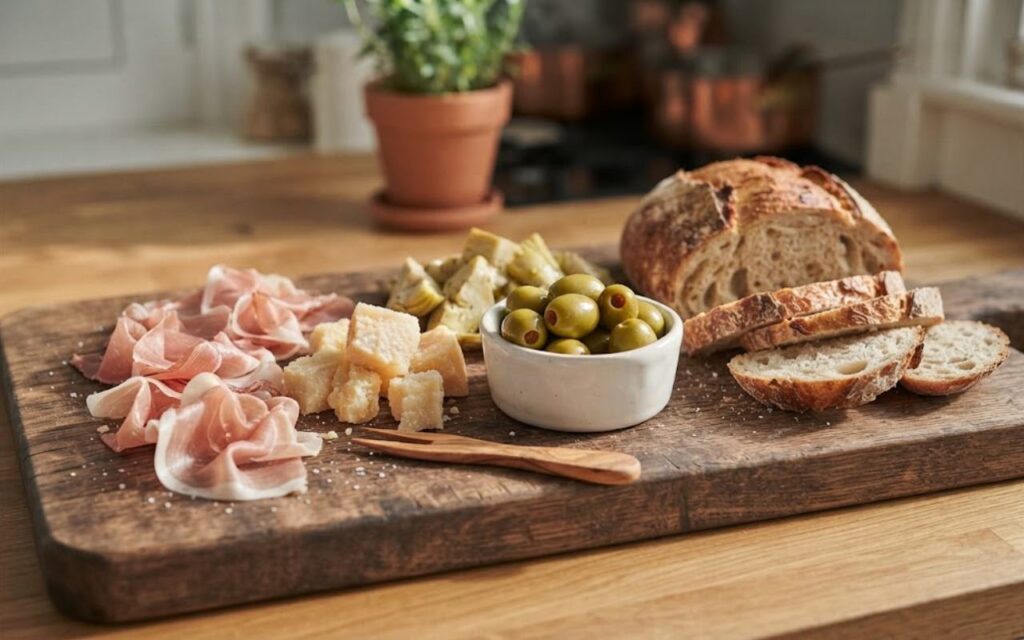
Begin by placing small ceramic ramekins across the board to serve as structural anchors. Fill these vessels with your wet items: pitted olives, marinated artichoke quarters, and pickled mushrooms.
- Place two or three small bowls off-center across the board to anchor the layout
- Drape cured meats loosely around the bowls in soft folds rather than flattening them
- Cluster broken cheese chunks alongside raw walnuts, dark grapes, or fresh figs
- Reserve bread and crackers for a separate cloth-lined basket to prevent softening
Arranging meat in loose, ruffled folds introduces air between the slices. This airflow prevents the meat from sweating and makes it simple for guests to pick up a single portion with a fork or tongs without dislodging the entire display.
Keep bread entirely off the presentation platter. Stacking sliced ciabatta or delicate grissini breadsticks against moist cheeses or oily vegetables destroys their crisp crusts within fifteen minutes.
Serving Temperatures That Keep Fat From Sweating or Hardening
Serving temperature alters the flavor profile of an antipasto spread dramatically. Plating cured meats straight out of a cold refrigerator keeps pork fats firm, waxy, and flavorless. Conversely, letting a platter sit under hot sun or warm kitchen lights will cause the fat to liquefy and separate, turning prosciutto greasy and translucent.
Pull your cured meats and firm cheeses out of refrigeration roughly twenty to thirty minutes before guests arrive. This allows the items to reach an ideal serving window between 65°F and 68°F. At this temperature, oleic acid in the pork fat softens without turning completely liquid, allowing the cures to coat the tongue smoothly.
Fresh, soft cheeses like mozzarella or burrata should be kept cool slightly longer. Bring them out ten to fifteen minutes before serving so the milky interior remains refreshing while avoiding an ice-cold chill that dulls lactic sweetness.
Never leave meat and dairy out at room temperature for longer than two hours. If entertaining over an extended afternoon, assemble smaller boards and replenish them directly from cold storage as needed.
Keeping Pickled and Marinated Sides Safe to Eat
Food safety requires careful attention when serving ambient room-temperature appetizers, particularly marinated vegetable garnishes. Vegetables preserved in vinegar rely on strict acidity levels to prevent microbial growth. For shelf-stable home-pickled preserves, standard commercial vinegar with 5% acetic acid reliably brings vegetable bases well below the standard 4.6 pH safety threshold.
Oil-packed vegetables, known as sottoli, carry different kitchen safety rules. Submerging low-acid ingredients like garlic cloves, rosemary sprigs, or blanched vegetables in an oxygen-free pool of olive oil creates a potential botulism environment if held at room temperature.
- Use commercially prepared sottoli that have undergone verified thermal processing or acidification
- Refrigerate homemade garlic or herb-infused oils continuously below 40°F
- Discard any homemade oil-steeped vegetable preparations after four days in storage
- Keep separate serving utensils for each wet condiment to stop cross-contamination
Commercial brands safely acidify their vegetables with citric or tartaric acid prior to oil packing. If you prepare homemade marinated artichokes, eggplants, or peppers for an antipasto board, always blanch the vegetables thoroughly in a strong fifty-percent vinegar solution before packing them into oil.
Provide dedicated toothpicks, small forks, and serving spoons for every bowl on the board. Guests dipping fingers directly into communal olive oils or pickle brines introduces ambient bacteria that rapidly spoils leftover ingredients.