
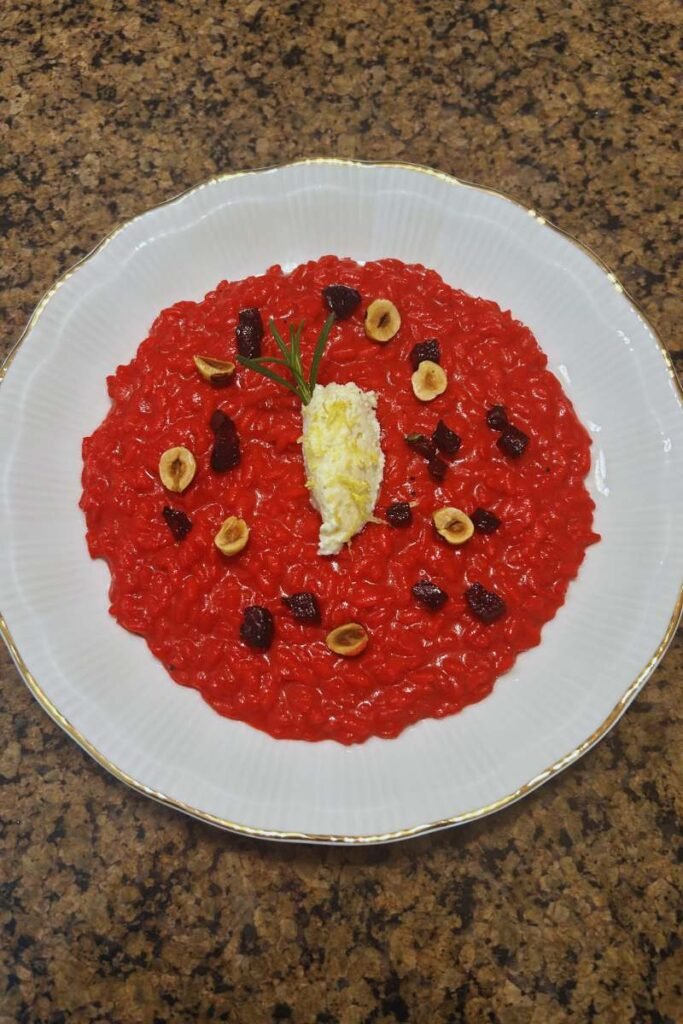
This elegant beet risotto showcases how a single vegetable, when prepared through multiple techniques, creates layered complexity and visual drama. The deep crimson color derived from roasted beets permeates the creamy rice, while whole roasted beets folded in at the finish provide textural contrast.
Whipped ricotta dolloped on top introduces cooling creaminess that balances the risotto’s richness, while roasted hazelnuts add earthy depth and crispy texture to the finished dish.
The preparation requires simultaneous management of three cooking processes—roasting two different beet preparations, toasting hazelnuts, and the active cooking of risotto—demanding attention and planning but producing restaurant-quality results that showcase both technique and ingredient quality.
Understanding Risotto Fundamentals
Risotto represents one of the most nuanced rice-cooking techniques, requiring understanding of starch gelatinization, emulsification, and heat management. The continuous stirring and gradual addition of liquid—fundamental to risotto method—develop a creamy texture through the gradual release of rice’s starch into the cooking liquid, creating a natural emulsion rather than relying on cream or excessive butter.
Arborio rice, an Italian short-grain variety, contains high levels of amylopectin, a type of starch that gelatinizes (swells and releases starch into the cooking liquid) at lower temperatures than long-grain varieties. This chemical property creates risotto’s characteristic creamy texture while the grains maintain al dente (slightly firm) cores. Understanding this distinction is essential; using long-grain rice produces mushy results regardless of technique.
This particular risotto integrates beet purée into the cooking process, which adds earthy sweetness, vibrant color, and additional body to the final dish. The timing of when the beet purée enters the cooking process—approximately midway through—affects the final flavor development and texture.
Ingredients
For the Risotto
- 1 small beet, diced (approximately 100-120g)
- 2 small whole beets (approximately 150-200g total)
- 1 sprig fresh rosemary
- 2 sprigs fresh thyme
- 2 garlic cloves, unpeeled
- 1 shallot, finely diced (approximately 40-50g)
- 350g Arborio rice
- 150ml dry white wine
- 1-1.2L hot vegetable stock
- 2-3 tablespoons extra-virgin olive oil
- 40-50g butter
- 60-80g Parmesan cheese, freshly grated
- Zest of ½ lemon
- 40-50g roasted hazelnuts
- Salt and freshly cracked black pepper to taste
For the Whipped Ricotta Garnish
- 120g whole-milk ricotta, well drained
- 1 teaspoon extra-virgin olive oil
- 1 teaspoon Parmesan cheese, finely grated
- Pinch of freshly grated nutmeg
- Pinch of lemon zest
- Salt and freshly cracked black pepper to taste
Ingredient Selection and Quality
Arborio Rice Selection
Arborio rice’s unique starch composition makes it essential for proper risotto. The grain’s shape—shorter and rounder than long-grain rice—accommodates the high starch content that creates risotto’s signature creaminess. When stirred continuously in liquid, Arborio rice gradually releases starch molecules that suspend in the cooking liquid, creating a natural emulsion without cream.
According to culinary science research, Arborio contains approximately 20-21% amylose (a linear starch) and 79-80% amylopectin (a branched starch). The higher amylopectin content gelatinizes more readily than long-grain rice varieties (which contain 23-30% amylose), creating the creamy texture risotto requires at a faster rate during cooking.
Quality matters considerably; risotto rice from reputable Italian producers offers superior texture and flavor compared to generic “risotto rice” from uncertain sources. Carnaroli rice serves as an acceptable alternative, offering slightly firmer texture at the expense of creamy mouthfeel. Avoid arborio rice that appears chalky or damaged, as broken grains release excessive starch, creating mushy risotto.
Beet Selection and Preparation
Young, tender beets offer superior flavor compared to mature beets, which can taste overly earthy or mineral. Look for beets approximately 5–7 cm in diameter with smooth skin and fresh-looking greens still attached, which indicates a recent harvest.
The greens themselves are edible and make an excellent sautéed accompaniment, though they are not used in this specific recipe. Two different beet preparations serve distinct structural purposes in this dish.
Diced beets roasted with herbs contribute concentrated flavor and texture that creates visual and gustatory interest when folded in at the finish. Whole roasted beets blended into a smooth purée incorporate throughout the rice matrix, creating the signature crimson color and adding a subtle sweetness that pervades every spoonful.
Beet pigments, called betalains, have significant health benefits. According to biochemical research published in the official MDPI Molecules Journal, betalains exhibit strong antioxidant and anti-inflammatory properties.
Roasting intensifies their concentration by reducing the vegetable’s raw water content. Roasting also caramelizes the natural beet sugars, creating a richer, more complex flavor than boiling, which leaches both the color and water-soluble sugars directly into your cooking water.
Hazelnut Quality and Preparation
Hazelnuts contain approximately 62% fat (mostly heart-healthy monounsaturated fat) and provide rich, buttery flavor that deepens during roasting. Fresh hazelnuts offer superior quality and flavor compared to hazelnuts stored for extended periods, which can develop rancidity as fats oxidize.
The roasting process develops hazelnut flavor through the Maillard reaction—a complex chemical process where amino acids and sugars react under heat, creating hundreds of new flavor compounds. This browning reaction creates savory, complex flavors impossible to achieve in raw nuts. The skin removal, while optional, reduces slight bitterness and improves visual presentation and texture.
Ricotta Selection for Whipped Topping
Whole-milk ricotta provides creamier texture and richer flavor than part-skim varieties. The whipping process incorporates air, creating light, fluffy texture that contrasts beautifully with the dense risotto. Ricotta’s moisture content affects whipping success—overly wet ricotta won’t whip properly; well-drained ricotta creates the ideal consistency.
Draining ricotta before whipping is essential. Place ricotta in a fine-mesh strainer lined with cheesecloth and let rest in the refrigerator for 30-60 minutes, allowing excess moisture to drip away. This step transforms ricotta from creamy to firm enough to whip into light, airy texture.
Method
Roast the Beets
1. Prepare diced beets for roasting: Preheat oven to 200°C (400°F). Peel and dice 1 small beet into approximately 0.5-1cm pieces (about 100-120g total). Place in a bowl with 1 sprig fresh rosemary, 2 sprigs fresh thyme, salt, freshly cracked black pepper, and a light drizzle of extra-virgin olive oil (approximately 1-2 teaspoons).
Toss everything together, ensuring beet pieces are evenly coated with oil and seasonings are distributed throughout. Spread onto a baking tray in a single layer.
2. Roast diced beets: Place tray in the preheated oven and roast for 25-30 minutes, stirring halfway through cooking, until the beet pieces are completely tender and develop light caramelization on the edges (slight browning but not charring). The beets should be soft enough to crush easily with a fork. Set aside.
3. Prepare whole beets for roasting: While diced beets roast, prepare whole beet package. Scrub 2 small whole beets (approximately 150-200g total) to remove any soil, but don’t peel. Tear off a piece of aluminum foil large enough to enclose both beets generously.
Place the whole beets in the center of the foil. Add 2 unpeeled garlic cloves, a small drizzle of extra-virgin olive oil (approximately 2 teaspoons), a pinch of salt, 1 sprig rosemary, and 1 sprig thyme. Fold the foil tightly around the beets and garlic, sealing all edges to trap steam.
4. Roast whole beets: Place the foil package on the oven rack or baking tray (away from the diced beets if space allows) and roast at 200°C for 45-60 minutes, until the beets are completely fork-tender and the garlic is soft and caramelized. The exact time depends on beet size and oven temperature variations; larger beets require longer cooking.
Test doneness by carefully opening the foil package (watch for steam) and piercing a beet with a fork. It should offer no resistance.
5. Process roasted beets: Remove the foil package from the oven and open carefully to release steam. Once cool enough to handle (approximately 5 minutes), discard the herb sprigs. The beets should peel easily at this stage; grasp each beet at one end and rub with your fingers under cool running water, and the thin skin will slip off.
Cut the peeled beets roughly into pieces and place in a food processor along with the soft, roasted garlic cloves. Blend until completely smooth and silky, scraping down sides as needed. If the purée seems too thick, add a splash of warm vegetable stock (approximately 2-3 tablespoons) to achieve a smooth consistency that will incorporate easily into the risotto.
Set the purée aside. You should have approximately 200-250ml of smooth beet and garlic purée.
Roast the Hazelnuts
1. Initial roasting: Preheat oven to 175°C (350°F) if not already at this temperature. Spread whole hazelnuts on a baking tray in a single layer and roast for 10-12 minutes, until they smell fragrant and the thin skins begin to loosen slightly. The nuts should not be deeply brown at this stage; they’ll continue browning during the second roasting.
2. Remove skins: Transfer the warm (but not hot) hazelnuts to a clean, dry kitchen towel. Fold the towel over the nuts and rub them together vigorously for 1-2 minutes. The friction and slight moisture from the warm nuts cause the papery skins to separate and fall away. Don’t expect to remove every last bit of skin; approximately 70-80% skin removal is acceptable and creates less work than pursuing perfection.
3. Halve the nuts: Once skins are removed, cut each hazelnut in half using a small sharp knife. The halves provide better visual presentation and texture in the finished dish than whole nuts.
4. Season and second roasting: Toss the hazelnut halves with a light drizzle of extra-virgin olive oil (approximately 1-2 teaspoons) and a small pinch of salt. Spread onto a clean baking tray in a single layer.
Return to the 175°C oven for another 8-10 minutes, until deep golden brown and crisp. Shake the tray or stir the nuts halfway through this roasting to ensure even browning.
5. Cool completely: Remove from oven and spread on a clean tray to cool completely. The nuts will crisp further as they cool. Store at room temperature, uncovered, until ready to serve. Crispy hazelnuts are best used within a few hours of roasting for maximum crispness, though they remain edible for 24-48 hours if stored in an airtight container.
Cook the Risotto
1. Prepare the stock: Pour 1-1.2L vegetable stock into a separate saucepan and bring to a gentle simmer over medium heat. Maintain this gentle simmer throughout risotto cooking; hot stock incorporates more smoothly into the rice than cool or cold stock, promoting even cooking and creamy texture development.
2. Heat the pan: Select a large, heavy-bottomed saucepan or deep skillet (approximately 4-5 liter capacity). Add 2-3 tablespoons extra-virgin olive oil and place over medium heat. The oil should shimmer but not smoke, indicating it’s reached approximately 160-170°C.
3. Cook the shallots: Add the finely diced shallot to the hot oil and cook, stirring occasionally, for 3-4 minutes until completely soft and translucent without taking on any color. The shallots provide aromatic sweetness that forms the flavor foundation of the risotto. Do not brown the shallots, as browning creates bitter flavors that detract from the delicate beet sweetness.
4. Toast the rice: Add the 350g Arborio rice to the softened shallots and stir constantly for 2-3 minutes. This toasting step heats the rice grains, beginning the process of starch gelatinization and creating subtle nutty flavors. The rice should appear slightly translucent around the edges with opaque, white centers still visible.
5. Add wine: Pour the 150ml dry white wine into the pan, stirring constantly. The wine should be nearly completely absorbed into the rice within 2-3 minutes. The acidity in wine adds brightness to the final dish and helps break down rice starch, contributing to creamy texture development.
6. Begin adding stock: Once the wine is absorbed, begin adding the hot vegetable stock one ladle at a time (approximately 250ml per ladle). Stir frequently—approximately every 30-45 seconds—allowing each addition to be mostly absorbed before adding the next. The stirring is crucial; it continuously brings hot liquid into contact with rice surfaces, promoting even starch gelatinization and creating the emulsion that gives risotto its characteristic creamy texture.
7. Mid-cooking adjustment: After approximately 12 minutes of cooking (when rice is beginning to soften but still has obvious firmness), stir in the 200-250ml beet and garlic purée. Fold it in thoroughly, distributing evenly throughout the rice. The purée will darken the risotto noticeably and add earthy sweetness.
8. Continue cooking: Keep adding stock one ladle at a time, stirring frequently. After the beet purée addition, risotto typically requires another 6-8 minutes of cooking. Total cooking time from first stock addition to finish is approximately 18-20 minutes.
9. Test for doneness: Risotto is ready when the rice is creamy throughout but individual grains still maintain slight firmness when bitten (al dente). The mixture should flow slowly across the plate when spooned out, not pile up or run excessively. If risotto is too firm, add another ladle of stock and stir well. If too liquid, stir for another minute or two to allow more starch to gelatinize and thicken the mixture.
10. Finish the risotto: Remove from heat. Fold in:
- 40-50g cold butter, cut into small pieces
- 60-80g freshly grated Parmesan cheese
- The roasted diced beets
- Zest of ½ lemon
Stir gently until the butter has melted completely and everything is distributed evenly. The addition of cold butter at the end—called “mantecatura” in Italian—creates additional creaminess through emulsification as the butter’s fat integrates with the starchy rice liquid.
11. Season: Taste and adjust seasoning with salt and freshly cracked black pepper. Remember that Parmesan adds considerable salt, so taste cautiously before adding more.
12. Adjust consistency: The risotto should slowly flow across a plate when spooned out—not pile up firmly (too thick) or run completely (too liquid). If consistency seems off, add warm stock in small amounts (2-3 tablespoons at a time) if too thick, or stir for another minute or two if too liquid.
Prepare the Whipped Ricotta Garnish
While risotto cooks or immediately before serving:
1. Ensure ricotta is well-drained: Place the 120g whole-milk ricotta in a fine-mesh strainer lined with cheesecloth and let drain for 30-60 minutes if not already done. Draining is essential for creating whipped texture; undrained ricotta won’t whip properly and will remain separated.
2. Combine ingredients: Place the drained ricotta in a bowl with 1 teaspoon extra-virgin olive oil, 1 teaspoon finely grated Parmesan, pinch of freshly grated nutmeg, pinch of lemon zest, salt, and freshly cracked black pepper.
3. Whip to light texture: Using a whisk or, for more efficient results, an electric mixer or immersion blender, whip the ricotta until it becomes light, fluffy, and increased in volume (approximately 50-100% increase). The whipping incorporates air, creating a mousse-like texture that contrasts beautifully with the dense risotto.
4. Taste and adjust: Sample the whipped ricotta and adjust seasoning with additional salt, pepper, or other seasonings as needed. The ricotta should taste well-seasoned on its own as it will be a prominent garnish.
5. Refrigerate until serving: Cover and refrigerate until ready to plate. The whipped ricotta can be prepared up to 2 hours ahead; whipped texture holds better when chilled.
Plate the Risotto
1. Warm the bowls: Use shallow bowls for serving risotto, as they allow the creamy consistency to spread naturally and display the beautiful color. Place bowls in a warm oven or fill with hot water 2-3 minutes before serving, then empty and dry.
2. Portion risotto: Spoon approximately 150-200ml of risotto into each warm bowl. The amount depends on whether you’re serving as a first course or main course; these portions are generous mains.
3. Shape the risotto: Gently tap the bottom of the bowl several times against the work surface. The risotto will relax and flow naturally toward the bowl’s edges, creating a more elegant presentation than a neat pile in the center.
4. Add whipped ricotta: Create 3-5 small quenelles (oval shapes) of whipped ricotta by drawing a spoon through the ricotta, across itself repeatedly to create an elegant, elongated dollop. Alternatively, use two spoons to create rustic dollops. Arrange on top of the risotto, spacing them evenly.
5. Add hazelnuts: Distribute the roasted hazelnut halves around the risotto, some nestled in the whipped ricotta for visual interest and textural contrast.
6. Finishing elements: Drizzle a small amount of high-quality extra-virgin olive oil around the risotto for luxury and sheen. Add optional finishing touches if desired: fresh thyme leaves, microgreens, additional grated Parmesan, or fresh lemon zest.
7. Serve immediately: Risotto is best enjoyed immediately after plating, while the rice is at optimal temperature and texture.
Technical Notes on Risotto Science
Starch gelatinization: Arborio rice contains starch granules that absorb water and swell when heated above 60-70°C. As the granules swell, they release amylose and amylopectin molecules into the cooking liquid, creating the characteristic creaminess. Continuous stirring brings hot liquid repeatedly into contact with rice surfaces, promoting even gelatinization rather than allowing some grains to overcook while others remain firm.
Emulsification: The creamy texture develops through emulsification—a process where fat (butter and oil) and water-based liquid become stably mixed despite their usual incompatibility. Starch molecules act as emulsifiers, surrounding fat droplets and preventing separation. This explains why proper risotto has creaminess without cream—the starch creates emulsion naturally.
Beet purée integration: Adding the beet purée midway through cooking allows it to incorporate smoothly while still allowing some additional starch gelatinization afterward. Adding it too early would result in overly soft rice; adding it at the very end would create uneven color distribution and texture.
Temperature management: Maintaining consistent, moderate heat throughout cooking prevents scorching on the pan bottom (which creates bitter flavors) while promoting even cooking. If heat is too high, risotto can cook unevenly with exterior grains soft while interiors remain firm. If too low, cooking takes excessive time and starch gelatinization slows.
Serving Suggestions and Pairings
This elegant risotto serves 4 as a main course or 6-8 as a first course, depending on portion sizes and accompanying dishes.
Wine pairings: Medium-bodied white wines with good acidity complement this dish beautifully. Pinot Grigio offers crisp minerality, while Gavi provides fuller body with bright lemon notes that echo the risotto’s lemon zest. For lighter-bodied reds, Barbera offers sufficient acidity to cut through richness without overpowering delicate flavors.
Vegetable accompaniments: Simple roasted or sautéed vegetables provide additional substance and color contrast:
- Sautéed mushrooms (particularly cremini or porcini) add earthy depth
- Roasted asparagus provides spring freshness
- Tender greens like spinach or arugula provide color and slight bitterness
- Roasted or sautéed beet greens complete the “root-to-stem” cooking approach
Salad: A sharp green salad with vinaigrette provides refreshing contrast to the risotto’s richness. Arugula with lemon-shallot vinaigrette works particularly well.
Bread: Crusty Italian or sourdough bread allows guests to soak up any remaining sauce on their plates.
Variations and Adaptations
Different root vegetables: While beets provide distinctive color and sweetness, this preparation method works with other roots:
- Carrots offer similar sweetness with different flavor profile
- Parsnips provide nutty, buttery character
- Celeriac (celery root) contributes earthy depth
- Purple or golden beets offer color variation while maintaining similar flavor
Herb variations: The rosemary and thyme in beet roasting can be replaced with:
- Sage for more pronounced herbal character
- Oregano for Mediterranean flavor
- Marjoram for subtle floral notes
Different nuts for garnish: Hazelnuts can be replaced with:
- Walnuts for earthier, more assertive flavor
- Almonds for lighter, more delicate character
- Pistachios for vibrant color and unique flavor
- Pecans for buttery richness
Vegetarian/vegan adaptations: This risotto is naturally vegetarian if vegetable stock is used. For vegan adaptation:
- Replace butter with quality extra-virgin olive oil or vegan butter substitute
- Replace Parmesan with nutritional yeast or vegan Parmesan substitute
- Replace whipped ricotta with whipped silken tofu seasoned similarly, or cashew cream
Additional protein: While rich enough to serve as-is, adding protein creates more substantial main course:
- Crispy pancetta or guanciale adds salt and textural contrast
- Seared scallops or prawns add luxury
- Grilled or roasted chicken breast provides lighter protein
Goat cheese alternative: Replace or supplement whipped ricotta with creamy goat cheese (chèvre), which provides tanginess that balances beet sweetness beautifully.
Make-ahead considerations: Risotto is best served freshly cooked and shouldn’t be made ahead, as reheating degrades texture. However, components can be prepared ahead:
- Beets can be roasted up to 3 days ahead and stored refrigerated
- Hazelnuts can be roasted up to 24 hours ahead and stored in airtight container
- Stock can be prepared a day ahead and refrigerated
- Whipped ricotta can be prepared up to 2 hours ahead and refrigerated
Cook risotto within 30 minutes of serving for best results.
Troubleshooting Common Issues
Risotto too thick/gluey: Too much stock was absorbed, or stirring was insufficient. Add warm stock 2-3 tablespoons at a time and stir well to loosen. Also, this can result from overcooking; risotto should be barely done when rice is al dente, not soft.
Risotto too thin/soupy: Insufficient starch gelatinization, usually from insufficient stirring or cooking. Stir vigorously for another minute or two to promote further gelatinization and thickening. Alternatively, insufficient stock absorption can indicate temperature is too low; increase heat slightly.
Rice grains still firm/undercooked: Risotto requires approximately 18-20 minutes total cooking time. If rice seems undercooked, continue adding stock and cooking, testing every minute or two for doneness. Don’t rush; proper risotto requires patience.
Risotto broken/separated: This indicates the emulsion has broken, usually from overheating or excessive stirring after finishing. Prevent by removing from heat before final butter and cheese addition and folding gently rather than stirring vigorously.
Beet color bleeding/uneven: Beet purée is naturally assertive in color but should distribute evenly. Stir thoroughly when adding purée to ensure even distribution. If color seems uneven after serving, you may have insufficient stirring during cooking.
Whipped ricotta won’t whip: Ricotta wasn’t properly drained. Return to strainer for additional draining time. Also ensure you’re using whole-milk ricotta; part-skim ricotta has less fat and proteins, making whipping less successful.
Hazelnuts soggy instead of crispy: Hazelnuts weren’t properly dried after roasting or were stored in humid environment. Roast fresh hazelnuts immediately before serving for maximum crispness. If needed ahead of time, store in airtight container with silica gel packets to absorb moisture.
Storage and Leftovers
Risotto is best consumed immediately after cooking. However, leftovers can be stored:
Refrigeration: Cover and refrigerate for up to 3 days. The texture will become thicker and more rice-like rather than creamy as starches absorb additional moisture during storage.
Reheating: Reheat gently in a saucepan over low heat, stirring frequently and adding splashes of warm stock to restore creamy consistency. Microwave reheating works but often creates uneven heating.
Risotto cakes: Leftover risotto can be transformed into crispy risotto cakes by forming into patties, refrigerating until firm, then pan-frying in butter or oil until golden on both sides. Serve with additional whipped ricotta and roasted hazelnuts.
Freezing: Not recommended. Freezing damages the emulsion and results in grainy, separated texture when thawed.
Presentation and Plating Philosophy
This risotto exemplifies modern plating principles: simplicity, balance, and visual interest. The deep crimson color of beet-infused risotto creates dramatic visual impact, enhanced by the ivory whipped ricotta, golden hazelnuts, and emerald of optional herb garnish. The composition moves diners’ eyes around the plate, creating interest while maintaining elegance.
Warm plates are essential; they maintain the risotto’s temperature and allow it to flow naturally, showcasing the perfect creamy consistency. Shallow bowls rather than deep plates allow the risotto to spread in a thin layer, displaying color and texture rather than piling ingredients on top of each other.
The whipped ricotta provides not just flavor contrast but visual elegance—the quenelle technique creates restaurant-quality presentation accessible to home cooks. The hazelnut garnish adds textural interest while tying flavors together through the roasting process that developed their buttery complexity.
This beet risotto represents how vegetable-forward cooking can achieve luxury and elegance. For those interested in exploring other risotto preparations using similar technique, mushroom risotto and asparagus and prosciutto risotto demonstrate how the fundamental technique adapts to showcase diverse ingredients while maintaining the principles of proper risotto cookery that create this dish’s signature creamy texture and delicate balance of flavors.
The combination of earthy roasted beets, creamy risotto enriched with Parmesan and butter, cooling whipped ricotta, and crispy roasted hazelnuts creates a dish that satisfies on multiple levels—visually striking, texturally complex, and flavorfully sophisticated. This is risotto as an elegant vegetarian main course, proving that meat is unnecessary to achieve luxury and satisfaction when ingredients are treated with proper technique and respect.