
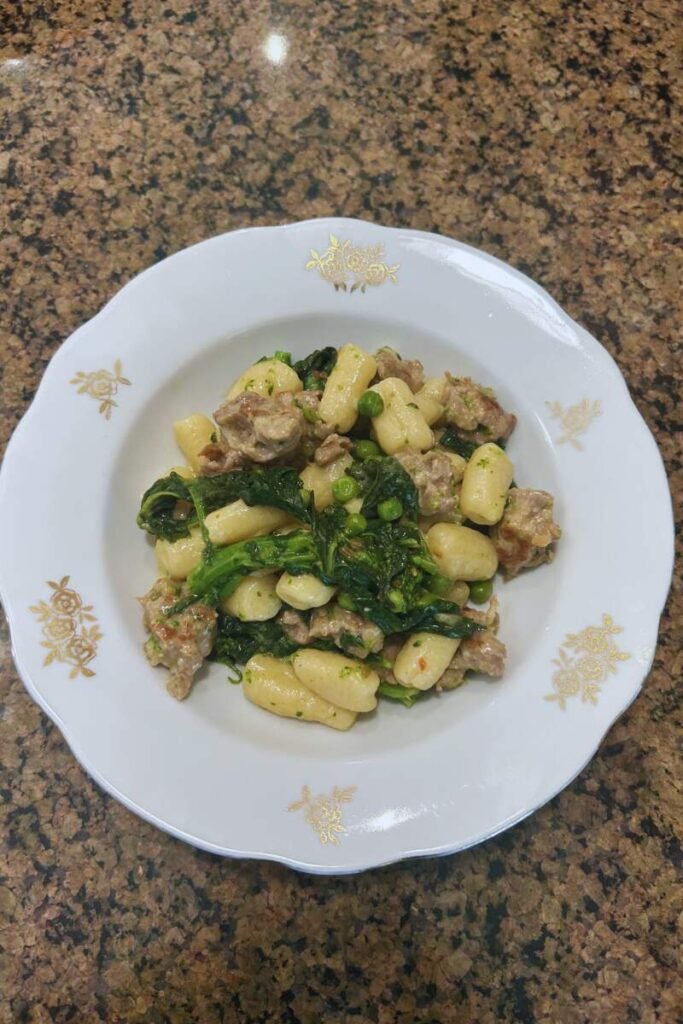
Making ricotta gnocchi with sausage, bitter rapini, and sweet peas yields a light, fluffy alternative to heavy potato gnocchi. Because it relies on minimal flour and a delicate touch, this dough creates an ethereal, cloud-like texture that melts on your tongue.
Combined with the hearty sausage and vibrant greens, it turns simple ingredients into restaurant-quality comfort food. The final dish cooks in seconds, absorbs sauce beautifully, and offers the perfect balance of rich, bitter, and sweet flavors.
Understanding Ricotta Gnocchi
Ricotta gnocchi, also called “gnocchi di ricotta” or sometimes “gnocchi alla romana” when made with specific techniques, became popular during periods when potatoes were unavailable or expensive. The preparation highlights ricotta’s naturally creamy texture and mild flavor, creating gnocchi that feel luxurious despite their simplicity.
The key distinction between ricotta and potato gnocchi lies in their binding mechanisms. Potato gnocchi rely on starch gelatinization (the swelling of starch granules during cooking) for structural integrity, allowing them to tolerate more flour and kneading.
Ricotta gnocchi depend primarily on the egg yolk’s proteins and fat for binding, with flour playing a supporting rather than primary role. This fundamental difference means ricotta gnocchi are ready to cook when barely holding together, while potato gnocchi require firmer texture.
Ricotta’s high moisture content—typically 70-80% water compared to potato’s 79-80%—affects dough hydration significantly. Quality ricotta with appropriate moisture produces gnocchi that cook quickly (30-45 seconds total) with delicate, tender texture. Overly wet ricotta creates gnocchi that dissolve during cooking, while overly dry ricotta produces dense, tough gnocchi.
Ingredients
For the Gnocchi Dough
- 400g fresh ricotta cheese
- 400g 00 flour
- 1 large egg yolk
- Pinch of salt
For the Sauce
- 150g fresh or frozen peas
- 1 bunch rapini, trimmed and chopped (approximately 300-350g)
- 4 garlic cloves, thinly sliced
- 1 teaspoon red chili flakes
- 2 Italian fennel sausages, casings removed (approximately 200-250g)
- 100ml dry white wine
- Parmesan cheese, finely grated (approximately 50-75g, to taste)
- Salt to taste
- 2-3 tablespoons olive oil
Ingredient Selection and Quality
Ricotta Texture and Moisture
Fresh ricotta from Italian specialty shops or farmers markets offers superior texture compared to mass-produced supermarket versions. Quality ricotta should have a smooth, creamy consistency with fine curds rather than grainy or separated appearance.
Ricotta’s moisture content significantly impacts gnocchi success. If your ricotta appears very wet with visible liquid, drain it in a fine-mesh strainer lined with cheesecloth for 30-60 minutes. Conversely, if ricotta appears very dense or dry, it’s already lost too much moisture and won’t produce tender gnocchi. The ideal ricotta feels creamy and holds together slightly but isn’t dry.
To test ricotta moisture, scoop some with a spoon and observe how it holds together. It should form a cohesive mound but not be stiff or pasty. If you squeeze a small amount gently, it should hold together without releasing liquid.
Rapini Characteristics
Rapini, also called broccoli rabe or Italian broccoli, offers slightly bitter, assertive flavor that balances the creamy gnocchi and rich sausage beautifully. Look for bunches with dark green, tender leaves and unopened flower buds at the top. Yellowed leaves or opened flowers indicate age and less pleasant flavor.
The vegetable requires trimming—remove the bottom 5-7cm of thick stems (which are tough and fibrous) and any yellow leaves. The remaining stems, leaves, and flower buds are all edible and tender. Blanching before final cooking softens the rapini slightly while maintaining its distinctive character.
Fennel Sausage Quality
Italian fennel sausages provide essential character to this dish. Quality sausages contain pork, fennel seeds, salt, and spices, with minimal fillers or binders. The fennel seed contributes subtle anise notes that complement the rapini’s bitterness and peas’ sweetness beautifully.
If fennel sausages are unavailable, sweet Italian sausage works acceptably, though it lacks the fennel’s distinctive character. Avoid pre-cooked or heavily processed sausages, which often contain binders that prevent proper browning.
Peas and Seasonal Considerations
Fresh peas in season (spring) offer superior flavor and texture compared to frozen. However, quality frozen peas (which have been blanched immediately after harvest) often provide better results than fresh peas held in storage. The blanching process, applied at peak ripeness, preserves sweetness and tender texture.
According to research from the USDA Agricultural Research Service, frozen peas processed immediately after harvest retain more nutrients than fresh peas held in refrigeration for extended periods, as sugars convert to starch and some vitamins degrade during storage.
Method
Make the Gnocchi Dough
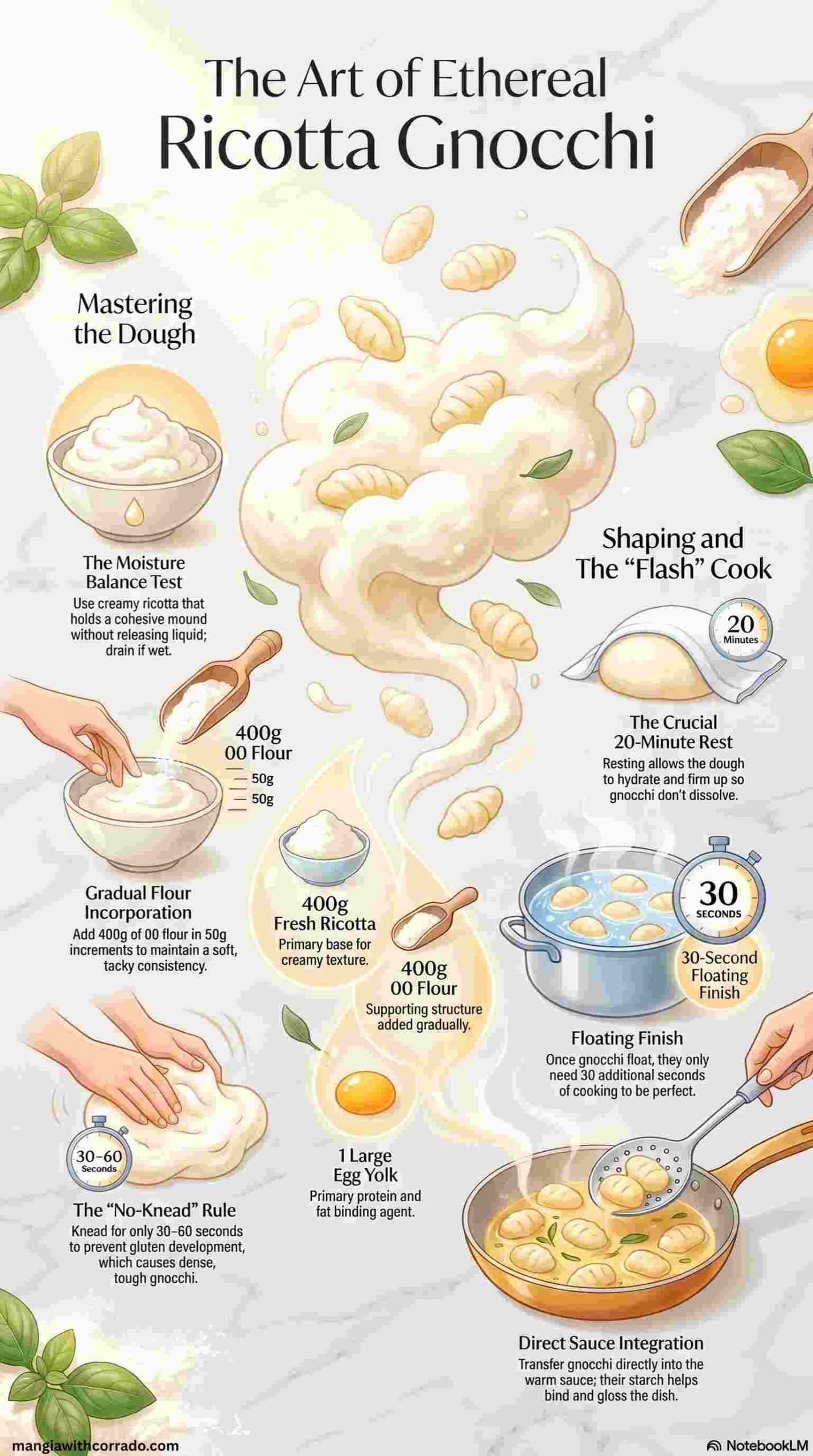
1. Combine ricotta and egg yolk: Place the 400g fresh ricotta in a large mixing bowl. Add 1 egg yolk and a pinch of salt. Using a fork or wooden spoon, mix gently until the yolk is fully incorporated and distributed throughout the ricotta. The mixture should be smooth and creamy with no visible egg white remaining.
Egg yolk serves as the binding agent, providing fat and protein that hold the ricotta particles together during cooking. The yolk’s emulsifying properties create stronger bonds than would occur with ricotta alone, allowing minimal flour addition while maintaining structural integrity.
2. Add flour gradually: Begin adding the 400g of 00 flour to the ricotta mixture, incorporating it gradually in small amounts (approximately 50g at a time). After each addition, fold and mix gently until the flour is distributed throughout, then add the next portion. This gradual approach prevents lumps from forming and allows you to gauge moisture and consistency as you work.
The dough will progress from wet and sticky to increasingly firm as flour accumulates. The goal is to add just enough flour to create a soft, barely-holding-together dough—not a firm, elastic dough like bread or pasta.
3. Knead minimally: Once all flour is incorporated, knead very gently for approximately 30-60 seconds, just until the mixture comes together cohesively. The dough should feel soft and somewhat tacky but hold together when gathered into a ball. Resist any urge to knead longer or more vigorously; excessive kneading develops gluten networks that make gnocchi tough and dense rather than light and fluffy.
This light touch differentiates ricotta gnocchi technique from pasta or bread making, where proper gluten development is essential. Here, you want to minimize gluten formation to maintain delicate texture.
4. Test the dough consistency: Gather the dough into a ball and gently try to form it into a small oval or rope. The dough should be very soft and slightly tacky but not so wet that it falls apart. If it feels too wet and won’t hold any shape, add flour 1 tablespoon at a time, mixing very gently. If it seems too dry and crumbly, you’ve likely over-kneaded it; there’s no remedy beyond starting over (which rarely happens with attentive technique).
Proper ricotta gnocchi dough should feel almost fragile—very different from the firmer, more elastic texture of potato gnocchi dough.
Shape and Rest the Gnocchi
1. Prepare work surface: Lightly flour a clean work surface and have a baking sheet or large tray ready, lightly dusted with flour.
2. Divide dough: Divide the dough into 4-6 portions for easier handling. Work with one portion at a time, keeping others covered under a kitchen towel to prevent drying.
3. Roll into ropes: Taking one portion, gently roll it into a rope approximately 1-1.5cm in diameter and 20-25cm long. This requires a very light touch; avoid pressing or compressing as you roll. The rope should feel somewhat delicate and soft rather than firm and structured like a pasta rope.
If the dough tears or breaks apart during rolling, it’s either too dry or you’ve over-worked the batch. Either way, gather the pieces, work gently together, and try again with lighter pressure.
4. Cut gnocchi: Using a small knife, cut the rope into pieces approximately 1-1.5cm long. Each piece becomes one gnocchi. The size should be consistent—aim for roughly the size of a small grape or large pea. Uniform size ensures even cooking.
5. Arrange on tray: Place cut gnocchi on the floured tray in a single layer, ensuring they don’t touch (they’ll stick together). Gnocchi will compact and firm slightly during the resting period.
6. Rest the gnocchi: Let gnocchi rest at room temperature for 20-30 minutes. During this time, the dough continues to hydrate slightly and firms enough that gnocchi maintain their shape during cooking rather than falling apart. This resting step is crucial for ricotta gnocchi success.
Prepare the Components
While gnocchi rest, prepare all sauce components so cooking moves smoothly:
1. Blanch rapini: Bring a large pot of salted water to a rolling boil (you’ll use this same water for cooking gnocchi later). Add the trimmed, chopped rapini and cook for 2-3 minutes until the vegetable becomes tender and the color brightens to vibrant green. Remove with a slotted spoon and set aside on a plate. The blanching removes excess bitterness while ensuring the rapini is tender for final cooking. Reserve the water for cooking gnocchi.
2. Prepare remaining ingredients: Have your garlic cloves sliced, chili flakes measured, sausages removed from casings, white wine poured, and peas measured. Pre-measuring everything (mise en place) allows you to focus on cooking technique rather than scrambling for ingredients at critical moments.
Make the Sauce
1. Brown the sausage: Heat 2-3 tablespoons olive oil in a large, deep sauté pan or skillet over medium heat. Add the fennel sausage, breaking it into small pieces (approximately 1-2cm) as it cooks. Sausage should break apart and render its fat during this process.
Cook for 5-7 minutes, stirring occasionally, until the sausage pieces develop deep brown color and the fat has largely rendered. This browning creates flavor through the Maillard reaction, as proteins and sugars in the meat react under heat to create hundreds of complex flavor compounds.
2. Add aromatics: Reduce heat slightly to medium-low. Add the sliced garlic cloves and red chili flakes to the pan. Cook, stirring constantly, for approximately 1 minute until the garlic becomes fragrant and just begins to soften. Avoid browning the garlic, which creates bitter, unpleasant flavors. If the heat is too high and garlic is browning, move the pan off the burner momentarily.
3. Deglaze: Pour in the 100ml dry white wine, stirring to combine with the sausage and aromatics. Increase heat slightly to achieve a gentle simmer. The wine should bubble steadily but not violently boil. Cook for 4-5 minutes until the liquid reduces by approximately half. This reduction concentrates the wine’s flavor while allowing some alcohol to evaporate, leaving behind the wine’s fruity, acidic character that balances the dish.
4. Add peas and rapini: Add the 150g peas and the blanched rapini to the pan, stirring to combine. Season lightly with salt, tasting as you go. Remember that Parmesan added at the end will contribute additional salt. Cook for 1-2 minutes to heat the vegetables through and allow their flavors to begin blending with the sausage and wine sauce.
Keep the sauce on low heat while you cook the gnocchi; you’ll add the cooked gnocchi directly to this pan.
Cook the Gnocchi
1. Bring water to boil: Ensure the pot of water (from blanching rapini) is at a rolling boil. If needed, top off with more water to ensure adequate depth—gnocchi need room to float freely.
2. Add gnocchi carefully: Gently add the rested gnocchi to the boiling water in a single addition or two batches if your pot seems crowded. Overcrowding lowers water temperature and causes gnocchi to stick together. Stir very gently once after adding, using a wooden spoon or fork to ensure they don’t stick to the pot bottom.
3. Watch for floating: Within 1-2 minutes, the gnocchi will begin floating to the surface as their interior cooks and becomes less dense. As gnocchi float, they’re mostly cooked but still have firm texture.
4. Additional cooking: Once gnocchi float, cook for another 30 seconds. This brief additional cooking ensures the interior is completely cooked through without overdoing them. Ricotta gnocchi are done very quickly; prolonged cooking causes them to become mushy and begin falling apart.
5. Remove carefully: Using a slotted spoon or spider strainer, lift the cooked gnocchi from the water, allowing excess water to drain back into the pot. Transfer directly to the sauce pan. Some cooking water clinging to the gnocchi is desirable as it helps create a light, cohesive sauce.
Finish the Dish
1. Combine gnocchi and sauce: Add the cooked gnocchi directly to the sausage-rapini-pea sauce, gently folding them together. The hot gnocchi will absorb some of the sauce’s flavor while contributing their starchy cooking liquid to lighten and help bind everything together.
2. Adjust consistency: If the sauce seems too thick, add a splash of gnocchi cooking water (1-2 tablespoons at a time), stirring gently to combine. The sauce should coat the gnocchi lightly and appear glossy rather than dry or overly liquid.
3. Add Parmesan: Remove the pan from heat and add finely grated Parmesan cheese to taste (start with 50g and adjust upward). Stir very gently to distribute the cheese throughout without breaking apart the delicate gnocchi.
4. Final seasoning: Taste and adjust seasoning with additional salt and black pepper as needed. The Parmesan contributes considerable salt, so add cautiously.
5. Serve immediately: Divide gnocchi and sauce among warmed bowls, ensuring each portion contains gnocchi, sausage pieces, vegetables, and sauce. Garnish with additional grated Parmesan and a grinding of black pepper. Serve immediately while everything is hot and the gnocchi maintain their optimal texture.
Technical Notes on Ricotta Gnocchi Success
Moisture balance: The most critical factor in ricotta gnocchi is balancing ricotta moisture against flour addition. Too-wet ricotta requires excessive flour to firm up, resulting in heavy, tough gnocchi. Too-dry ricotta produces crumbly dough that won’t hold together. Testing ricotta before beginning helps—if it seems very wet, drain it. If very dry, it likely won’t produce good results.
Minimal handling: Every time you handle the dough, you’re developing gluten networks that make gnocchi tougher. Once you’ve mixed in all flour and done your light knead, resist any urge to re-knead or “improve” the dough. If a piece breaks during cutting, gather scraps and very gently reform rather than re-kneading.
Resting importance: The 20-30 minute rest isn’t merely convenient timing; it’s essential for gnocchi to firm enough to cook properly. Unrested gnocchi often fall apart in the boiling water. If you’re short on time, even 15 minutes helps considerably.
Cooking timing: Ricotta gnocchi cook almost immediately once they float. They don’t require the extended cooking that potato gnocchi need. The additional 30-second cooking after floating ensures they’re done without overdoing them.
Serving and Presentation
Ricotta gnocchi are delicate and best enjoyed immediately after cooking. Serve in shallow bowls or on warm plates, allowing sauce to distribute evenly. The gnocchi should appear pillowy and soft, each piece coated lightly with sauce and studded with sausage pieces, rapini, and peas.
This dish serves 4 as a main course or 6 as a first course with lighter accompaniments. The rich sausage and creamy gnocchi require only simple additions:
Wine pairing: Medium-bodied Italian reds like Chianti or Barbera complement the sausage and peas beautifully. The wine’s acidity cuts through richness while its flavors harmonize with the fennel and herbs.
Salad: A sharp green salad with lemon vinaigrette or bitter greens with acidic dressing provides refreshing contrast.
Bread: Crusty Italian bread soaks up remaining sauce without overwhelming the dish.
Variations and Adaptations
Herb variations: Add 2-3 tablespoons finely chopped fresh herbs (basil, parsley, or sage) to the gnocchi dough for additional flavor. Add herbs with the initial ricotta and egg yolk, before flour incorporation.
Spinach gnocchi: Add 100-150g cooked, squeezed-dry, finely chopped spinach to the ricotta before flour incorporation for “gnocchi verdi.” The spinach adds color, flavor, and nutrition.
Different vegetables: Replace or supplement rapini with:
- Broccoli, blanched and cut into small florets
- Asparagus tips, blanched and cut into 2-3cm pieces
- Swiss chard or kale, chopped and blanched
- Roasted red peppers, cut into strips
Vegetarian version: Omit sausage and increase vegetables substantially. Add sautéed mushrooms, additional garlic, or white beans for protein and substance. A simple preparation with brown butter, sage, and Parmesan showcases the gnocchi beautifully.
Cheese variations in gnocchi: Add 30-40g finely grated Parmesan or other aged cheese to the ricotta mixture before flour incorporation for additional savory flavor and richness.
Different sauce bases: Rather than sausage-based sauce, try:
- A light cream sauce with nutmeg and sage
- A simple tomato sauce with fresh basil
- A brown butter and sage preparation
- A light seafood sauce with white wine and seafood stock
Make-ahead option: Form gnocchi up to 2 hours ahead, keeping them refrigerated and covered. The extended refrigeration actually helps firm them for more reliable cooking. Alternatively, freeze formed, uncooked gnocchi in a single layer on a tray, then transfer to freezer bags for up to 3 months. Cook frozen gnocchi directly without thawing—they’ll take 2-3 minutes longer to cook.
Troubleshooting Common Issues
Gnocchi falling apart during cooking: This indicates insufficient firmness, usually from too-wet ricotta or too little resting time. Ensure ricotta is drained adequately and give gnocchi full 20-30 minutes rest before cooking. With practice, you’ll learn to judge ricotta moisture and dough consistency by feel.
Gnocchi sinking and staying at bottom: Unrested gnocchi often don’t float properly. The 20-30 minute rest is essential. Also, if gnocchi are too large, they take longer to float and may overcook before reaching the surface. Cut smaller gnocchi (approximately grape-sized) if this occurs.
Dense, tough gnocchi: Over-kneading developed excessive gluten, or too much flour was added during mixing. Use lighter touch next time and add flour more gradually. Also avoid any temptation to re-knead or work the dough after initial mixing.
Gnocchi too light and fluffy (falling apart in sauce): Paradoxically, this usually indicates too much flour was added, which paradoxically creates less cohesive gnocchi by interfering with ricotta’s natural binding ability. Reduce flour slightly next time and use ricotta with slightly less moisture.
Storage and Make-Ahead
Uncooked ricotta gnocchi store well, making advance preparation practical:
Refrigeration: Arrange formed gnocchi on a floured tray, cover loosely with a towel, and refrigerate for up to 24 hours. The extended refrigeration actually improves cooking results by firming the gnocchi.
Freezing: Freeze formed gnocchi in a single layer until solid (2-3 hours), then transfer to freezer bags, removing excess air. Frozen gnocchi keep for up to 3 months and cook directly from frozen, adding 2-3 minutes to cooking time.
Sauce preparation: The sauce components can be partially prepared ahead. Brown sausage, blanch rapini, and measure all ingredients up to 4 hours in advance. Complete the sauce just before serving by adding wine, reducing it, and adding peas and rapini.
Leftover cooked gnocchi can be reheated gently in a skillet with sauce over low heat, though gnocchi’s delicate texture is best enjoyed fresh. Extending storage beyond a day is not recommended.
This ricotta gnocchi preparation demonstrates how understanding ingredient properties, and specifically ricotta’s high moisture content and egg yolk’s binding properties, and allows dramatically different technique from potato-based gnocchi. The result is an ethereal, delicate pasta that cooks in seconds and showcases the quality of supporting ingredients.
For those interested in exploring other fresh pasta preparations using similar handmade techniques, techniques from fresh pappardelle preparation or ricotta ravioli provide valuable foundation skills applicable across filled and shaped pasta varieties.
The combination of ricotta gnocchi with sausage, rapini, and peas reflects classical Italian cooking principles: simple, quality ingredients prepared with proper technique, allowing each component to contribute to a unified whole that’s greater than the sum of its parts.
The bitterness of rapini balances the creamy gnocchi and rich sausage, while sweet peas add color and textural contrast, creating a dish that satisfies while maintaining surprising lightness and elegance.