
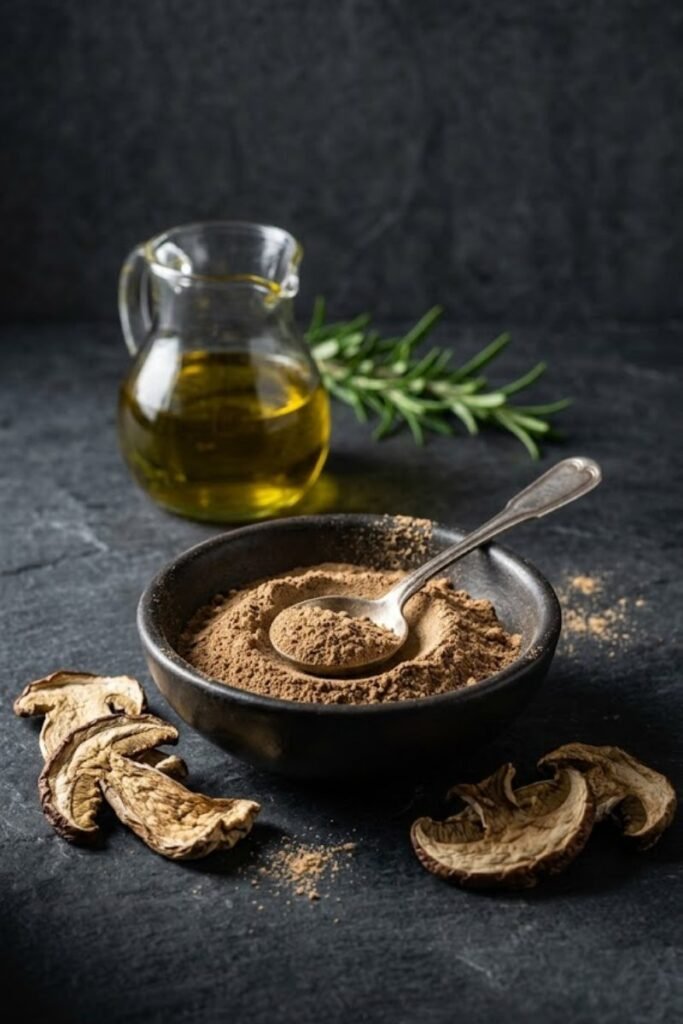
If you are wondering about the deep savory power of porcini mushroom powder, learning how to utilize this dried pantry staple is the absolute ultimate step required to elevate your everyday Italian cooking. When you add a pinch of this concentrated seasoning to a dish, the fine brown grains dissolve instantly to inject a massive wave of earthiness into the food.
If you let your sauces run too watery or rely on bland supermarket button mushrooms for flavor, you risk leaving your dinner tasting flat and uninspired. Watching your complex pasta sauces or slow-simmered braises turn out dull and lacking character shows how easily skipping a high-flavor pantry element compromises your hard kitchen work.
For me, delivering an elite restaurant-quality plate simply requires sprinkling a small spoonful of this unrefined mushroom flour directly into your warm pan fats. This continuous seasoning defense ensures your skillet reductions remain rich, savory, and full-bodied without requiring any extra cooking time over a hot stove burner flame.
The Glutamate Concentration of Dehydrated Wild Caps
To understand why a simple brown dust transforms a basic kitchen sauce so quickly, you have to look closely at moisture evaporation and natural taste chemistry. Wild porcini mushrooms grow naturally across the damp forest floors of Italy, absorbing rich minerals from the soil.
When fresh caps are harvested, they contain a massive volume of water that dilutes their internal flavor compounds significantly. Industrial and artisan producers slice these wild caps thin and dry them slowly under controlled heat to evaporate the water content completely.
This slow dehydration process triggers a massive concentration of natural glutamic acid, the organic amino acid responsible for delivering the deeply satisfying taste known as umami. When you grind these bone-dry slices into a fine flour, you are creating a highly concentrated flavor booster.
The fine dust dissolves completely upon making contact with hot pan lipids, releasing a warm, woodsy complexity that salt shakers cannot mimic. This savory enhancement coats the tongue instantly, a rustic baseline I track closely when managing deep shelf-stable flavor assets inside my guide on Essential Pantry Ingredients That Define Puttanesca.
This savory coating shields the tongue from thin, watery flavors, mimicking the rich depth of a sauce that has been simmering over a hot stove flame for hours. Without this powder sitting inside your cupboard, you cannot add instant forest aromatics to quick weeknight noodles without dealing with mushy vegetable textures.
The Serious Eats Lipid-Blooming Method for Ground Powders
The kitchen rule for unlocking the full flavor potential of dried mushroom dust relies on blooming the powder directly inside warm fats instead of raw water. I follow the strict ingredient measurement ratios, fat blooming steps, and liquid reduction guidelines documented inside the official Serious Eats Pantry Seasoning Guide to keep my savory sauces completely pristine.
Banish late-stage dusting entirely. Never try to fix a flat dinner plate by shaking raw mushroom powder directly over a finished, steaming bowl of pasta right before serving. Sprinkling the dry flour onto cooked starch leaves an unappealing, chalky coating across your noodles and leaves a raw, muddy taste in your mouth.
Utilize the hot lipid blooming technique. Melt a tablespoon of unsalted butter or extra virgin olive oil inside your heavy skillet well over medium heat before adding any liquids. Drop a single teaspoon of your dry mushroom dust directly into the warm fat along with your minced shallots.
Maintain a brief 30-second window. Stir the mixture continuously with a wooden spoon as the hot oil bubbles gently around the brown powder. This brief fat-soaking step dissolves the oil-soluble flavor compounds rapidly, infusing the entire fat base with a deep, earthy aroma.
The moment the mixture releases a rich, nutty scent, pour in your primary liquid ingredients like whole cream, white wine, or crushed tomatoes. This sudden fluid addition halts the frying process instantly, locking the savory mushroom notes firmly into your sauce base without letting the fine particles scorch.
Three Simple Ways to Upgrade Your Everyday Kitchen Menu
Incorporating this dried woodland asset into your weekly rotation does not require executing long, complicated restaurant techniques. You can easily upgrade simple, everyday comfort foods using minor pan adjustments that deliver a satisfying, professional depth.
- The Velvet Risotto Finish: Stir a half-teaspoon of the dry powder into your warm chicken stock before ladle-feeding your rice grains. The fine grains suspend perfectly in the starch, adding a deep golden color and a complex earthy flavor.
- The Rich Pan-Cream Glaze: Whisk a spoonful of mushroom flour into a skillet reduction of heavy cream, white wine, and seared chicken drippings. The dust acts as a natural thickener, binding the cream into a glossy jacket that clings to your pasta.
- The Savory Meatball Crust: Dust a pinch of the concentrated seasoning directly into your raw ground beef and pork blend along with your grated cheese. The powder dissolves deep inside the protein matrix as it bakes, locking in extra savory juices.
I know my seasoning strategy is fully successful when the rich sauce forms a smooth, velvety jacket across every single pasta ribbon. The deep, woodsy flavors blend with your hot cooking fats beautifully, delivering a perfect restaurant-grade dinner that contains zero gritty residue. Taking an extra minute to bloom your mushroom powder inside warm oil keeps your everyday cooking simple, delicious, and easy for everyone to enjoy.