
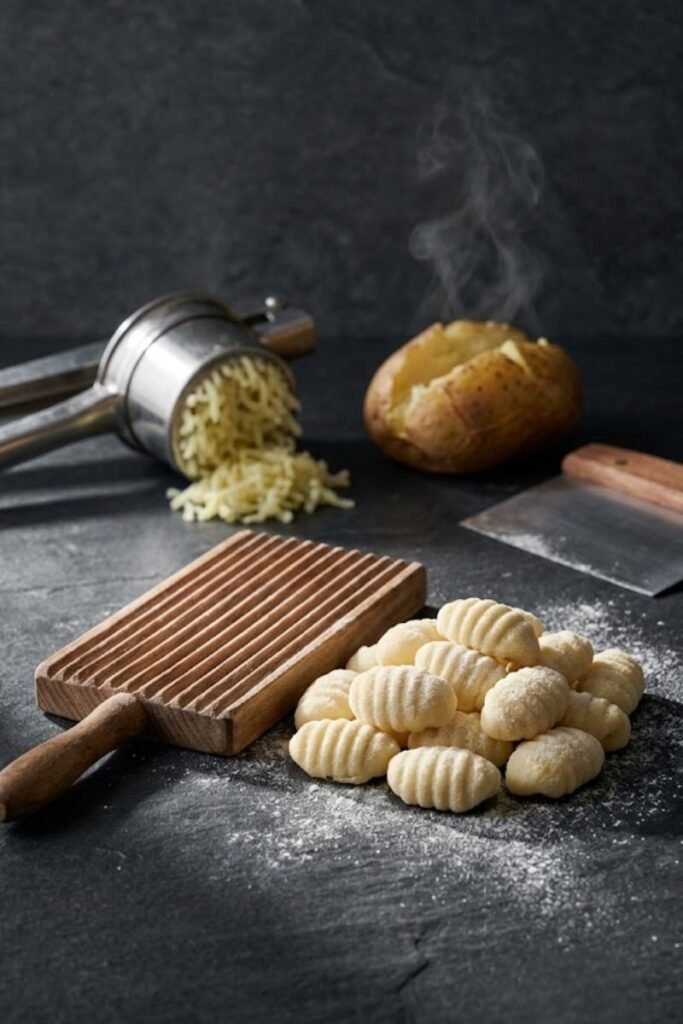
If you are wondering why is my gnocchi heavy, learning how to manage potato steam and flour gluten is the absolute ultimate step required to rescue your delicate dumpling dinner. When you are rolling out a fresh batch of dough, the cooked potato pillars need to mix into a light, pillowy cloud that melts in your mouth.
If you let water pool across your baking sheets or over-knead the mixture until the starches turn sticky, you risk transforming your dough into tough rubber blocks. Watching your time-consuming dumplings sink into a dense, gummy paste that feels like little rocks shows how easily small material handling errors compromise your hard kitchen work.
For me, delivering an elite restaurant-quality plate simply requires selecting dry baking potatoes, venting internal moisture early, and cutting your flour additions down to a strict protective layer. This continuous structural control ensures your dumplings float effortlessly during the boil, guaranteeing a smooth and glossy table presentation.
The Sticky Starch Lockdown of Over-Boiled Russet Cells
To understand why a delicate potato dumpling transforms into a tough, rubbery knot so quickly, you have to look closely at water retention and cell wall rupture. Authentic regional cooking completely rejects standard red or white waxy potatoes because their high moisture-to-starch ratio creates a loose, watery pulp that demands excessive flour to hold its shape.
Your ideal foundation relies on high-starch, low-moisture varieties like classic Russet or Idaho spuds, which possess dry, floury internal cell structures. However, if you chop these potatoes into small cubes and boil them uncovered inside a deep pot of water, the porous flesh drinks in massive volumes of liquid.
When you mash these wet, water-logged potato cells while they are still boiling hot, the intense steam pressure fractures the delicate starch perimeters completely. This structural rupture spills a sticky, glue-like compound called amylopectin across your cutting board, building a heavy paste that binds aggressively with wheat proteins.
Once this sticky starch network locks onto your dry ingredients, it demands an immense volume of extra flour just to stop clinging to your fingers. I manage these exact hydration lines and fragile starch boundaries carefully whenever I assemble scratch-made dough formulas, a material handling standard I prioritize inside my troubleshooting guide on Fix Dry, Crumbly Homemade Pasta Dough.
This excess flour overloads the mixture, transforming a light, cloud-like dumpling into a dense mass that hardens into a little rock the exact second it hits boiling water. The separate components collapse into an unappealing, gummy paste that ruins the visual look of your entire dish.
The Serious Eats Steam-Venting Method for Light Potato Pillows
The kitchen rule for maintaining a light, melt-in-your-mouth dumpling core relies on removing internal water vapor before adding any wheat starches. I follow the strict potato baking techniques, ricing boundaries, and manual folding steps documented inside the official Serious Eats Guide to Light and Fluffy Gnocchi to keep my dough structures completely pristine.
Banish direct water boiling entirely. Never try to prep your potato assets by peeling them and simmering the naked chunks inside a boiling water channel. This wet environment saturates the potato flesh completely, ruining any chance of achieving a light dough balance before you even reach for your flour bag.
Utilize whole salt baking. Prick your whole, unpeeled Russet potatoes all over with a fork and arrange them flat across a baking sheet lined with a layer of coarse sea salt. Bake the spuds at 400°F for roughly one hour until the skins wrinkle and the internal flesh turns completely soft and powdery.
Maintain complete steam evacuation. Slice the hot potatoes open immediately with a sharp knife to let the trapped internal water vapor vent out into the open room air. Scoop the warm flesh straight into a metal ricer and press the grains out across a clean, unheated wooden work surface.
Spread the riced potato strands into a thin, level layer and let them cool down completely to room temperature before touching the dough. This passive cooling window allows all the remaining core moisture to evaporate completely, ensuring your flour binds with dry potato fluff instead of wet steam.
Gentle Folding Steps to Stop Gluten Traps
The final law for successfully building your dumpling boards requires abandoning traditional pasta kneading methods to protect the fragile flour structure. Dust your dry, cooled potato strands with a light layer of unbleached all-purpose flour and a small splash of beaten egg yolk.
- Ditch Aggressive Kneading: Never punch, twist, or press the dough columns hard against your counter like you would for a standard egg pasta dough sheet.
- Utilize a Bench Scraper: Use a metal bench scraper to lift and fold the outer edges of the flour over the potatoes using quick, shallow chopping cuts.
- Stop at Homogeneity: Cease all manual manipulation the exact second the dry white streaks vanish and a loose, cohesive dough ball forms under your tool.
This gentle chopping motion combines the components cleanly without pulling or stretching the wheat strands, keeping the tough gluten networks completely asleep. Roll the soft, delicate dough into long, half-inch ropes on a floured surface, and use your scraper to slice the lines into separate, pillow-shaped units.
I know my starch control strategy is fully successful when the independent dumplings rise to the top of your boiling pot within 60 seconds of hitting the water. The cooked pillows slide onto the serving plate as light, vertical blocks that melt effortlessly against the roof of your mouth, delivering a flawless restaurant-grade dinner.
Taking an extra hour to salt-bake your potatoes and protect your flour line keeps your home cooking simple, delicious, and easy for everyone to enjoy.