
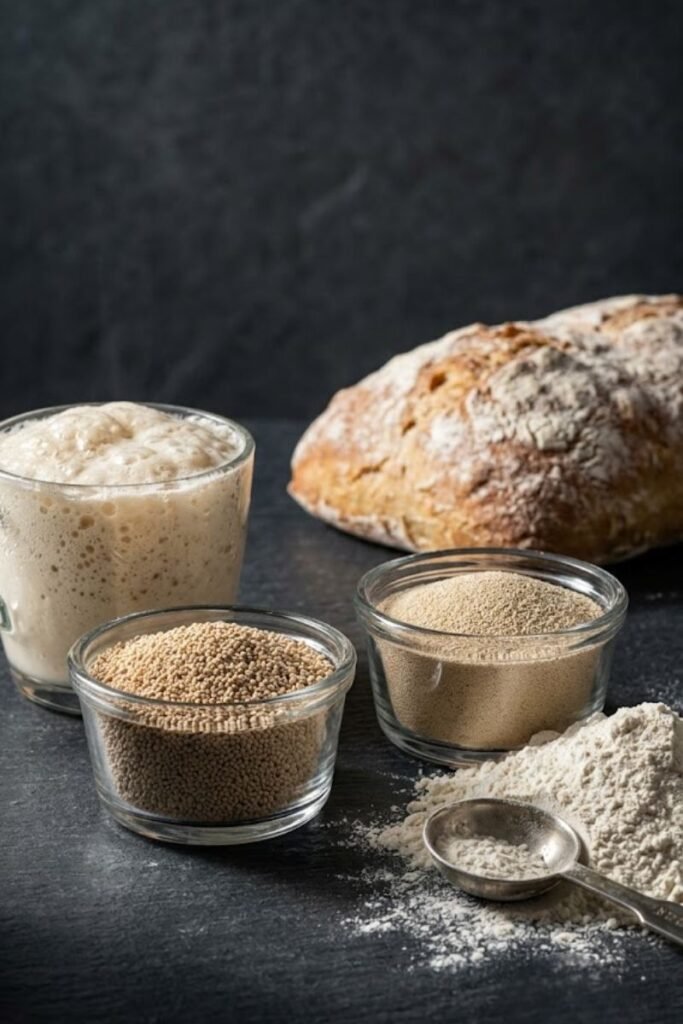
If you are wondering about the operational split between active dry yeast vs instant yeast, selecting the right leavening agent is the absolute ultimate step required to master classic Italian breads. When you are mixing a fresh batch of dough, the hidden fungal cells need to digest unrefined flour sugars smoothly to generate clean carbon dioxide pockets.
If you guess your activation fluid measurements or pick an incompatible strain for your baking timetable, you risk stalling your fermentation curves entirely. Watching your labor-intensive dough masses turn into flat, dense, or unpleasantly sour bricks shows how easily a small ingredient choice compromises your kitchen work.
For me, delivering a true bakery-quality crumb simply requires matching your dough hydration style to the precise water-absorption speeds of your chosen yeast cells. This continuous cell defense guarantees your crust expands beautifully inside a hot oven, ensuring every single loaf yields a light, airy structure that sets your home kitchen line apart.
The Cellular Processing Split of Dehydrated Yeast Strains
To understand why two tan powders sitting inside identical paper packets react so differently inside a wet flour well, you have to look closely at manufacturing methods and cell wall density. Both commercial options rely on the exact same active fungal strain, Saccharomyces cerevisiae, which thrives by consuming simple starches.
The divide occurs during the industrial drying stage, where liquid yeast cream is dehydrated down into a shelf-stable powder. Active dry variations undergo a slow, gentle hot-air drying cycle that rolls the wet cell clusters into relatively large, heavy spheres.
This slow process creates a thick, protective outer jacket of dead yeast cells around the living core, shielding the interior from room air. To break past this dead layer and wake up the internal cells, you must submerge the spheres in a warm liquid bath beforehand. I manage this delicate cell awakening and temperature line carefully whenever building traditional starters, an exact fermentation standard I detail inside my guide explaining What is a Biga? (The Italian Baking Preferment).
Instant variations, by contrast, are flash-dried using quick fluid-bed heat before being ground down into microscopic, porous rods. This thin granular structure lacks any heavy shell of dead cells, allowing water to penetrate straight into the living core instantly upon contact.
The Serious Eats Hydration Rule for Proofing Dough Wells
The kitchen rule for keeping your yeast active relies on matching your mixing methods to the physical absorption rates of your grains. I follow the strict water temperatures, flour ratios, and fermentation timing benchmarks documented inside the official Serious Eats Yeast Proofing Guide to keep my dough structures completely pristine.
Banish scalding hot tap water entirely. Never dump your dry yeast granules into a cup of steaming water that measures past 115°F on your kitchen thermometer lines. Extreme thermal heat kills the delicate fungal cells on impact, leaving you with a dead, watery liquid that will fail to lift your flour.
Utilize the active blooming bath. If you are using active dry yeast packets, whisk the granules into a bowl of lukewarm water measuring precisely 105°F along with a pinch of sugar. Let the cup sit undisturbed on your counter for ten minutes until a thick layer of tan foam blankets the surface.
Maintain a direct instant flour mixing. If your recipe calls for instant yeast, skip the water blooming step completely and dump the fine powder straight into your dry flour bowl. The tiny granules dissolve smoothly during the initial water pouring phase without requiring any advanced soaking steps.
The moment your liquids and dry starches link together, lock your dough container inside a draft-free workspace to let the gas cells multiply. This stable air environment protects the rising bubbles from sudden drafts, allowing your wheat grids to stretch gradually without tearing their gluten walls.
Choosing the Best Strain for Italian Crust Dynamics
Selecting between these two leavening assets does not require managing complicated formulas; it simply requires tracking your kitchen clock and target bread style. You can easily adjust your final dough textures by matching the right strain to the specific density of your regional Italian loaves.
- Steady Active Dry for Focaccia: The measured, slow gas release of active dry yeast works beautifully for airy flatbreads. It allows you to execute extended proofing runs that develop complex, nutty sugars and giant air bubbles safely.
- Rapid Instant for Weeknight Pizza: When you need to drop a scratch-made pie on the table fast, instant grains shave massive chunks of time off your first rise. The thin granules start pumping carbon dioxide instantly, letting you slide the dough onto your hot baking steel fast.
- Preferred Strains for Overnight Starters: If you are building an overnight poolish or biga starter, stick exclusively to active dry cells. The slow fermentation rate ensures your preferment develops deep, rustic aromas over twelve hours without collapsing into a sour liquid slurry.
I know my cell hydration strategy is fully successful when the baked loaf exits your hot oven with an incredibly crisp, golden-brown crust. The interior crumb displays an open network of separate, elastic air pockets that bounce back immediately when pressed with your fingers. Taking an extra minute to understand your yeast cell structures keeps your home baking simple, reliable, and easy for everyone to enjoy.