
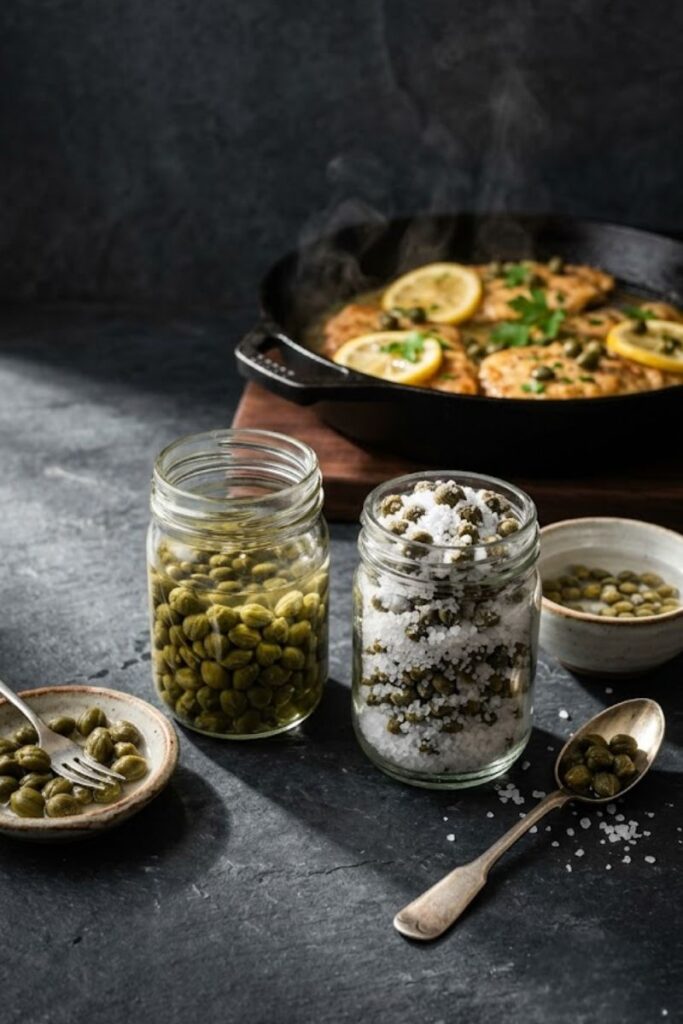
If you are wondering about the culinary divide between capers in brine vs salt, picking the right packing method is the absolute ultimate step required to balance sharp, punchy flavors in your favorite Mediterranean dishes. When you are building a savory sauce, these small flower buds need to deliver a clean burst of floral acidity without throwing off your entire seasoning line.
If you scoop your ingredients straight from the jar without checking their preservation style, you risk making your dinner taste unpleasantly sour or intensely salty. Watching your expensive seafood toppings or pasta sauces turn out harsh and unbalanced shows how easily a simple ingredient prep error compromises your hard kitchen work.
For me, delivering a true restaurant-quality plate simply requires matching your recipe’s fat levels to the precise moisture and texture profiles of your preserved buds. This continuous quality control ensures your pan sauces emulsify smoothly, a flavor standard I maintain when organizing raw pantry assets for quick weeknight cooking.
The Preservation Split of Vinegar Bath and Dry Crystals
To understand why two green jars packed with identical flower buds from the Capparis spinosa shrub deliver completely different taste profiles, you have to look closely at preservation chemistry. Capers are harvested by hand while they are still tight, un-ripened green buds, carrying a naturally bitter flavor compound called glucocapparin.
To make them edible, producers must cure them immediately using either a wet liquid acid or dry mineral crystals. Brined variations are submerged inside a heavy solution of distilled white vinegar, water, and salt, which quickly leaches away the internal bitterness.
However, this wet preservation method forces the porous flower petals to drink in the sharp vinegar, completely replacing the natural herbal notes of the plant with a dominant, sour tang. Salt-packed variations, by contrast, are buried raw inside layers of coarse sea salt crystals to draw out internal moisture through simple osmosis.
This dry curing process deflates the water pockets inside the petals cleanly without introducing any outside vinegar flavors, locking the true, woodsy, and floral aromas safely inside the firm core.
I manage these exact clean acid balances and savory pantry layers carefully whenever I assemble complex Mediterranean reductions on my station, a tracking focus I maintain closely inside my master guide on the Essential Pantry Ingredients That Define Puttanesca.
The Serious Eats Soaking Method for Removing Excess Sodium
The kitchen rule for keeping your floral buds tasting fresh relies on executing a thorough fresh-water soak before dropping them into hot skillet fats. I follow the strict water temperatures, soaking durations, and drying guidelines documented inside the official Serious Eats Capers Preparation Manual to keep my pan emulsions completely pristine.
Banish straight-from-the-jar dry frying entirely. Never throw raw, un-rinsed salt-packed buds directly into a pool of hot olive oil along with your delicate garlic slices. Searing un-soaked salt crystals over a hot gas flame will instantly over-salt your oil reduction, ruining your flavor foundation before the pasta even hits the pan.
Utilize the cold-water submersion bath. Measure out your desired portion of salt-packed buds, drop them into a small ceramic bowl, and cover them completely with cold tap water. Let the vessel sit undisturbed on your counter for a full fifteen minutes to draw out the harsh outer sodium crust gradually.
Maintain thorough paper towel drying. Drain the water well through a fine wire mesh strainer, and tumble the wet buds onto a thick sheet of paper towels. Press down gently with a dry cloth to absorb the surface water film completely before adding them to your skillet.
The moment your dried buds clear the prep line, drop them directly into your warm pan fats to let the floral aromas bloom safely. This dry introduction prevents loose water droplets from splashing hot oil across your stove, ensuring your base elements toast smoothly without steaming the pan floor.
Choosing the Best Packing Method for Your Skillet Sauces
Selecting between these two preservation styles does not require managing complicated culinary formulas; it simply requires tracking your heat applications and target sauce weights. You can easily adjust your final food textures by matching the right jar to the specific assembly steps of your meal.
- Wet Brine for Cold Cold Plates: The sharp, vinegary punch of brined capers works beautifully in raw, unheated presentations. Toss them straight into a cold potato salad, slice them over a fresh smoked salmon platter, or drop them into a quick tartare sauce to wake up heavy fats.
- Dry Salt for Rich Chicken Piccata: When you are building a hot pan reduction with white wine and butter, stick exclusively to salt-packed buds. The firm, meatier texture handles high skillet heat beautifully without disintegrating into a soft, mushy paste during the simmer.
- Purity for Puttanesca Reductions: To build an authentic, deep savory glaze with black olives and anchovy fillets, un-vinegared salt buds provide total flavor clarity. They deliver a clean, earthy umami depth that bonds with your tomato juices without flooding the pan with harsh white vinegar vapors.
I know my ingredient preparation strategy is fully successful when the seasoned sauce forms a smooth, glossy jacket across every single protein cutlet. The deep, floral flavors blend with your hot cooking fats beautifully, delivering a perfect restaurant-grade dinner that contains zero harsh or metallic notes.
Taking an extra fifteen minutes to soak your salt-packed assets and dry your ingredients keeps your home cooking simple, delicious, and elite for everyone at the table