
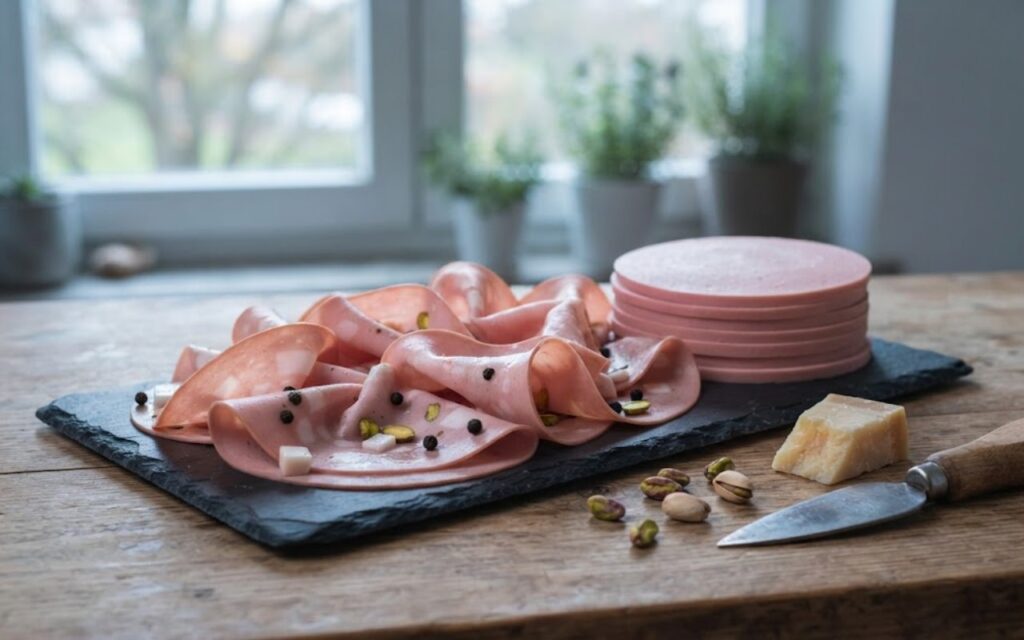
If you want to know what‘ s mortadella, look past the rubbery deli counter and step into the historic butcher shops of Bologna. This prized Italian cold cut is a finely emulsified pork sausage studded with tender cubes of cured neck fat, whole black peppercorns, and aromatic spices like myrtle berries.
American bologna claims direct descent from this Italian classic, but industrial mass production stripped away everything that made the original special. Real mortadella offers a delicate, silky melt and balanced savory warmth that completely outclasses standard packaged lunch meat.
Quick-Glance Kitchen Summary
Real Italian mortadella is a slow-roasted pork emulsion studded with firm pork neck fat cubes and whole spices, delivering a silky mouthfeel rather than a rubbery chew. To enjoy it properly, always request it shaved paper-thin so the delicate fat melts instantly at room temperature.
- Base Meat: 100% select lean pork trimmings, finely pureed into an emulsion
- Fat Cubes (Lardelli): Cured pork neck fat (gola), accounting for roughly 15% of total volume
- Signature Spices: Whole black peppercorns, ground coriander, cinnamon, mace, garlic, and optional myrtle berries or pistachios
- Thermal Cooking: Slow-roasted in dry-air convection ovens to an internal temperature of 70°C (158°F)
- Slicing Standard: Paper-thin (velata), translucent slices served at 20°C to 22°C (68°F to 72°F)
Why Real Mortadella Tastes Nothing Like Lunch Meat Bologna
American supermarket bologna gained popularity as an affordable survival food during the Great Depression. Factory producers quickly swapped whole-muscle pork for mechanically separated poultry trimmings, beef scraps, liquid smoke, and industrial water binders. This aggressive processing produces a dense, uniform paste with high moisture retention and a distinctly rubbery snap.
Authentic Mortadella Bologna IGP follows strict Italian consortium regulations that ban scrap fillers and poultry. Italian salumieri grind high-grade lean pork shoulder or leg meat through fine steel plates before emulsifying it with ice. This gentle emulsion suspends meat proteins with pristine water droplets without rupturing cellular structure.
The difference in aroma hits you the moment you open the wrapper. Mortadella relies on warm spices, crushed myrtle berries, fresh garlic, and whole tellicherry peppercorns instead of liquid smoke. The result is a savory, floral perfume that smells like a slow-simmered roast rather than salty hot dog water.
| Cold Cut Classification | Meat Emulsion & Mosaic Structure | Aromatic Seasoning Profile | Thermal Cooking Technique |
|---|---|---|---|
| Authentic Mortadella (DOP) | Finely pureed lean pork shoulder studded with solid cubes of rich pork neck fat. | Whole black peppercorns, myrtle berries, garlic, cinnamon, and whole pistachios. | Slowly dry-baked in large brick ovens using gentle hot-air chambers until fully set. |
| American Bologna | Finely uniform, fully emulsified blend of pork, beef, and mechanically separated poultry scrap paste. | High sodium loads, corn syrup, liquid smoke flavorings, and chemical preservatives. | Mass-boiled or steam-cooked inside plastic casings for speedy commercial manufacturing. |
Mortadella vs American Bologna: What Goes Inside the Casing
Understanding the gap between these two cured meats comes down to checking raw ingredients, grinding machinery, and cooking methods.
| Feature | Authentic Mortadella Bologna IGP | American Supermarket Bologna |
|---|---|---|
| Base Materials | Pure lean pork muscle trimmings from leg or shoulder cuts. | Mechanically separated chicken, turkey, beef trimmings, and pork offal. |
| Fat Content | Discrete cubes of firm, hand-washed pork neck fat (gola). | Liquid fat emulsified invisibly into the raw meat batter. |
| Feeder Gear | Industrial cutter bowl and slow dry-air convection baking ovens (stufe). | High-speed vacuum bowl choppers and steam-jacketed water cooking chambers. |
| Texture | Silky, melting, and velvety when sliced paper-thin across the grain. | Dense, springy, rubbery, and uniform throughout the slice. |
| Spicing Profile | Whole black peppercorns, myrtle berries, nutmeg, and optional pistachios. | Onion powder, garlic salt, sodium erythorbate, and artificial smoke. |
Italian producers use large industrial cutters to whip lean pork into a velvety pink paste. They cut the lardelli fat squares from the throat and neck of the pig because this fat has the highest melting point on the animal. These white fat squares hold their shape through hours of baking rather than liquefying into grease.
American processors force their meat mix through high-speed micro-cutters until every component liquifies into a slurry. The entire mixture gets pumped into synthetic plastic casings and steamed in hot water tanks. Because the fat is trapped entirely within the protein matrix, factory bologna never develops the contrast between lean meat and melting lard.
When you buy brands like Levoni, Rovagnati, or Veroni, look for the official IGP seal on the label. This European Union designation guarantees the sausage came from designated Northern Italian regions and followed certified production techniques.
How Neck Fat and Dry Heat Give Mortadella Its Texture
The secret behind mortadella’s delicate bite lies in how commercial salumi makers handle thermal energy. Once workers mix the lean pork batter with the diced neck fat, they hand-stuff the mixture into natural or beef-bung casings. Some artisanal mortadelle weigh over one hundred pounds and require heavy twine harnesses for physical support.
The stuffed sausages hang inside dry-air heat ovens called stufe for anywhere from twelve to twenty-four hours. Technicians gradually raise the air temperature, slowly cooking the interior of the sausage until the core registers exactly 70°C (158°F). This slow dry heat activates pork collagen, creating a delicate gel without blowing out the fat pockets.
Once the meat reaches its target internal temperature, workers immediately transfer the logs into cold water spray chambers. The rapid temperature drop shocks the exterior, sealing moisture inside the casing and setting the pork fat cubes firmly in place. This delicate cooking cycle preserves the natural sweetness of the pork without generating harsh, rendered greasiness.
The Secret to Slicing and Serving Mortadella at Home
The single biggest mistake home cooks make with mortadella is slicing it like sandwich ham. Thick slices highlight the firm texture of the cold neck fat, making the meat feel heavy, greasy, and chewy on your palate. Mortadella must be shaved paper-thin, a technique Italian delis call velata, meaning sheer like a bridal veil.
Thin slicing increases the surface area of the cold cut instantly. As soon as you drape a paper-thin ribbon over your tongue, body heat melts the unsaturated fats in the lardelli. This melting reaction carries the fragrance of cracked pepper, nutmeg, and pork across your taste buds without any greasy residue.
- Request setting 0.5 or 1 on the commercial gravity slicer at your local specialty grocer
- Allow sliced mortadella to rest at room temperature (around 21°C or 70°F) for ten minutes before serving
- Avoid wrapping shaved slices tightly in heavy plastic, which crushes the airy folds and forces fat out of the meat
- Serve ruffled loosely in mounds on a charcuterie board alongside pickled giardiniera to cut through the rich pork fat
If you only have access to a knife, do not try to slice whole retail chubs by hand for sandwiches. Instead, chop the thick slab into quarter-inch cubes and serve them on toothpicks with aged balsamic vinegar. Cubing thick mortadella offers an enjoyable, hearty bounce that works well on an antipasto platter.
How to Cook With Mortadella Without Ruining Its Fat
While mortadella tastes incredible straight from the butcher paper, heating it requires careful temperature control. Blasting thin slices over high heat in a dry skillet causes the delicate pork fat to render completely, leaving behind a shriveled, salty ring. Low to medium heat allows the exterior edges to crisp while preserving the soft, aromatic core.
In Bologna, chefs blend mortadella scraps with fresh ricotta, heavy cream, and grated Parmigiano Reggiano to make spuma di mortadella. This savory whipped mousse is piped onto warm tigelle or crusty bread. The natural fat in the mortadella emulsifies smoothly with the cheese, creating a spreadable dip packed with umami.
Mortadella also plays an irreplaceable structural role in authentic tortellini di Bologna filling alongside raw pork loin and prosciutto crudo. Its balanced moisture keeps the ground meat filling tender during the rapid boil in rich capon broth. Treat this storied salumi with care, and it will elevate your everyday cooking far beyond anything a pack of bologna could ever deliver.