
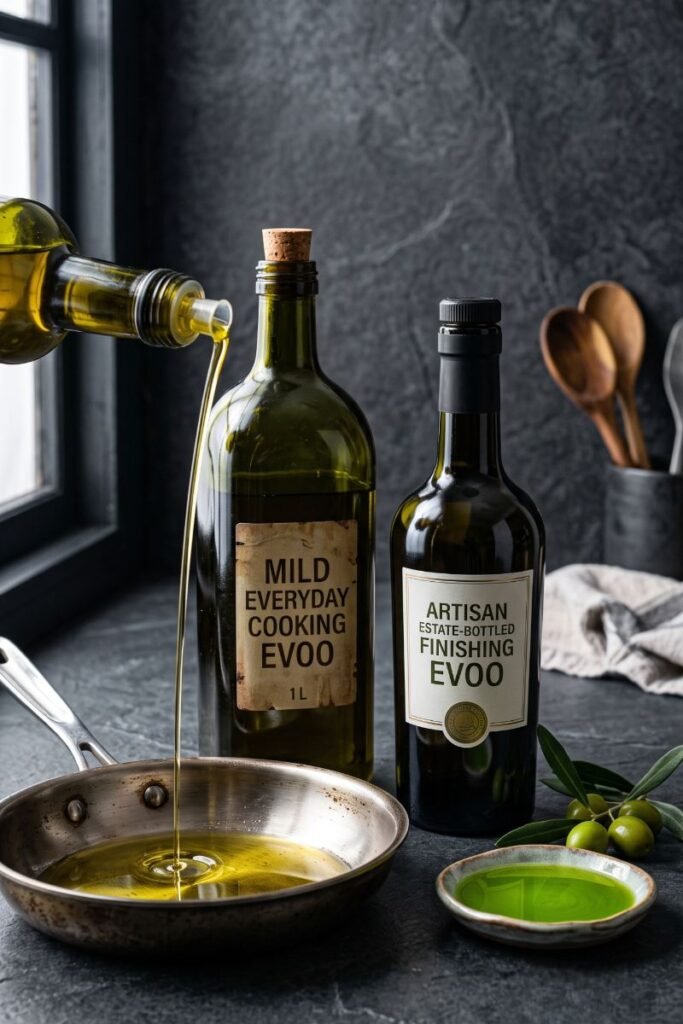
When I line up my dark glass bottles across my kitchen counter to finish a rustic dinner, understanding the structural difference behind the best type of olive oil for cooking vs drizzling is the absolute ultimate rule to preventing your delicate fats from scorching over an open flame.
Over my years of sourcing regional Italian pressings, I have treated extraction grades, free fatty acid percentages, and polyphenol counts as critical physical variables rather than simple marketing labels.
Whenever I see casual home cooks buy a single, highly expensive bottle of estate-bottled finishing oil and dump half a cup of it into a searing hot iron pan to roast meat, watching the delicate compounds burn into a bitter, acrid cloud of smoke, I notice how a lack of oil knowledge ruins the meal.
For me, delivering maximum flavor and maintaining perfect kitchen safety requires keeping your expensive, peppery finishing juices locked far away from direct burner heat. Instead, rely on larger, milder blending vessels to handle your high-heat stovetop work.
How Free Fatty Acid Limits Shape Your Pan Smoke Point
To understand why different bottles of the exact same vegetable extract behave so completely differently when exposed to high kitchen heats, you have to look closely at chemical refinement scales and acid values. True extra virgin olive oil is legally defined as 100% mechanical cold-pressed fruit juice containing a maximum free fatty acid content of no more than 0.8%.
Because high-quality EVOO is completely unrefined, it keeps a dense concentration of natural monounsaturated oleic acids, antioxidant vitamins, and microscopic plant sediments floating safely inside its liquid matrix. This natural nutrient density provides a highly stable chemical barrier that actually protects the oil from rapid oxidative breakdown, allowing a quality unrefined press to maintain a reliable smoke point that tops out between 390°F and 410°F.
Lower commodity grades like “pure” or “light” olive oil are stripped of these delicate elements via chemical solvents and heat processing, resulting in a completely neutral fluid that displays a higher 460°F smoke threshold but lacks any real fruit flavor or nutritional value. I manage these exact fat stability behaviors constantly when regulating hot pan layers, a fluid threshold I track closely inside my guide on handling an Over-Proofed Dough Rescue in a hot cast-iron skillet.
Selecting Mild Everyday Bottles for Reliable Heat Execution
When your goal for the evening is to sweat down minced garlic cloves, slow-simmer a rich tomato base, or brown seasoned proteins over medium flame heights, a mild everyday extra virgin olive oil is your absolute best asset. I follow the strict sensory panel guidelines, oxidation stability metrics, and manufacturing chemical limits documented inside the official Serious Eats Olive Oil Quality Assessment to keep my pan dynamics clean.
High heat naturally degrades volatile aroma compounds within minutes; therefore, pouring a hyper-premium, complex finishing oil into a hot pan wastes the delicate floral nuances you paid extra to secure. Look for large, cost-effective tins or dark glass bottles explicitly described as carrying a “mild,” “buttery,” or “delicate” sensory profile.
These versatile oils act as reliable, non-reactive workhorses that carry enough natural antioxidants to withstand extended skillet exposure without breaking down into harmful polar compounds or imparting harsh flavors into your sauce foundations. Save your high-dollar, boutique bottles for the table, and let these clean everyday EVOOs handle the heavy thermal lifting right on your stovetop grates.
Deploying Intense Cold Pressings for Finishing Maximum Impact
The final law for managing your high-end oil investments requires keeping your premium, robust extra virgin pressings completely raw, exposing them only to ambient plate temperatures right before serving. Robust finishing oils are often pressed from early-harvest green olives like Italian Frantoio or Spanish Picual, which carry a massive concentration of active polyphenols.
When you pass a thin, raw stream of this premium liquid over a freshly sliced caprese salad, a bowl of minestrone, or a warm slice of bread, the rising ambient heat of the food activates the volatile aromatics inside the lipids. This release triggers a complex explosion of grassy, herbal, or intensely fruity aromas that completely transforms the sensory profile of your dinner.
The characteristic peppery back-of-the-throat scratch indicates a high concentration of oleocanthal, a potent anti-inflammatory compound that adds an intentional, robust kick to rustic recipes. Substituting a cheap, generic cooking oil at this final step leaves your completed dishes tasting flat, heavy, and completely devoid of traditional regional character.
Simple Kitchen Rules to Protect Your Oil Inventory From Light
The final law for preserving your liquid gold inventory requires implementing a strict storage environment that shields your bottles from the damaging elements of kitchen cross-contamination. Never pour your oils into clear glass tabletop cruets or store your primary bottles directly on the counter space right next to your hot stovetop burners.
Constant exposure to harsh ambient daylight triggers rapid photo-oxidation, a destructive chemical reaction that breaks down chlorophyl lines and turns premium green oils rancid, sour, and waxy within weeks. Keep your oil containers sealed tightly and stored inside a cool, dark kitchen pantry cabinet situated far away from the heat-loss cycles of your oven or refrigerator compressor.
I know my asset management is completely successful when I open a fresh bottle and get hit with a vibrant, clean aroma that feels slick and crisp across the tongue without a single trace of musty odors. Taking the extra five seconds to properly match your oil grade to your pan temperatures is the ultimate kitchen secret to delivering an elite meal to your family table.