
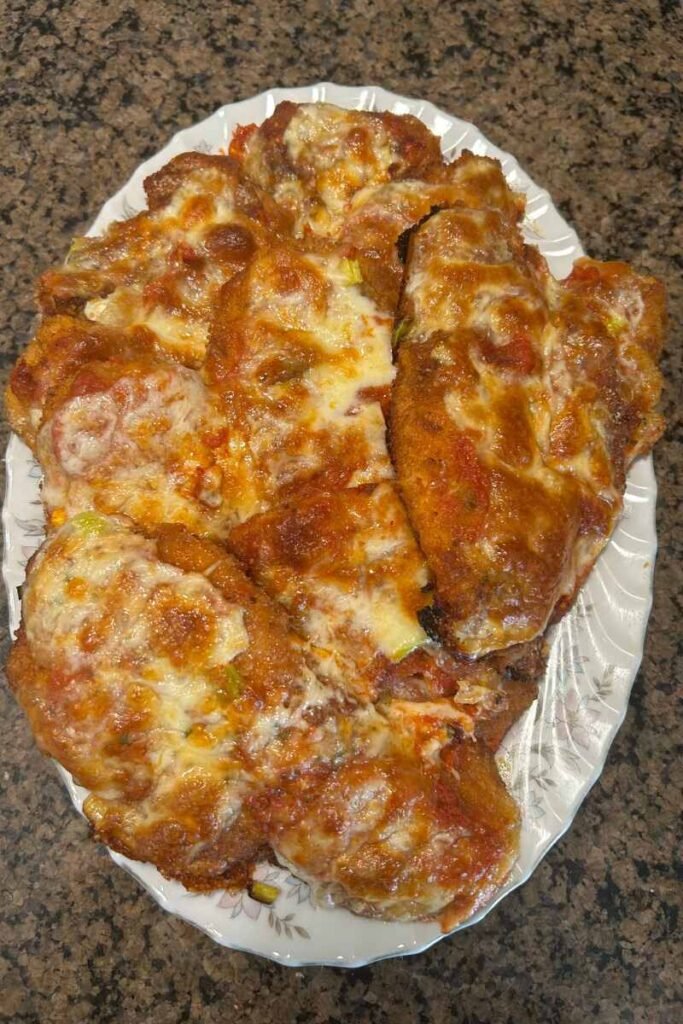
This Italian-American classic layers crispy breaded chicken cutlets with tangy tomato sauce and melted mozzarella, finished with a generous shower of Parmesan cheese. The dish represents the evolution of Italian cooking in America, where cotoletta (breaded cutlet) merged with parmigiana (a preparation style involving tomato sauce and cheese) to create one of red-sauce cuisine’s most beloved offerings.
The technique combines two preparations: first frying breaded cutlets to golden perfection, then topping them with sauce and cheese before a brief bake that melts everything into harmonious unity. The result delivers multiple textures and flavors in each bite: crispy coating, tender chicken, savory tomato sauce, and stretchy melted cheese.
Understanding Chicken Parmigiana Tradition
Chicken Parmigiana (or chicken parmesan) emerged from Italian-American communities in the early to mid-20th century, adapting the Sicilian melanzane alla parmigiana (eggplant Parmesan) to use readily available, affordable chicken instead of eggplant. The name “parmigiana” likely derives from “parmigiano” (Parmesan cheese), though some culinary historians suggest it references the shuttered window pattern created by overlapping eggplant slices in the original Sicilian dish.
The preparation became a staple of Italian-American restaurants and home kitchens, served over pasta as a hearty main course or tucked into submarine sandwiches. While purists might argue it bears little resemblance to traditional Italian cooking, the dish has earned its place as legitimate Italian-American cuisine, representing how immigrant communities adapted Old World techniques to New World ingredients and tastes.
Ingredients
Ingredients for Breaded Chicken Cutlets
For the Breaded Cutlets- 3 large boneless, skinless chicken breasts (approximately 600 to 750g total)
- 100g all-purpose flour (approximately ¾ cup)
- 3 large eggs
- 150g breadcrumbs (approximately 1½ cups)
- 3 tablespoons fresh flat-leaf parsley, finely chopped
- 50g Parmigiano-Reggiano cheese, finely grated (approximately ½ cup)
- Salt and freshly ground black pepper to taste
- Olive oil for frying (approximately 250 to 375ml)
- 375 to 500ml tomato sauce (approximately 1½ to 2 cups, homemade or quality jarred)
- 300g mozzarella cheese, shredded or sliced
- 40g additional Parmigiano-Reggiano, grated (approximately ⅓ cup)
- Fresh basil leaves for garnish (optional)
Ingredient Selection and Quality
Chicken Preparation
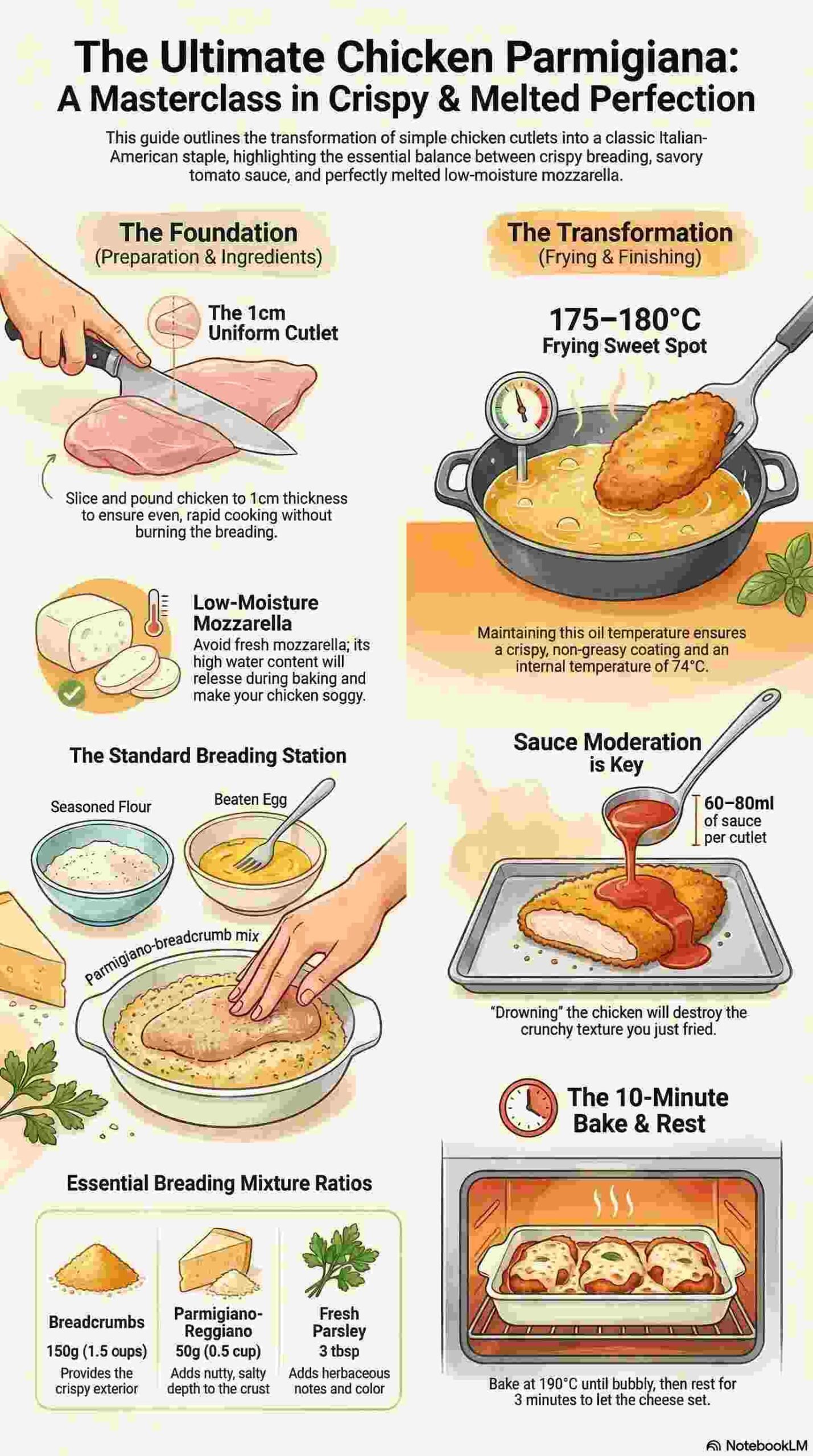
Follow the same preparation as standard chicken cutlets: slice each breast horizontally to create two thinner pieces (yielding 6 cutlets total), then pound to uniform thickness of approximately 1cm (⅜ inch). Pat dry thoroughly and season with salt and pepper. The thin, even cutlets cook quickly and ensure the coating doesn’t burn before the chicken reaches safe internal temperature.
Tomato Sauce Selection
Quality tomato sauce significantly impacts the final dish. Homemade marinara or simple tomato sauce offers superior results, though good jarred sauce works acceptably for convenience. Look for sauce with simple ingredients (tomatoes, olive oil, garlic, herbs, salt) and avoid varieties with excessive sugar, which creates overly sweet results.
If making sauce from scratch, a simple preparation of crushed San Marzano tomatoes simmered with garlic, olive oil, and basil provides ideal balance. The sauce should be relatively thick rather than watery, as excess liquid creates soggy coating. According to the USDA Food Safety and Inspection Service, proper handling and cooking of chicken ensures food safety.
Cheese Selection
Mozzarella: Low-moisture mozzarella works best for chicken Parmigiana. Fresh mozzarella packed in water contains too much moisture that releases during baking, creating watery results and potentially soggy coating. Shredded low-moisture mozzarella melts beautifully and creates the stretchy, appealing cheese layer characteristic of proper chicken Parm. Avoid pre-shredded cheese containing anti-caking agents; shred block mozzarella yourself for best results.
Parmigiano-Reggiano: Authentic Parmigiano-Reggiano, grated fresh, provides incomparably superior flavor to domestic “parmesan.” The aged cheese contributes nutty, salty depth both in the breading and as a finishing element.
Breadcrumb and Parsley
Use the same breadcrumb selection as standard cutlets: dried breadcrumbs (plain or Italian-style) or panko for extra crispiness. Fresh flat-leaf parsley adds color and fresh, herbaceous notes to the coating. Chop it finely so it integrates smoothly.
Method
Prepare and Bread the Chicken
1. Set up the breading station: Arrange three shallow dishes. In the first, place the flour seasoned with salt and pepper. In the second, beat the 3 eggs with a pinch of salt and pepper until uniform. In the third, combine breadcrumbs, chopped parsley, and grated Parmigiano, mixing thoroughly.
2. Prepare cutlets: Slice and pound the chicken breasts into 6 thin, even cutlets approximately 1cm (⅜ inch) thick. Pat completely dry with paper towels and season both sides with salt and pepper.
3. Bread the cutlets: Working with one cutlet at a time, dredge in seasoned flour and shake off excess. Dip in beaten eggs, allowing excess to drip off. Press firmly into the breadcrumb mixture, coating both sides completely. Place breaded cutlets on a plate and let rest for 10 to 15 minutes to allow the coating to set.
Fry the Cutlets
1. Heat the oil: Pour olive oil into a large, heavy-bottomed skillet to a depth of approximately 5mm to 1cm (¼ to ⅜ inch). Heat over medium to medium-high heat until the oil reaches 175 to 180°C (350 to 360°F). Test by dropping a pinch of breadcrumbs into the oil; they should sizzle immediately.
2. Fry in batches: Working in batches to avoid overcrowding, carefully place 2 to 3 cutlets in the hot oil. Fry for 3 to 4 minutes per side until deep golden brown and crispy. The chicken should reach an internal temperature of 74°C (165°F). Transfer fried cutlets to a paper towel-lined plate to drain excess oil.
3. Prepare for baking: Preheat the oven to 190°C (375°F). Arrange the fried cutlets on a large baking sheet or in a baking dish. They can overlap slightly if necessary, though a single layer is preferable.
Assemble the Chicken Parmigiana
1. Add tomato sauce: Spoon approximately 60 to 80ml (¼ to ⅓ cup) of tomato sauce over each cutlet, spreading it relatively evenly to cover most of the surface. Don’t drown the cutlets in sauce; a moderate layer preserves the coating’s crispness while providing enough sauce for flavor and moisture.
2. Add mozzarella: Distribute the shredded or sliced mozzarella evenly over the sauce-topped cutlets. Each cutlet should receive a generous layer of cheese that will melt and bubble during baking. If using sliced mozzarella, overlap slices to cover each cutlet completely.
3. Add Parmigiano: Sprinkle the additional grated Parmigiano-Reggiano over the mozzarella. This adds sharp, salty flavor and contributes to the golden, slightly crispy top that forms during baking.
Bake
1. Bake until bubbly: Place the assembled cutlets in the preheated oven and bake for 10 to 12 minutes, until the cheese melts completely, bubbles actively, and develops light golden color in spots. The sauce should be hot throughout.
2. Optional broiling: For more dramatic browning and slightly crispy cheese, switch to the broiler for the final 1 to 2 minutes of cooking. Watch carefully to prevent burning. The cheese should develop golden-brown spots and the edges should appear slightly crispy.
3. Rest briefly: Remove from the oven and let rest for 2 to 3 minutes before serving. This allows the cheese to set slightly, making serving neater.
Serve
Transfer the chicken Parmigiana to serving plates. Garnish with fresh basil leaves if desired. Serve immediately while hot and the cheese is at peak stretchiness.
Technical Notes on Success
Several factors determine whether chicken Parmigiana achieves proper texture and flavor:
Crispy coating before saucing: The cutlets must be fried to deep golden, crispy perfection before adding sauce. Pale or soft coating will become soggy rather than maintaining textural contrast.
Don’t oversauce: Too much tomato sauce saturates the coating and makes it soggy. A moderate layer provides flavor without compromising texture.
Low-moisture mozzarella is essential: Fresh mozzarella releases too much water, creating watery results and soggy coating.
Brief baking time: The cutlets are already fully cooked from frying. The baking time needs only to melt the cheese and heat the sauce, typically 10 to 12 minutes. Longer baking dries out the chicken and makes the coating soggy.
Proper frying temperature: The 175 to 180°C (350 to 360°F) oil temperature creates crispy coating without burning. Lower temperatures produce greasy results.
Even cutlet thickness: Uniform pounding ensures even cooking during frying.
Serving Suggestions
This recipe serves 4 to 6 people depending on appetite and accompaniments.
Classic presentation: Serve over spaghetti, linguine, or other pasta tossed with additional tomato sauce.
With sides: Accompany with garlic bread, Caesar salad, or roasted vegetables for a complete meal.
Sandwich version: Serve in crusty Italian rolls for chicken Parm sandwiches.
Wine pairings: Medium-bodied Italian reds like Chianti, Montepulciano d’Abruzzo, or Barbera complement the tomato sauce and cheese beautifully.
Variations and Adaptations
Eggplant Parmigiana: Replace chicken with breaded, fried eggplant slices for the vegetarian original that inspired this dish.
Veal Parmigiana: Use thin veal cutlets instead of chicken for the traditional (and more expensive) version.
Sausage addition: Layer sliced cooked Italian sausage over the sauce before adding cheese.
Mushroom addition: Sauté sliced mushrooms and layer them over the sauce.
Herb variations: Add fresh or dried oregano and basil to the tomato sauce for more pronounced Italian herb character.
Spicy version: Use spicy marinara or add red pepper flakes to the sauce.
Provolone addition: Mix shredded provolone with the mozzarella for sharper, more complex cheese flavor.
Lighter baked version: Instead of frying, spray breaded cutlets with oil and bake at 200°C (400°F) for 15 minutes, flip, bake 10 more minutes, then add sauce and cheese and proceed with final baking.
Storage and Reheating
Refrigeration: Fully assembled and baked chicken Parmigiana keeps refrigerated, covered, for up to 3 days. The coating softens during storage but remains good.
Reheating: Reheat in a 180°C (350°F) oven for 15 to 20 minutes until heated through and the cheese bubbles. Microwave reheating is faster but makes the coating soggy.
Freezing: Freeze either before or after the final baking. For best results, freeze after frying but before saucing and baking. Wrap individually in plastic wrap and freeze for up to 2 months. Thaw, add sauce and cheese, and bake as directed. Fully assembled chicken Parm can be frozen for up to 2 months; thaw and reheat in the oven.
Make-ahead assembly: Fry the cutlets up to a day ahead. Store refrigerated, then bring to room temperature, add sauce and cheese, and bake just before serving.
Cultural Context and Italian-American Heritage
Chicken Parmigiana represents Italian-American cuisine at its most iconic, demonstrating how immigrant communities adapted traditional techniques to create new dishes suited to their adopted homeland. While not found in traditional Italian cooking, the dish has become so embedded in American food culture that it represents “Italian food” to millions of people.
The preparation reflects resourcefulness and adaptation: using affordable chicken instead of expensive veal, embracing the abundance of cheese and tomatoes available in America, and creating hearty, satisfying portions that appealed to American appetites. Italian-American restaurants made chicken Parm a menu staple, while home cooks embraced it as special-occasion food that demonstrated skill and care.
This chicken Parmigiana demonstrates how fundamental techniques combine to create something greater than the sum of their parts. The interplay of crispy breaded chicken, tangy tomato sauce, and melted cheese creates multilayered satisfaction that has earned the dish its enduring popularity. It’s food that bridges cultures, honoring Italian techniques while embodying American abundance and innovation.