
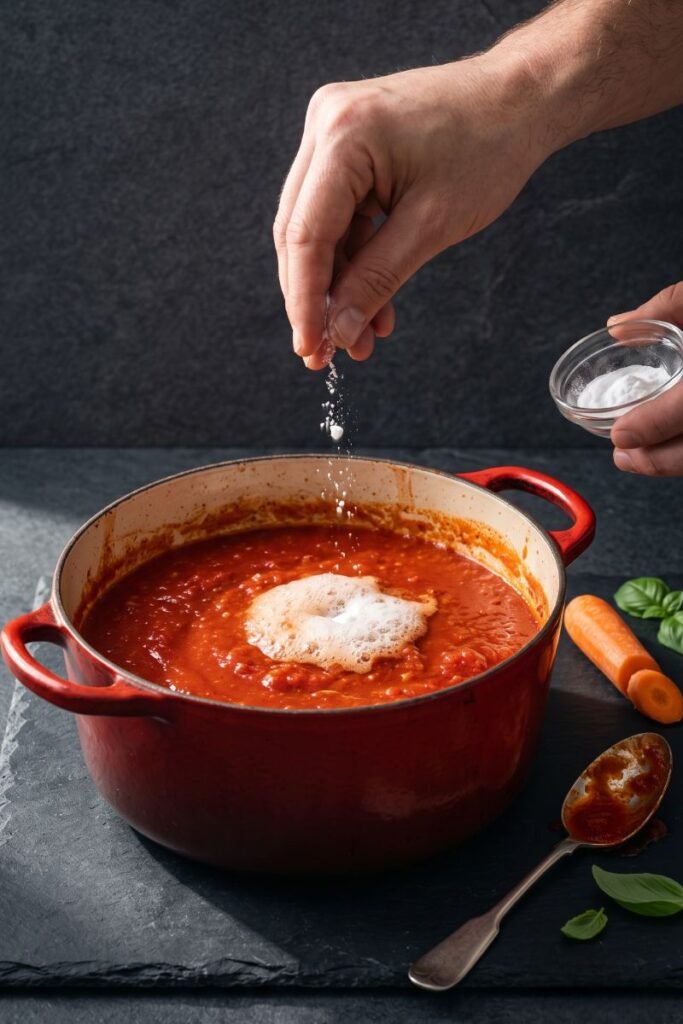
When I crack open a fresh tin of plum tomatoes to start a sauce and find the liquid carries a sharp, sour bite, learning how to safely cut the acidity in canned tomatoes is the ultimate way to balance your dinner flavors. Over my years of boiling down red reductions, I have treated sharp tomato tartness as a basic chemical adjustment problem rather than a permanent recipe disaster.
Whenever I see casual cooks try to drown out that sour punch by dumping tablespoons of raw white sugar into the pan, I notice how it turns their savory dinner into a cloying, dessert-like syrup. For me, softening a sharp canned harvest without masking its natural character requires using alkaline elements and sweet root vegetables to neutralize the acid molecules cleanly.
How Volcanic Soil and Preservation Rules Build Sour Notes
To understand why a canned fruit can taste so aggressive on your tongue, you have to look closely at industrial packaging rules and plant genetics. Factory lines must keep their canned goods highly acidic to prevent food safety issues, meaning they often add extra citric acid into the processing water before sealing the lids.
When these preserved crops hit a hot skillet, that added chemical layer combines with the fruit’s natural malic properties, creating a sharp tang that hits the back of your throat. If you rush your cooking timeline and boil the mixture for only fifteen minutes, those harsh acidic liquids never get a chance to mellow out or integrate with your oils.
I have watched fast reductions leave dinners tasting unpleasantly sour, a balancing problem I watch out for when simmering red bases for my comforting Italian Lentil and Pasta Soup. To soften that sharp profile naturally, you must rely on slower stovetop evaporation windows or alkaline interventions that physically alter the liquid’s properties.
Using Alkaline Baking Soda to Neutralize Acid Molecules Cleanly
My absolute primary technical trick for fixing a sour pot without altering the sugar scale relies on dropping a pinch of alkaline sodium bicarbonate into the bubbling liquid. I follow the standardized ingredient testing and chemical breakdown analyses documented inside the official USDA FoodData Central Registry to track how alkaline minerals interact with processed fruit fibers.
When I stir a tiny quarter-teaspoon of baking soda into a simmering 28-ounce can of tomatoes, a rapid chemical neutralization reaction happens right inside the pan. The sauce will immediately foam and throw up tiny carbon dioxide bubbles as the alkaline powder breaks down the harsh hydrogen ions.
Once the bubbling stops after a few minutes of steady stirring, the physical acidity drops significantly without altering the core tomato profile. You must use caution with this powder; adding more than a half-teaspoon at once will cause a soapy, metallic aftertaste that ruins the dish.
Dropping Sweet Carrots into the Pot for Root Sugar Infusions
If you want a more traditional, hands-off approach to taming a sour can, your next best move is to let a sweet root vegetable soften the profile naturally. I peel a whole fresh carrot, slice it in half, and drop the raw blocks straight into the bubbling red sauce right at the start of the simmer.
As the carrot breaks down over a slow flame, it gently releases complex root sugars into the surrounding liquid. These natural starches don’t change the physical properties of the acid, but they round out the flavor profile beautifully, a mellow baseline I utilize when simmering smooth red glazes for my classic Zucchini Pasta Recipe.
Once the sauce finishes bubbling after an hour on medium-low heat, I use a pair of tongs to pluck the softened carrot pieces out of the pan and discard them entirely. This leaves you with a light, velvety sauce that tastes completely balanced without a single grain of added table sugar.
Using Rich Dairy Fats to Soften Harsh Flavor Points
The final rule for taming an aggressive tin requires using rich, silky fats to coat your palate and block the sharp acid from hitting your taste buds. Swirling a small tablespoon of unsalted butter or a splash of heavy dairy cream into the skillet right before serving creates a smooth texture shield.
The heavy dairy proteins bind directly to the sharp acidic compounds, slowing down how fast the sour flavor can register on your tongue. This fat addition works perfectly for robust meat ragùs or smooth vodka reductions that need an extra layer of velvety body to lock onto pasta strands.
I know my pan-tossing process is successful when the red reduction achieves a uniform, glistening crimson sheen that clings tightly to my wooden spoon. For me, taking a calm, step-by-step approach to adjusting your minerals, roots, and fats is the ultimate secret to delivering an elite meal to your family table.